
 Amazon Music
 Apple Podcasts
 Audible
 Castbox
 Deezer
 Fountain
 iHeartRadio
 Pandora
 PocketCasts
 Podcast Addict
 Spotify
 YouTube
  RSS Feed
 S5E18: Desert Heat: Who Really Pays the Price?
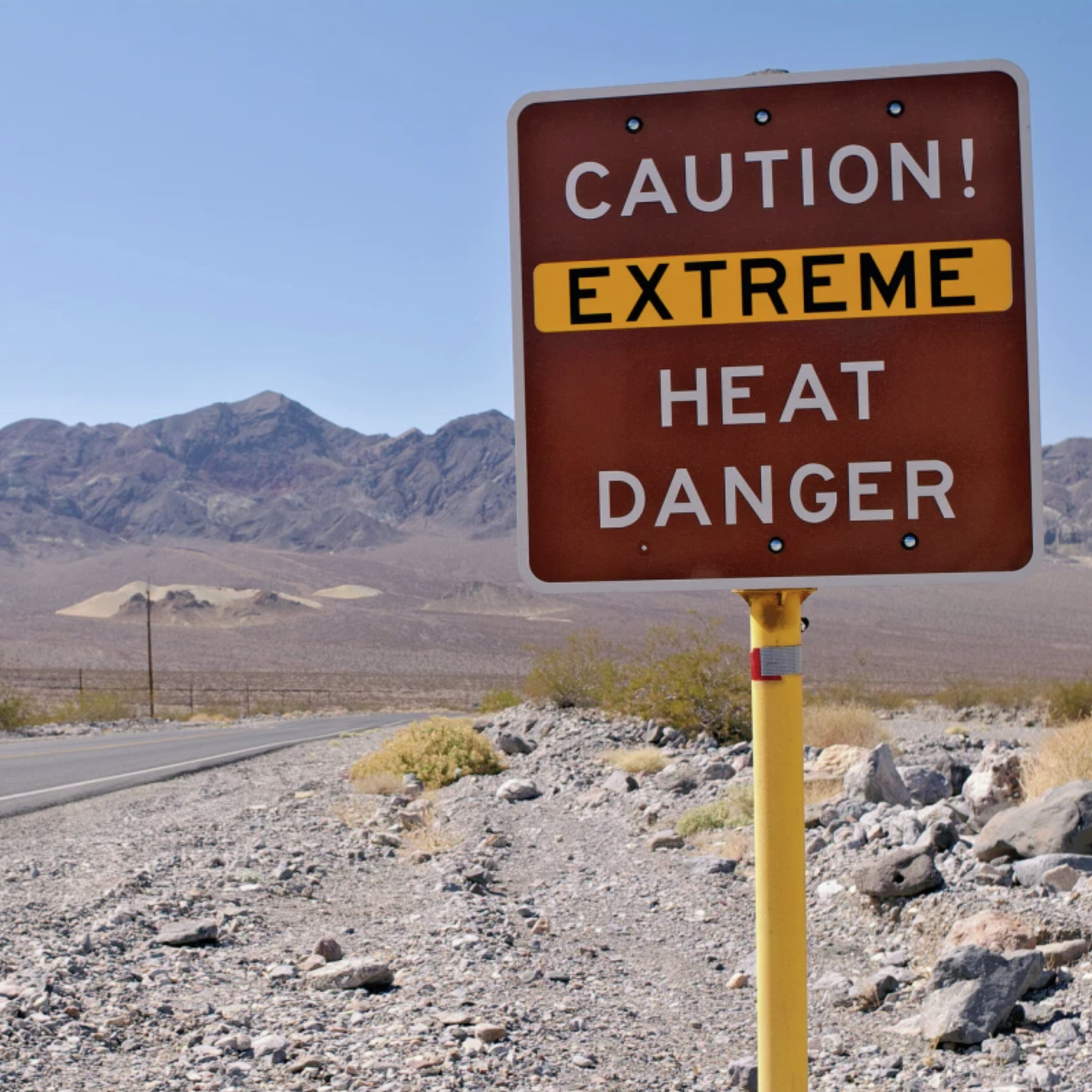
Chris combines practical hot-weather safety with an examination of unequal heat exposure, contrasting voluntary recreation with the risks imposed on migrants, outdoor workers and incarcerated people who often cannot escape extreme temperatures.
In this timely episode, Chris discusses the best ways to avoid becoming a statistic while hiking during desert heat waves. He also points out that the vast majority of people suffering injury and death from extreme heat have little other choice. Migrants, the incarcerated, and outdoor labor all face serious threats from hot weather, with little recourse to protect themselves. That's why state and federal protections for workers and the incarcerated are so crucial.
Notable Quotes:
-
"Heat turns minor mistakes into fatal mistakes."
-
"Testosterone is not an electrolyte replacement."
-
Incarcerated people dying from heat injury is a frequent and growing problem that is not tracked in any methodical way."
-
"Hug your dogs."
Resources:
-
Podcast Website: 90 Miles from Needles
-
PO Box for Donations and Support: P.O. Box 127, 29 Palms, CA 92277
-
New analysis provides more evidence that heat standards save lives
- Leading Healthcare and Public Health Organizations Call for Federal Government to Fast-Track Rules to Protect Workers from Worsening Extreme Heat
- American Hiking Society's Hot Weather Hiking Guide
Become a desert defender!: https://90milesfromneedles.com/donate
See omnystudio.com/listener for privacy information.
UNCORRECTED TRANSCRIPT
0:00:00 - (Chris Clarke): 90 miles from the desert Protection Podcast is made possible by listeners just like you. If you want to help us out, you can go to 90 miles from needles.com donate or text needles to 53555.
0:00:25 - (Joe Geoffrey): Think the deserts are barren wastelands?Think again.
0:00:34 - (Joe Geoffrey): it's time for 90 miles from Needles, the Desert Protection Podcast.
0:00:45 - (Chris Clarke): Thank you Joe, and welcome to 90 Miles from Needles, the Desert Protection Podcast. I'm your host, Chris Clarke, and it is hot in the desert right now. We are still a few days shy of the summer's solstice, which is the official beginning of summer. But we are already up above triple digits in much of the desert Southwest. Everywhere from Los Angeles all the way to Big Bend. We have temperatures in the high 90s to triple digits.
0:01:10 - (Chris Clarke): Tucson's at 103 as I speak. Phoenix is about the same. Yuma is 107103 in El Paso. It is hot, my friends, and we're going to be talking about some of the upshots of that heat. This will end up being one of those evergreen episodes because it gets hot every year and it will get hotter and hotter as the years go go on, in all likelihood due to our mucking up of the world's climate. Because I've got your ears right now and this is a podcast about information about the desert, I feel like I have an obligation to tell you how to survive summer in the desert without undue risk of injury.
0:01:47 - (Chris Clarke): But I also want to talk a little bit about who gets noticed when we are talking about heat injury or heat death. A lot of the attention in the media gets paid to people who are out hiking. These are often people who are experienced hikers. Despite a common reaction in social media when these kind of stories pop up. These are often people that have hiked in the heat before they're acclimated. They're probably not lost.
0:02:13 - (Chris Clarke): They know where they are, they know where they're heading and the heat gets them anyway. Sometimes within a couple minutes’ walk of help and safety. We will get to that. But first I want to thank a few people for donating since the last episode, last full episode was back in May and since then we've had new donations from Monona Wali. Thank you so much Monona. We also have a new donation from Amanda Vernon with a very lovely note attached. A recurring donation was dedicated in memory of heart and a very nice personal message from Amanda.
0:02:50 - (Chris Clarke): Thank you so much. And we also have a wonderful donation sent in by snail mail to our post Office box at P.O. box 127, 29 Palms, CA 92277 from one Chuck George, who is a longtime supporter of the podcast and he sent us a little something extra in the last couple weeks with a note that said “your rallying cries should be heard by a way wider audience.” Thank you, Chuck. We really appreciate you doing what you can to help us achieve that goal, which we share.
0:03:21 - (Chris Clarke): Again, if you want to join Monona and Amanda and Chuck, you can go to 90 miles from needles.com donate if you want to give to our Fellowship for desert reporting. That's 90 miles from needles.com Fellowship. That'll allow us to use some matching funds to pay freelance journalists throughout the desert to work with us. Or you can mail us something, whether that's a check or or a box of cookies or a picture of your dog.
0:03:45 - (Chris Clarke): P.O. box 12729 Palms, CA 922 7. Every summer these days we get a handful of stories about someone who's out hiking in a desert national park or a state or regional park like South Mountain in Phoenix or Valley of Fire near Las Vegas, about someone who set out to go hiking and never made it back to the trailhead. Or if they did make it back to the trailhead, they didn't make it back home. These cases get a lot of press.
0:04:37 - (Chris Clarke): For instance, in August 2024, Peter Robino, a 57-year-old Los Angeles resident, died after a short hike on the Natural Bridge Trail in Death Valley national park, which is a one-mile round trip. People at the trailhead noticed that he wasn't making any sense, offered to help him, but he refused help, got in his car and drove off a 20-foot cliff. Bystanders were able to walk him back to the parking lot to sit in the shade and another bystander called 911.
0:05:07 - (Chris Clarke): But Robino stopped breathing just before park rangers arrived to provide help. Park Service did everything they could. They had an air-conditioned ambulance, the CPR, chest compressions, et cetera. But Peter Robino was declared dead not too long after the Park Service got there. The ambient temperature was 119 degrees. Just a week or two before that, 71-year-old Steve Curry, an avid hiker, hiked from Golden Canyon on the valley floor to the Zabriskie Point, which is a hike that I've done. It's not terribly difficult.
0:05:39 - (Chris Clarke): At 10am Steve got to Zabriskie Point, stopped to rest under a metal sign in the shade, and he told bystanders, including a couple of reporters with the LA Times, that he didn't need help. He was accustomed to hiking in the heat. He Walked back down to Golden Canyon trailhead, which is an easier walk than getting to Zabriskie Point because it's not uphill. You got down to the trailhead and collapsed at about 3:30pm at that point, the Furnace Creek Visitor center thermometer read 121 degrees.
0:06:10 - (Chris Clarke): The actual temperature inside Golden Canyon was very likely much higher. It's got a lot of blonde and light-colored sediments and canyons just reflecting heat all over the place. It can be uncomfortable to hike there when it's 80 degrees. Even earlier that month, a 65-year-old man was found dead in his car about 30 yards off the highway, Death Valley. He had been driving, but the AC in his car wasn't working. Apparently he was driving with a window rolled down and they found him dead in his vehicle.
0:06:37 - (Chris Clarke): That's just one park in one year. Death Valley, the Grand Canyon, Big Bend national park and Canyonlands lead the pack in terms of national park's recreation Visitors putting themselves in a lot of trouble by hiking at the wrong time, sometimes with the wrong gear or the wrong set of instructions. And I do not necessarily want to insinuate that these people were clueless or careless because I've been hiking in those same places in warm weather or hot weather, as well as many of the wildernesses around the Southwest. And just BLM lands in temperatures that are cited in other cases as contributing to deaths. And I like to think that I'm careful, but the only really careful way of avoiding injury in that kind of situation is not to go.
0:07:22 - (Chris Clarke): And people are going to go hiking, including me. It's not that people made incredibly stupid mistakes. I mean, occasionally that's true, but it's more that heat removes the margin of safety you might enjoy. Heat turns minor mistakes into fatal mistakes. The last time I hiked in Golden Canyon, I hike from Zabriskie Point down to the trailhead and then back. And I ran out of water halfway back and it was in the high 70s or low 80s somewhere around there. And it was a problem.
0:07:51 - (Chris Clarke): It was not pleasant. And I got to my car and I was parched and I drank water. Five or ten minutes later I was just fine and went off to dinner. That was a margin of safety that I enjoyed. I pushed it farther than I should have, but I had that backup. But all kinds of things can remove that margin of safety, whether it's misinterpreting what the trail is going to demand of you, or accidentally twisting your ankle or stopping to help somebody else is having trouble or even taking the wrong kind of prescription. Medication like antidepressants can put you into the danger zone.
0:08:26 - (Chris Clarke): So we will talk about the bigger issue of who gets mentioned when it comes to heat injury and heat death. But here are five things for you to remember that will maximize the chances of you dying comfortably in your bed, in your sleep at an advanced age rather than out on the trail in the desert. They are Carry more water than you think you're going to need. Turn around when half your water is gone, or before.
0:08:50 - (Chris Clarke): If you're hiking downhill, turn around well before half your water is gone. Because as they say at the Grand Canyon, down is voluntary, up is mandatory. If your vehicle fails on you in the desert, stay with it. Even a vehicle as small as a Smart car or a Mini Cooper can be seen from the air much more easily than you will be, especially if you're wearing earth tone clothes that blend in with the surroundings.
0:09:13 - (Chris Clarke): Stay with your vehicle. Rule number four Cover up. Here in Joshua Tree we routinely see folks from out of town who are hiking in a pair of short shorts and flip flops and nothing else. And even if you completely coat yourself in SPF 50 sunscreen, that's just setting yourself up to overheat every bit of sunlight that you can keep from reaching your body reduces the amount of heating you have to contend with.
0:09:37 - (Chris Clarke): Think of people that have lived in the desert for generations, like Bedouins in North Africa and the Middle East. Call to mind a picture of what they look like when they are out in the Sahara Desert wearing traditional clothing, long heavy robes. Air circulates underneath, allows cooling. You don't have to adopt Bedouin garb to go hiking in the Grand Canyon or Joshua Tree, although I expect Joshua Tree will see something like that before long from the tastemakers in la.
0:10:06 - (Chris Clarke): But a loose-fitting long sleeve shirt, a broad brimmed hat, your trilby or your trucker ball cap ain't gonna cut it. You want something that shades the back of your neck. Long pants and rule number five, Tell someone where you're going and when you'll be back. And don't change your mind without letting them know. And confession time. I am really bad at following this one. But if nobody knows where you are, the search and rescue folks don't know where to start.
0:10:33 - (Chris Clarke): If you tell somebody where you are, you might get found in a couple hours. If you don't, it could be days or weeks or never. So take more water than you think you're going to need. Turn around before half of it's gone. Stay with your car, cover up, and let somebody Know where you're going. I want to challenge one thing that you hear a lot of people saying on this topic, by the way, which is a piece of conventional wisdom that used to be backed up by science and is no longer.
0:11:05 - (Chris Clarke): You hear a lot of people saying, by the time you're thirsty, it's too late. You're already dehydrated. Start drinking before you're thirsty. And that's wrong. I mean, drink when you want, but your body has one of the best dehydration warning systems ever invented by evolution, and it is called thirst. Thirst is all the signal you need, for the most part, drink when you're thirsty. If you drink a lot of water, whether you're thirsty or not, you can come down with hyponatremia, which is low blood sodium, a potentially fatal condition, and even more fatal if you are five miles off the pavement in the hot desert.
0:11:42 - (Chris Clarke): Now, people do ignore thirst sometimes because they're focused on driving or hiking or taking photos or because dry air makes your sweat evaporate before you realize you're sweating, so you don't realize how much water you're losing. Folks my age and older sometimes have a diminished thirst response, so do keep that in mind. You know your body better than I do. If you're worried about hyponatremia, it's a really good excuse to stock up on those salty junk food snacks.
0:12:07 - (Chris Clarke): Pretzels, potato chips, peanuts. Salty snacks are your friend if you're hiking in the desert when it's even a little warm. Some of the best advice I've ever heard on this particular topic, I heard from Pam Cox, a very popular National Park Service ranger working at Phantom Ranch in the Grand Canyon. At least she was 21 years ago when I was there and she was giving us a pep talk for those of us who were hiking out of the canyon the next day.
0:12:32 - (Chris Clarke): Pep talk and safety talk, little of each. And she talked about drinking enough water, taking salty snacks. She talked about resting in the shade with your feet elevated above the rest of your body if your legs are starting to get tired, and even if they're not. And that's advice I have followed for a long time since. It's all good advice. But she had this sentence in her spiel that has stuck with me, and that sentence is, testosterone is not an electrolyte replacement.
0:13:01 - (Chris Clarke): Don't tough it out. Pay close attention to how you're feeling. Drink and eat and rest accordingly. And, you know, not everybody follows those things religiously, and they don't always work to reduce risk. Entirely. So when those methods fail or they aren't followed, there arises a need to do search and rescue to find people that are suffering in desert parks. And not just in parks. The stats for different parks in the desert are really kind of interesting. And they separate different parks out into different categories.
0:13:33 - (Chris Clarke): We have Death Valley, there's the Grand Canyon, there's Big Bend, there's Canyonlands. And these parks see more than their share of heat deaths compared to other desert parks. And it would seem that the reason these four parks tend to have more issues with heat injury and heat death among visitors is that once you start a hike, it's not so easy to bail. I've done short hikes in all of these parks and enjoyed myself and in fairly warm weather. But if you're taking on a longer excursion, there's not usually a good bailout place two or three miles down the trail in any of those parks.
0:14:07 - (Chris Clarke): Whereas compared to places like Arches national park or Joshua Tree or Red Rock Canyon outside of Vegas or Sabino Canyon in Tucson, they're a little bit smaller. They have bail points, they have communities nearby. They do have rescues every single year, but they have fewer recoveries postmortem. Per visitor. Rescues are still really important at the parks that are more dangerous, obviously. And the track record from the National Park Service is actually, despite the tragedies, pretty good.
0:14:38 - (Chris Clarke): A Park Service paper talking about preventive search and rescue, which is the practice of stationing rangers at trailheads and warning them that they are not going to make it down to the river and back comfortably if they're walking with a 12-ounce bottle of water and flip flops and carrying pool floaties. But even before that program became established at the Grand Canyon, that park averaged about 300 heat related search and rescue incidents per year.
0:15:00 - (Chris Clarke): And five of those on average involved a death. Joshua Tree has millions of annual visitors, around 3 million a year these days. Constant rescue activity. One of Heart's best friends in our old neighborhood was a volunteer with Joshua Tree Search and Rescue. He did PSR as well as regular search and rescue, handing out bottles of water at trailheads. He was a busy guy. And there are lots of heat incidents at Joshua Tree. People come out from San Diego or Los Angeles not as well prepared as they ought to be.
0:15:31 - (Chris Clarke): And there are people that know what they're doing that still get in trouble, regular climbers, people that are expert desert hikers. And yet, on a per visitor basis, Joshua Tree has a pretty low number of heat fatalities compared with the big four parks, Grand Canyon or Death Valley. Or Big Bend or Canyonlands. And those successful rescues don't get nearly as much news coverage. The media undercounts prevention because it's not as interesting a story.
0:15:56 - (Chris Clarke): Not as clickbaity as hiker death or picnicker death for that matter. Nonetheless, in the last three or four years there have been at least a dozen well documented recreation related heat deaths in the major desert national parks of the American Southwest. Death Valley is maybe half a dozen. Same with the Grand Canyon. Big Bend adds some. Canyonland add some. And these are the ones that got publicized either in the media or press releases from the Park Service.
0:16:22 - (Chris Clarke): And there are certainly others. Sometimes deaths will get recorded as the result of accident or heart attack or drowning in situations that might not have happened if it had not been for the heat. Thinking about Lake Mead National Recreation Area, for instance, people get out on the water, sunlight reflecting all around from all of the water or what little water is left in Lake Mead. People zooming around in speedboats, drinking alcohol.
0:16:49 - (Chris Clarke): Imagine you've been on a boat on Lake Mead in 108-degree weather for the last six hours. You've had a couple of beers, maybe more than a couple, maybe a couple couples of beers. You're dehydrated, you've been having a great time, but you're tired. You think there's cold water all around me that's going to make me cool down, make me wake up, it'll sober me up, I'm going to jump into the water. And you do that and you don't come out, the death certificate's gonna say death by drowning.
0:17:20 - (Chris Clarke): There were about 110 drowning deaths in Lake Mead between 2007 and 2024. But in the hypothetical scenario I just described, heat has contributed to every step leading up to that drowning. Similarly, with motor vehicle crashes and boating accidents, people's reaction time slows their judgment and executive function gets impaired. Medical events like heart attacks, obviously if you've been in triple digit temperatures all day and getting hyponatremia or not drinking enough water, if you're prone to heart attacks, you're more likely to have one in that circumstance.
0:17:54 - (Chris Clarke): And it's not just national parks. Like I said, there are places like South Mountain park and Camelback Mountain near Phoenix and the Superstition Mountains. Noah Faribaul, a 33-year-old hiker, got into the newspapers when he died in May of last year. Hiking in the Superstitions and friends who were with him said that they had run out of water on the hike. So for your own safety, we have that list of five ways to keep yourself safer.
0:18:19 - (Chris Clarke): And that can really be boiled down into one meta rule, one piece of meta advice, and that is keep as many options open for yourself as you can. Take way more water than you think you're going to need. Not only are you less likely to hike too far because the water is fricking heavy, but you might be able to decide, I'm way too hot right now. I'm going to sit in the shade of this juniper tree until the sun goes down and hike by the full moon and it'll be about 10 degrees cooler. And in the meantime, I'm just going to relax here and drink my water.
0:18:50 - (Chris Clarke): Or taking a nap under the tree and getting up at four in the morning and hiking out or changing your plans when you see what it's actually like out here in the desert. And instead of that five-mile loop trail, do a one mile out and back or less. Or for that matter saying, oh, I planned to hike today but then I didn't wake up till 9:30 and it's a half hour ride to the trailhead and so I'm just going to try and do better tomorrow morning.
0:19:10 - (Chris Clarke): The more options you can keep for yourself, the better off you are. And that's a really important way of looking at things in a larger context. Because recreationists, you know, hikers, bicyclists, climbers, people that are going out into the desert to have fun, we have a lot of options that we take with us up to and including not going. But after the break we are going to talk about some folks who have to face very similar conditions with no choice in the matter and no options whatsoever.
0:19:41 - (Joe Geoffrey): Don't go away. We'll be right back
0:19:45 - (Chris Clarke): for this episode's contribution by our nature recordist friend, Fred Bell. We have something a little different. Fred sends a note. Chris, this is not my typical nature track. However, I love the sounds of small town life. And the whistle from the Nevada Northern Railway steam engine in Ely, Nevada really adds to the town's ambiance. And I figured it was appropriate to use this recording in this episode because I'm going to be in Ely, Nevada in a few days working on an episode on the loneliest road in America, US 50.
0:20:16 - (Chris Clarke): And so let's get a little taste of Ely, Nevada. Enjoy.
0:21:21 - (Joe Geoffrey): you're listening to 90 miles from Needles, the desert protection podcast. Kangaroo rats can go their whole lives without drinking water. That leaves more for you. Drink up.
0:21:37 - (Chris Clarke): When hikers die in the desert as a result of underestimating the Difficulty of the trail or the amount of water that they'll need, or just out of sheer bad luck, the world often learns their names. I've so far talked about Peter Robino and Steve Curry, both of whom died in Death Valley in 2023. Dennis Smith, a very fit, experienced desert hiker, died almost at the end of his South Rim to North Rim hike in the Grand Canyon.
0:22:04 - (Chris Clarke): Albino Herrera Espinosa and Beatriz Herrera died on a trail in Canyonlands. Father and daughter. We just talked about Noah Faribah, who lost his life during a hike in the Superstitions. It's a very diverse set of people. Different ages, different experience levels, different deserts. And we know their names. We don't know the names of everybody that's died while hiking in the desert, but it's not unusual.
0:22:32 - (Chris Clarke): A lot of us also heard Marsha Powell's name too, after she died. But she was facing a very different set of circumstances. On my Zabriskie Point to Golden Canyon and back hike, I had options. I had water in the car. It was a fairly populated trail that day. My car was air conditioned, full tank of gas. I had a room down the road at Furnace Creek. I was hiking with a dozen coworkers, all of whom were interested in me not dying.
0:22:59 - (Chris Clarke): So I came out none the worse for wear, except a little thirsty. Marsha Powell had no options. She had no choice in being in the situation that took her life. In 2009, Marsha Powell was an inmate at the Arizona State Prison in Goodyear. She did allegedly commit a crime. She had a substance abuse problem, and she offered someone sexual favors in exchange for $20 worth of methamphetamine. That person turned out to be an undercover cop.
0:23:27 - (Chris Clarke): That's generally considered a misdemeanor, but it was her third arrest for that, so it was upgraded to a felony. In July 2008, she was sentenced to 27 months imprisonment on a prostitution charge. And that sentence turned into a life sentence. In May of 2009, Marsha Powell was scheduled to be moved to a psychiatric unit for observation on suicide watch. At 11 o' clock that day, she was put in an outdoor cage at the prison to await transfer to that unit.
0:23:58 - (Chris Clarke): And there she was exposed to temperatures of 107 degrees Fahrenheit for almost four hours. Now, the official limit for confinement in that particular outdoor cage is two hours. But the transfer was delayed due to a disturbance. And at 2:40pm that day, she collapsed from heat stroke and was taken to the hospital where she died. Early the next morning, an autopsy determined she had first and second degree burns, a core body temperature of 108 Fahrenheit. When she died, blood samples showed she had traces of benztropine, valproic acid, haloperidol and lidocaine, all of which were prescribed for her mental illness.
0:24:41 - (Chris Clarke): Those drugs increased sensitivity to heat, sunlight, and dehydration. It's a tragic circumstance. And if Marsha Powell's case is unusual, it's mainly unusual in that we know her name. Incarcerated people dying from heat injury is a frequent and growing problem that is not tracked in any methodical way. And like with the hikers and boaters and such, a lot of heat related deaths of incarcerated people are reported as being caused by something other than heart attack, stroke, renal failure, multiple organ failure, sepsis.
0:25:18 - (Chris Clarke): And in Marsha Powell's case, and in the case of a lot of other people who are incarcerated, psychiatric medications impaired her ability to contend with the heat. And such deaths are often reported as drug related. I just finished reading a study that says between 2001 and 2019, prisons in Texas saw 271 inmate deaths attributable to heat. The researchers did not rely on death certificates listing heatstroke.
0:25:46 - (Chris Clarke): Instead, they looked at mortality patterns in air conditioned versus non air conditioned facilities and accounted for other factors. Often enough, prisons either have no climate control or they rely on evaporative cooling, which works really well when relative humidity outside in the desert is extremely low. But for a month or two out of the year, that is not reliably the case because the monsoons come in, humidity goes up, and swamp coolers become worse than useless at that point because they just pump more humidity into a building.
0:26:17 - (Chris Clarke): Incarcerated people are at the other end of the spectrum from hikers and bikers and boaters and climbers who risk injury during hot months. People out in the world for recreation have other options. Some of those options are micro, and some of them are macro micro. Other options are choosing to go sit in the shade, as I did on my way down to Phantom Ranch on that day in 2005. Macro options include picking a different day to go on your hike.
0:26:48 - (Chris Clarke): Marcia Powell had no such options. She couldn't go sit in the shade. She was in a cage. She couldn't pick another day. She kind of tried to, pleading with the authorities at the prison to put her back in her original cell because of the delay in transfer, but she had no recourse, she had no choice. And as such, she is an extreme example. And incarcerated people in general are extreme examples of people who are forced into situations where they risk heat injury and they don't have a choice.
0:27:20 - (Chris Clarke): There are other people who might have a little bit more agency than incarcerated people, but not nearly as many as someone who's just out there for fun with a camelback. There's farm laborers, there's roofers, construction workers, delivery workers driving those big UPS trucks around with the doors open carrying packages in 109-degree heat. There are people without homes. They can sometimes find shade.
0:27:47 - (Chris Clarke): If they're lucid, they might have a pretty good chance of being able to sit in the library for a few hours. Nonetheless, hundreds of people who are unhoused die in Maricopa County, Arizona, where Phoenix is, of heat related injuries every year. In 2023 there were 645 deaths from heat injury in Maricopa County. 2024, it was 608. 2025 is 430. 75% of those deaths happened to men or boys. Two thirds of those Deaths almost were 50 years or older, and half of them were among people experiencing homelessness.
0:28:25 - (Chris Clarke): And then of course there is the issue that we have covered in this podcast before of the migrant population. People attempting to come into the country have been funneled by formal US Federal policy into some of the most dangerous parts of the desert where the likelihood of acquiring heat injury is extremely high. Southern Arizona, southern New Mexico, West Texas. Hundreds of deaths per year directly attributable to hyperthermia and dehydration and other heat related illness.
0:28:58 - (Chris Clarke): The American Public Health association says that heat-related illness is the leading cause of weather-related deaths in the us. That's more than tornadoes, more than hurricanes, more than flash floods, more than freezing to death in snowstorms. In the workplace, the lowest paid workers outdoors experience five times as many heat related injuries as their highest paid counterparts. And all of the heat related deaths along these lines happen to people who may not have felt like they really had a choice but to be outdoors.
0:29:29 - (Chris Clarke): I mean, sure, you can stay home from your UPS driver job when the weather's 113 degrees, but if you really, really need that job, that may not seem like a choice. A letter carrier can find shade, a cold glass is something to drink, but that mail isn't going to deliver itself. This is just one of a whole bunch of ways in which climate change lands on the less affluent first. It lands on the poorest members of our communities first and often the hardest working members of our communities.
0:30:00 - (Chris Clarke): Most journalists that I hang out with find these deaths abhorrent and would be very interested in covering the topic, but there's so little information out there on migrants, on the incarcerated, even on workers who work outside. It might be hard even just to get their names, let alone track down next of kin and interview them about who their dearly departed was and how she liked to spend her time and what were her dreams and why was she coming into the country.
0:30:27 - (Chris Clarke): This is how hikers and climbers and other recreationists are often portrayed after their deaths from heat injury. But the categories of heat injury deaths that happen to people with fewer options absolutely deserve to be treated as seriously. And I get it, a vital story that's well documented and absolutely factual and important, that doesn't have that human interest angle that is just reporting on the statistics. You know, 300 homeless people died in Phoenix this year of heat injury.
0:30:55 - (Chris Clarke): Editors are likely to ask for something else. I think that's part of why deaths in parks among hikers, et cetera, get covered abundantly, while literally hundreds of times more deaths of incarcerated people or migrants or outdoor laborers are treated more as stories about policy rather than telling the human stories of the people that have suffered and died, of the people that are grieving them. And I am ashamed to say I really don't have an answer for this, except that we should pay attention.
0:31:27 - (Chris Clarke): We should note what these folks go through. We should try to tell the stories of people who die from heat injury regardless of whether they're wearing Patagonia or Carhartt when they die. And if you take anything at all away from this, it should be what I said at the beginning. Carry more water than you think you need. Turn around before it's half gone. Stay with your vehicle, keep yourself protected from the sun, and always tell somebody where you're going and when you expect to be back.
0:31:56 - (Chris Clarke): And I would add to that: support laws that require employers and jailers and other institutions to protect their workers, their guests, their inmates from heat injury in the desert Southwest. California is the state that has the best laws for this. They could use some improvement, but they are fairly effective. Nevada is close behind. Arizona and Texas are considering some new laws this year. I'll put a link in the show notes to more information on that because we're all in this together.
0:32:36 - (Chris Clarke): I want to thank you for listening. As I mentioned before, we are going to have an episode reporting from the field coming up really shortly. I'm heading up to Nevada to look at some of the construction of Green Link west and to do a little traveling and decompressing because the last few weeks have been tough. Again, I want to thank you for reaching out if you've done that, y' all have been very kind. I'm ready to get back to work.
0:32:58 - (Chris Clarke): Along those lines, I am more frequently updating my substack email newsletter@lettersfromthesert.substack.com go and check it out. You can read it for free. Do me a favor and hug your dogs. And especially don't make them walk outside in the desert in summer. Unless they have really good shoes and you have a bunch of water. Don't take them on a hike this time of year unless it's a moonlight hike. And even then, be careful.
0:33:22 - (Chris Clarke): I'm looking forward to getting back to you next week with a new episode. Until then, take care of yourselves because the desert needs you.
0:33:32 - (Joe Geoffrey): And that brings us to the end of this episode of 90 Miles from Needles, the Desert Protection Podcast. You can find show notes for this episode along with links and background@90miles from needles.com we're also on social media. You can find us on Facebook, Instagram, Bluesky and Threads. Just search for 90 miles from Needles and if you'd like a more direct line, you can reach us on signal at HEY90MFN67.
0:34:07 - (Joe Geoffrey): If you'd like to support the show, you can make a donation of whatever size and frequency feels right to you. And 90 miles from donate Listener support is what makes this podcast possible. Our voiceover is by Joe Jeffrey. Podcast artwork is by Martine Moncham. Nature sounds are recorded by Fred Bell. Our theme song, Moody Western is by Bright side Studio with additional music licensed from Independent Artists.
0:34:41 - (Chris Clarke): Additional music in this episode is by Alex Guz 2A Soundworks Audio, Zen and hybrid wave.
0:35:06 - (Joe Geoffrey): 90 miles from Needles is a production of the Desert Advocacy Media Network.
0:35:53 - (clip): Oh, that's hot. Are you able to decide what's hot and what's not? So it's a God given talent.