
 RSS Feed
 Amazon Music
 Apple Podcasts
 Audible
 Castbox
 Deezer
 Fountain
 iHeartRadio
 Pandora
 PocketCasts
 Podcast Addict
 Spotify
 YouTube
 S5E17: The Desert Needs Our Voice and We Need Your Help
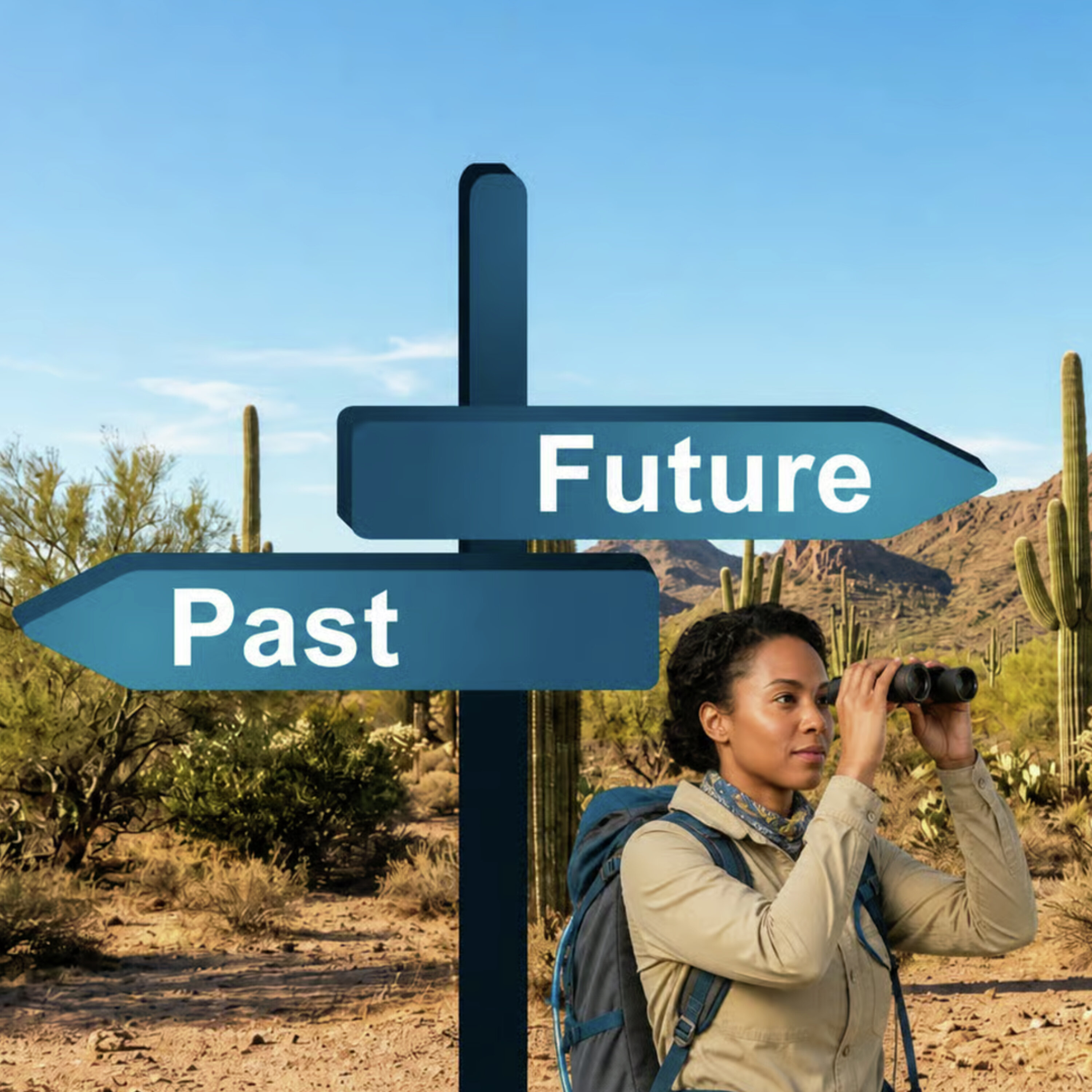
After a personal loss and production hiatus, Chris speaks candidly about the podcast’s reach and asks listeners to help by reviewing, recommending and sharing the show so desert reporting can find the people who need it.
In the wake of a personal loss and a several-week hiatus, our host Chris wonders about the future of the podcast and whether it's doing what we need it to do to get to the people who need to hear it. Listeners are encouraged to take a few easy and free (or cheap) steps to help spread the word of 90 Miles from Needles, including posting reviews on Apple, Spotify, or our website; boosting us on social media, and so many other possible ways to help.
A full episode will come your way on 6/19!
Become a desert defender!: https://90milesfromneedles.com/donate
See omnystudio.com/listener for privacy information.
UNCORRECTED TRANSCRIPT
0:00:00 - (Chris Clarke): 90 miles from Needles, the desert Protection Podcast is made possible by listeners just like you. If you want to help us out, you can go to 90milesfromneedles.com/donate or text “Needles” to 53555.
0:00:25 - (Joe Geoffrey): Think the Deserts are barren wastelands? Think again. It's time for 90 miles from Needles the Desert Protection Podcast.
0:00:46 - (Chris Clarke): Thank you Joe and welcome to 90 Miles from Needles, the Desert Protection Podcast. I'm your host, Chris Clarke, and I want to thank you listeners for putting up with a hiatus of a few weeks that allowed me to regroup after losing my dog Heart. You know, that kind of thing is always sad, and Heart and I were closer than I've ever been with any other animal. So it's been hard. But I want to start by thanking those of you who got in touch with words of sympathy and encouragement.
0:01:15 - (Chris Clarke): Sharing pictures of your own dogs and their stories, living or past. When my dog Zeke died back in 2007, I felt very lonely. I felt like I was going through it alone, despite the fact that my ex-wife was right there suffering along with me. But I can't say that I feel alone this time around, and I'm grateful for that now. Something I learned from losing Zeke was that afterward I spent a lot of time writing about Zeke and mourning him publicly and talking about how much I missed him in blog entries back in the day. And it was not healthy.
0:01:55 - (Chris Clarke): So I'm going to be watching myself pretty closely to make sure that this doesn't become the Desert Protection and Dead Pit Bull podcast. But there are a couple of things I've been thinking about in the wake of losing her that I think are important, and they don't really have as much to do with how sad I am about losing her, but more to do with how her passing marks a turning point in my life. Now this will get to the desert, I promise.
0:02:26 - (Chris Clarke): Losing Heart was a turning point in my life, and as with any turning point, whether it's a death or marriage or divorce or ending a job or having a kid or graduating or whatever that might be, it's a good time to sit back for a day or so and take stock of what you've done in your life and what you'd like to get done in your life. I've been looking at what I want to spend time doing now that I don't have an elderly pit bull to take care of. And I know that I'm gonna look back years from now and see a big dividing line between sections of my life
0:03:04 - (Chris Clarke): right on May 26, 2026 and one of the questions that has come up in my mind as I've been assessing what I'm doing with my life is why am I doing this podcast? I really enjoy doing the podcast. I'm not entirely sure it's reaching who it needs to reach, but I enjoy the process. I enjoy meeting and talking to desert activists from around the Southwest. I like hearing from listeners. I like having an excuse to go to different interesting places and get some recording done. But to despite the generosity of a big core group of people who've been keeping this podcast going, in a financial sense, donations are kind of flat the last couple of years.
0:03:50 - (Chris Clarke): The number of donors is flat. The number of downloads of this podcast is essentially flat. Now if you average them out, I last night built a spreadsheet and I did a five-month running average of downloads over the entire course of this podcast. And our downloads have pretty much stayed the same for the last two years. And I start to feel like maybe my energy would be better put into some other method of reaching out to people.
0:04:16 - (Chris Clarke): There's a parallel that's been on my mind between my life with Heart and my working to defend deserts on this podcast and elsewhere. Heart was always difficult. She was reactive. She bit a couple of people, not badly, but know she left bruises and startled people and caused them pain. And I was horrified at that. Heart came out of a shelter system in Southern California that was not well equipped to maintain their inmates emotional and mental health, and she had to overcome that. We did a lot of work, we had a lot of help.
0:04:52 - (Chris Clarke): She got better and better and even in my sadness, I am proud of that. I am very glad that I kept at it with her and very glad that we were able to work together to make her a friendlier dog. And one of the things that added to the urgency of making her a friendlier dog is the fact that pit bulls are maligned. When I first announced online that I was keeping her, there was a discussion on a website in the skeptic atheist community that I used to frequent about how I was an idiot for adopting an inherently dangerous dog around that time. Early on we were walking out in the desert and I had someone approach who I didn't know and she came up to me and asked why I would bother adopting a black person dog.
0:05:39 - (Chris Clarke): Except she didn't quite put it that way. There's a lot of hatred and misunderstanding and fear of dogs like Heart based on crap science and rumor and not so veiled racism. And I see the desert being treated the same way, barren, empty, Desolate, useless, except as a place to extract resources from or a place to dump garbage. I lived with Heart 24/7,365. I paid attention. I got to be able to read her emotions, some of her thoughts. I started to understand what her body language meant.
0:06:18 - (Chris Clarke): I got to know what she liked and didn't like, what she'd respond to positively and what she'd respond to negatively. And a similar thing happens when a person who is open to information they get from the world through whatever sense they like to use. If they're open to information that they get from being in a habitat and paying attention, they can begin to see the beautiful and diverse and fascinating and life affirming and joyous aspects of the desert.
0:06:50 - (Chris Clarke): I didn't give up on Heart, so why would I give up on the desert? Not going to be doing that. I am not 100% certain that a podcast is the best way to advocate for the desert. I'm not saying I'm going to stop necessarily. I'm not threatening to stop. This is not a plea for attention. I just, you know, I've always been transparent about what goes into this podcast with you all, and this is part of that. A couple episodes ago I talked about people volunteering. I said that we were looking to expand and diversify our board, that we could use volunteer help and everything from distributing social media to proofreading transcripts, creating artwork, writing grant proposals.
0:07:30 - (Chris Clarke): I heard from a couple of folks who are interested, very grateful to them, and necessarily because people are busy. A lot of times when I put out requests like that, I feel like I'm shouting into the void and not hearing an echo. I look at other podcasts that I admire, you know, Desert Oracle, Border Chronicle, some of the better funded news podcasts. I see that they tend to have core groups of listeners who promote the podcast they like to listen to either in social media or in email or in other ways.
0:08:08 - (Chris Clarke): And I know that there are people who would jump at the chance to join a 90 Miles from Needles community of people doing work to defend the desert and to advocate for the desert. And I'm just not certain how to kickstart that, you know. Now I very often run into people who listen to the podcast and say they appreciate it. I had that happen when I was in El Paso last year in Ajo a couple of months ago in Arizona, talking to folks in Salt Lake City and Moab in Las Vegas.
0:08:41 - (Chris Clarke): I went in for a healthcare appointment recently and the receptionist, who I had never met, looked at my email address and it turns out she's an avid listener and we had never met. I want to keep doing this podcast, but if I don't get some help, it's not going to get better than it is right now. It's not going to get more ambitious. We're not going to be able to do half the things I'd really like to do.
0:09:12 - (Chris Clarke): It's going to kind of stay the same. It's already been kind of the same. And if people start to feel like they can expect exactly what this podcast is going to give them in any particular episode, there isn't really a reason to listen. Now, some of you have been really involved in this podcast. You've been a guest one or more times. You've been talking up the podcast. You've been making donations from the modest and helpful to the quite generous.
0:09:43 - (Chris Clarke): But even with our downloads being kind of flat for the last couple years, we still have three or four times as many people downloading episodes as we do. Regular donors and downloads are not the most precise way of counting the number of listeners. A download might just be going to a machine and nobody listens to it. Another download might represent a household of five people listening. It's really imprecise and almost unhelpful, but it is the metric we have. So we've got three or four times as many downloads per episode as we have supporters.
0:10:19 - (Chris Clarke): And for that, 66 to 75% of our listeners. I have a question, and I'm asking this sincerely. What would it take to make you an active listener or more active than you have been? Would it be swag? Do you need a bumper sticker or a T shirt? Do you want a discord or open chat or Facebook page or someplace where you can hang out and talk with other listeners? Would you be interested in live shows where we have interviews and discussions that you can actually be in the audience for and perhaps ask questions?
0:10:58 - (Chris Clarke): We have three or four people that routinely share our episodes on social media. We might have some people sharing our episodes in email. I don't really have a way of knowing that. The last review we had, which people can do by going to Apple Podcasts or Spotify or to our website for that matter, at 90miles from needles.com. the last review we had was in July 2025, and reviews are among the most effective ways of tweaking the algorithm of the various podcast providers so that they suggest this podcast to people that are listening to other stuff about landscapes of the West.
0:11:38 - (Chris Clarke): If you like this podcast and you want to see it improve, please share it. It'll really help more than you know. Share it, review it, promote it. We have a lot of stuff on our minds right now, all of us. There are so many different things begging for our attention, clamoring for our attention, and this is one. This is one of those things.
0:12:05 - (Chris Clarke): I'm not asking these questions rhetorically. If you have specific answers you want to share, I really honestly want to know. Chris C H R I s@90miles from needles.com or you can leave us a voicemail message at 760-392-1996. I promise nobody's going to pick up and startle you. You can leave a message, let us know what you think. You can reach out to me on signal at hey90MFN.67 so as I take stock of the next part of my life and how it might be different from the last part, now that I don't have an ancient dog to take care of, I could really use your help figuring things out.
0:12:50 - (Chris Clarke): Just like my dog, the desert is widely misunderstood. It needs to be protected, and it has people who love it with their whole hearts, even if they're far away. I'd love to work with you to make this podcast better and more effective and more fun to listen to. Please reach out and please forgive the excessively personal note. We'll have a full episode next Friday, June 19th. Keep up what you're doing because the desert needs you.
0:13:36 - (Joe Geoffrey): And that brings us to the end of this episode of 90 Miles from Needles, the Desert Protection Podcast. You can find show notes for this episode along with links and background@90miles from needles.com. we're also on social media. You can find us on Facebook, Instagram, Bluesky, and Threads. Just search for 90 miles from Needles and if you'd like a more direct line, you can reach us on signal at HEY90MFN67.
0:14:11 - (Joe Geoffrey): If you'd like to support the show, you can make a donation of whatever size and frequency feels right to you at 90miles from needles.com donate listener support is what makes this podcast possible. Our voiceover is by Joe Geoffrey. Podcast artwork is by Martine Moncham. Nature sounds are recorded by Fred Bell. Our theme song, Moody Western, is by Bright side Studio, with additional music licensed from Independent artists.
0:15:11 - (Joe Geoffrey): Sam. 90 miles from Needles is a production of the Desert Advocacy Media Network.
0:42:47 - (Chris Clarke): Other music in this episode is by Texas brother.