
 RSS Feed
 Amazon Music
 Apple Podcasts
 Audible
 Castbox
 Deezer
 Fountain
 iHeartRadio
 Pandora
 PocketCasts
 Podcast Addict
 Spotify
 YouTube
 S5E22: Morgan Sjogren on the War on Utah's National Monuments

Writer Morgan Sjogren describes the emotional and ecological stakes of renewed attacks on Bears Ears and Grand Staircase–Escalante, connecting monument boundaries to rivers, cultural landscapes, resource extraction and everyday life in southern Utah.
Episode Summary:
This episode covers the recent decision by the Trump administration to drastically reduce the acreage of Bears Ears and Grand Staircase Escalante National Monuments in southern Utah. Listeners are will hear the central issues surrounding desert conservation, including potential threats of resource extraction like uranium and coal mining, which loom as monuments face reduction.
The episode features Morgan Sjogren, a writer deeply connected to the Bears Ears and Grand Staircase regions. Through engaging dialogue, Morgan offers her insights as a resident and her reaction to the political maneuvers affecting monuments she holds dear. Her extensive experience in these areas provides an authentic perspective on the importance of protecting these lands. With direct quotes from Morgan emphasizing the emotional and ecological significance of the monuments, this episode serves as an urgent call to action for listeners to engage in conservation efforts and support local advocacy groups.
Key Takeaways:
- The Trump administration has attempted to reduce Bears Ears and Grand Staircase Escalante National Monuments significantly, revisiting actions from its previous tenure.
- Local communities and environmental stewards are mobilizing against the possibility of resource extraction, such as uranium and coal mining.
- Sjogren emphasizes the connectedness of these landscapes, stressing that “landscape scale exploring” is essential to understand the full impact of these reductions.
- Support for on-the-ground groups and active participation in electoral processes are vital to combating these environmental setbacks.
Notable Quotes:
- "The air is filled with tension, and the noise is mostly online, but outside it's eerily quiet." – Morgan Sjogren
- "Monuments are one of the most robust protections we have for rivers in this country." – Morgan Sjogren
- "Vote like this landscape and our lives depend upon it." – Morgan Sjogren
- "I've been getting to know my riverside neighbors. Both the human and more than human, plant communities, wildlife, tribes, rural Americans, urbanites, farmers." – Morgan Sjogren
- "Utah delegates have taken actions that disregard their constituents. 75% of Utahns oppose reducing monuments." – Morgan Sjogren
Resources:
-
Morgan Sjogren's Website: Glen Canyon Backcountry Club (glencanyonbackcountryclub.com)
-
Books by Morgan Sjogren:
-
Organizations:
Become a desert defender!: https://90milesfromneedles.com/donate
See omnystudio.com/listener for privacy information.
0:00:00 - (Chris Clarke): 90 miles from the Desert Protection Podcast is made possible by listeners just like you. If you want to help us out, you can go to 90 miles from needles.com donate or text needles to 53555.
0:00:25 - (Joe Geoffrey): Think the deserts are barren wastelands? Think again. it's time for 90 miles from Needles, the Desert Protection Podcast.
0:00:45 - (Chris Clarke): Thank you, Joe, and welcome to 90 Miles from Needles, the Desert Protection Podcast. I'm your host, Chris Clarke and oh boy. This has been a week full of bad news for the desert coming out of Washington, D.C. almost seems like the Trump administration is worried about the midterms. Worried that one or both houses of Congress might flip and that they won't get to do as much damage to the planet as they would like because they're pushing a whole lot of really bad ideas into reality.
0:01:12 - (Chris Clarke): For instance, on the 9th of July last week, the Trump administration, through its agency, the Bureau of Land Management, approved a proposal by the Cadiz Water Project to use a retired oil and gas pipeline to ship water to customers. Now, Cadiz's water is already hazardous to drink. 16 parts per billion of hexavalent chromium, the toxic chemical that made erin Brockovich famous. 10 parts per billion is the most you can have in drinking water and have it be even close to safe.
0:01:40 - (Chris Clarke): It's a carcinogen, a mutagen, a teratogen. Just not a good thing to have in your water. And they're going to be putting that water into an oil and gas pipeline that is a couple hundred miles long so that they can extract anywhere between five and ten times the normal aquifer recharge in the groundwater that they want to sell for profit.
0:02:01 - (Chris Clarke): It's a really bad idea.
0:02:03 - (Chris Clarke): Cadiz has been trying to do this for the last 35 or 40 years, and they keep getting defeated one time after another. The only time Cadiz makes any progress is when Trump is in the White House, and last Thursday was an example. Fast forward to Tuesday. The U.S. fish and Wildlife Service and National Marine Fisheries Service rescinded the regulatory definition of harm under the Endangered Species act to exclude damage to habitat.
0:02:30 - (Chris Clarke): They claim that damaging habitat does not hurt endangered species. I doubt there's a single wildlife biologist in the world who would agree with that. We're going to cover both of those topics in upcoming episodes, but for this episode, we're looking at an action the Trump administration took on Monday of this week. After dropping some hints at the end of last week, gutting both Bears Ears National Monument and Grand Staircase Escalante National Monument. These two places were both targeted for serious reduction during Trump's first administration.
0:03:01 - (Chris Clarke): Monument defenders, myself included, hold that this was done illegally. The president has no power to cut down the size of monuments. They were restored under the Biden administration, and so Trump is trying to undo that again. Both monuments covered more than 3.2 million acres in southern Utah, but they have been reduced by the administration as of this week to less than one tenth of that 303,000 acres, which is a much bigger reduction than the one he tried in his first term.
0:03:32 - (Chris Clarke): Now, we are very lucky in that our friend Morgan Sjogren, a wonderful writer who lives in southern Utah, spending most of her time in one or the other of these monuments, agreed to talk to us today about these reductions. And I think you're going to find that interview quite interesting. But before we get to our conversation with Morgan, I wanted to mention that we have no new donors this week. If you've been thinking about making a donation to keep this podcast going and to help the Desert Advocacy Media Network, which is our nonprofit mothership, you can go to 90miles from needles.com
0:04:03 - (Chris Clarke): donate and choose a size and frequency of donation that makes sense to you. Anything from $1 time to monthly donations in the months that would make my eyes water. It's all very welcomed. And honestly, movements that succeed are generally funded by a bunch of people giving a small amount of and we're entirely on board with that strategy. So 90 miles from needles.com donate if you want to help out our Fellowship for Desert Reporting, which will bring new voices into this podcast, you can go to 90 miles from needles.com
0:04:35 - (Chris Clarke): Fellowship and take advantage of a matching funds arrangement we have with a generous donor. Now let's get to our conversation with Morgan Sjogren about Grand Staircase Escalante National Monument and Bears Ears National Monument. I think you're going to like this one. I am very pleased to welcome Morgan sjogren Back to 90 miles from Needles. Longtime listeners will remember that Morgan was with us for our hundredth episode celebration, which was a great time. And I think there was a little bit less bad news descending on us that week than there is this week.
0:05:19 - (Chris Clarke): Morgan's an accomplished author. Her book Path of Light a Walk Through Colliding Legacies of Glen Canyon, which was published in 2023, is still attracting rave reviews and won the Utah Book Award last year. Congratulations for that. She's written a number of other books, including hiking guides to the new national monuments we're going to be talking about today, Grand Staircase Escalante and Bears Ears. And most recently, Morgan is the Winner of the 2026 Ellen Malloy Desert Riding Fund Award, which I've tried for a couple of times. And so I'm a mixture of envious and appreciative that you got that.
0:05:51 - (Chris Clarke): Morgan, thanks for coming back to 90 miles from Needles.
0:05:54 - (Morgan Sjogren): Thanks. Thank you for having me, Chris. It's great to be here again. And on that note, I have tried pretty much every year for the past nine years to apply for the Ellen Malloy Award. And so I almost didn't believe it when they called me this year and I've heard from other applicants to keep trying to. That's the name of the game.
0:06:15 - (Chris Clarke): It's a wonderful award and commemorates an amazing writer who I expect has probably had an impact on your writing. He certainly did on mine.
0:06:24 - (Morgan Sjogren): She's a huge influence and I consider her, though she is not with us, I consider her a friend.
0:06:30 - (Chris Clarke): You are coming to us from the banks of the Escalante River.
0:06:34 - (Morgan Sjogren): I don't know if you're catching the sound of this, but three helicopters have flown overhead. This is not usual activity. I cannot suspect what it is, but perhaps it has something to do with the bad news that has happened. It could be news crews. I don't know. It's crazy.
0:06:53 - (Chris Clarke): The news, in case people haven't heard it, is that the Trump administration tried yet again to reduce the size of both Bears Ears and Grand Staircase Escalante national monuments, reducing each of them by upwards of 90%. And this is something that the Trump administration, first time around, tried to do and it was rescinded by the Biden administration. And so this is just another volley in the great big ping pong game of establishing monuments and then trying to take them away.
0:07:29 - (Chris Clarke): That basically benefits Mike Lee and nobody else.
0:07:35 - (Morgan Sjogren): Well said.
0:07:37 - (Chris Clarke): I want to start by talking a little bit about your relationship with the place. I know you were not born and raised there. It was a home that you found later in life. Do you remember when you first saw each monument and how that felt? When was it? How long ago?
0:07:53 - (Morgan Sjogren): It's actually, you know, in the big picture relatively recently, although now the past decade of my life is brimming with experiences in these landscapes. I actually made my first trip to both Bears Ears in Grand Staircase Escalante in the fall November of 2016. I had just run the US Trail Marathon National Championships and I was taken the long way home back to the Eastern Sierra where I lived and met some friends in Indian Creek to go climbing and was just awestruck by how beautiful the landscape was and thought to myself, as someone who loves warmth and Running around the Owens Valley, this could be a good place to hang out in winter when there's too much snow.
0:08:37 - (Morgan Sjogren): And then the next day I drove out to Grand Staircase Escalante, camped at Lower Calf Creek and hiked into one of the slot canyons. And when I returned back to self service, that was the day that President Trump was elected. And when I look back, I realize that those two experiences right before that election were really the turning point in my life. I knew I was in the process of leaving my husband at the time, and I couldn't really foresee the domino effect that would have. But literally within two months, I had left that situation, was living in my Jeep, and accepted my first assignment to report on potential reductions in Bears National Monument.
0:09:22 - (Chris Clarke): Absent the political context, what is it that ties you to this landscape? Is there a special aspect of southeastern Utah and southern Utah that really speaks to you? Birds, native history, climbing, geology.
0:09:37 - (Morgan Sjogren): I mean, it's endless. I think going back to what initially hooked me was all that I didn't understand when I lived in the Eastern Sierra. My sense of place, I realized really quickly had nothing to do with the tiny cabin I was renting. It had to do with my experiences in the backcountry, in the mountains, in the desert, and learning the lay of the land, knowing the names of the peaks, feeling the change of the seasons, knowing where the water was flowing to, both in the Sierra and connecting me to my home where I grew up in Southern California.
0:10:09 - (Morgan Sjogren): And so when I came to the Southwest, and not only did I, I no longer had a home, I was in a landscape where I looked around and I didn't know what anything was. And so to anchor myself and also being totally broke, I decided I would just stay out and I would just devote myself to learning where I was and learning about this new place and using those same skills that I developed in the Sierra to center myself.
0:10:35 - (Morgan Sjogren): And it was really challenging at first. It was winter, the temps were in the single digits, there was snow on the ground. But I stuck around. And as that thaw began to in bears ears, I was able to tiptoe into new places in the landscape. And little by little, it opened up to me. And I realized, oh my gosh, this is unfathomable. Both the human history, the diversity of ecosystems, the waterways and rivers that you're connected to, the elevation differentials, it was mind blowing. And so what had crept into my mind is, oh, this would be a good place to hang around for a little bit until the high country opens up.
0:11:13 - (Morgan Sjogren): It just consumed me. And now nine, almost 10 years later, that has not changed. And the more time I spend in this landscape, it just becomes more unfathomable. You know, it's if you go to a place once, and I don't just mean the entire landscape of Bears Ears or Grand Staircase, but simply one area or one stretch of river, you've been there once because it will be different the next day, the next season, after the next storm.
0:11:41 - (Morgan Sjogren): And it's powerful to recognize that it's humbling and awe inspiring.
0:11:47 - (Chris Clarke): So basically, you can't step in the same river twice.
0:11:50 - (Morgan Sjogren): Nope. Cliche, but true.
0:11:53 - (Chris Clarke): So with the announcement on Monday of this week that the Trump administration was going to try again to completely gut both of these monuments, how was your reaction? How did that sit with you? And given what you know about people that live in the area, how is it being received?
0:12:14 - (Morgan Sjogren): I heard the teaser that it was coming a few days before, and I was angry. You know, the first time this happened, I, like many people, didn't quite understand what it meant. And so there was a period of deciphering and trying to unravel it. Now there's no mystery. I know exactly what it means. It means opening the door for extractive industries and these landscapes and the dismantling of the Bears Ears Coalition, which was the reason to establish Bears Ears National Monument.
0:12:46 - (Morgan Sjogren): I knew that we were being lied to. The first time the monument was reduced, I had just barely stepped foot in the monument. But now, after spending thousands of miles in the monument, to hear the president say you virtually can't even step foot in these places. Enraging. You know, we can laugh about it, but it's enraging to, to be lied to, literally, after you've just done your morning walk on these lands.
0:13:11 - (Chris Clarke): In case you're wondering what Morgan's talking about with regard to Trump and others in his administration creating fabrications about restrictions on use in Bears Ears in Grand Staircase Escalante, here is a bit of the conversation that took place at the signing of the executive order shrinking the monuments. The first voice you're going to hear is Kate McGregor, Deputy Secretary of the Interior since last June.
0:13:31 - (Chris Clarke): She also had that same job in the final year of Trump 1. Before she was elevated to deputy secretary in the Interior Department, she worked as the principal deputy assistant secretary for Land and Minerals management. And during the Biden administration, MacGregor worked for NextEra Energy, famed enemy of desert resources nationwide, in case you wanted a hint as to her motivations. At any rate, as a way of identifying the falsehoods that were stated in this meeting, at least the ones that we're excerpting here.
0:14:04 - (Chris Clarke): I've added a little marker after each falsehood. See if you can figure out where I got it.
0:14:14 - (Kate McGregor): President Clinton, President Obama and President Biden have increased the acreage in the state
0:14:15 - ((Kate McGregor): of Utah and locked those acres up, over 3 million acres for nobody to use.
0:14:20 - (Donald Trump): Right? Wrong. Can't do anything. Wrong.
0:14:22 - (Donald Trump): You can't go hunting.
0:14:24 - (Donald Trump): Wrong.
0:14:24 - (Donald Trump): You can't go fishing.
0:14:25 - (Donald Trump): Wrong.
0:14:26 - (Donald Trump): You can't do anything wrong. You can virtually not even walk on it.
0:14:29 - (Donald Trump): Wrong.
0:14:30 - ((Kate McGregor): That's exactly right, sir.
0:14:31 - (Donald Trump): Wrong.
0:14:32 - (Chris Clarke): Okay, back to Morgan.
0:14:36 - (Morgan Sjogren): In the local community, there are, you know, I'm, I'm here in Escalante, Utah and in Garfield county. And there, there are many of us who live and have established businesses and lives here because of the monuments. And now many of these people have lived here for upwards of three decades. There are definitely also members of the community that are part of the efforts to dismantle monuments, including the county itself, who has filed lawsuits against the Biden administration for restoring the monuments.
0:15:06 - (Morgan Sjogren): It's a complicated thing. And I guess the best way I can describe it being here on the ground though, is that the noise is mostly online and then you step outside and it's eerily quiet. The neighborhoods are the same, the monument is the same. But that tension, it's in the air.
0:15:25 - (Chris Clarke): You mentioned the possibility of resource extraction coming on the heels of these reductions. When you were on last year with us, you talked a little bit about uranium mining. Is that the primary concern or is there more of a broad-spectrum kind of threat?
0:15:41 - (Morgan Sjogren): It's definitely a broad-spectrum threat. I think, you know, uranium is definitely a threat in Bears Ears. In Grand Staircase, Escalante, there's the idea of a coal mine on the Kaiparowits that just never seems to die, no matter how economically unfeasible it is. And there's also copper mine in the Circle Cliffs and potential for expansion of that. Also oil and gas leases that people are eyeing in the Bears Ears region.
0:16:09 - (Morgan Sjogren): So definitely the concerns are far reaching, especially with an administration that's focused on a so-called energy emergency and a drill baby drill approach to public lands.
0:16:20 - (Chris Clarke): There's been a lot of reaction to mines in northern Arizona from tribes and locals and such. Is there a similar sentiment? I mean, I know that southern Utah is a complicated place, obviously. What's the local feeling like about that kind of resource extraction?
0:16:38 - (Morgan Sjogren): Utah is a complicated place. And one thing to consider that's maybe the biggest difference from a place like northern Arizona is like how far flung our population centers are and how small these communities are. I mean, once you get out of Salt Lake and you get into southern Utah, this is among the most, along with Nevada, the most remote areas in the lower 48. And so the nearest community can be two hours away. So it's hard to gain a sense of different areas, but one that comes to mind is the White Mesa Ute community that lives next door to the White Mesa Uranium Mill that processes the radioactive ore largely extracted from the rim of the Grand Canyon right now, which also impacts an aquifer that feeds the Havasupai tribes community.
0:17:23 - (Morgan Sjogren): There's state boundaries and monument boundaries, but water and people are connected beyond these boundaries. And so that's something we have to take into consideration. But yeah, the White Mesa community, they hold a march in protest every single year. On the flip side, what I can say about those less concerned with mining in Utah. I was driving on Highway 15 the other day coming back from Great Basin and there's a giant billboard with a bundle of bananas and the sign said, your produce gives off more radioactive activity than a nuclear power plant.
0:18:00 - (Chris Clarke): Yeah, the banana argument is always amusing. I'm wondering if there are particular places in either of the monuments that cause you to worry more about exploitation than others. Not that these places are necessarily more important, but are there places that speak to you that are now outside the monument boundaries according to the Trump administration?
0:18:23 - (Morgan Sjogren): Yeah, you know, I've been thinking a lot about that and unfortunately the answer is really easy because almost everything is out of the monument boundaries, especially as some who I consider the way I approach being outside, like landscape, scale, exploring. You know, it's never just one place. It's how is this landscape put together and how is it connected with other landscapes? You know, and Bears Ears and Grand Staircase, Escalante are connected through the Colorado River, which right now is a reservoir. Lake Powell, a big symbol of how we treat these landscapes. But you know, in particular, as I, as I read last year on the show in Bears Ears, the areas around Red Canyon and Mangus Mesa and the Mossback are particularly vulnerable to uranium mining. And there's already a uranium mine that was grandfathered into the original monument because that's how this works. You know, monuments prevent new mining, but they grandfather in preexisting claims. And in Grand Staircase, definitely the Circle Cliffs and the Kaiparowits. The Kaiparowits is this massive sedimentary rock formation that's teeming with fossils. New dinosaurs are discovered there almost every year.
0:19:33 - (Morgan Sjogren): I spoke with a paleontologist last week that Talked about there being more than a dozen different species of freshwater turtle fossils that are preserved in that landscape. And it's incredibly remote and rugged. And including myself, I know very few people who spend time up there. It's just, it's a heady place. There's deep canyons, rough terrain. There's one road on the. On the north end of it. And beyond that, you have to kind of be willing to hoof it and suffer up there. Very little water.
0:20:04 - (Chris Clarke): I know that people have been paying attention to this and are very concerned. I mean, southern Utah is a place that's close to the hearts of a lot of people that are thousands of miles away from southern Utah at the moment. And I know people are going to be wondering what actions they can take aside from hitting the ballot box later this year to protect these places. Any thoughts on it?
0:20:26 - (Morgan Sjogren): Absolutely. Number one is the only way this is going to change is we do have to vote our way out of this vote like this landscape and our lives depend upon it and our future. But in the more interim, there's a couple groups, including the Conservation Lands foundation, they have one of those nifty forms set up to help you write a letter to your member of Congress and tell them, urge them to oppose these actions.
0:20:51 - (Morgan Sjogren): This is particularly helpful if you live outside of Utah because the Utah delegates have taken actions that disregard their constituents. 75% of Utahns oppose reducing monuments. And that's from a pew hall. And the other thing you can do is to support the groups doing the heavy lifting, the groups who are preparing for lawsuits, though, you know, that hasn't been disclosed how that's going to work, but it's been made known that that's going to be the next step. And also the smaller groups like Grand Staircase Escalante Partners who are doing on the ground stewardship, these monuments were already severely underfunded. You know, they have very few rangers. And these groups put stewardship people on the ground to check for impacts and host volunteer trips to clean up any impacts. And also doing scientific research in Grand Staircase Escalante, which was the purpose of the monument. And in Bears Ears, there's the Bears Ears Partnership, which also does similar youth programs for stewardship and works with local tribes in the monument.
0:21:54 - (Chris Clarke): And there's always the option of deciding to go visit and spend your money in the gateway communities like Escalante and Boulder. It's a really distressing situation, but I'm very glad that you were able to join us and talk a little bit about it. And look in our show notes for links to some of the groups that are on the ground working there before we sign off. What are you working on, though?
0:22:18 - (Morgan Sjogren): I am working on a book about the Colorado river watershed. And so specifically looking at the ways our relationships with the river affect its protection or lack of protection and how we manage it for the future. And also what does it mean to be a citizen of the watershed. And so from the glaciers in Wyoming down to the border, I've been getting to know my riverside neighbors, both the human and more than human, plant communities, wildlife, tribes, rural Americans, urbanites, farmers.
0:22:50 - (Morgan Sjogren): I've been spending spend the past four years of my life specifically working on this book. It's called Riverside, and it will be published by Torrey House Press in the fall of next year. And what's going on with the monuments is certainly intertwined. Monuments are one of the most robust protections we have for our rivers in this country and to protect them specifically from the mining and extractive industry.
0:23:15 - (Morgan Sjogren): So my deadline is next month, and these events have certainly it just feels like my monkey wrench is out and it's a pen. So.
0:23:26 - (Chris Clarke): Morgan Sjogren, thank you so much for joining us. And thank you for being a bit of a ray of positivity in a really negative time. I mean, this is not the only piece of bad news that we've been handed in the last few days. So just really appreciate your time and your work.
0:23:43 - (Morgan Sjogren): Thank you for having me. Chris.
0:23:46 - (Joe Geoffrey): Don't go away. We'll be right back
0:23:50 - (Chris Clarke): for this week's
offering by our friend, nature recordist Fred Bell. We have a feisty flock of western kingbirds giving warning to a nearby raven at Desert National Wildlife Refuge northeast of Las Vegas. Enjoy.
0:25:32 - (Joe Geoffrey): You're listening to 90 miles from Needles, the Desert Protection podcast. The best packable tool for surviving a snake bite is your car keys.
0:26:04 - (Chris Clarke): Thanks again to Morgan Sjogren for talking to us about Grand Staircase Escalante and Bears Ears National Monuments. And Morgan got in touch after our conversation to tell me that just before the reductions in the national monuments happened this week, that Morgan, along with her partner Aaron Crosby, were approved by the BLM for showing people the wonders of Grand Staircase Escalante through their guiding service called the Glen Canyon Backcountry Club.
0:26:31 - (Chris Clarke): The Escalante river flows into the Glen Canyon watershed, so Glen Canyon and the Escalante are closely related. Check out their website@glencanyonbackcountryclub.com I am going to have to take advantage of their services. I think if you forget the web address, you can look in our show notes. You can also pick up a copy of Path of a Walkthrough, Colliding Legacies of Glen Canyon as well as a couple other of Morgan's books including Outlandish Fuel Epic and the Best Grand Staircase Escalante National Monument Hikes at that website.
0:27:04 - (Chris Clarke): You will be buying them through Back of Beyond Books, a MOAB institution. Well worth your support. This all sure makes me want to go get away from this computer and out into the backcountry. Going to have to do that. Things are developing on the topic of our immediately previous episode on the proposed Rare Earth Elements Mine essentially in downtown Twentynine Palms, nestled right up against Joshua Tree national park and the Pinto Mountains Wilderness.
0:27:30 - (Chris Clarke): We had a spectacular meeting at a local community college. I'd say that there were a good 200 people in attendance and a lot of good questions being asked. One or two tough questions. You know, this is a diverse community. We have diverse opinions. Not everybody is dead set against mining in downtown 29 Palms, but people raised a lot of good questions, and I think that this mine in 29 is not going to get put in without a huge fight.
0:27:58 - (Chris Clarke): I'm just really proud to be part of this community. We'll keep you updated on the mine campaign as it develops. Again, if you want to help us keep doing this work 90 miles from needles.com donate to support the fellowship for desert reporting 90 miles from needles.com fellowship I got out of the desert for a few days this past week. I was up in Northern California visiting a couple of friends including one friend that I've known for 15 years but have never met in person until this past weekend. That was a wonderful afternoon and just, you know, catching up with a couple of friends and a lot of nonhuman friends. Swainson's thrushes and acorn woodpeckers and even the bluegum eucalyptus trees.
0:28:39 - (Chris Clarke): I can love an invasive exotic. They're not the worst and they smell good. Anyway, I am back in the desert and it is hot. We have monsoon clouds all around us this afternoon as I record this. It is definitely a desert summer. Monsoons have hit in Southern Arizona already and in Baja. We are just waiting to catch up here. If they do hit where you are, please be careful. Remember not to drive into dry washes or flooded underpasses.
0:29:05 - (Chris Clarke): It's dangerous and we need you around and the desert needs you too.
0:29:11 - (Joe Geoffrey): And that brings us to the end of this episode of 90 Miles from Needles, the Desert Protection Podcast. You can find show notes for this episode along with links and background@90miles from needles.com we're also on social media. You can find us on Facebook, Instagram, Bluesky, and Threads. Just search for 90 miles from Needles and if you'd like a more direct line, you can reach us on signal at HEY90MFN67.
0:29:46 - (Joe Geoffrey): If you'd like to support the show, you can make a donation of whatever size and frequency feels right to you. And 90 miles from day listener support is what makes this podcast possible. Our voiceover is by Joe Geoffrey. Podcast artwork is by Martine Mancha. Nature sounds are recorded by Fred Bell. Our theme song, Moody Western is by Bright side Studio, with additional music licensed from Independent Artists.
0:30:19 - (Chris Clarke): Other music in this episode this episode is by Atlas Tunes.
0:30:45 - (Joe Geoffrey): 90 miles from Needles is a production of the Desert Advocacy Media Network.
0:31:42 - (Donald Trump) Wrong.
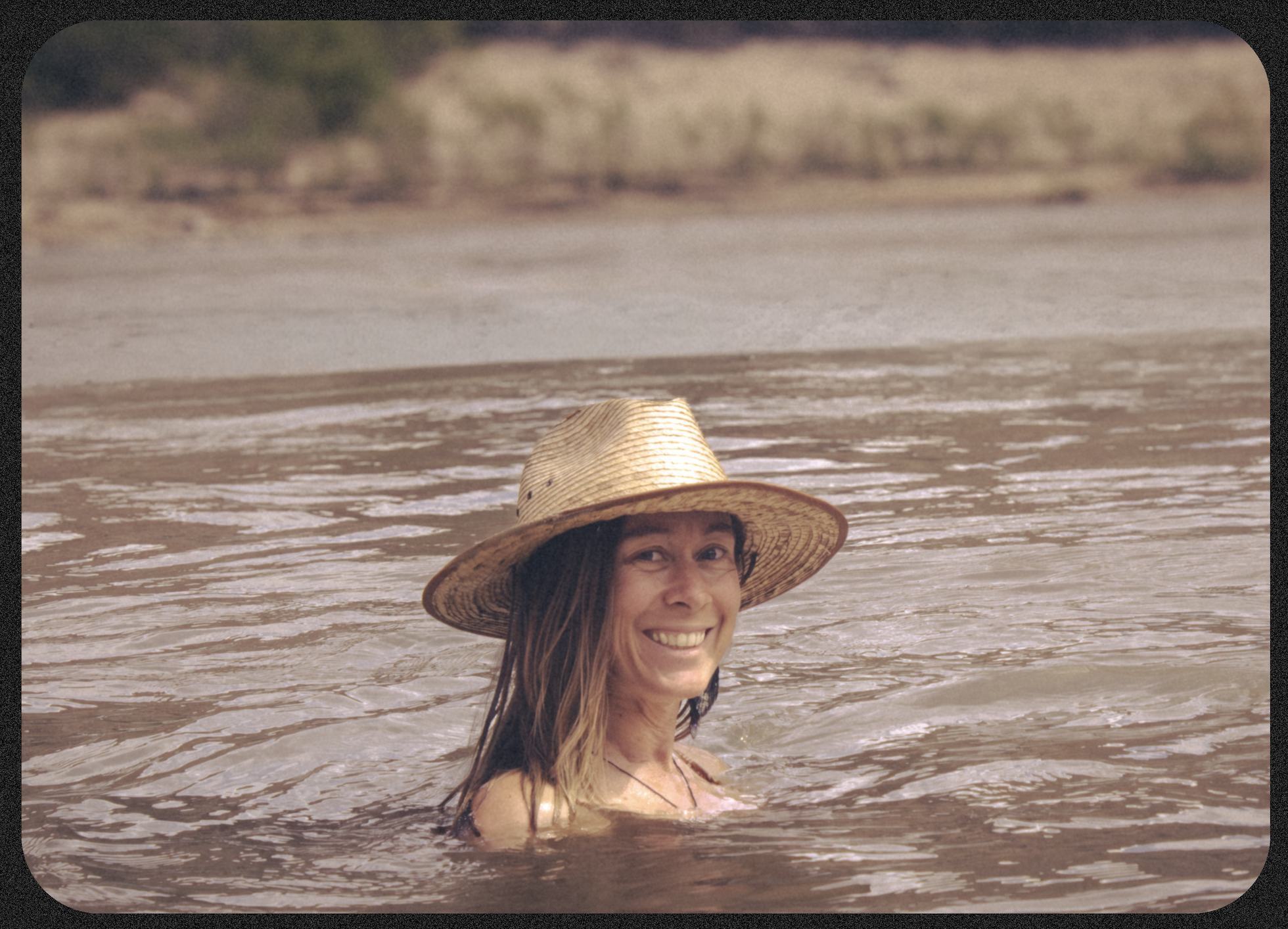
Morgan Sjogren is an award-winning author and journalist. An intrepid explorer, she writes about Western lands and water through a lens of history, culture, science, and adventure. Her latest book, Path of Light: A Walk Through Colliding Legacies of Glen Canyon won the 2025 Utah Book Award and Library of Congress “Great Reads” Utah selection.
She is the winner of the 2026 Ellen Meloy Fund Desert Writer’s Award and the 2024 Entrada Institute Writer-in-Residence. These awards support her forthcoming books Riverside: Becoming a Citizen of the Colorado River Watershed (Torrey House Press, 2027) and Desert Maverick: The Life of Archaeologist Ann Axtell Morris (Lyons Press, 2028).
Sjogren’s stories and photographs are published in Adventure Journal, Archaeology Southwest, Arizona Highways, bioGraphic, Patagonia, Reasons to be Cheerful, and Sierra Magazine. Her reporting received a 2022 Water Desk Grant and a 2024 BYU Charles Redd Center Independent Research and Creative Works Award.
Sjogren is the co-founder of Glen Canyon Backcountry Club hiking and backpacking tours. She is based in Southern Utah’s canyon country and migrates seasonally throughout the Colorado River watershed.
Read more on Wild Words (Substack) and Instagram @morgan.sjogren. For speaking and book event inquiries visit MorganSjogren.com.