
 RSS Feed
 Amazon Music
 Apple Podcasts
 Audible
 Castbox
 Deezer
 Fountain
 iHeartRadio
 Pandora
 PocketCasts
 Podcast Addict
 Spotify
 YouTube
 S5E21: Don't Mine 29! Australian Company Threatens Joshua Tree
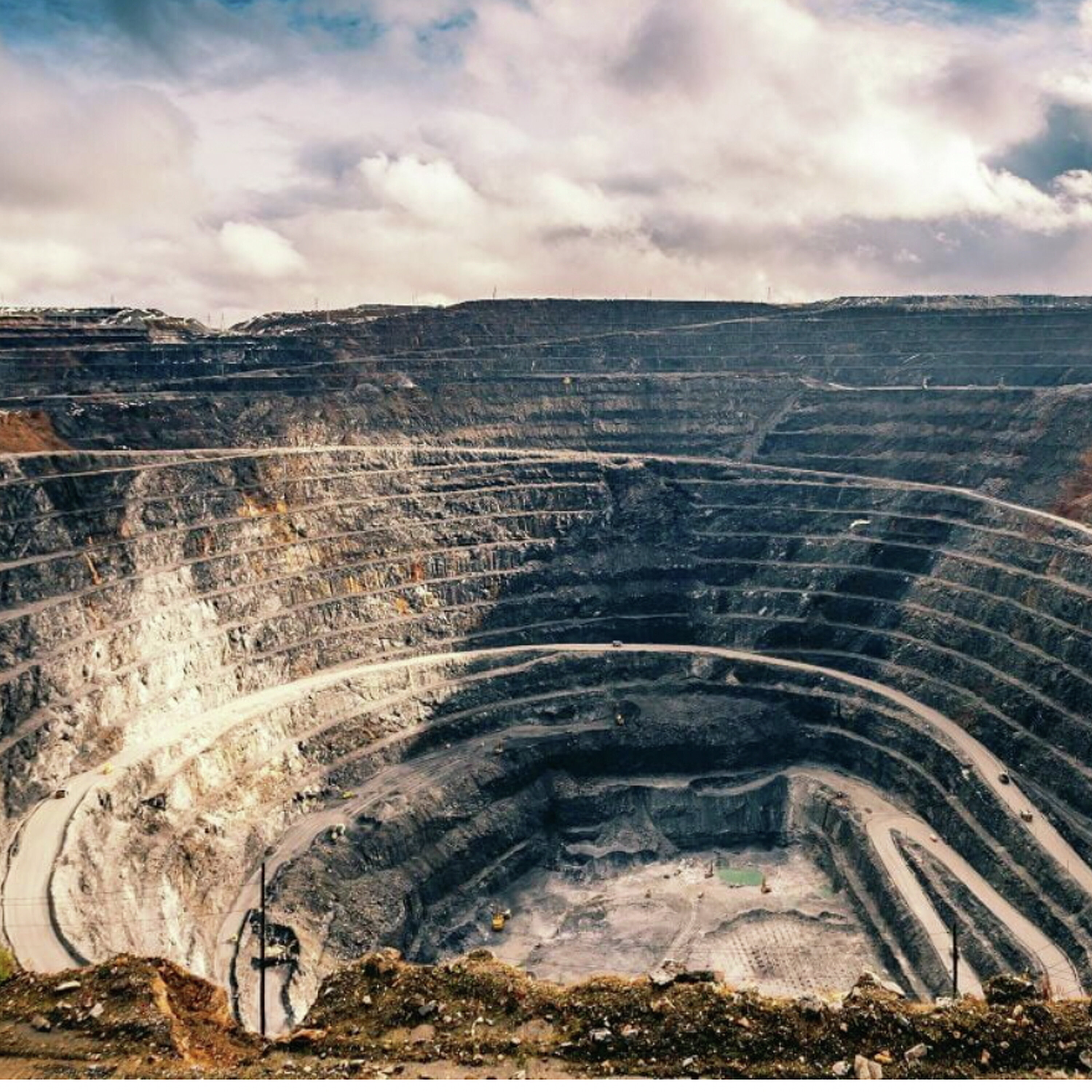
Chance Wilcox explains how Dateline Resources’ proposed rare-earth mine could industrialize roughly 20,000 acres beside Twentynine Palms and Joshua Tree National Park, threatening residents, wildlife, water, air quality and a tourism-dependent economy.
Episode Summary:
In this episode of "90 Miles from Needles: The Desert Protection Podcast," host Chris Clarke focuses on mining in the California desert, in particular, a rare earth elements mine proposed by an offshore mining startup. This 20,000-acre mine would be surrounded by Joshua Tree National Park and the gateway community of Twentynine Palms. Joined by Chance Wilcox of the National Parks Conservation Association, Chris explores the complexities and potential consequences of mining activities on the precious desert landscape.
The episode sheds light on the socioeconomic and environmental stakes, touching on conservation topics, the intricate processes governing mining claims, and the community's growing resistance, characterized by a coalition of local residents and environmental organizations.
Key Takeaways:
- The Stop Music Valley Mine Community Information Meeting will be held at Copper Mountain College’s Bell Center, July 15, 2026, 5:30-7:30 PM.
- Dateline Resources, an Australian mining company, proposes a vast mining operation near Joshua Tree National Park, posing significant threats to local ecosystems and communities.
- The planned mine would disturb about 20,000 acres of land, impacting visibility, air and water quality, and desert wildlife such as the native tortoise population.
- Community members and conservationists are rallying to oppose the mine, arguing it endangers Twentynine Palms' economy, heavily reliant on tourism.
- The federal Mining Law of 1872, which still governs mining on public lands, allows mining companies nearly free rein to profit from despoiling these lands.
- Local and national political influences, including past and present administrations, play a crucial role in shaping the future of mining initiatives in sensitive ecological areas.
Notable Quotes:
- "This is going to be about 20,000 acres of strip mine next to residential neighborhoods and Twentynine Palms…"
- "People live here to really be part of this landscape. And people live here for a reason."
- "Twentynine Palms is not a mining town. It's a gateway community to Joshua Tree."
- "When people's livelihoods are actually at stake here alongside the conservation issue, there's a lot more ears that are willing to perk up."
- "There's so much more at stake. It's about the interconnection of all of that to every small business in Twentynine Palms."
Resources:
- National Parks Conservation Association (NPCA)
- Copper Mountain College: Website
- Learn more about Dateline Resources’ operation of the Colosseum Mine,
Become a desert defender!: https://90milesfromneedles.com/donate
See omnystudio.com/listener for privacy information.
UNCORRECTED TRANSCRIPT
0:00:00 - (Chris Clarke): 90 miles from Needles the desert Protection Podcast is made possible by listeners just like you. If you want to help us out, you can go to 90 miles from needles.com donate or text needles to 53555.
0:00:25 - (Joe Geoffrey): Think the deserts are barren Wastelands foreign It's time for 90 miles from Neil's the Desert Protection Podcast.
0:00:45 - (Chris Clarke): Thank you, Joe, and welcome to 90 Miles from Needles the Desert Protection Podcast. I'm your host, Chris Clarke, and longtime listeners will know we've covered a few mining issues on the podcast in the past. The desert has a long history of being used as a place from which one extracts natural resources, and mining is one of the most destructive ways that happens. We've covered a proposed copper mine in the Santa Rita Mountains near Tucson.
0:01:12 - (Chris Clarke): We interviewed John Dougherty from Save the Scenic Santa Ritas about that proposed mine by the company Copper World, which is a really bad idea. We've been covering the prospect of lithium mining in the Amargosa region almost since this podcast started. For our 100th episode, we had Morgan Sjogren talking about uranium mining in the Four Corners area. So mining hasn't been the most frequently covered topic, but it's in there. And along the way you may have thought, well, they haven't covered any mining proposals in California because as we all know, California is a state of green bureaucracy run amok. All these rules and regulations and requirements of environmental analyses and that kind of thing are keeping Ezra Klein from gentrifying the city cores around the state of California.
0:02:02 - (Chris Clarke): There is no way they could get a mine through that regulatory hellhole that is the state of California. Well, right now a whole lot of people in my neighborhood are hoping that's true, but we can't count on it. I was joined this week sitting on a hill outdoors high above Joshua Tree by Chance Wilcox, the California Desert Program Director for the National Parks Conservation Association. He's going to tell us about a proposal by a company called Dateline, based in Australia, to mine for rare earth elements immediately adjacent to a wilderness area, Joshua Tree national park and the city of Twentynine Palms.
0:02:44 - (Chris Clarke): He's putting together a meeting here in Town on July 15, and we'll have much more information at that meeting about the proposed Dateline Rare Earth Elements Mine. This is going to be about 20,000 acres of strip mine next to residential neighborhoods and 29 palms visible from basically the entire city right up against the park boundary of Joshua Tree National Park. It is a really bad idea, folks, and I think you're going to find the conversation with Chance interesting and enlightening and probably infuriating.
0:03:17 - (Chris Clarke): Before we get to that though, real quick, no new donors to report this week. We are incredibly grateful for everyone that has stepped up throughout our history to help us out with funding to keep this project going. We have other projects as well that are brewing with the Desert Advocacy Media Network, which is our nonprofit mothership. And if you've been meaning to donate and just haven't had the spare minute, which I totally understand, you can go to 90 miles from needles.com
0:03:46 - (Chris Clarke): donate where you can choose a size and frequency of donation that works for you. We are also running a little slow in generating funds to meet our matching funds donation for our Fellowship for Desert Reporting. If you want to help us out there, you can go to 90miles from needles.com Fellowship. Your donation of whatever size will be very much appreciated. And now let's get to the meat of this episode and my conversation with Chance Wilcox of the National Parks Conservation association about the huge and ill-advised mine proposal pushed by DATELINE Resources a couple of miles from downtown Twentynine Palms.
0:05:01 - (Chris Clarke): I'm sitting here with Chance Wilcox, who is Associate Director of the California Desert Program, which is a job title that sounds very familiar to me for the National Parks Conservation association and a long overdue conversation.
0:05:18 - (Chance Wilcox): Yeah, yeah, for sure. This increase in mining in the California desert has been going on for about two years, ever since I took this job. So yeah, happy we're finally getting to chat about it.
0:05:28 - (Chris Clarke): There is a meeting in Joshua Tree at Copper Mountain College in the Bell Center.
0:05:33 - (Joe Geoffrey): Yep.
0:05:34 - (Chris Clarke): Fun side note, that's where my wife and I met.
0:05:37 - (Chance Wilcox): Everything always comes back to a circle right in the desert.
0:05:40 - (Chris Clarke): Yeah. The mining company DATELINE has staked out an absurd amount of claims in the area of BLM land that is surrounded on three sides by Joshua Tree National Park. And some of the claims are right up on the park boundary. Why don't you tell us about what?
0:05:57 - (Chance Wilcox): Yeah, I'll give a shameless plug for my meeting. We're having a meeting on the 15th, like you said, at Copper Mountain College at the Bell center to talk about this mining company, Dayline Resources, that's been of particular interest to me since 2024. This is a company that has earned itself a reputation as choosing to mine in and around national parks here in the California Desert. This meeting will be about why this matters to the community of 29 Palms. In particular, they've staked 20,000 acres of claims right on the edge of Joshua Tree in the Pinto Mountains, which, I mean, you'll hear me talk a lot about the Pinto Mountains, I refer to the project is the Music Valley Mine. Back there in the Pinto Mountains is Music Valley. It's one of the most beautiful parts of that area. Like that entire landscape. I mean, it's just such a treasured landscape. And yeah, I, I want to give people more of an Insight on the 15th of why they should care about the Pinto Mountains in Music Valley.
0:06:57 - (Chance Wilcox): Why this matters to the city of 29 palms, why this matters to Joshua Tree, and why this matters on a bigger scale of mining in the California desert, and why all eyes might be on this project in particular. Yeah.
0:07:11 - (Chris Clarke): This is not their first venture in the California desert.
0:07:14 - (Joe Geoffrey): No.
0:07:15 - (Chance Wilcox): So background on Dayline Resources. They are an Australian mining company. They're pretty junior. They have some smaller activities here and there all over the world. But their first venture was purchasing Coliseum Mine inside of Mojave National Preserve. And that was in 2021. And then in 2023 and 2024, they started activity there. They started bulldozing roads and like grading a road, like access road through Mojave National Preserve, which is managed by the Park Service to get to the mine.
0:07:47 - (Chance Wilcox): And the Park Service caught them and said, hey, you need a new plan of operations. You need permitting, essentially, you gotta follow the law. And company said, actually, no, we don't. We can do whatever we want. Our plan of operations is valid from 1985, which predated the California Desert Protection Act. Right. Mojave wasn't even a preserve at that point, but it was BLM land, not managed by the Park Service.
0:08:12 - (Chance Wilcox): The Park Service said, actually, no, things have changed. You need to shift this. Like, you need to go through the NEPA process. You need a new plan of operations, even, God forbid, a special use permit to raid the road. And you also owe the American taxpayers over $200,000 worth of damages that you've done to native plants already. And things went quiet because we reached the election in late 2024, and when we saw Trump win the election, it just changed everything.
0:08:43 - (Chance Wilcox): I mean, it changed everything from mining in the desert, mining across the nation in particular. We're not just talking about the desert in California. We're talking about the entire Southwest. We're talking about Alaska. We're looking at the boundary waters in Minnesota. Right. Like, there have been so many changes to the way this country sees mining that if you were a junior mining company from Australia, wouldn't you start taking advantage of it too?
0:09:06 - (Chance Wilcox): Yeah.
0:09:07 - (Chris Clarke): Plus there's this long tradition of so many especially smaller scale miners essentially being grift artists that you can understand why this administration would be favorable to them. They're in his professional courtesy.
0:09:20 - (Chance Wilcox): Yeah, yeah. I mean like we're looking at corporations first and foremost. There's a lot of different buy in from all over the place. Right. We're looking at corporations which this administration loves a corporation of any kind. And you're looking at this corporation in particular, Dateline Resources is seeking out rare earth elements, which also happens to be a buzzword. With this administration in particular, we've got a new critical minerals agenda that's been pushed by the administration to create a domestic supply of minerals that we use for everything from magnets, electric cars, your phone, like every sort of technology, missiles even.
0:10:02 - (Chance Wilcox): But in particular we're also like, this is all necessary for things like AI and this like brand new technology that we're really pushing. So I'm not going to say that rare earth elements aren't necessary. But what we've seen is the art, I guess you said the art of grifting these corporations take advantage of the situation where the administration is saying, go forth and mine and we'll make it easy for you.
0:10:29 - (Chance Wilcox): And what has this mining company chosen to do in particular is buy an old mine that was supposed to be in reclamation, that was supposed to be back in the earth in Mojave National Preserve, start bulldozing the preserve to get to it, Create new opportunities for mining, new drill pads, new storage sites. They are just completely doing whatever they want, and the park service has no say in it whatsoever over their own lands.
0:10:53 - (Chance Wilcox): But then they're emboldened by the administration saying, yeah, go do it. Go, go bulldoze that national park unit that they're like, let's just go stake 20,000 acres of claims on the edge of Joshua Tree as well. No one will notice. And we'll just continue to garner investment, gain support from the administration and be allowed to do whatever we want. But the one thing that this company forgot is that Joshua Tree's far more populated area and these communities are so used to fighting that it's an entirely different situation.
0:11:25 - (Chance Wilcox): This is not like Mojave National Preserve. This is very different.
0:11:29 - (Chris Clarke): Yeah, Coliseum mine doesn't have 20,000 angry hippies, just downhill
0:11:32 - (Chance Wilcox): hippies veterans, more conservation minded folks. Right? These are big communities of people. And I'm not discounting the communities around Mojave. I mean Barstow and, and Baker and Southern Nevada all have their own game to play there. But these are communities in particular that people have moved to on the edge of Joshua Tree in the Morongo Basin. People live here to really be part of this landscape.
0:12:02 - (Chance Wilcox): And people live here for a reason. And they have become really amazing gateway communities to Joshua Tree in particular. And I think that's what this mining company has forgotten. They've gotten so wrapped up in the capitalism of it all. Right. The broader scheme of pushing a critical minerals agenda, the administration being so behind them and earning a buck off of mineral extraction, that what they forgot to take into account was communities.
0:12:28 - (Chance Wilcox): And I think that these 20,000 acres of claims on the Pinto Mountains are going to be a force to be reckoned with because it disrupts the city of 29 palms entirely.
0:12:38 - (Chris Clarke): Yeah. I was looking at a map of the general area in which they filed the claims, and I was kind of astonished to see how big it was because, I mean, it goes from the boundary of the park pretty much all the way up to Highway 62.
0:12:50 - (Chance Wilcox): Yeah.
0:12:51 - (Chris Clarke): This whole area that's cut out of the north part of Joshua Tree is called the Saddle.
0:12:56 - (Chance Wilcox): Yeah.
0:12:56 - (Chris Clarke): That was cut out in the 1950s specifically to allow mining. And things have changed quite a bit. It was a national monument back then, and it's a national park now. But it's hard to imagine the impact it's going to have on dark night skies, water quality, air quality. It's not like we need another source of dust around here. Yeah.
0:13:19 - (Chance Wilcox): I think I point more so, though, to visual impacts and activity. Rare earth element mining is kind of unknown here in the United States. The only rare earth elements mine in the US Is actually Mountain Pass mine, which is right on the edge of I15. And I point to it often. It's a huge operation. And when you drive up I15, it's hard not to notice the tiered pyramid of tailings. And the sheer amount of activity for that pit mining. I mean, we're not talking about shaft mining here. We're not talking about going underground and navigating that. We're talking about very irreversible scarring of the earth in a way that also will be visible from 29 palms.
0:14:03 - (Chance Wilcox): So, yeah, we're talking about water quality. We're talking about dust. We're talking about environmental impacts, but we're also talking about changing the landscape visibly. And we're also talking about what comes with that, which is trucks and helicopters and activity of just people. One of my biggest concerns is that the access road to get there, Gold park, which is right off of Utah trail, It runs through the Hanson tract.
0:14:29 - (Chance Wilcox): And this operation would have to be accessed through a neighborhood.
0:14:33 - (Chris Clarke): Yeah, it's actually quite a nice residential neighborhood.
0:14:36 - (Chance Wilcox): Yeah, I think there are a lot of Airbnbs there. It's close to the entrance to the park, which makes it an ideal location. Right. And it's right on the edge. So I think there are dark nights, like good dark night skies there. Yeah. But imagine, would you want to rent an Airbnb in Joshua Tree where you've got mining trucks running past your front door all the time, rumbling through and creating dust and you walk out your front door and yeah, you've got the park in front of you, but more so you've got a gigantic pyramid of tailings and mining activity off to the side.
0:15:05 - (Chance Wilcox): And I think that disrupts what Twentynine Palms has built. Right. There's a lot more about this parcel, I think. Let's talk about the conservation piece of it too. This is prime desert tortoise habitat. I have seen a tortoise every time I go back there. Or at least like active burrows with footprints or skeletons of tortoise. I mean, this is prime desert tortoise habitat. I've heard from people who go out there in the spring that this is also bursting with desert lilies out on the other side towards Shelton road, past the 29 Palms airstrip.
0:15:35 - (Chance Wilcox): So we're talking about very special landscape. Like you said, it has a history of mining. But I think the USGS and the Park Service and BLM have put out many reports over the last decades that show at that time, at the very least, that it was not economically viable to pursue them. That although it was carved out for mining, that it wasn't economically viable and that the environment itself was worth protecting in a way.
0:16:02 - (Chris Clarke): Right.
0:16:03 - (Chance Wilcox): Yeah, it butts up against the park. The access road after leaving the neighborhood also goes through the park. At one point in time. I've seen kid foxes on that section too. It's special, like it's very special area. And anyone in the Wonder Valley also like Wonder Valley community, has a prime view of those mountains. Yeah, I mean that's. That is their front, like view from their door. So there's a lot at stake, I think. There's the conservation piece and there is the activity piece and the visual impacts.
0:16:33 - (Chance Wilcox): And I think what all of that culminates in is really a huge threat to what Twentynine Palms has created itself to be, which is a fun and interesting and connected and community minded gateway community that's centered around this landscape and centered around providing visitors and community members and anyone who lives in the Morongo Basin. The ideal experience connected to Joshua Tree national park and is a Pit mine part of that? Absolutely not.
0:17:12 - (Chance Wilcox): I think that's what keeps me up at night, is just like the entire community of Twentynine Palms's tourist economy as a gateway community would particularly be impacted on this by this project. Just because of. Yeah, even just the visual impacts alone would have severe consequences. Yeah.
0:17:30 - (Chris Clarke): So has DATELINE said anything to sell the project to people in Twentynine Palms?
0:17:37 - (Chance Wilcox): Not that I know of. I don't know that DATELINE itself has pursued anyone. They're really focused on Colosseum right now. They are also wrapped up in litigation. I should have said that, too. This company doesn't necessarily have the best track record. There's active litigation about how they acquired the claims here in the Twentynine Palms area, which I don't know as much about. But also we, The National Parks Conservation association filed a lawsuit against the Department of the Interior last month about the authorizations of a coliseum.
0:18:08 - (Chance Wilcox): So there's not a lot of good press about this company. And I wouldn't be surprised if they're trying to sell themselves in a way that makes them look better. But I also know that Twentynine Palms, as a city, as they've been on this trajectory, has sought out economic benefits. Right. And has. Is seeking out what comes next for economic revenue. How do we continue this trajectory? And I would worry that DATELINE would approach the city in a way to pursue any sort of economic benefits package and try and provide that. But what do they have to offer that would be worth the economic impacts of all of the tourism dollars that come into 29 homes every year?
0:18:48 - (Chris Clarke): Yeah.
0:18:48 - (Chance Wilcox): From millions and millions of people across the globe who come to Joshua Tree for the dark night skies, like you said, for the alien landscape, so to speak. Or if you're talking about the energy vortex. Right. Like, they come to Joshua Tree for very specific reasons, for the beauty of it all, for its landscape. And 29 palms has something to offer as a really beautiful community alongside it as well.
0:19:12 - (Chris Clarke): Yeah.
0:19:13 - (Chris Clarke): So what's the response been like among community members? I mean, it seems like you've gotten some pretty good support on social media. See people that I've never heard of, who apparently live here, who are objecting to it, which is great. Not the usual suspects.
0:19:27 - (Chance Wilcox): Like I said, the beautiful thing is that these communities, but 29 palms in particular, has fought in the past for this right to live in this landscape untouched. And to put it into easy words, every time we've tried to give someone a physical flyer, they've said, oh, I've already seen it online. The word has gotten around like wildfire. And my understanding is that this has already been brought up in some spaces that the Wonder Valley community in particular has already been chatting about, like, how they counteract this.
0:19:58 - (Chance Wilcox): The businesses are all very concerned as well. I mean, beyond the Facebook groups, Right. Like, beyond my push for this July 15th community meeting. I've attended Rediscover 29 meetings. I've just. I've gone to the Palms and had brunch with the people who live in Wonder Valley. I've engaged with so many different stakeholders who all say, absolutely, 29 palms is not a mining town. It's a gateway community to Joshua Tree. And the people live here for that reason. Whether you're part of that economy, as the tourism dollars coming from Joshua Tree, or just because you live there for the love of this landscape, that's what Twentynine Palms is about. It's not about industry and mineral extraction and leaving huge negative impacts on this landscape. That's not what people are here for. Yeah.
0:20:46 - (Chris Clarke): Have you heard anything from the other miners who have small claims in the area?
0:20:51 - (Chance Wilcox): I have not, and I think that would be a group that I would be interested in hearing from. Generally. Rockhounders tend to be opposed to conservationists, and we have some other groups that tend to be. And one thing that I found really interesting is that OHV users have been kind of vocal about preserving this area as well. I mean, this used to be an OHV area prior to the court decision earlier this year that kind of shut down thousands of miles of OHV trails in the California desert for tortoise restoration.
0:21:20 - (Chance Wilcox): But I think that OHV users have this mindset as well that aligns here with all of these businesses of, like, if we can't be there, then why should a foreign mining company get to destroy it? If OHV users who have far more attention to the land and understand stewardship of the land and engage in it cannot be there, because that's too much for tortoise restoration, then why should we allow a foreign mining company to just come in and destroy all of it?
0:21:50 - (Chance Wilcox): So I think that rockhounders should have the same. And like, hobby miners should have the exact same feelings. I mean, huge mining corporations taking over this landscape is not what that level of community is about, is not what that level of. Even hobby miners and OHP users, right, they connect with the land in their own way, but what corporations do is not connect with the land. Right. We're all coming from our own sides. Right. To put it in the easiest sense.
0:22:19 - (Chance Wilcox): But that's why I think that this is such a special issue. I shouldn't call any sort of grand 20,000 acres of mining special by any means. But I do think that this is one of those issues that brings everyone together. And if you're for the complete destruction of the Pinto Mountains and the destruction of 29's economy, that's absurd.
0:22:41 - (Chris Clarke): Do you want to talk a little bit about the federal law governing mining on public lands?
0:22:48 - (Chance Wilcox): Oh, God, yeah.
0:22:49 - (Chris Clarke): I mean, that's pretty protective of the ecosystem, isn't it?
0:22:52 - (Chance Wilcox): Oh, yeah, completely. I mean, the mining laws haven't really changed since 1872. I mean, we are talking gold rush era, going and throwing a stick in the ground and calling it your own. And technically it's your own. Legally, if you do the proper staking of claims, it's yours. And that's exactly what we see out there. I mean, you go walk up Shelton Road, which is kind of the far east side of these claims, or if you're walking back in Music Valley, you're going to see those stakes with little pink fluttering tape on the top and just some sort of identifier.
0:23:25 - (Chance Wilcox): That's it.
0:23:26 - (Joe Geoffrey): That's it.
0:23:27 - (Chance Wilcox): That's all they had to do. And the identifiers that you see out here, here say Delaware. Some of them say New Zealand. I think these are contractors. So they're all contracted by Dateline Resources to come out here. But yeah, the. They just throw stakes in the ground and get to call it their own, which is absurd. As long as it's not wilderness, which this area is not. It butts up against wilderness and it butts up against the park.
0:23:48 - (Chance Wilcox): And federal law also states that they can disturb up to 5 acres per claim before they have to really pursue any sort of environmental impact statement through the BLM. And when you're talking about 20,000 acres, that's a lot of disturbance if they wanted to. Right? It's a lot. When you think about what they are allowed to get away with before pursuing any sort of environmental protection law process, it's a lot.
0:24:14 - (Chance Wilcox): Granted, there are no new mines in the California desert these days. It's a lot of buying of old mines and then moving in there. A thousand acres of those claims back there on the Riverside county side are old mining, like there's old mining infrastructure. But 19,000 acres of new claims is not insignificant. So there would be an extensive process that would involve the BLM and the counties as well, both Riverside and San Bernardino, but they are still allowed to get away with a lot before they have to go through any processes kind of where I'm going, come back to that.
0:24:51 - (Chance Wilcox): And I say that they shouldn't even be allowed to do that. It should be demonstrated to this mining company that disturbing the earth isn't worth it because we don't want it.
0:25:02 - (Joe Geoffrey): Don't go away. We'll be right back.
0:25:05 - (Chris Clarke): Let's take a quick break and listen to this week's entry by Nature Sounds recordist and friend of the podcast Fred Bell, who brings us a recording from Great Basin national park, where I had the distinct privilege of hiking a couple of weeks ago above 10,000ft. Fred writes, it's been about 10 years since a lightning sparked fire burned through the Strawberry Creek drainage in the northern part of Great Basin National Park.
0:25:32 - (Chris Clarke): The hillsides are barren, but the creek is still flowing and the riparian areas are coming back to life. Almost too many birds to count in this dawn chorus recording. Let's kick back and listen.
0:27:03 - (Joe Geoffrey): you're listening to 90 miles from Needles, the desert protection podcast. Don't hang your hammock from a Joshua tree or a saguaro.
0:27:16 - (Chris Clarke): And we are back with Chance Wilcox of the National Parks Conservation Association. Chance, this is BLM land we're talking about and I spent time working with various California Desert District BLM staff and found that they have a pretty strong environmentalist streak as a rule. I have to wonder how they're feeling about having this mine proposed that's going to destroy a place that they've protected for quite some time.
0:27:41 - (Chance Wilcox): Quite often these offices are just doing what they're told from above, is what my understanding is. And quite often that's coming directly from the office of the secretary. And there's a huge buy in to pushing forward these mining companies. I mean, you're also seeing pictures in like Obernolte's newsletter of him buddy-buddy with Dateline Resources -as well. Well, there's a lot of buy in from this, these supporters of the administration that I don't think that the BLM office has a choice.
0:28:09 - (Chance Wilcox): And I don't think they have a choice really anywhere. I think they can follow science and they do have good heart, like I said. And I think all of these field offices in the California desert are doing all that they can. And these field managers are great. They're great people that I have gotten to know across the breadth of all of this work of the California desert. But right now I don't believe that the BLM has a path. Like, I don't think that we have a path with the BLM right now.
0:28:35 - (Chance Wilcox): I mean, if we if push came to shove, yes. Are we going to follow the public process? Absolutely. But, yeah, I think that the BLM doesn't listen to people now the way that the counties do. And this is in Dawn Rowe's district, and this is her landscape. She understands these communities as gateway communities, and I would hope that she would know that's what 29 palms has built up. And that's why 29 palms should gather as many voices as possible for many different people. And that's what I'm trying to do, is rally the troops.
0:29:09 - (Chris Clarke): I would really love to talk about the meeting coming up before we get to that, given the reciprocal gerrymandering that our state just went through, that mine is, if I'm not mistaken, no longer in Jay Obernoltes district, but it's in Raul Ruiz's district.
0:29:24 - (Chance Wilcox): Yeah. Next year. Next year, all of 29 palms, actually, and this project will be in Representative Ruiz's district. Who has been an astonished supporter of public lands. He really has thrown himself into the sphere of understanding the need for protecting these places. He was a big supporter of Chuckwalla National Monument, but also he understands irresponsible development and what that means for this landscape. He recently came out in opposition to Cadiz, and he knows that he supports communities over irresponsible development.
0:29:57 - (Chance Wilcox): And so it brings me joy that Twentynine Palms has a supporter in Congress, because that's not something we've seen from Obernolte.
0:30:04 - (Chris Clarke): Yeah, I think Nbernolte kind of regards the desert as an annoyance. You know, he's from Big Bear thrown in. Big Bear, yeah.
0:30:11 - (Chance Wilcox): Yeah. I think also something to point out is that we've had a lot of support in the California State assembly for Public Lands from both sides of the aisle. I should say, too. I mean, Assemblymember Wallace and Assemblymember Lackey both supported Chuckwalla. And I extend immense gratitude to those, both of the assembly members, because they get it. They understand that, like, yes, California is a state of industry.
0:30:38 - (Chance Wilcox): We have a huge economy, and the desert is a vast landscape. But I think they understand Joshua Tree. They understand what that means for this state, and they understand what the park means for these communities. I mean, Assemblymember Wallace has been sending out postcards saying how much he supports Joshua Tre, the economy, protection of lands. And he has been so amazingly involved in the protection of Chuckwalla.
0:31:03 - (Chance Wilcox): And that's what we need more of, is both sides of the aisle recognizing that public lands aren't just about conservation. That's part of it, yes. It's A huge part of it. But when it comes down to it, conservation and protection of these places is about industry. It is about bringing people in. There's tourism dollars, there's economies, there's livelihoods at stake here. And that's why I think this music Valley mine issue and this proposed project that we see is really going to test both sides of the aisle of how are they going to support a community's economy.
0:31:34 - (Chance Wilcox): This isn't necessarily about conservation. It is. It 100% is about the tortoise, the desert lilies, those mountains, the park.
0:31:42 - (Chris Clarke): There are other ways to get there.
0:31:44 - (Chance Wilcox): There's so much more. It's about the interconnection of all of that to every small business in 29 palms that has visitors come through its doors. It's about every single person that lives there and loves their view of the Peninsula mountains every day. It is about how that community has built itself up as the beautiful, weird, wild, wonderful 29 palms at the edge of the desert. You know, in Wonder Valley, like the last.
0:32:11 - (Chance Wilcox): The last stop before the Colorado river. The true end of the world, so to speak, that people flock to for all of that. And mining takes away so much of that.
0:32:24 - (Chris Clarke): So what can people look forward to on the 15th at this meeting?
0:32:27 - (Chance Wilcox): Yeah, at the 15th, I'll go into more. Greater detail of what we're talking about here. Just like, what's the process? What does that timeline look like? What's more of the background for this company? There's way more I could talk about when it comes to dateline resources.
0:32:41 - (Chris Clarke): You know, we haven't even talked about the Astronium project.
0:32:43 - (Chance Wilcox): Oh, my God. Yeah.
0:32:44 - (Chance Wilcox): There's so much more to engage on that I would like to cover with the whole community. Because everyone has their own stake, like I was just talking about. Everyone has their own stake in the ground. That's not a mining claim, but like an actual investment of emotion and care into the Pinto Mountains. And letting people understand how they can channel their energy and their love and their care for whether it's the community, whether it's the landscape into something tangible that can help here is going to be great.
0:33:13 - (Chance Wilcox): I think, like, what I am trying to encourage most at this meeting is that the community of 29 Palms has a lot to lose here. And the city council needs to recognize that and the city manager needs to recognize that the counties need to recognize that. That even giving a mining company an inch, they're going to take a mile. That even engaging in some sort of conversation about economic benefits package per se is already selling out. Your community.
0:33:40 - (Chance Wilcox): And so what I want to explain at this meeting is like, how can we vocalize that in a way that's respectful? I know, like, a lot of public officials are tired of getting yelled at. How do we do this in a way that's respectful but also gets our point across in a way that is current? Like I said earlier, this is about 20 lane Palm's economy, which I think is something that a lot of public officials can really look at.
0:34:05 - (Chance Wilcox): Sometimes I feel like, as a conservationist, as all of us have probably felt this, when we're talking about conservation and talking about public lands, it feels like we're just screaming into the void. And public officials are like, yeah, yeah, I've heard this before. But when people's livelihoods are actually at stake here alongside the conservation issue, there's a lot more ears that are willing to perk up. And so how do, like. I think what I would like to create at this meeting is one, a presentation about what's at stake, what's the situation, what's this mining company all about, but also engage in dialogue with the community of just like, what does it mean to you?
0:34:41 - (Chance Wilcox): I want to listen to the people telling me what's at stake for them. And how do we translate all of that? How do we synthesize all of that? Of everything from Wonder Valley and 29 Palms and the Morongo Basin and Joshua Tree National Park. How do we synthesize it in a way that makes the city council and the counties want to care and save 29 palms from bad mining?
0:35:04 - (Chris Clarke): I know that people are going to ask what they can do at this meeting. And I bring that up because there are so many people that love Joshua Tree or that want to come see it at some point. It's on their bucket list. And they don't live within easy, striking distance of Copper Mountain College to get to the meeting.
0:35:25 - (Chance Wilcox): Yeah.
0:35:26 - (Chris Clarke): What can people do if they're in far flung places like New Jersey?
0:35:30 - (Chance Wilcox): I think that people who love Joshua Tree, even if they don't live here, they still have a voice. I mean, they're the ones that have either come through and spent money in Twentynine Palms or fell in love with the little vinyl shop on the corner. Or just like at the end of the day, they left the park and were in 29 palms and they sat there in 29 palms and reflected on how much they loved it.
0:35:53 - (Chris Clarke): Right.
0:35:53 - (Chance Wilcox): Or you've got people who haven't been yet and want to go and know that they will be there someday. And all of them have voices and they matter in this moment because visitation is key and people wanting to spend time at 29 palms and their money and just like their investment of emotions is key. So a couple things. One, people who do live here keep apprised of city council meetings. Yeah, just like county meetings that we can hopefully make change and make people understand just how many people can fill a room who care.
0:36:26 - (Chance Wilcox): But also they can always email me at cwilcox@#npca.org, hopefully we'll have a website up and running or some sort of submission page that might work best. But I think there's an opportunity for letter signers too, to be like, I don't live in Joshua Tree, but I've been there. I don't live in 29 Palms, but I spent my money there. I love that park with all my heart and soul. I'm like, please don't ruin it. Please don't ruin that landscape.
0:36:51 - (Chance Wilcox): So I think voices from all around are going to be important here. It is about the people who own businesses and live in Twentynine Palms, but it's also about everyone who comes through all the time or wants to or has dreams of it. Because you have dreams of coming to a park that is untouched. You have dreams of coming to a gateway community that's warm and friendly and is so glad that you're there to experience the landscape that they love.
0:37:17 - (Chance Wilcox): And this project really would take away from all of it.
0:37:19 - (Chris Clarke): Okay, well, look in our show notes for more info on how to get to this meeting.
0:37:25 - (Chris Clarke): And Chance Wilcox, this has been great and we'll have to have you on again.
0:37:29 - (Chance Wilcox): Yeah. Thank you..
0:38:10 - (Chris Clarke): Thanks again to Chance Wilcox for joining me on that lovely hillside above Joshua Tree to talk mines. That community meeting will be July 15th at 5:30pm to 7:30pm at the Bell center on the Copper Mountain College campus, 6162 Rotary Way, Joshua Tree, California. I will be there. If you are a listener and you haven't talked to me before, be sure and tap me on the shoulder and introduce yourself and say hi.
0:38:40 - (Chris Clarke): And of course, if you have talked to me before, you are enthusiastically invited to do the same. Now, we may or may not have an episode next week. I'm going to be traveling. It may be that I skip a week and get some of the logistical work done for managing the Desert Advocacy Media Network, because that does pile up. But whether it's next week or the week after, I always, always am grateful for you tuning in.
0:39:06 - (Chris Clarke): Please take care of yourselves because the desert needs you
0:39:12 - (Joe Geoffrey): and that brings us to the end of this episode of 90 Miles from Needles, the Desert Protection Podcast. You can find show notes for this episode along with links and background@90miles from needles.com. we're also on social media. You can find us on Facebook, Instagram, Bluesky and Threads. Just search for 90 miles from Needles and if you'd like a more direct line, you can reach us on signal at HEY90MFN67.
0:39:46 - (Joe Geoffrey): If you'd like to support the show, you can make a donation of whatever size and frequency feels right to you and 90 miles from donate. Listener support is what makes this podcast possible. Our voiceover is by Joe Jeffrey. Podcast artwork is by Martine Moncham. Nature sounds are recorded by Fred Bell. Our theme song Moody Western is by Bright side Studio with additional music licensed from Independent Artists.
0:40:20 - (Chris Clarke): Other music in this episode is by the Honeymooners.
0:41:16 - (Joe Geoffrey): 90 miles from Needles is a production of the Desert Advocacy Media Network. My my. My.
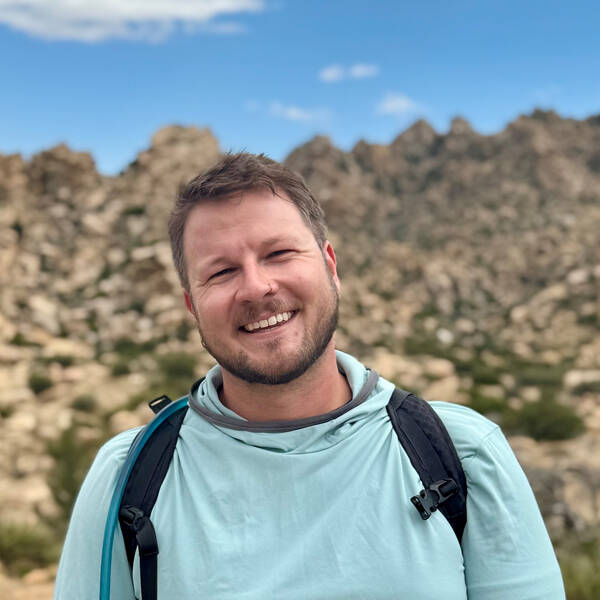
Director, California Desert Program
Chance comes to NPCA with a deep history and diverse experience in conservation and advocacy in both his personal life and his career.
Born in Montana and raised in Alaska, Chance spent most of his childhood hiking, skiing, berry picking, fishing, and reveling in the Chugach and Beartooth mountain ranges of these two states. These childhood experiences built his eternal appreciation for mountains, wildlife, public lands, and the pure, unique joy that can only be found on a ridgeline on a bluebird day.
After completing his undergraduate degree, Chance moved to Paraguay with the US Peace Corps, where he served as an environmental conservation volunteer. He worked closely with rural and indigenous communities, conservation nonprofits, and governmental institutions to implement sustainable agroforestry systems, wildlife protection campaigns, and public environmental education programs to protect the Atlantic Rainforest and Pantanal ecoregions of Paraguay. This work over the course of five years was integral to shaping Chance’s approach to conservation advocacy, focusing on forming coalitions of people and organizations with a stake and deep care for this work and building partnerships with the communities whose livelihoods and cultural resources are most at risk from resource extraction and environmental degradation.
After returning to the US, Chance worked in advocacy, coalition building, and development for Pride Foundation in Alaska, focusing on social justice issues that threatened Alaskan LGBTQ+ communities and campaigning for protections for th… Read More