
 RSS Feed

 Amazon Music

 Apple Podcasts

 Audible

 Castbox

 Deezer

 Fountain

 iHeartRadio

 Pandora

 PocketCasts

 Podcast Addict

 Spotify

 YouTube
S5E36: Desert Defenders, We Remember You
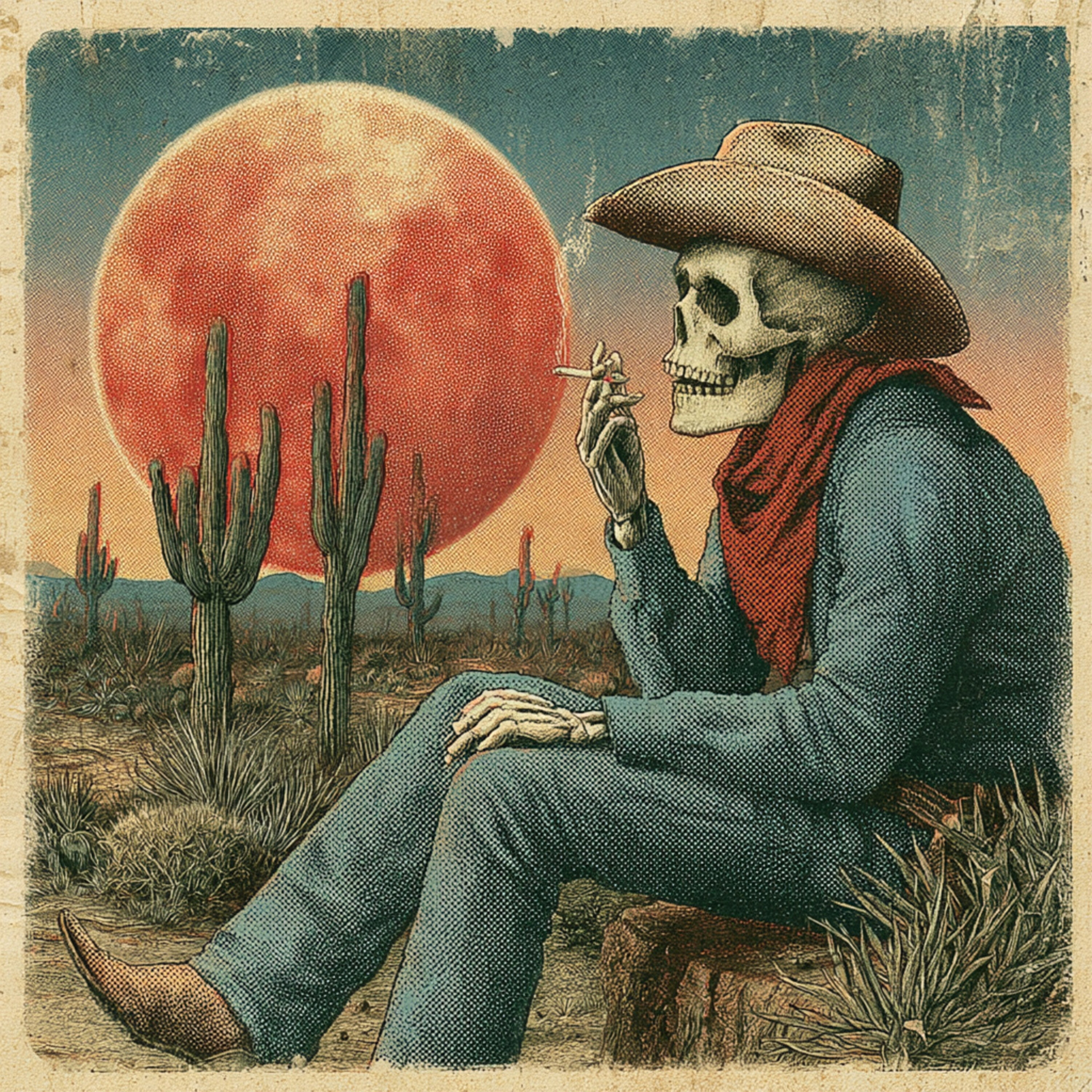
For Día de los Muertos, Chris Clarke remembers five people whose work helped protect the deserts: Judy Ackerman, Tomás Rojo Valencia, Donna Charpied, David Gaines, and Ken Sleight. Their stories lead from El Paso and the Yaqui River to Eagle Mountain, Mono Lake, and Glen Canyon, tracing decades of organizing, resistance, and love for desert places. The episode also honors Dolores Huerta and a wider community of departed desert defenders, with an Amargosa River recording from Fred Bell.
For this episode on the weekend of Dia delos Muertos, host Chris Clarke celebrates the life and work of five departed desert defenders: Judith Ackerman of El Paso; Tomás Rojo Valencia of Sonora's Yaqui communities; Donna Charpied of Desert Center, CA; David Gaine of Lee Vining, CA, and Ken Sleight of Green River, Utah. In these all-too-brief descriptions, Chris gives us a glimpse into each activist's work and life. Some of the five died tragically and far too soon, others lived out longer lives. All are missed. Bonus: If you stay to the end, Chris lists and commemorates 60 other departed desert defenders. Their work made our work possible.
Chris also observes the passing of labor icon Dolores Huerta, and in a mid-stream PSA, he urges listeners to donate to groups aiding survivors of the serious flooding in the Four Corners area. Check out the Bluff Community Foundation, Hopi Relief, the Navajo Relief Fund, and/or Samaritan's Purse to help out.
Chris is eagerly anticipating his attendance at the Chihuahuan Desert Conference in El Paso on 11/4-6, and hopes to see some of you there.
Resources:
Judy Ackerman — Texas House Resolution 63 (2023). Official memorial covering her military career, Castner Range work, Rio Bosque protest, and civic organizing. https://capitol.texas.gov/tlodocs/88R/billtext/html/HR00063I.htm
Tomás Rojo Valencia — Human Rights Defenders Memorial. Profile and links to additional reporting on his killing and subsequent prosecutions. https://hrdmemorial.org/hrdrecord/tomas-rojo-valencia/
CEMDA — Independencia Aqueduct and Yaqui consultation rights (2015, Spanish). Legal and organizing background from an organization involved in environmental-rights advocacy. https://cemda.org.mx/a-dos-anos-del-fallo-de-la-suprema-corte-continua-operando-de-forma-irregular-el-acueducto-independencia/
La Jornada — Arrest in Rojo’s murder (July 6, 2021, Spanish). Contemporary reporting that attributes the toll-revenue motive to prosecutors. https://www.jornada.com.mx/2021/07/06/estados/024n1est
Donna Charpied — First-person interview, parts I and II (2008). Her farming background, the landfill campaign, and her vision for Eagle Mountain. https://edgeofthemirage.blogspot.com/2008/02/interview-with-donna-charpied-part-i.html and https://edgeofthemirage.blogspot.com/2008/03/interview-with-donna-charpied-part-ii.html
Chris Clarke — Court Order Final Blow to Landfill Near Joshua Tree National Park. https://www.pbssocal.org/redefine/court-order-final-blow-to-landfill-near-joshua-tree-national-park
Donna Charpied — Family obituary notice (2017). Includes remembrances. https://www.legacy.com/us/obituaries/venturacountystar/name/donna-charpied-obituary?id=10096010
John Hart — Storm over Mono (University of California Press, 1996). Free full text of the book recommended in the episode. https://publishing.cdlib.org/ucpressebooks/public/book/storm-over-mono-the-mono-lake-battle-and-the-california-water-future.html
California State Water Board — Mono Lake Basin. Official entry point to the 1983 court ruling, Decision 1631, and restoration requirements. https://www.waterboards.ca.gov/waterrights/water_issues/programs/mono_lake/
John Wesley Powell River History Museum — Ken Sleight. River-guide biography and Hall of Fame profile. https://johnwesleypowell.com/ken-sleight-2012-hall-of-fame-inductee/
Richard Markosian — The Last Man To Know Glen Canyon Before Lake Powell (Utah Stories, May 29, 2014). Source of the interview and compromise quotation used in the episode. https://utahstories.com/2014/05/glen-canyon-before-lake-powell/
Ken Sleight — The Death of Glen Canyon. His own account, republished by the Canyon Country Zephyr. https://www.canyoncountryzephyr.com/2020/11/30/from-the-archives-ken-sleight-remembers-the-death-of-glen-canyon/
Dolores Huerta Foundation — In Memory of Dolores Huerta. Official memorial and family statement. https://doloreshuerta.org/in-memory-of-dolores-huerta/
Places and assistance links
Glen Canyon Dam facts and history — Bureau of Reclamation. Construction, power generation, and reservoir filling. https://www.usbr.gov/uc/rm/crsp/gc/index.html
Lake Powell operations — Bureau of Reclamation. Date-sensitive reservoir conditions and operational forecasts. https://www.usbr.gov/uc/water/crsp/cs/gcd.html
Hopi Relief. Assistance to Hopi communities. https://hopirelief.org/
Navajo Relief Fund. Partnership With Native Americans program supporting food, water, and emergency assistance. https://nativepartnership.org/nrf/
Copper Mountain College. Episode sponsor. https://www.cmccd.edu/
Support 90 Miles from Needles. https://90milesfromneedles.com/donate
Become a desert defender!: https://90milesfromneedles.com/donate
See omnystudio.com/listener for privacy information.
[00:00:00] Chris Clarke: This episode is made possible by listeners just like you, and by
[00:00:05] CMC Ad: Copper Mountain College is proud to sponsor this episode of 90 Miles from Needles, the Desert Protection podcast.
[00:00:13] Chris Clarke: Tomás Rojo Valencia had a habit of taking morning walks every day in Vícam just to get a little exercise and to see people and chat.
[00:00:21] Chris Clarke: On May 27th, 2021, he left for his morning walk, and he didn't come back.
[00:00:36] Joe Geoffrey: Think the deserts are barren wastelands? Think again.
[00:00:45] Joe Geoffrey: It's time for 90 Miles From Needles, the desert protection podcast.
[00:00:56] Chris Clarke: Thank you, Joe, and welcome to 90 Miles From Needles. I am your host Chris Clarke, and as this episode is coming out at the end of October, right around Halloween and Día de los Muertos, I thought it would be appropriate to recognize some of the desert activists that have departed from us along the way over the last few decades.
[00:01:15] Chris Clarke: I've compiled a short list of people that I'll talk about a little bit, some of whom I knew, others of whom I wish I had known. And so it was, it was something, I'm not sure of the right word, that this morning as I was driving toward the studio to get ready to record this, a piece of news came up on the radio that Dolores Huerta had passed.
[00:01:37] Chris Clarke: Huerta was 96. She'd been battling cancer for a few years. I really can't come up with a better thing to say to honor Huerta than what the Embassy of Mexico and the U.S. posted on Twitter this morning, which is, "We mourn the passing of Dolores Huerta, a towering figure in the history of Mexican Americans and the struggle for civil rights in the U.S.
[00:01:59] Chris Clarke: For more than six decades, she fought for the dignity of farm workers, helped secure better wages and working conditions, and opened doors for generations of Latinos and women to make their voices heard. Her legacy extends far beyond the labor movement. She helped transform American society through the power of peaceful organizing and civic participation.
[00:02:22] Chris Clarke: Her lifelong commitment to justice, equality, and opportunity will continue to inspire generations to come." That is very well said, and Ms. Huerta has earned this rest several times over. She will be missed even by people that never met her, myself included. We'll get to the list of dear departed desert activists I wanted to talk about in a second, but first, I wanna welcome and thank Chris Miller for joining the ranks of our donors.
[00:02:53] Chris Clarke: It's great to have you on board, Chris. If you wanna join Chris, you can go to 90milesfromneedles.com/donate, where you will be able to pick a size and frequency of donation that makes sense to you. And lastly, I wanna thank all of you who thought about applying for the Fellowship for Desert Reporting, and all of you especially who did.
[00:03:13] Chris Clarke: It's gonna be a tough decision, which is what we were hoping for. Have a lot of great candidates. And we shall have news for you on that in, I would say, mid-November, partly 'cause I'm gonna be heading out of town towards El Paso and Big Bend, and that means that we may not have an episode next week. We'll see what I can do, but I can't make any promises about next week.
[00:03:37] Chris Clarke: The week after that should be no trouble. I expect to have some great conversations in El Paso, and down in Big Bend, and in Ajo, and that should, uh, provide a few episodes to take us through the rest of the year. But having said that, let's get to our short list of people I thought we should honor on this episode right around Día de los Muertos.
[00:04:31] Chris Clarke: I first really started digging into trying to report more on West Texas environmental issues at the beginning of 2024. And when I was talking to folks in El Paso around then, almost without exception, they said something along the lines of, "You should have been here a year ago. You could have talked to Judy."
[00:04:49] Chris Clarke: Judith Ackerman died in November 2022 after a long career of fighting for the environment in the Chihuahuan Desert, especially the area around El Paso, Las Cruces, and Juárez. She was crucial in establishing the Castner Range National Monument, and she worked to protect little pieces of the ecosystem that hadn't yet been paved around El Paso.
[00:05:10] Chris Clarke: Ackerman came to the El Paso area the way a lot of people do, through the Army and Fort Bliss. She joined the Pennsylvania Army National Guard in 1980 and spent 27 years in the U.S. Army. She taught a course in the NCO education system for primary non-commissioned officers, and eventually retired in 2007 at the rank of sergeant major.
[00:05:35] Chris Clarke: In 1995, though, she had transferred to Fort Bliss, and she quickly fell in love with the El Paso area, and that love was expressed in action. In 2012, she famously handcuffed herself to a bulldozer to protect the Rio Bosque wetlands from construction. She played a leading role in development of the Knapp Land Nature Preserve, which is managed by the Frontera Land Alliance.
[00:06:01] Chris Clarke: She signed up thousands of voters in El Paso County. She co-founded the Viejitas for Choice network, working to preserve reproductive rights. She was an active member of the local Sierra Club chapter, the Friends of the Rio Bosque, the El Paso chapter of the Native Plant Society of New Mexico, the Trans-Pecos chapter of Texas Master Naturalists, the Frontera Land Alliance.
[00:06:32] Chris Clarke: She was a regular attendee at El Paso City Council meetings, often sharing her thoughts during public comment. She spoke out against the Texas Department of Transportation's plans to widen Interstate 10 through downtown El Paso. I don't think anybody would dispute the idea that if Judy Ackerman hadn't shown up at Fort Bliss and fallen in love with the area, that that part of the Chihuahuan Desert might look very different today.
[00:06:57] Chris Clarke: She was first diagnosed with cancer in 2015, and she lived and worked with that cancer for seven years until it claimed her life in November 2022. Though unfairly shortened, it was a life well-lived. Judy Ackerman, we remember you.
[00:07:42] Chris Clarke: In the late 1990s and 2000s, the city of Hermosillo in the state of Sonora was short on water. Short to the point where daily rationing was not unknown. To address these water shortages, in 2010, the state of Sonora's governor, Guillermo Padrés Elías, established an agency called Sonora SI, Sonora Integrated Systems.
[00:08:05] Chris Clarke: The agency was intended to oversee new projects that would bring water to Sonora cities, especially Hermosillo, the capital of Sonora, the largest city in the state, and home to about a third of the state's population. Sonora SI, when it started, had 24 water projects on its plate. They included new dams, irrigation canals, deep water wells, and most controversially, the Hermosillo Aqueduct, more formally called the Independencia Aqueduct.
[00:08:36] Chris Clarke: The Independencia Aqueduct is 150 kilometers long. It takes water from a reservoir behind the El Novillo Dam on the Yaqui River and brings it to Hermosillo. The Yaqui River is the largest river system in the state of Sonora. This diversion by the Independencia Aqueduct actually violates a 1940 presidential decree by then President Lázaro Cárdenas, which guaranteed the Yaqui people half of the water stored in the Angostura Reservoir. Taking water from the reservoir reduced the flow to downstream riparian communities, the heartland of the Yaqui in the area.
[00:09:15] Chris Clarke: It took a monkey wrench to local agriculture and hurt about 2,000 Yaqui farming families. The project triggered a bunch of legal battles, including some that went to Mexico's Supreme Court, and it also spurred a form of protest which might be novel to Norteños like myself, but it's increasingly prevalent in the nation of Mexico.
[00:09:36] Chris Clarke: And that form of protest is blockades of federal highways, often with the intent of collecting tolls from drivers either to make up for economic losses due to whatever is being protested or just to take money. Not all these blockades are altruistic in nature. In 2020, according to Al Jazeera, Mexican industry officials said that as many as two dozen toll plazas across the country were seized by protests on any given day.
[00:10:04] Chris Clarke: Protesters and other groups taking in about $150 million a year in the tolls that otherwise would have gone to government agencies. So this is really a big thing in Mexico. The aqueduct wasn't the only thing that had made the Yaqui feel targeted. The Yaqui have a long history of strong resistance to the Mexican government, and in 2021, a number of blockades happened on Highway 15 in Sonora, protesting not only the aqueduct, but also gas pipelines and railway lines that had been run across their territory with no consultation of the tribe.
[00:10:38] Chris Clarke: In February of 2021, a trucker plowed through the blockade, hitting and killing one of the Yaqui people there. Tomás Rojo Valencia was a leader in the Yaqui indigenous community. He served as the Yaqui spokesman fairly often during this conflict and others for a couple decades prior. Tomás was a Yaqui agricultural engineer by trade, but he became a valuable and revered community spokesperson and defender of indigenous land and water rights in Sonora.
[00:11:09] Chris Clarke: Early in his career, he settled in the community of Vícam, which is about 50 kilometers away from Ciudad Obregón. In Vícam, he worked on agricultural development, and he became a prominent spokesperson for the Yaqui. When the Independencia Aqueduct started getting some buzz in 2010, Tomás helped lead opposition to the aqueduct.
[00:11:30] Chris Clarke: He worked with Mario Luna, a colleague, challenging the project, which was approved, let's say it together, without adequate consultation with the Yaqui communities. As I said, their livelihood and culture depended on that water. The movement opposing the aqueduct combined demonstrations and legal challenges, and the protest movement also included some of those highway blockades.
[00:11:56] Chris Clarke: Now, the highway blockades certainly annoyed local authorities and probably more than a few drivers. But it really angered the local cartels, who had their own practice of highway blockades to collect tolls, and they raked in a significant amount of money doing that. They saw Rojo as a threat to this income.
[00:12:17] Chris Clarke: They saw him as unwanted competition. Tomás Rojo Valencia had a habit of taking morning walks every day in Vícam, just to get a little exercise and to see people and chat. On May 27th, 2021, he left for his morning walk, and he didn't come back. His remains were discovered about three weeks later. He'd been partially buried, and his head had been essentially crushed.
[00:12:46] Chris Clarke: He was 54 years old. Authorities arrested suspects that prosecutors claimed were connected with a cartel later in the year. In the aftermath of his killing, Tomás' family publicized their memory of his commitment to peaceful activism and his love for his Yaqui identity and the community. He was returned to Pótam, the town where he was born, for burial with traditional prayers and songs.
[00:13:14] Chris Clarke: Tomás Rojo Valencia, we remember you.
[00:13:44] Chris Clarke: One of the biggest historic environmental issues in my neck of the woods here in the Mojave Desert near Joshua Tree National Park was an attempt that lasted for a couple of decades to put the world's largest landfill in a little area near the company town of Eagle Mountain, which is surrounded on three sides by Joshua Tree National Park.
[00:14:04] Chris Clarke: This landfill would've polluted groundwater and surface water when there was surface water in the Chuckwalla Valley east of the park, as well as in the Coachella Valley to the west. It was also slated to go in on land that the owners of a defunct mine, the Kaiser Corporation, had promised to return to Joshua Tree National Park.
[00:14:23] Chris Clarke: The land had been taken out of the park, then a national monument, to allow the company to mine iron in 1950. Years later, when the mine folded, that area should have been handed back to the park. So far, it hasn't been. The trash dump would have been in Riverside County, and the Riverside County Board of Supervisors approved an environmental impact report for the dump in 1992.
[00:14:48] Chris Clarke: This report was shoddy and unduly favored the landfill proposal, and that riled up a couple of jojoba farmers who were immediately downhill from the proposed dump. Their names were Larry and Donna Charpied. Larry and Donna filed a lawsuit in the Superior Court of California challenging the adequacy of the EIR, charging the Board of Supervisors with abusing their discretion, and that court ruled in their favor and put the project back to square one, forcing the landfill developers to release a new and improved EIR in 1997.
[00:15:25] Chris Clarke: That court case was later reversed by the Court of Appeal, and the Charpieds worked with conservation organizations, including the Center for Community Action and Environmental Justice, and the Natural Resources Defense Council, and the National Parks Conservation Association, and the Sierra Club, challenging the project under federal law.
[00:15:46] Chris Clarke: In order for the project to proceed, the federal government would have had to trade some of its land in the area, and that opened the door for a court case against it. Eventually, after more than two decades of opposition and litigation by the Charpieds and others, the landfill proposal was abandoned in 2014, and that was a huge victory for Joshua Tree National Park, the benefits of which we are still enjoying today.
[00:16:13] Chris Clarke: But Donna's vision extended beyond stopping the dump. She advocated for returning those Eagle Mountain lands to Joshua Tree National Park and developing a sustainable future for the intact but abandoned company town of Eagle Mountain. Now, I knew Donna for some years, and I know she would not object to my characterizing her as occasionally cantankerous.
[00:16:37] Chris Clarke: In fact, she might be upset if I didn't. But beneath that shell was an unbelievably generous, kind, and sweet person. In the years before I joined NPCA, she had a conflict with them, which rubbed her raw, and it didn't feel good on the other side either. But I had just gotten the job, and I called to let her know I'd taken the job and asked if we could get together and chat about Eagle Mountain.
[00:17:04] Chris Clarke: And she said, essentially, if I was representing NPCA, she didn't wanna talk to me, but if it was just me there as me, she would be very happy to see me. That was the last time we talked. After the landfill issue was settled, there were a couple other issues in the Chuckwalla Valley that occupied Donna's attention.
[00:17:26] Chris Clarke: One of which was a proposed pump storage project, which is still on the books. And the other, which Donna fought valiantly and lost, was the conversion of the beautiful and largely wild Chuckwalla Valley, full of amazing Sonoran Desert vegetation, desert dry wash woodland, eagles, desert tortoises, kit foxes.
[00:17:51] Chris Clarke: Much of that beautiful and largely wild valley was converted to solar fields. Donna and Larry's farm was surrounded by the proposed Desert Sunlight Solar Project, which when it was built took up about 4,100 acres of the Chuckwalla Valley. Now, Desert Sunlight was the first large project in the area, and potentially the worst, but it wasn't the last. Something like 23,000 acres of solar project sites now exist in the Chuckwalla Valley.
[00:18:23] Chris Clarke: That's about 36 square miles. And that's project footprints rather than just the ground covered by solar panels directly. So there's buildings and roads and fences and things like that. But the result is essentially the same. Converted habitat in a crucial habitat area in the California section of the Sonoran Desert.
[00:18:45] Chris Clarke: Thousands more acres in the Chuckwalla Valley are proposed to be scraped clean to install more solar. Donna and Larry were honored with a Minerva Hoyt California Desert Conservation Award in 2005, which is granted every year by the Joshua Tree National Park Association. And their jojoba oil, which is generally regarded as some of the best produced in the desert, started to get a fair amount of traction on burgeoning social media of the early 21st century, helped along by a local TV reporter, Huell Howser, whom Californians will recognize.
[00:19:22] Chris Clarke: He became a huge fan of the jojoba farm and of Donna Charpied. Sadly, the wholesale conversion of the Chuckwalla Valley surrounding her farm was too much for Donna. She ended up moving back to the coast where she had previously lived. And in November 2017, just a couple of months after we talked the last time, at age 64, my friend Donna Charpied died.
[00:19:49] Chris Clarke: Donna Charpied, we continue your fight, and we remember you.
[00:19:55] Joe Geoffrey: Don't go away. We'll be right back.
[00:19:58] CMC Ad: Copper Mountain College is a proud sponsor of 90 Miles From Needles, the desert protection podcast. Located in Joshua Tree in the Mojave Desert, Copper Mountain College serves the communities of the high desert with a broad range of programs, from desert studies and the popular Wildland Fire Academy to nursing, EMT, water technology, and many more programs.
[00:20:19] CMC Ad: Copper Mountain College provides direct transfer programs to CSU and UC universities, as well as career technical education. Learn more at www.cmccd.edu. Go Fighting Cacti.
[00:20:33] Chris Clarke: It's time for this week's offering from our friend, nature recordist Fred Bell, who writes about this piece of sound that it was recorded a couple of miles downstream from Tecopa, California, where the Amargosa River circles in front of some high cliffs that reflect the most pleasing echo, especially when Woodhouse’s toads are calling.
[00:22:42] Chris Clarke: Severe flooding in the Four Corners area has forced people from their homes, including in Native communities such as the Navajo, Hopi, and Ute Mountain Ute. If you can help, visit hopirelief.org and/or nativepartnership.org/nrf for the Navajo Relief Fund. Other links where you can help are in our show notes.
[00:23:03] Joe Geoffrey: You're listening to 90 Miles from Needles, the desert protection podcast. You can help the desert by picking up those dang Mylar balloons.
[00:23:14] Chris Clarke: The North American deserts used to be full of huge lakes. During the Ice Age, there was a lot more precipitation in the desert Southwest. Temperatures were lower. The mountains in the desert were regularly capped with snowfall that melted and ran off and refilled the lakes. One of the oldest of these lakes was Lake Russell, right up against the Sierra Nevada's eastern side in what would later be called California.
[00:23:41] Chris Clarke: Then, between 12,000 and 8,000 years ago, the climate changed. The desert warmed up and dried up. Those immense Pleistocene lakes, like Lake Bonneville, dried up and became remnant salt lakes or, in some cases, playas, flat spots of ground covered with salt where there used to be water. Lake Russell, which was nestled up against the back end of Yosemite, became Mono Lake, which is known mainly for its amazing populations of birds as well as for its fantastic tufa towers formed when warm water containing a lot of calcium and other salts came into the cold water of the lake, making those dissolved salts come out of solution and coalesce into these wonderful towers, which are now a major tourist draw.
[00:24:30] Chris Clarke: But Mono Lake has been the center of a difficult environmental battle. In the middle of the 20th century, the LA Department of Water and Power, LADWP, decided it wasn't getting enough water from the Owens Valley through the Owens Valley Aqueduct, which is itself a huge and well-documented environmental battle.
[00:24:49] Chris Clarke: But DWP decided it needed to explore further north to get even more water off the east side of the Sierra, and so they built aqueducts into the Mono Basin and started diverting the waters of Rush Creek, which is the largest creek flowing into Mono Lake. As a result of that diversion, the lake level of Mono Lake started dropping, which is a problem in the best of cases.
[00:25:14] Chris Clarke: But compounding the problem was that in the middle of Mono Lake was an island, Negit Island, a prominent black volcanic outcrop in the middle of the lake where gulls and other birds found secure nesting spots, safe from roving predators like coyotes. LADWP diverted Rush Creek, the biggest tributary of Mono Lake, as well as Lee Vining Creek, Parker Creek, and Walker Creek.
[00:25:39] Chris Clarke: Their water was diverted into the Los Angeles Aqueduct system. Lake levels dropped, and ornithologists and wildlife biologists of other kinds started worrying about the land bridge that was likely to emerge between Negit Island and the shore, which would allow coyotes to trot across and eat eggs and baby birds.
[00:26:00] Chris Clarke: Now, a number of environmental groups had paid attention to Mono Lake for some time. They'd taken on the cause of restoring Mono Lake so that its ecosystem could thrive. A fairly simple ecosystem based on the few organisms that could stand to live in Mono Lake's very saline and alkaline water. And one by one, they came up against the brick wall that was the LA Department of Water and Power, the 800-pound gorilla of California politics.
[00:26:30] Chris Clarke: And these groups quietly de-emphasized their campaigns to save Mono Lake. The diversions by DWP continued. Approximately 100,000 acre feet of water per year flowed through the aqueduct into Los Angeles faucets. In 1976, a study suggested that if that diversion continued, the lake would get down to half of the surface area it had at the time of the study, one-third or less of its volume, and would become four times as saline as when the study was published.
[00:27:02] Chris Clarke: The next year, in November 1977, the lake level was approaching 6,375 feet above mean sea level, and that exposed the land bridge to Negit Island enough that the soil on the bridge dried out. There was an ornithologist named David Winkler who had been studying the birds of Mono Lake, and he was watching this happen, and he grew alarmed.
[00:27:25] Chris Clarke: He reached out to a fellow he knew who was familiar with Mono Lake. He'd led student-run bird surveys there while studying at UC Davis. And David Gaines was, at that point, working with his partner, Sally Judy, who would later become Sally Gaines, in a redwood forest preserve on the North Coast of California run by The Nature Conservancy.
[00:27:47] Chris Clarke: David Winkler reached out to David and Sally, and they founded the Mono Lake Committee. The first act of the Mono Lake Committee was to persuade the California National Guard and other authorities to blast a channel through the land bridge to Negit Island in March 1978 using high explosives. And as author John Hart wrote in his 1996 book, Storm Over Mono, which we highly recommend, "The Mono Lake Committee literally began with a bang."
[00:28:16] Chris Clarke: That same year, the very first issue of the Mono Lake newsletter came out. That first issue called for restoring the surface of Mono Lake to its 1976 elevation of 6,378 feet above sea level. This was a modest proposal, and not in the Swiftian sense. It was a compromise. It would have been less than three feet above the level needed to cover the land bridge to Negit Island with water.
[00:28:45] Chris Clarke: But even that fairly modest offering would require DWP to cut its diversion by 75%, and DWP did not respond. The months went by. David Winkler decided to return to UC Berkeley and pursue his career in ornithology. David Gaines and Sally Judy bought a couple of houses in Lee Vining in the fall of 1978.
[00:29:12] Chris Clarke: They opened a storefront office in Lee Vining, which is still there. For the next few years, David Gaines spent a bunch of time on the road with a Mono Lake slideshow, and he went to schools and colleges, environmental group chapters, Lions Clubs, similar groups, focusing on Sacramento and Los Angeles, but hitting up other places as well.
[00:29:34] Chris Clarke: I met David briefly when I was working my first environmental job as a canvasser and fundraiser for the California League of Conservation Voters back in 1982, and he talked about this place I had never heard of, and its otherworldly charm, and the wildlife that depended on it. And I was rapt, and it would take me five years to visit Mono Lake, but I had David in mind when I first came over Conway Summit and saw that lake spread out before me.
[00:30:03] Chris Clarke: David Gaines was a musician early in life. He was a fan of classical music and the Grateful Dead. He had come to birding at a very early age, but it was the campaign to save Mono Lake that gave him the focus that would last for the rest of his life. The lake reached a historic low in the early 1980s.
[00:30:22] Chris Clarke: Its bird population suffered die-offs. This was very troubling to everyone in the environmental community in California, especially the Mono Lake Committee and the people that loved Mono Lake. A combination of some tentative court victories and administrative decisions and favorable weather all conspired to cause lake levels to rise a little bit, and that's where things stood in January of 1988 when, in a winter storm with approximately zero visibility on Route 395, Sally and David Gaines, and their daughter Vireo, and their son Sage, and Mono Lake Committee staff member Don Oberlin hopped into a Toyota Tercel in Bishop, California, and headed back north toward Lee Vining.
[00:31:10] Chris Clarke: There was a man driving south on Route 395 in a pickup truck who made the unwise decision to try and pass a vehicle with extremely limited visibility. The pickup truck hit the Gaines' car head-on. Sally came out of the wreck with a broken wrist. Sage basically was unharmed. Vireo was badly injured but survived.
[00:31:36] Chris Clarke: Don Oberlin and David Gaines died in the crash. David Gaines wouldn't see the victory that was coming for his lake just six short years later when California's Water Resources Control Board decided that LADWP had to cut back its water diversions from the basin in order to preserve lake levels at a height that would allow the Mono Lake ecosystem to continue without collapsing.
[00:32:00] Chris Clarke: It just would've been nice if David had been able to see that day. But the lake stands as the best memorial possible. David Gaines, we remember you.
[00:32:39] Chris Clarke: The Glen Canyon Dam has been getting a lot of attention in the last few years, in part because the current mega drought has decimated water levels in the Colorado River, and therefore Lake Powell, which backs up behind Glen Canyon Dam, is receding and revealing a whole lot of Glen Canyon as it was before the dam. The general trend over the next several decades is very likely to be continued drought.
[00:33:04] Chris Clarke: This year is likely to be essentially just an unusual high point in a downward trend. And it's a lovely thing that Ken Sleight was able to see Glen Canyon reemerge, if somewhat changed by its decades of inundation. Ken, who was born in August 1929, had guided float trips through Glen Canyon starting in 1957.
[00:33:28] Chris Clarke: At a cost of about 50 bucks a week, passengers could see the relatively gentle section of the Colorado with its side slot canyons and cultural resources and sandstone alcoves like Cathedral in the Desert. And according to a story in Deseret News, Ken recalled losing $10,000 in his first two years of business as a river guide.
[00:33:51] Chris Clarke: Ken was born into a Mormon family in Idaho. He grew up in Idaho and northern Utah. He was attending the University of Utah in 1951 when he floated through the Gates of Lodore on the Green River. He served in Korea, completed a business degree, got a job selling tires until 1957 when he quit the tire job and started his guide business.
[00:34:16] Chris Clarke: It's likely that Ken felt that he had learned about Glen Canyon almost too late because the year before he started his guide service in October 1956, construction began on the Glen Canyon Dam. And despite some opposition from Ken Sleight and Katie Lee and Edward Abbey and quite a number of others, the dam was finished by September 1963.
[00:34:46] Chris Clarke: Glen Canyon Dam was explicitly designed to be a cash register dam. Sales of power would bankroll other projects coming off the Colorado River. Electricity generation from the Glen Canyon Dam began in 1964, and for the next couple decades, Ken and other Glen Canyon lovers watched foot after foot of the canyon walls disappear under the water.
[00:35:09] Chris Clarke: It took 17 years to fill that reservoir. Ken continued his rafting business running the Grand Canyon with some folks and other undammed stretches of river in the Southwest. But Glen Canyon was always his center. Preparing for one of his Grand Canyon trips at Lees Ferry, he met writer Edward Abbey, and the two of them became friends for the rest of Abbey's life.
[00:35:36] Chris Clarke: Ken survived Ed by almost four decades. It's a long time to mourn a friend. In 1982, a proposal was floated to build a nuclear waste dump on the border of Canyonlands National Park. Ken joined with other folks to raft Cataract Canyon to highlight the insanity of that proposal, and that waste dump died on the drafting table.
[00:35:57] Chris Clarke: It was never built. Ken wore a lot of hats during his activist life. He was a bookstore owner, political writer, a columnist for the Canyon Country Zephyr. He was a party in more than one lawsuit. He became active in politics, working with his indigenous neighbors to guarantee their rights. He's a repeat figure in independent documentaries about Canyon Country, and he is likely best known for Ed Abbey's somewhat fictionalized version of him in the book The Monkey Wrench Gang as Seldom-Seen Smith, the river guiding Jack Mormon.
[00:36:33] Chris Clarke: Ken's politics changed substantially over the years. He was raised Mormon. He supported Goldwater for president in 1964, but he shifted leftward as he got to know the Native people he was working with, and he understood that the liberals, for all their flaws, were more likely to actually do things to increase the quality of life for Native people and their political rights and dignity.
[00:36:59] Chris Clarke: He was a co-founder of the Southern Utah Wilderness Alliance, which continues to do amazing work. And I think my favorite story about Ken Sleight is that a land clearing project was chaining pinyon juniper woodland near his home. Chaining involves putting a huge, very heavy chain between two bulldozers and moving them across the landscape, just ripping out any trees that are between those dozers.
[00:37:28] Chris Clarke: Ken learned about this and hopped on his horse, and Ken and the horse stood in front of the bulldozer that was chaining the woodland, forcing the project to a halt. In 2021, a fire that burned thousands of acres of forest and destroyed four homes burned into Ken's Pack Creek Ranch property, destroying a bunch of his archives.
[00:37:49] Chris Clarke: And this year, as sober establishment water managers in the Southwest started talking seriously about decommissioning Glen Canyon Dam as a way of adapting to the new mega drought regime on the Colorado River, Ken Sleight died at age 97, following his wife Jane by less than eight months. In 2014, in a story in the publication Utah Stories entitled The Last Man to Know Glen Canyon Before Lake Powell, Ken detailed his general approach to environmental campaign strategy saying, "If the environmental community compromises, they undercut everything that we've tried to do.
[00:38:28] Chris Clarke: If you compromise halfway, then you've lost. Instead of 20 wells, you have 10, then they come back the next time, there's another 10. Pretty soon you have nothing left." You have nothing left. And he closed the interview with a description of Glen Canyon before the dam. There was a feeling about Glen Canyon that put you a little closer to heaven.
[00:38:53] Chris Clarke: If heaven does in fact exist, I can imagine Ken happily rafting through interesting rapids in whatever section of the afterlife includes red rock canyons. Ken Sleight, we remember you.
[00:39:35] Chris Clarke: Thanks for listening. This is necessarily a bit of a somber episode, but I remember at least my encounters with the two people on the list I've met with some joy. I'm just really glad that I knew them. And if there is something to this afterlife thing, I hope they have a good visit this weekend to the land of the living. Once again, thanks to Chris Miller for joining the ranks of our donors.
[00:40:00] Chris Clarke: 90milesfromneedles.com/donate. I am very much looking forward to getting to El Paso and Big Bend and spending a little time in Tucson. Gonna be visiting the Pinacates as the current plan is, and hopefully getting to record a bit on the Rio Grande right around the bottom end of Big Bend National Park, if for no other reason than to bring you some sound from a place that might get transformed radically if the current administration has its way.
[00:40:31] Chris Clarke: And transformed radically for no good reason. For the next few days, I am gonna try and enjoy the cooler weather that has descended upon the Mojave. It does warm up a bit during the day, but even that, even so, I can still take Jack the giant German shepherd around the block on a leash in the middle of the day, which I couldn't do after around March. You'd think I'd be used to the seasons changing by now.
[00:40:59] Chris Clarke: I've gone through it almost 70 times, but it's always a source of wonder and delight. And speaking of delight, I wish you a happy Halloween, and I will see you at the next Watering Hole.
[00:41:24] Joe Geoffrey: And that brings us to the end of this episode of 90 Miles From Needles, the desert protection podcast. You can find show notes for this episode along with links and background at 90milesfromneedles.com. We're also on social media. You can find us on Facebook, Instagram, Bluesky, and Threads. Just search for 90 Miles From Needles.
[00:41:49] Joe Geoffrey: And if you'd like a more direct line, you can reach us on Signal at A90MFN.67. If you'd like to support the show, you can make a donation of whatever size and frequency feels right to you at 90milesfromneedles.com/donate. Listener support is what makes this podcast possible. Our voiceover is by Joe Geoffrey.
[00:42:16] Joe Geoffrey: Podcast artwork is by Martín Mancha. Nature sounds are recorded by Fred Bell. Our theme song, Moody Western, is by Bright Side Studio, with additional music licensed from independent artists.
[00:42:33] Chris Clarke: Other music in this episode is by PremiumBeat.
[00:43:30] Joe Geoffrey: 90 Miles from Needles is a production of the Desert Advocacy Media Network.
[00:43:41] Chris Clarke: I picked the five people we featured in this episode with a few different criteria in mind, like geographical distribution or whether I knew them and could speak more expertly about what they were like, or prominence in the movement. And there are dozens of other people that I could have chosen. Some of them worked on protecting the desert as part of working on preserving global habitats.
[00:44:03] Chris Clarke: They were not just desert activists. Some of them were labor activists or social justice activists. But they all saw the desert as really crucial, and they all deserve to be commemorated as part of the Desert Defender family. Now, this is an incomplete list necessarily. There are certainly any number of important people that I've left out either because I'm getting older and my memory's failing or because I'm unaware of the work they did through my own parochial ignorance of what goes on in places besides California.
[00:44:33] Chris Clarke: So if I fail to mention someone who's important to you who did the work, let me know. I'd love to hear about them. Love to learn about who they were and what they did for the desert. Here is the incomplete list. We remember Edward Abbey, Harriet Allen, Clara Babb, Llewellyn Barrackman, George Barnes, Maeveen Behan, Joy Belsky, Klee Benally, Roberta Blackgoat, David Brower, Bob Burleson, Carrie Dann and Mary Dann, Jim Deacon, Jim Dodson, Richard Felger, Denzel Ferguson, Dave Foreman, Gene Ford, Cal French, Rob Fulton, Glen Goodwin, Raúl Grijalva, Corbin Harney, Randall Henderson, Minerva Hamilton Hoyt, Elden Hughes, Philip Hyde, Leroy Jackson, Phil Klasky, Darrell Knuffke, Katie Lee, Martin Litton, Steve Lopez, Roberto Lujan, Mink Minckley, David Myers, Wayne Owens, Raquel Padilla-Ramos, Phil Pister, Eliot Porter, Robert Redford, Susan Luckie Reilly, Jay Roylance, Marge Sill, Jim Stiles, Susan Tixier, Gabriel Trujillo, Morris Udall, Stewart Udall, Kevin von Finger, Barton Warnock, Stan Weidert, Frank Wheat, Pam White, Stormy Williams, Bob Witzeman, Beth Woodin, Ward Young, Nancy Zierenberg.