

 Amazon Music
 Apple Podcasts
 Audible
 Castbox
 Deezer
 Fountain
 iHeartRadio
 Pandora
 PocketCasts
 Podcast Addict
 Spotify
 YouTube
  RSS Feed
 S5E31: Desert Dispatch, Data Centers, and the People Pushing Back
Chris talks with Melinda Matson Spina, Jodi Darby, and Sage Bond about Desert Dispatch Media’s effort to document communities responding to the rapid expansion of AI data centers across the desert Southwest. They discuss a community-led film, public assemblies, and music that draws on sounds from the land.
Desert Dispatch Media is bringing together artists and communities to document how the AI buildout is affecting desert lands and the people who live there. Chris talks with organizer Melinda Matson Spina, filmmaker Jodi Darby, and musician Sage Bond about their planned community-led documentary, a short film for public assemblies, and the stories they hope to gather across the Southwest.
Sage describes composing with sounds and materials from the land, while Jodi explains how footage contributed by community members can shape the larger film. Chris also surveys actions communities and tribal governments are taking in response to proposed data centers.
Links and further reading
- Gallup: Americans Oppose AI Data Centers in Their Area — In a March 2026 national survey, 71% of U.S. adults opposed construction of an AI data center in their local area.
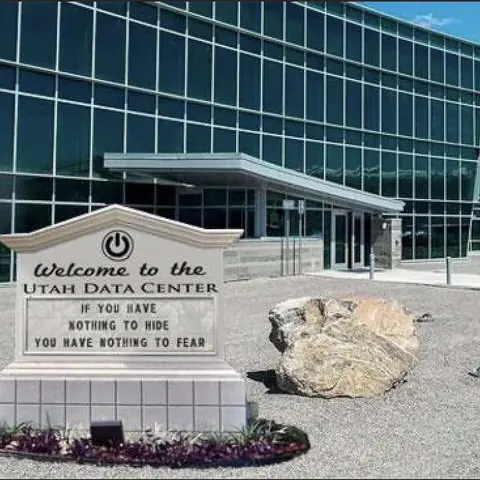
- Episode image is from a satirical website dated 2013
Become a desert defender!: https://90milesfromneedles.com/donate
See omnystudio.com/listener for privacy information.
Full for transcription
[00:00:00] Chris Clarke: This episode is made possible by listeners just like you, and by
[00:00:05] CMC Ad: Copper Mountain College is proud to sponsor this episode of 90 Miles from Needles, the Desert Protection podcast.
[00:00:13] Melinda Matson Spina: Over 70% of the public is against the development of data centers. There's a tremendous consensus, certainly not one like anything I've seen in my lifetime.
[00:00:25] Melinda Matson Spina: That's honestly part of the reason this documentary is so important to me, because I joined this movement in Tucson here, the No Desert Data Center Coalition, about six months ago, and I've gotten to know that movement. And within three months of engaging with the many people there, I have learned that they aren't really well represented in the media.
[00:00:49] Melinda Matson Spina: It's hard to know who are these people, and I'm gonna tell you right now, you're probably one of them.
[00:01:03] Joe Geoffrey: You think the deserts are barren wastelands? Think again It's time for 90 Miles From Needles, the desert protection podcast
[00:01:24] Chris Clarke: Thank you, Joe, and welcome to 90 Miles From Needles. I'm your host Chris Clark, and this episode, we have something a little bit unusual for us. Our nonprofit mothership, the Desert Advocacy Media Network, has taken on a new project, which is doing work right in line with what we're all about here, spreading information about protecting the desert and linking communities.
[00:01:42] Chris Clarke: The Desert Dispatch Media Project, which has joined DAMN in the last few months, is working to bring people together that are fighting data centers or other aspects of AI in their communities. We have three people working on that project j- talking to us today, Melinda Matson Spina, who has become a really good friend since we met in Tucson, Jodi Darby, a filmmaker, videographer from Portland, Oregon, and Sage Bond, who is a fantastic musician.
[00:02:09] Chris Clarke: We'll put a link to her YouTube channel in the show notes. You will enjoy hearing her music and her singing and playing. That is, in fact, a direct order. You will enjoy it. We had a great conversation, and I hope you'll be swayed to pay attention to and support Desert Dispatch Media. Before we get to that, we don't have any new donors to thank this week.
[00:02:28] Chris Clarke: Go to 90milesfromneedles.com/donate if you wanna be a new donor in the next episode. We are still accepting applications for our fellowship for desert reporting. Check that out at thedamn.org. T-H-E-D-A-M-N.org stands for the Desert Advocacy Media Network T-H-E-D-A-M-N.org/fellowship. We explain what the fellowship is all about on that page, and there's a link to our application form.
[00:02:58] Chris Clarke: If you tried to click on that link and it led nowhere, it actually works now. I apologize for the glitch. It's now fixed. You can get to the application from the fellowship page by clicking on the button that says Apply for the Fellowship. One last note before we jump into the interview, Melinda Matson Spina mentions an anniversary party for the Border Chronicle.
[00:03:23] Chris Clarke: We did meet at their fourth anniversary party in Tucson last year. They are coming up on their fifth anniversary, that's how math works, October 22nd. Go check out their website at theborderchronicle.com to find out more about how you can help them celebrate, especially with regard to a party on October 22nd in the Tucson area, actually in downtown Tucson at my favorite restaurant there, La Indita.
[00:03:52] Chris Clarke: Go look at the Border Chronicle's website for more information on how you can take part in that party. If you've already forgotten the address I gave you, look at our show notes. And with that, let's get to our interview with Melinda Matson Spina, Sage Bond, and Jodi Darby talking about the Desert Advocacy Media Network's newest project, Desert Dispatch Media.
[00:04:44] Chris Clarke: Welcome to the 90 Miles From Needles virtual studio. Melinda, Sage, and Jody, can each of you introduce yourselves?
[00:04:55] Melinda Matson Spina: I'll go first. My name's Melinda Matson-Spina, and I am in Tucson, Arizona. I'm a, a member of the No Desert Data Center Coalition. I spent the most important years of my childhood at the base of the Huachuca Mountain in the Borderland, and I returned here recently in 2018 hoping to grow old here.
[00:05:23] Melinda Matson Spina: I missed the desert.
[00:05:25] Sage Bond: My name is Sage Bond. I am of the Navajo and San Carlos Apache tribes, Dineh and Deh, and I'm out in Tonalea, Arizona.
[00:05:34] Jodi Darby: My name's Jodi Darby. I am a media artist, an activist, an educator out here in Portland, Oregon
[00:05:44] Chris Clarke: So the three of you are all involved in Desert Dispatch Media, which is the newest project of the Desert Advocacy Media Network, and you've been doing some amazing work getting this project off the ground.
[00:05:56] Chris Clarke: What does the project do precisely? What do you have planned?
[00:06:01] Melinda Matson Spina: The idea for the project, the core deliverable for this project, is a documentary. A community-led documentary on the movement that is addressing impact from inhumane tech in the desert region.
[00:06:17] Chris Clarke: And when you talk about inhumane tech, there is a particular flavor of techs that has been a major focus of the group.
[00:06:26] Melinda Matson Spina: Yeah, that's correct. You're talking about AI. And what I wanna say about that is first and foremost, the problem with what's going on with AI is the hyperscaling of extraction and expansion. And obviously, extraction and expansion have been threats tied up with the abuse of human rights for all of human history.
[00:06:54] Melinda Matson Spina: And what we're seeing now is a hyperscaling of those threats.
[00:06:59] Chris Clarke: Mm-hmm.
[00:07:00] Melinda Matson Spina: There's so many moving parts to this project. We have a zine going on. We have a short catalyst video that's meant to start conversation at people's assemblies, we're calling them here in the region. So I just wanna mention that all of these different things that we are doing are a way to meet people, to find out what they wanna talk about, to earn their trust, to build relationships.
[00:07:27] Melinda Matson Spina: And I honestly feel that is the most important step towards getting us to the place for a documentary where we can hear what people have to say, what is going on, what they've been coping with, and what they are looking to next.
[00:07:44] Chris Clarke: AI and hyperscale data centers have been getting a huge amount of press for the last few months, and that doesn't seem to be going away any time soon.
[00:07:51] Chris Clarke: We're in a period in which CEOs or T- CTOs of AI firms are talking about slowing things down and 14% chance of human extinction by 2030 is a phrase I've seen going around in the media. How does this wave of really unpopular technology on the public scale and the burgeoning of development of data centers affect the desert in particular?
[00:08:18] Melinda Matson Spina: Jodi or Sage, either of you wanna jump in here? Yeah.
[00:08:21] Sage Bond: I'll jump in on that. I am a musician and composer, and I first met Melinda through the Peaceful Sky Benefit- Mm-hmm ... in Tucson, Arizona, a few hours away south of where I live. I feel so honored to be brought onto this project when Melinda asked me to be a part of it and explained to me what Desert Dispatch is, and especially the effects of AI and how it relates to Native people and people that live on the reservation in this Southwest desert.
[00:08:58] Sage Bond: We've had Native people telling us, educating us, constantly warning everyone throughout history about the dangers of extraction from Mother Earth. And the deeper we dig, the more poison we're gonna bring out and harm ourselves. So we like to keep it in the ground because it's sacred land. It's a place, it's our home, and it really sucks to see how fast-moving this is, how fast-paced AI is really taking over not only just the lands, but everyone's minds and free will.
[00:09:39] Sage Bond: I feel like it's just a mask, like the same, the government, it's the same leader in power, and they're just changing masks for all these different forms of genocide that we're still trying to fight against as a whole. And now more people are starting to listen.
[00:09:58] Chris Clarke: And speaking of more people listening, the documentary that you folks are putting together seems like an interesting tool for that.
[00:10:06] Chris Clarke: I'd love to hear from you, Jodi, about what the documentary is gonna look like and how you imagine it's gonna be used in these different community meetings that the project is putting together.
[00:10:17] Jodi Darby: So there are two film aspects to Desert Dispatch. The documentary that we're talking about is kind of this larger community-led, ideally feature-length film that is going to be created by a lot of different folks in the Southwest region who are being affected by this hyperscale build-out, uh, people who have been organizing against it, individuals on the front lines, Native community members, organizations.
[00:10:52] Jodi Darby: So a lot of different people are going to be activated to send in their media into what we are doi- Right now, we're creating what we're calling kind of an archive or a library of just, as people are getting together and trying to talk to each other about organizing opportunities, like ways that communities are gonna band together against this thing, those conversations, those protests, those city hall meetings, whatever those look like, are being documented, and that footage is being sent to me, and my role in that is just kind of keeping it all organized, creating, you know, a hard drive and some sort of file organizing convention so that that stuff doesn't get all mucked up.
[00:11:42] Jodi Darby: And so th- that is in service to a larger documentary that will be then created, I think, slowly, organically as this movement builds. And I really like that idea. It's kind of like planning for a garden. You know, you have to sort of till the soil, and you gotta bring in some good compost. And I was just working in my yard, so apologize for the allegory.
[00:12:04] Jodi Darby: But it's, it's, uh-
[00:12:05] Chris Clarke: You're speaking my language, Jodi. You're speaking my language.
[00:12:08] Jodi Darby: So we're sort of prepping the soil right now for a larger project that we're really excited to see grow, and we don't necessarily have control over what happens, but it's really cool to watch what comes in, to let the folks on the ground identify what's most important to them, what they wanna show, what they're most proud of from their communities.
[00:12:31] Jodi Darby: Obviously, not only the fight, but the beauty. I get a lot of documentation of landscape, because I think it's really important to see what we're fighting for and what communities on the ground, what they love, and what they're trying to save, the areas that are sacred to them. So that stuff has been really cool to watch come in.
[00:12:53] Jodi Darby: You know, there's areas of Arizona, New Mexico, the Imperial Valley in, in California that I'm like, "Oh, my God, this is so beautiful. I can't believe they're gonna blow it up." So these are things that are coming in, images, conversations, and that will be the documentary. So that's its own kind of thing happening.
[00:13:17] Melinda Matson Spina: I wanna pipe up here and say that in addition to all of this community contributed footage, we are looking for a regional director. We have inquiries out and also just welcoming conversation from media artists throughout the region about a regional director to help guide this process creatively and collect interviews.
[00:13:43] Melinda Matson Spina: We want interviews with the people from frontline communities, particularly frontline communities which have been faced with extraction and expansion from day one, and who we need to be looking to for leadership in this fight
[00:14:02] Chris Clarke: And Melinda, when you mention the region that you're working in, we have listeners all over.
[00:14:06] Chris Clarke: Could you narrow that down a little bit so people that might have the requisite skills for the position you're looking for, or might know somebody that does, could find out whether they're out of the running just 'cause they live in Tanzania?
[00:14:19] Melinda Matson Spina: Yeah. Well, first off, just don't think about borders. We're not looking at borders.
[00:14:25] Melinda Matson Spina: What we're looking at is the desert, okay? The region of the North American continent, which runs essentially from the Mojave and into the western edge of Texas, and up through the Colorado Plateau, and down into Mexico.
[00:14:47] Chris Clarke: As you put together the, the audio-visual and the community meeting elements of this, it seems like there's a pretty big wave of public sentiment to surf on going on.
[00:14:59] Melinda Matson Spina: Oh, yeah.
[00:15:00] Chris Clarke: What are you hoping for, let's say, 12 or 18 months from now if, assuming that this project is a rip-roaring success and that you get a lot of what you're looking to get done, what do you envision the difference that this project is gonna make us being?
[00:15:16] Melinda Matson Spina: Before I answer that second part of what you just said, I really want to touch on the first part, and that is the big wave that you're talking about.
[00:15:26] Melinda Matson Spina: I'm seeing numbers that say over 70% of the public is against the various aspects, including data centers, the development of data centers in the hyperscale build-out. So yeah, there's a tremendous consensus, certainly not one like anything I've seen in my lifetime, and that's honestly part of the reason this documentary is so important to me, because I joined this movement in Tucson here, the No Desert Data Center Coalition, about six months ago, and I've gotten to know that movement.
[00:16:04] Melinda Matson Spina: And within three months of engaging with the many people there, I have learned that they aren't really well-represented in the media. It's hard to know who are these people, and I'm gonna tell you right now, you're probably one of them. If you don't have all the knowledge that you need yet, all the information you h- need yet, once you have it, you probably will be.
[00:16:30] Melinda Matson Spina: It's your friends, your neighbors, probably some of your family members, and they are people from all walks of life, and there's a very large percentage of them who come from STEM, from the sciences, a huge amount of IT and systems engineers- Cybersecurity specialists, many of them veterans, are in this movement, and that's part of the reason I feel it's really important to have a documentary focused on storytelling.
[00:17:02] Melinda Matson Spina: But I just wanted to say that, and as long as I'm saying that, and I did mention veterans, I wanna let people know who are going to be looking at materials around our project, 'cause it's tied up in the military industrial complex and threats that are related to that. As someone whose family identity comes from earnest military upbringing, which cares very much about honorable defense, this is not a project against our armed forces.
[00:17:34] Melinda Matson Spina: It is a project that is against misuse of our armed forces for purposes which are, frankly, the antithesis of honorable defense. So I just wanna make that real clear. And as far as what I'd like to see, what I think we would all like to see in a year from now, or hopefully sooner, is that government becomes more aware of what's happening, and they start to take serious action in this crisis on behalf of the people, because that's what's missing and what has been missing for quite a while As far as logistics and projection related to the documentary around that, there's gonna be a lot of grant writing.
[00:18:21] Melinda Matson Spina: We're gonna be doing that for a while. I hope there's gonna be stronger relationships, a lot of conversation, and that we're going to have a regional director guide this process forward to the place where it can be released, the th- theatrical release and screenings throughout the country.
[00:18:40] Jodi Darby: I'll just jump in and say, you know, without it being, like, didactic and strange, I'd like to see this documentary be kind of a roadmap that other communities can use to organize against this thing.
[00:18:54] Chris Clarke: I think didactic and strange is one of the group of possible epitaphs for my tombstone.
[00:19:00] Joe Geoffrey: Don't go away. We'll be right back.
[00:19:03] CMC Ad: Copper Mountain College is a proud sponsor of 90 Miles from Needles, the desert protection podcast. Located in Joshua Tree in the Mojave Desert, Copper Mountain College serves the communities of the high desert with a broad range of programs, from desert studies and the popular Wildland Fire Academy to nursing, EMT, water technology, and many more programs.
[00:19:24] CMC Ad: Copper Mountain College provides direct transfer programs to CSU and UC universities, as well as career technical education. Learn more at www.cmccd.edu. Go Fighting Cacti!
[00:19:38] Chris Clarke: We have thunderstorms going on as I put this episode together, and so what better offering from Fred Bell than to reach into the back catalog and pick out his recording entitled Beaver Dam Thunderstorm.
[00:19:51] Chris Clarke: He writes, "Thunderstorm recorded at Beaver Dam State Park, a Nevada state park located east of Caliente, Nevada."
[00:21:34] Joe Geoffrey: You're listening to 90 Miles From Needles, the desert protection podcast. Sure, bring your phone on a desert hike. Just don't count on coverage.
[00:21:46] Chris Clarke: I just noticed in the last few days that Virginia's governor has ordered significant restraints on data center development. If there is another epicenter of data center construction in the US other than the deserts, it would be in Virginia, probably because of proximity to DC, but Virginia's trying to slow things down.
[00:22:07] Chris Clarke: And so it seems like the desert really is gonna get increased attention from the AI industry. What do you think it might look like if Virginia is increasingly out of play and people are looking for other places to put these mega projects that they might have put in Manassas or Fredericksburg or someplace like that?
[00:22:27] Chris Clarke: Do you see that landing on the desert?
[00:22:31] Melinda Matson Spina: This plan has been in the works for a long time. That's something that has been happening on both sides of the aisle politically in this country through various administrations, and one of the elements that really started pushing it in this direction for the desert region was the CHIPS Act, which set the foundation for central Arizona to become the domestic AI chip manufacturing and semiconductor capital of the US.
[00:23:07] Melinda Matson Spina: Nvidia and the Taiwan Chip Manufacturing company are aiming to produce at least 30% of the AI chips here, the highest-grade AI chips for the planet. And there's a number of reasons why this area was singled out for that. Virginia is where the highest density of data centers has been up to this point, and that does have a lot to do with proximity to the Pentagon and other elements of the Department of Defense.
[00:23:41] Melinda Matson Spina: And this region has room to grow cheaper electricity. It has the most mineral mining in the country. There is a legacy of extraction for mineral resources in this region, so there is a legacy of harm that goes with that, and the hyperscaling of AI is tethered to that legacy. Although this is the hottest place on the continent, it is the place with the least earthquakes, tornadoes, hurricanes, et cetera, so that's part of the reason it's also singled out.
[00:24:20] Melinda Matson Spina: There's honestly so many reasons this area is singled out. Long-standing established military industrial presence, yeah, as well.
[00:24:29] Jodi Darby: I also think this area flies under the radar, and maybe, like, Sage, I'd like to hear, you are here. You've seen this in your lifetime. But it just seems like... I grew up in, you said Manassas, Chris, which kind of is funny, 'cause that's where I grew up, and I witnessed a lot of development and environmental degradation and devastation in my lifetime, just, like, farmlands going away, forests being cut down for Taco Bells and malls and highways.
[00:24:57] Jodi Darby: And then the data center thing happened after I'd already moved away, but I would go back and see- Just how devastating it was for that particular part of the country, which is, it's horrific, and it, it has its own really devastating impacts environmentally and, you know, on a lot of different levels. But it's a really different environment than the desert Southwest, where trees are 900 years old.
[00:25:24] Jodi Darby: You know? It's like the slowness of growth in the desert, the fragility, the vulnerability of species is a real different thing. And so it's a different question, but it's the impact of this kind of build-out in the desert is very different than in maybe other parts of the United States.
[00:25:44] Chris Clarke: I'm curious, Sage, given that you're contributing to this project as a musician, how do you approach conveying this kind of information through music?
[00:25:55] Chris Clarke: I mean, if I was gonna imagine myself doing it, it would probably be kind of a Pete Townshend thing of destroying a guitar in a fit of rage, and you can only do that for so long. How do you approach this topic musically?
[00:26:08] Sage Bond: Yeah, yeah. When I was asked to compose the music, and I wanted to get an idea from Jodi what exactly are we trying to go for, 'cause I'm mainly a singer-songwriter.
[00:26:22] Sage Bond: Mm-hmm. And then I do composition with classical instruments and stuff, and it was decided that vocals, the voice in this Catalyst film is gonna be a little distracting when there's so much other voices that need to be heard during the whole film. I have this thought of, like, since we're, like, trying to get as far away from technology as possible, I'm just gonna go outside and grab some rocks and dirt and grass and some yucca.
[00:26:58] Sage Bond: I have this little yucca seedpod. It just, like, it dried up, and it, I've been using it as a rattle, as percussion. And it's really cool to get to experiment and bring myself closer to my land, the home. There's so many bullheads outside, too. It's kind of annoying.
[00:27:17] Chris Clarke: Chris here with an aside. Sage mentioned bullheads.
[00:27:20] Chris Clarke: That's a local term in the Four Corners area, especially on the Navajo Res, for a plant that in a lot of other places is called goatheads, Tribulus terrestris, puncturevine, an introduced plant in the desert Southwest, and actually kind of pleasant-looking until it makes fruit. Those fruits are little tetrahedral spiky things that anyone who has walked a dog in the desert or who goes out barefoot to the mailbox has found these in one of the most unpleasant ways possible.
[00:27:49] Chris Clarke: Google Tribulus terrestris or goatheads or bullheads, take a look at the fruit, and see if you don't think they deserve to be featured in a museum of medieval torture instruments. Or maybe, just maybe, they deserve to be a symbol of a movement that inflicts painful karmic damage on those who would try to crush us underfoot.
[00:28:10] Chris Clarke: Back to the interview.
[00:28:13] Sage Bond: But I mean, to be able to explore this side of music and trying to create something really meaningful as well to get that message across. And I'm also collaborating with my partner, Kevin VanWinkle, who's more working on the synth side of things. So we're combining, like, this push and pull of, like, landscape sounds, and then also the synthesizer.
[00:28:40] Sage Bond: We're having fun. I did have, like, a little bit of trouble with trying to, like, convey a message without using lyrics or my voice to get the message out. But it's been really cool to figure that out, and especially with tying this audio to really strong images, and wanting people to understand and feel it in their, their heart also.
[00:29:07] Sage Bond: So yeah.
[00:29:09] Chris Clarke: That's a great answer.
[00:29:10] Melinda Matson Spina: When I first started thinking about this project early in the summer, I was thinking, "Who can I ask to be involved?" Because I felt the pressure of time. I feel as though we're in an emergency situation, and things needed to happen as quickly as possible, and that I would need to draw from persons that I had worked with before that I deeply admire and trust, and begin there.
[00:29:39] Melinda Matson Spina: And so that's part of the reason that I asked Jody, because we are very aesthetically aligned. We've known each other for almost 30 years. We've worked together on other projects. And although she's not located here, she does have ties to this region, and I knew that if she jumped into this, I would have someone amazing that I could rely on through the project.
[00:30:06] Melinda Matson Spina: And as far as music is concerned, there was just simply no other consideration. Having worked with Sage during the Peaceful Sky benefit, she was the first musician to come to mind in thinking about trying to tackle these issues, because not only is she incredibly talented, but like so many people in this movement, she is a person of extreme attention to detail and integrity.
[00:30:35] Melinda Matson Spina: So I just am finding again and again that the people who are drawn to these issues and have something that they wanna bring to the table, I am finding them to be people who have a, an extremely high work ethic, and that who also care very much about doing what's right.
[00:30:57] Chris Clarke: I suspect that a lot of our listeners are gonna be curious about how they can find out more of what Desert Dispatch is doing and perhaps throw some cash your way to get the music and the documentary produced.
[00:31:09] Chris Clarke: How do people find you?
[00:31:12] Melinda Matson Spina: Well, the first thing I wanna say is thank you to the Desert Advocacy Media Network for being our nonprofit sponsor, and that folks should go to the Desert Advocacy Media Network's website and read about us there. I met you, Chris, as you know, and I'll tell everybody else, I met you
[00:31:36] Melinda Matson Spina: I think that you were going to a conference in El Paso last fall.
[00:31:40] Chris Clarke: Yep.
[00:31:40] Melinda Matson Spina: And I met you there at an anniversary for the Border Chronicle, and I started listening to 90 Miles From Needles then, and I felt kinship. That's all I can say. So thank you for that. Folks, please support this network. There is no other network like it covering the protection of deserts And from there, you can also check out our crowdfunding page, which is the damn.org/dd. [Note: it’s actually https://www.zeffy.com/en-US/ticketing/desert-dispatch-documentary-production.]
[00:32:11] Melinda Matson Spina: If you contribute $40 there, you can reserve one of our zines that we're working on. It's a risograph zine, if you're familiar with that type of printing, and there are amazing artists all over the region, and writers who are contributing to that, including Reuben Chagpaa, the poet from the Tohono O'odham Nation, who also participated in the Peaceful Sky event, including Crisosto Apache, who is now the poet laureate of the state of Colorado, including writer Elaine Gimino in Albuquerque, New Mexico.
[00:32:52] Melinda Matson Spina: I could go on and on. So please, like, follow us and check out who's gonna be involved in that. And I do also wanna mention that the No Desert Data Center coalition is going to be hosting a music festival in late October called The Music Against the Machine Festival, and we are going to have a public assembly there, as well as a screening of the Catalyst video that Sage is preparing music for, and many other activities.
[00:33:23] Melinda Matson Spina: There's going to be the zine silk screening, and concerts for five nights running. Um-
[00:33:31] Chris Clarke: And this is in Tucson.
[00:33:32] Melinda Matson Spina: Yes. Yes. Yes. We are hoping to also have assemblies in other regions. We're working on trying to coordinate one in the Imperial El Centro area right now, and if you are somewhere in the desert region and you're interested in having an assembly, please let us know.
[00:33:51] Melinda Matson Spina: We have an impact producer who is assisting with those, who would be able to help you with logistics.
[00:33:57] Chris Clarke: This is really exciting, and we're really proud to have you on board, and I'm grateful to all three of you for spending time talking to us this morning.
[00:34:05] Jodi Darby: No, thank you so much for- Well, thank you ... [crosstalk] oops, sorry.
[00:34:08] Jodi Darby: Yeah, I just also wanna say thank you so much to Chris and to the Desert Advocacy Media Network for all the support. And I mean, this is just, it's a really great time to have this amount of wind in one's sails. It's, you know, there's, like, one bummer after the other, and I think that it's been really life-affirming and life-saving to be able to work in community with so many amazing people.
[00:34:36] Jodi Darby: So thanks to everybody here.
[00:34:56] Chris Clarke: As part of the research for this episode, I rounded up a few facts about communities, especially in the Desert Southwest, that have restricted or postponed or set moratoria on or sometimes banned outright the construction of new data centers. It's kind of an inspiring list, so let's just go through it really quick Pima County in Arizona has a moratorium in unincorporated parts of the county set for a hundred twenty days.
[00:35:26] Chris Clarke: It's a very short moratorium, but it is something, and the more delays we get, the easier it is to eventually kill projects. The Hualapai Tribe in Arizona has registered its opposition to hyperscale development on the reservation. The LeChee Chapter of the Navajo Nation in Arizona has formally opposed a sale of land in Page, Arizona, for a proposed one-gigawatt facility.
[00:35:52] Chris Clarke: The project is not on tribal land, so there's a limit to what they can really do. The cities of Coachella and Calexico in California have prohibited data center uses within the city, and there is no expiration date on those bans. Desert Hot Springs in California has an interim moratorium on licenses, permits, and entitlements for data centers.
[00:36:15] Chris Clarke: Brawley, California, has a large facility moratorium. It's unclear what the sunset is on that. The Fallon Paiute Shoshone have banned data centers on tribal land. Similarly, the Pyramid Lake Paiute Tribe in Northern Nevada has put in a permanent moratorium on data centers on tribal homelands there. The city of Reno, Nevada, has an application moratorium in place that extends until August thirty-first of next year, twenty twenty-seven.
[00:36:44] Chris Clarke: Nye County and Pahrump in Nevada have prohibited new data centers in Hydrographic Basin one sixty-two, which is essentially the Pahrump Valley. It's an extremely oversubscribed aquifer. White Pine County in Nevada has a hundred-and-eighty-day application moratorium in place as of July of this year. Wells, Nevada, has an approval moratorium in place.
[00:37:08] Chris Clarke: That moratorium is going to last until the city staff comes up with some recommendations for a permanent policy. Humboldt County, Nevada, has a temporary application moratorium on new facilities in the unincorporated parts of that county, which will expire unless extended next July. Archuleta County in Colorado has a six-month application moratorium in place that was established in mid-June.
[00:37:34] Chris Clarke: And in Texas, ERCOT, which is the grid operator in Texas, has declared they have to perform an audit before a data center can be interconnected within their grid. There are a lot of other measures in a lot of other communities nationwide, and it is inspiring to see how much ground the opposition to data centers has gained in the last few months.
[00:37:55] Chris Clarke: Well done. Well done. Well done.
[00:38:28] Chris Clarke: Thanks again to Melinda, Sage, and Jody for talking to us. You can find out more about Desert Dispatch at thedamn.org/desertdispatchmedia. Again, don't forget to look in the show notes for Sage's music on YouTube. You won't be sorry. And for the link to more information on The Border Chronicle's fifth anniversary party.
[00:38:47] Chris Clarke: As a podcast that has lasted almost five years at this point, I understand better than a lot of people how much work that is, and a big shout-out to Melissa and Todd and Caroline and all the other great folks over at The Border Chronicle. They do an amazing job. We got ourselves out of the desert last weekend and had a really wonderful time up around 5,500 to 7,000 feet in the San Jacinto Mountains, which is the northernmost mountain range in the Peninsular Ranges.
[00:39:16] Chris Clarke: It was a great time, and we woke up Monday morning, got in the car, and found out that the battery was dead. And folks, you have not lived until you've gotten a jump in a little mountain town and then from there driven to the nearest store that sells car batteries, which turns out to be 23 miles away and about 3,000 feet downhill on a switchback-y road, especially with the lights on the dashboard flashing on and off and the touch screen flashing on and off.
[00:39:46] Chris Clarke: We made it safely. It was a little bit of a thrill ride, though. As I record this, I'm hearing thunder in the background. It's raining, and I am grateful for that, even though that may sound a little odd to folks in New Mexico right now, because they are getting hammered with the advance guard of Hurricane Polo as we speak, flash floods and high winds aplenty.
[00:40:10] Chris Clarke: Stay safe, folks, and I will see you at the next watering hole.
[00:40:21] Joe Geoffrey: And that brings us to the end of this episode of 90 Miles From Needles, the desert protection podcast. You can find show notes for this episode along with links and background at 90milesfromneedles.com. We're also on social media. You can find us on Facebook, Instagram, BlueSky, and Threads. Just search for 90 Miles From Needles.
[00:40:47] Joe Geoffrey: And if you'd like a more direct line, you can reach us on Signal at Hey90MFN.67.
[00:40:56] Joe Geoffrey: If you'd like to support the show, you can make a donation of whatever size and frequency feels right to you at ninetymilesfromneedles.com/donate. Listener support is what makes this podcast possible. Our voiceover is by Joe Geoffery. Podcast artwork is by Martin Mancha. Nature sounds are recorded by Fred Bell.
[00:41:20] Joe Geoffrey: Our theme song, Moody Western, is by Bright Side Studio with additional music licensed from independent artists.
[00:41:29] Chris Clarke: Other music in this episode is by Music Dog, I Love Media ES, and Sound the Limit
[00:42:28] Joe Geoffrey: 90 Miles from Needles is a production of the Desert Advocacy Media Network
[00:42:46] Larry Kramer: I like data centers so much, I wish I lived in one!
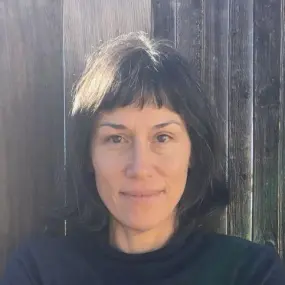
Melinda Matson Spina was born in the US to a family with a combination of veteran and immigrant roots beginning in the Vietnam war. Her childhood was spent in the Sonoran Desert at the foot of the Huachuca Mountains. From that grounding experience, she has inclined always toward artistry, habitat and placemaking; developing her ideas in environments ranging from the southern Arizona border and desert to the Panama Canal and rainforest.
Melinda is a lifelong artist and writer motivated by self reliance, community resilience, and aesthetic experience. She worked in art and craft, from curating exhibitions to rehabilitating historic houses, for two decades in Northern CA and the Pacific Northwest. In 2018, she returned to her elementary roots in AZ, where she is currently working with Desert Dispatch, a community-led documentary and mobilization of collective storytelling in the fight against inhumane tech.
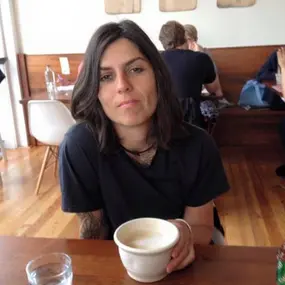
Jodi Darby is a media artist, activist and educator specializing in experimental video and photography.
Her work reflects an interest in re-purposing history, mapping the changing North American landscape and finding beauty in that which has been discarded and abandoned. She has exhibited at venues including
San Francisco Museum of Modern Art, the Washington Project for the Arts (DC), Museum of Fine Arts Houston, Yerba Buena Center for the Arts (San Francisco), Anthropology Film Archives (New York), the Portland Art Museum (Portland) and the Henry Art Gallery (Seattle).
She has developed and taught trauma-informed media arts curriculum for young people in the Portland area since 2005.
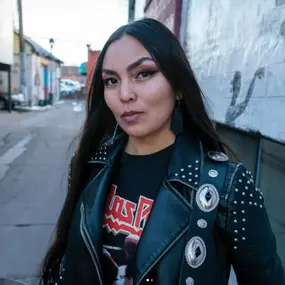
From the Four Corners region of the Navajo Nation, Sage Bond draws from Diné and Apache roots. Her music weaves together heavy metal influences, personal experience, and hard-earned wisdom, grounded in Native traditions that continue to guide their path. Through sound, she moves between intensity and reflection, shaping a practice that is both personal and rooted in lineage.