

 RSS Feed
 Amazon Music
 Apple Podcasts
 Audible
 Castbox
 Deezer
 Fountain
 iHeartRadio
 Pandora
 PocketCasts
 Podcast Addict
 Spotify
 YouTube
 S5E33: From Starfleet to the Sonoran Desert: Coping With a Burro Onslaught
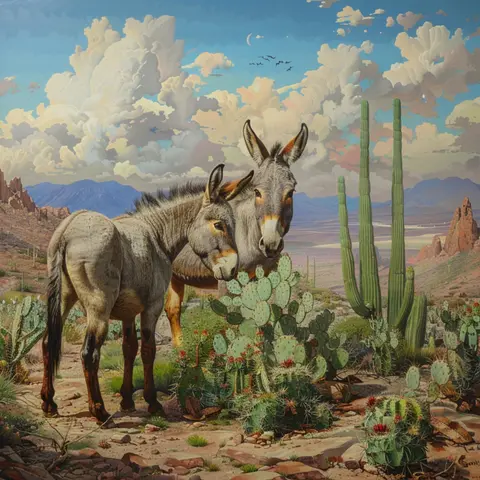
Burros are magnificent animals. What happens when unmanaged herds overwhelm the desert habitat around them? Dr. Jen Anderson joins Chris Clarke to describe her efforts to restore the Sonoran Desert Sanctuary near Alamo Lake in western Arizona. She recounts damage to palo verde trees, disappearing wildlife, and years of seeking help from the Bureau of Land Management. The conversation brings together desert conservation, federal wild burro management, animal welfare, and hands-on restoration—and includes a detour onto the bridge of Star Trek: Enterprise.
Key Takeaways
- Wild burros can have serious negative impacts on Sonoran Desert vegetation and wildlife, especially if their nuumbers are not controlled. There is some evidence that other animals are adapting to burro presence in some places, but that's for another episode. Managing burro populations on public lands is a gargantuan job,. Restrictions on methos due to federal law and understaffing and underfunding of federal agencies make that job nearly impossible. Using veterinary contraceptive menthods can help reduce populations, but they can also cause unpleasant results for individual burros. PZP, a common contraceptive used on burros, can accelerate the estrus cycle in female burros, contributing to suffering by those females.
Listeners in Joshua Tree and Moab may think their homes are overrun with jackasses, but this episode's guest has got them beat. We talk with Dr. Jennifer Anderson, whose diverse career has brought her to stewarding 300 acres of Sonoran Desert landscape in Mohave County, Arizona. But restoring her former 19th Century mine site has not proved as straightforward as Anderson had imagined. Western Arizona landscapes — and others throughout the deserts — are contending with a huge increase in the numbers of feral burros, introduced centuries ago but newly prospering at the expense of the desert. Anderson details the impact her unwanted guests have caused to her part of the desert, and the cascade of unpleasant effects that stem from the donkeys' presence as well as the inability of land management agencies to contend with the issue.
Plus! Our first ever listener contest: correctly identify all the birds in Fred Bell's nature audio and message Chris, and you may win a 90 Miles from Needles T-shirt. The first three listeners who email Chris with a correct ID, a t-shirt size, and a mailing address will get some mail from us.
Citation links and further reading
- AZGFD study — Associations between a feral equid and the Sonoran Desert ecosystem — Esther S. Rubin, Dave Conrad, Larisa E. Harding, and Brianna M. Russo; Wildlife Monographs 215, e1083, published June 26, 2024. Fieldwork in 2017–2019 compared areas with and without established burro herds near Lake Havasu and Lake Pleasant.
- Environmental Assessment — Big Sandy Alamo and Lake Havasu Wild Burro Gather and Population Control Plan — BLM Kingman Field Office, DOI-BLM-AZ-C010-2023-0025-EA. Official document index for the final revised EA, Finding of No Significant Impact, and Decision Record. Decision issued September 13, 2024. Expand Final Documents to access the assessment.
- BLM 2025 Three Rivers Complex gather and daily reports — Official record of the bait and water trapping operation and fertility control work.
- Alamo Herd Management Area — BLM geographic profile and appropriate management level.
- Big Sandy Herd Management Area — BLM geographic profile and appropriate management level.
- Havasu Herd Management Area — BLM geographic profile and appropriate management level.
- AZGFD explanation of the burro study — Accessible agency summary of the ecological concerns.
- National Academies review of equid fertility management — Methods and Effects of Fertility Management, in Using Science to Improve the BLM Wild Horse and Burro Program A Way Forward (2013).
- Mountain lion predation study — Lundgren and colleagues (2022), A novel trophic cascade between cougars and feral donkeys shapes desert wetlands. Background relevant to the predator discussion.
- NPS saguaro biology and nurse trees — Background on young saguaros, nurse trees, growth, and roots.
- Federal wild horse and burro law — Official U.S. Code PDF covering private-land removal and criminal provisions, including 16 USC 1334 and 1338.
Guest and episode links
- Sonoran Desert Sanctuary
- Anderson-Arroyo Foundation
- Fellowship for Desert Reporting
- Support 90 Miles from Needles
- This episode's sponsor Copper Mountain College
- Contact Chris
Content note:
Discussion of aggressive burro mating behavior begins around 28:42 and continues through about 29:58; the subject is mentioned again around 38:18–38:40. The episode also discusses childhood trauma and an injury to a dog.
Become a desert defender!: https://90milesfromneedles.com/donate
See omnystudio.com/listener for privacy information.
[00:00:00] Chris Clarke: This episode is made possible by listeners just like you, and by
[00:00:05] CMC Ad: Copper Mountain College is proud to sponsor this episode of 90 Miles from Needles, the Desert Protection podcast.
[00:00:13] Dr. Jen Anderson: If the right amount of burros existed in the Sonoran Desert and Mojave Deserts, if the herds were managed, yeah, I have no problem.
[00:00:22] Dr. Jen Anderson: They're magnificent creatures. But you can't have huge herds of burro in the Sonoran Desert, 'cause where I'm living, there's not gonna be a Sonoran Desert left if these herds continue. There just won't.
[00:00:48] Joe Geoffrey: Think the deserts are barren wastelands? Think again
[00:00:57] Joe Geoffrey: It's time for 90 Miles from Needles, the Desert Protection podcast
[00:01:09] Chris Clarke: Thank you, Joe, and welcome to 90 Miles from Needles. I'm your host, Chris Clarke, and we're gonna bring you a potentially controversial topic in this episode. I know it's one that often creates very heated conversations, often with alcohol involved. I think you're gonna find it interesting. But really quickly before we get to that, two things.
[00:01:27] Chris Clarke: One is to thank Margaret Oostendorp and Sarah Hanner for their donations. They are new donors. This is what keeps us going, folks, and if you go to 90milesfromneedles.com/donate, you can join Sarah and Margaret in the secret society of people that don't know each other necessarily, but all support 90 Miles from Needles.
[00:01:48] Chris Clarke: There are no meetings. It's the best kind of secret society. And since we've edited our intro to leave this little thing out, if you have a phone handy and you can text things, and you have a credit card hooked up, you can go to your texting app and text the word needles to 53555. That'll bring you up a little form where you can make a donation that is of a size and frequency that makes sense to you.
[00:02:11] Chris Clarke: Thing two, we are still accepting applications for fellowships in our Fellowship for Desert Reporting. Go to thedamn.org/fellowship to find out more and possibly get paid a little bit to work with us on a specific project. We're gonna be picking as many as six fellows early next month, but our deadline is October 15th.
[00:02:32] Chris Clarke: Take a look at the webpage. Think about it. There's a link to fill out the application form right on that page, thedamn.org/fellowship. And with that, let's get to our interview with Dr. Jen Anderson about her efforts to defend 300 acres of the Sonoran Desert in West Central Arizona from a very popular animal.
[00:03:17] Chris Clarke: I am very pleased to be talking with Dr. Jennifer Anderson from her place in Signal, Arizona. Do I have that right?
[00:03:25] Dr. Jen Anderson: Kinda Signal, kinda Yucca. I am literally in the middle of nowhere.
[00:03:30] Chris Clarke: Full disclosure to the listeners, Jen and I have known each other for a decade and a half, something like that. We met going for a hike in Joshua Tree National Park, and just have recently gotten back in touch, and Jen is working on some fascinating stuff.
[00:03:44] Chris Clarke: So you've been doing some restoration or attempting some restoration. We're gonna talk about why it's attempting rather than doing it. But let's start by you giving us a quick précis of how you got to where you are. What's been the arc of your life that has brought you to an outpost in the middle of West Central Arizona?
[00:04:08] Dr. Jen Anderson: Wow. It's been a long arc 'cause I'm in my 50s, but I grew up in Tucson, so I'm a Sonoran Desert native. My blood and my bones are made of Sonoran Desert minerals and water and rock, and I grew up in the outskirts of Tucson, outside the city limits. Um, my dad was a biology teacher at the Arizona State School for Deaf and Blind for 40 years, and he used to take me on nature walks every day.
[00:04:37] Dr. Jen Anderson: Me and my sister, our family, we'd go on nature walks in the desert, and he would describe everything to us, and the ecosystems, and how everything synergistically worked together. And so I'm very familiar with the Sonoran Desert, with everything that lives there and grows there, and it's just, it's always been my favorite place on earth.
[00:04:57] Dr. Jen Anderson: For all of the travels I've done around the world, I just love the Sonoran Desert. So yeah, life took me all over the place. Took me to Hollywood, where I had the chance to be on Star Trek and do cooking shows and all of these fun things. But my heart was always out here, and two things happened in my life.
[00:05:19] Dr. Jen Anderson: I started getting very involved with environmental activism, and part of that is from my longtime love of science fiction. And science fiction and being on Star Trek, there's a lot of themes about dystopias and what can happen in the future if we don't take care of what we have right here.
[00:05:41] Chris Clarke: Mm-hmm.
[00:05:42] Dr. Jen Anderson: And also the concepts of what happens if a landscape does not support life or life is struggling?
[00:05:49] Dr. Jen Anderson: What processes do we have to bring life back or to create new life? And kind of all of that is happening in our world right now. So I started getting a, a lot involved in desert communities in California and Arizona, where I would see the impact of overgrazing, of pumping water from ancient aquifers. The Cadiz project, which now has new life breathed into it.
[00:06:17] Dr. Jen Anderson: I thought we got that killed over a decade ago. I worked hard on that one to try to stomp that out, but now maybe some donations were made to the right people and now they're looking at, yeah, taking water again out of an ancient aquifer. All of that to say that when I really wanted to transition out of a career in Hollywood, I wanted to return to my roots.
[00:06:38] Dr. Jen Anderson: I wanted to come back to the desert because I'd always promised myself... I'd actually made kind of a really- divine promise that one day I would return to the desert and continue to do the work on the land that is truly the most meaningful thing to me. So I lucked out, and in 2019, I got the land deal of a lifetime on LandWatch, LandWatch.com.
[00:07:05] Dr. Jen Anderson: Be careful, there's a lot of scams out there. I shouldn't... I'm not promoting LandWatch.com, but I happened to have found a 300 acre piece of property out by Alamo Lake, totally off the grid, but it had water infrastructure, and it had some buildings and a long history of Indigenous peoples, miners back in the day.
[00:07:30] Dr. Jen Anderson: Um, more recently, a prepper family lived out here on a family compound for decades. And I was able to purchase this land for just next to nothing compared to what its value is. Mm-hmm. And not being a wealthy person, that was really exciting to be able to be the caretaker of 300 acres of Sonoran Desert.
[00:07:52] Dr. Jen Anderson: So I purchased that in, in 2019, and then started my escape plan from Hollywood, of how I would get from Hollywood back to the desert- Excellent ... so that I could be here full time.
[00:08:04] Chris Clarke: Excellent. And I wanna dive into what you've been doing there, but I know that there are listeners that will not forgive me if I do not ask you what you did on Star Trek.
[00:08:14] Dr. Jen Anderson: Okay, so I was on Star Trek: Enterprise. That was the series where Scott Bakula was captain. And I started on the series as a stand-in and photo double for the Vulcan character named T’Pol.
[00:08:29] Chris Clarke: Mm-hmm.
[00:08:30] Dr. Jen Anderson: And then I got upgraded and put in uniform, and I was one of the fleet members on Starship Enterprise, which is a whole other long story of dream come true, right?
[00:08:43] Chris Clarke: Yeah, absolutely.
[00:08:43] Dr. Jen Anderson: I grew up with the original series, and then of course with Next Generation and everything that came after that, and it had always been a dream to be on Star Trek. And so yeah, that dream actualized. And I sat at engineering on the bridge, and I even got to fly the ship on one episode. I was cut out, but I was filmed flying it.
[00:09:08] Dr. Jen Anderson: So somewhere there exists footage of me flying the Enterprise.
[00:09:12] Chris Clarke: Wonderful.
[00:09:12] Dr. Jen Anderson: Um, so yeah. No, that's hugely exciting, and to be a big fan of the show that actually gets to do that, and to be there on the bridge, and I got to operate, of course, at the tactical station. I got to operate the weapons arrays, so I got to blow things up, and that was a lot of fun.
[00:09:28] Dr. Jen Anderson: Yeah.
[00:09:29] Chris Clarke: Yeah. And I get the sense that a percentage of the people listening have stopped listening and gone to Paramount to look you up. But, uh, we'll talk for the people that are continuing to listen. What did you have in mind with this 300 acres when you acquired it?
[00:09:44] Dr. Jen Anderson: When I was a young girl growing up in the desert, two things happened to me early on that were very foundational, and they were both trauma related.
[00:09:51] Dr. Jen Anderson: One was witnessing the destruction of a magnificent beehive that existed in a hollowed out mesquite tree- Hmm ... in the arroyo down the hill from where I lived. I had told some boys about it because I thought they'd wanna see it, and that they'd- Yeah ... be as, as excited about this hive as I was and would love it as much as I did.
[00:10:14] Dr. Jen Anderson: This was my special sacred place as a child. I'd go sit and watch the bees. And the next time I went down, they had destroyed it with BB guns.
[00:10:22] Chris Clarke: Ugh.
[00:10:23] Dr. Jen Anderson: And there was nothing left. And so I saw the potential o- of destruction that humans are capable of. And then I had some of my own childhood trauma, and my place of solace and healing was really the desert.
[00:10:42] Chris Clarke: Mm-hmm.
[00:10:43] Dr. Jen Anderson: I would go sit in the desert. I had my favorite cave I would go hang out in. You know, when we had storms, I knew where the water would collect, and I would go, and I'd just spend hours watching to see if the tadpoles had come up yet, to see if the dragonflies were there. And this kind of time spent in the desert, um, very much kind of praying and meditating my own way as a child, and, um, that's where I found a lot of healing and solace.
[00:11:11] Dr. Jen Anderson: And so I made a promise that someday I would return to the desert and create a space where others could come and participate with the land.
[00:11:21] Chris Clarke: Mm-hmm.
[00:11:22] Dr. Jen Anderson: Whether in helping restore the land or just by doing contemplative practices on the land, meditating, praying, hiking, whatever that means to somebody, whatever healing looks like to somebody, there'd be a space that's very private and very secluded that they could come and explore themselves.
[00:11:45] Chris Clarke: That sounds really important and really wonderful. I think that kind of thing is much needed, and not just in the desert.
[00:11:52] Dr. Jen Anderson: As a theologian and a PhD in theology now, which was part of my exit from Hollywood, I also really appreciate the prophetic traditions- Mm-hmm ... of how so many people, when there was something wrong with their life, with society, with what was going on, like, they would go and lament in the desert.
[00:12:12] Dr. Jen Anderson: They would take that with them and go and seek answers. And yeah, so that's my invitation. I have a nonprofit, and I work with veterans for free, 'cause I think nobody really prepares people for what the battlefield really is-
[00:12:31] Chris Clarke: Yeah ...
[00:12:31] Dr. Jen Anderson: and for the toll that's gonna take, and I think that's grossly unfair. Um, and then, and also because I'm in a community in Mohave County that has a very high per capita percentage of veterans.
[00:12:43] Dr. Jen Anderson: And then I do work with other trauma survivors, and everything's on a sliding scale-
[00:12:47] Chris Clarke: Yeah ...
[00:12:48] Dr. Jen Anderson: because of the nonprofit. And then I also offer contemplative retreats for people that have the money and wanna pay and come on retreat, and they're not in crisis. They just wanna deepen their connection with themselves, with whatever they consider God.
[00:13:01] Dr. Jen Anderson: I have a degree in Christian ministry, uh, non-denominational, but I also have a degree in Islamic studies, and I've studied in India. And I love working with anyone, no matter where they come from or what their background is, so that's very important to me, too. So the doors are open, and people are welcome.
[00:13:20] Dr. Jen Anderson: And yeah, there's a Anderson-Arroyo Foundation website. It's anderson-arroyo.org. [Note: It's actually https://www.sonorandesertsanctuary.com/anderson-arroyo-foundation] And then also Sonoran Desert Sanctuary is the larger thing that I've created, is the Sonoran Desert Sanctuary and the 300 acres that's both a conservation project and a desert restoration project, and then also a space for people to come.
[00:13:43] Chris Clarke: And we will have links to everything Jen has mentioned in the show notes. So what were you restoring the landscape from? Is it just general trampling, or was there- Mm ... some activity there or...?
[00:13:58] Dr. Jen Anderson: Back in the day, back in the 1880s, this was Love's Camp, Love's... It was a manganese mine, a pick-and-shovel manganese mine.
[00:14:07] Chris Clarke: Hm.
[00:14:07] Dr. Jen Anderson: So the first damage was really from mining, and at one point o- over 1,000 miners were camped here working in this little open pit mining area. No ore was processed here, so it's not a Superfund site. Right. There's no crazy chemicals here or anything. There were things missing from the land. A lot of the mesquite had been cut for campfires.
[00:14:30] Dr. Jen Anderson: Right. A lot of the prickly pear had been eaten. So- Having grown up in Tucson and knowing what a fully stocked Sonoran Desert should look like, I was immediately aware of kind of what was missing here. And so I noticed, yeah, lack of prickly pear, lack of mesquite trees, and some other things as well. And so I thought, my first thought of what I, of my first challenge here was gonna be, "Okay, how do I reintroduce species that should be here?"
[00:14:57] Dr. Jen Anderson: Mm-hmm. And that was what I thought my plan of action was. And then I was confronted with an entirely other unexpected foe that was far more devastating than anything I had seen from the mining activity.
[00:15:15] Chris Clarke: Mm-hmm.
[00:15:15] Dr. Jen Anderson: When I first bought this property, it was beautifully lush, just covered in palo verde trees and gorgeous saguaro, beautiful old saguaro.
[00:15:27] Dr. Jen Anderson: Um, just magnificent. Some of the most beautiful saguaro I'd ever seen, and some of these were like saguaro I had never witnessed before, with five or six arms that emanated almost directly out from the ground and up. Wow. Just magnificent, magnificent beings, and very ancient species. And, you know, I bought the land in 2019, and I was still living in California, so I was coming back every few months to do work on the land while I'm trying to finish school, and I just started...
[00:15:57] Dr. Jen Anderson: The trees just started looking ragged. And somebody said, "Oh, there's this, this palo verde beetle that's out there that's doing damage." And I was inspecting the trees, and I'm like, "I don't see any palo verde beetles, and boy, there's a lot of branches just laying on the ground. Like, how are these branches just ending up on the ground?"
[00:16:17] Dr. Jen Anderson: They'd obviously been broken off the trees, and I'm like, "Is it wind? What's going on?" And then months would go by, and then when I was spending more time here, I started to see that there was a lot of burro around.
[00:16:31] Chris Clarke: Mm-hmm.
[00:16:32] Dr. Jen Anderson: A lot of burro. And more and more kept coming. And I guess burro herds replicate so fast.
[00:16:44] Dr. Jen Anderson: They in- they double, triple in size very quickly. And what I was witnessing was really an explosion of the burro herd in the Alamo Lake region-
[00:16:57] Chris Clarke: Mm-hmm ...
[00:16:57] Dr. Jen Anderson: in this kind of Mohave County region. And because when other water sources dry up in the desert after the monsoons or after the winter rains have gone, they would come to the lake, to Alamo Lake, 'cause I'm right adjacent.
[00:17:10] Dr. Jen Anderson: I border the wilderness boundary to Alamo Lake. So they would come to the lake for water. Then in the evening they were coming up my canyons and coming onto the land and just ripping apart the trees. And I started to put out cameras, video cameras, and I would see, like, four, six burro just rip apart a palo verde tree in a matter of hours.
[00:17:33] Chris Clarke: Wow.
[00:17:33] Dr. Jen Anderson: As high as they could reach. And they would, like, rip a branch, chew on it, drop it on the ground, and then they'd go for another branch. They wouldn't eat what they just harvested. They'd let that lay on the ground, and then they'd just rip another branch off to, you know, chew whatever was in their mouth, and then just let that fall.
[00:17:52] Dr. Jen Anderson: And- I started witnessing just the whole canopy from all of the trees disappearing. And then once the canopy was gone, they were just chewing the bark. And at this point I was like, "Oh my gosh, does anybody know this is going on?" So I started reaching out to some of my colleagues and some people I know, Center for Biological Diversity and Sierra Club, and they're like, "Oh, good luck.
[00:18:17] Dr. Jen Anderson: Nobody can do anything about the burros. They're federally protected." Mm-hmm. "There's this Wild Horse and Burro Act. You can't do anything." And I looked it up, and sure enough, you can't harass them. You can't protect your property from them. You can't, you can't even call 'em names. Like, it's- ... the protections are so serious.
[00:18:38] Dr. Jen Anderson: And it's not because they're an endangered species. It's not even because they belong in the desert. They are not. They are a feral, invasive species left over from the Spaniards who brought them over from Africa.
[00:18:52] Chris Clarke: Mm-hmm.
[00:18:53] Dr. Jen Anderson: But there's this nostalgia for the Wild West and this nostalgia for burros that, that this legislation was created around.
[00:19:05] Dr. Jen Anderson: And then as I did more research, I realized that the legislation was created, but then there was nothing put in there to fully fund it.
[00:19:11] Chris Clarke: Right.
[00:19:11] Dr. Jen Anderson: To fund what does it mean to keep these burro herds under control. And I started reaching out to the Bureau of Land Management, 'cause you know the other places told me, "There's nothing you can do," and I'm thinking, "My land is being destroyed.
[00:19:24] Dr. Jen Anderson: You can't tell me there's nothing I can do." So in 2020, 2021, I started reaching out to the Bureau of Land Management locally.
[00:19:33] Chris Clarke: Mm-hmm.
[00:19:34] Dr. Jen Anderson: No response. So I reached out to the state. Kinda no response. And I kept reaching out, and I kept trying to get ahold of them, and I kept writing letters, emails, phone calls.
[00:19:49] Dr. Jen Anderson: I was persistent, 'cause at this point I am waking up every day and there's 50 burro on my property, and they're just ripping trees down, and it's getting so frightening the level of damage that's being done that I'm just driven to do something about it. And after being ignored for years, I finally wrote to Deb Haaland at the Department of Interior when she was in charge.
[00:20:13] Chris Clarke: Mm-hmm.
[00:20:14] Dr. Jen Anderson: And I wrote her a letter and I said, "Listen, I'm not a rancher. I don't run cattle, so I'm not in conflict with the burros that way." I said, "I grew up in Arizona. I know what the Sonoran Desert's supposed to look like. My dad was a biologist. I've been a conservationist for years, and here's what's missing.
[00:20:31] Dr. Jen Anderson: You don't have any of these ground cover species anymore 'cause they're gone. The burro have eaten them. You don't have these shrubs anymore. They're gone. The burro have decimated them. We don't have rabbits. We don't have deer. The birds have gone away. The birds of prey don't have anywhere to roost. The quail don't have anywhere to roost.
[00:20:47] Dr. Jen Anderson: These are all the species that are no longer showing up on my cameras. Everything has left. I'm left with mice and snakes. The only things that are here, mice, snakes, and burros."
[00:20:59] Chris Clarke: Mm-hmm.
[00:21:00] Dr. Jen Anderson: And maybe two foxes. That's the only thing I would see here.
[00:21:07] Chris Clarke: Dr. Anderson isn't alone in noticing the lack of wildlife in areas that are overrun by burros.
[00:21:12] Chris Clarke: A study released in June 2024 by Arizona Game and Fish biologist Esther Rubin found that a lot of species either declined or nearly vanished in areas favored by burros. Engelmann's prickly pears, beautiful cactus, declined by 94%. Palo verde foliage density was lower where there were burros. Desert ironwood foliage density was also lower.
[00:21:36] Chris Clarke: There was a 63% drop in saguaro recruitment. That's successful reproduction of saguaros in burro areas. Arizona woodrat, one of my favorite critters, Neotoma devia, suffered 68% declines in burro-favored areas. Side-blotched lizards, an incredibly common desert species, were 26% lower in numbers. It wasn't bad news for all the species sharing the land with burros.
[00:22:04] Chris Clarke: Three species exhibited higher densities in the study in burro areas than in non-burro areas. And echoing what Jen said, they were Bailey's pocket mouse, the desert pocket mouse, and deer mice. So Jen has some peer-reviewed backup for what she says.
[00:22:22] Dr. Jen Anderson: I have thousands and thousands of palo verde trees on my property, right?
[00:22:26] Dr. Jen Anderson: The acreage is just covered in palo verde trees. Most trees no longer have a canopy. There's no longer anything shading the ground, right? One of the devastating things from losing palo verde trees is that you lose the saguaro that it protects.
[00:22:43] Chris Clarke: Right.
[00:22:43] Dr. Jen Anderson: Every saguaro has a nurse tree. From the moment it sprouts, if the saguaro does not have something shade the ground around it, it won't survive- Right
[00:22:53] Dr. Jen Anderson: because saguaros have very shallow root systems. So unfortunately, with losing all of these palo verdes, I'm losing every single saguaro on my land.
[00:23:04] Chris Clarke: Wow.
[00:23:04] Dr. Jen Anderson: I won't have any left. Very shortly, I won't have any left. They're all coming down.
[00:23:08] Joe Geoffrey: Don't go away. We'll be right back.
[00:23:12] CMC Ad: Copper Mountain College is a proud sponsor of 90 Miles from Needles, the Desert Protection Podcast.
[00:23:17] CMC Ad: Located in Joshua Tree in the Mojave Desert, Copper Mountain College serves the communities of the high desert with a broad range of programs, from desert studies and the popular Wildland Fire Academy to nursing, EMT, water technology, and many more programs. Copper Mountain College provides direct transfer programs to CSU and UC universities, as well as career technical education.
[00:23:40] CMC Ad: Learn more at www.cmccd.edu. Go Fighting Cacti.
[00:23:47] Chris Clarke: We're gonna try something a little different with Fred Bell's recording this week. Email me at chris@90milesfromneedles.com with an ID of all the birds in this recording. Tell me what they are. Give me your T-shirt size and a mailing address, and the first three people that get an email in to me with an accurate ID will get a 90 Miles from Needles T-shirt in the size they request.
[00:24:11] Chris Clarke: Let's listen
[00:25:33] Joe Geoffrey: You're listening to 90 Miles from Needles, the desert protection podcast. Never drive through a flash flood. It's dangerous, and you didn't wanna go to that party anyway.
[00:25:47] Dr. Jen Anderson: I never heard back from the Department of Interior except for a form letter, "Thank you so much for your interest," blah, blah, blah. But I got a call from the state director of the BLM in charge of burros, and he said, "I don't know what you've done, but all of a sudden Alamo Lake is the number one concern of the Department of Interior-
[00:26:06] Dr. Jen Anderson: and now they want an environmental assessment, and then they want a cap." So they had to do an environmental assessment, and it showed that in a region where there's only supposed to be 150 burro in this whole region, maybe I might have the numbers wrong, but it's something like 500,000 acres.
[00:26:26] Chris Clarke: As it turns out, Jen did have the numbers a little wrong, although not by enough to really make a change in her argument.
[00:26:31] Chris Clarke: The Alamo Herd Management Area, which is the area that she's experienced with, is 341,000 acres. She was roughly in the ballpark, in other words. But what makes this even more interesting is that the Alamo Herd Management Area is adjacent to two other herd management areas, the Havasu HMA, which is 450,790 acres, and the Big Sandy HMA, which is 244,000 acres, or just a little bit less than that.
[00:27:00] Chris Clarke: So we have three contiguous herd management areas, and they add up to just under 1.04 million acres. That's a lot of land we're talking about.
[00:27:12] Dr. Jen Anderson: There's supposed to be 150 burro. That's what that land can handle, and there was upwards of 3,000 burro.
[00:27:20] Chris Clarke: Wow.
[00:27:22] Dr. Jen Anderson: And I knew this 'cause the person that was up with the planes doing the counts told me.
[00:27:30] Dr. Jen Anderson: Said, "Yeah, no, we got a problem. There's a lot of burro down there." I'm like, "Didn't anybody notice?" No, because they have one person-
[00:27:38] Chris Clarke: Right ...
[00:27:38] Dr. Jen Anderson: for all of Mohave County, and some of the bigger surrounding areas. One person to manage the entire herds for all the way from Kingman to the Mexican border. Wow. There's no way one person can do that job.
[00:27:55] Dr. Jen Anderson: I understand why my calls weren't getting returned. So they initiated a capture. They took out 1,000 a year ago. That still left 2,000 more than should be here. And remember, those herds do double and triple in size very quickly.
[00:28:14] Chris Clarke: Yeah. They're enthusiastic reproducers.
[00:28:17] Dr. Jen Anderson: Oh, my gosh, are they ever.
[00:28:20] Chris Clarke: Quick content note: Dr.
[00:28:22] Chris Clarke: Anderson is about to explain an unpleasant interaction between male and female burros that some of you might wanna skip. It's about a minute and 16 seconds long.
[00:28:34] Dr. Jen Anderson: Oh, my gosh, are they ever. And one of the things they did, too, is they started to initiate a birth control program. These programs are usually orchestrated by men.
[00:28:45] Dr. Jen Anderson: So the birth control solution is to, of course, give the jennys, the girls, birth control.
[00:28:52] Chris Clarke: Mm-hmm.
[00:28:52] Dr. Jen Anderson: They can't actually get pregnant.
[00:28:54] Chris Clarke: Right.
[00:28:55] Dr. Jen Anderson: But what this does is it keeps them in a perpetual state of heat. And if you've ever seen burro mating, when you have 2,000 burro too many in an area, if a jenny goes into heat, if one of the girls goes into heat, she gets surrounded very quickly by 10 to 20 males in a circle.
[00:29:18] Chris Clarke: Wow.
[00:29:18] Dr. Jen Anderson: And they will all repeatedly mate with her until she can get away. And the sound is horrific. It is absolutely horrific to hear her all night long. And I have canyons where this happens, and it echoes, and I can hear them all all night long. And it is a grossly unfair thing to put any creature through.
[00:29:50] Chris Clarke: Yeah. And I'm thinking that even apart from the ecological aspects of that going on, that's not really something that's helpful if you're running an organization that's supposed to help people with recovering from trauma.
[00:30:05] Dr. Jen Anderson: Yes. So the burro overpopulation here, it's very loud. It's very disturbing. They're also very aggressive creatures.
[00:30:16] Dr. Jen Anderson: These are not docile, tame. They're very curious, and they're very territorial.
[00:30:24] Chris Clarke: Mm-hmm.
[00:30:25] Dr. Jen Anderson: I don't wanna scare people from coming here, right? But there have been situations where, you know, burros come through, and they mess up your stuff at night. If you're camping and you have stuff sitting out, they've turned over cooler boxes and chewed up people's hats and kicked over chairs, and you have to be very careful not to confront them.
[00:30:45] Dr. Jen Anderson: They will charge you, or they will charge your dog. And burros are... They have no predators in the Sonoran Desert.
[00:30:53] Chris Clarke: Mm-hmm.
[00:30:53] Dr. Jen Anderson: Um, perhaps if we did have packs of gray wolves, that might be a predator for the burros. But even a mountain lion, burros will kill mountain lion.
[00:31:02] Chris Clarke: Wow.
[00:31:03] Dr. Jen Anderson: They are very intense with both their teeth, their jaws, and their hooves.
[00:31:09] Dr. Jen Anderson: And unfortunately, my dog has suffered from that. I had a very territorial burro that the BLM would not come and get, and it would charge us all the time. And I told the BLM, I said, "Listen, if this was a black bear that was charging us all the time and hanging around my house, and, like, I couldn't go out to my truck because it would charge me every time I open my front door, Arizona Game and Fish would come and get that bear, right?
[00:31:38] Dr. Jen Anderson: And they would move it somewhere else, or something would happen."
[00:31:40] Chris Clarke: Right.
[00:31:40] Dr. Jen Anderson: But because this is a burro, "Oh, man, we can't come and just get one burro." That burro at one point had me cornered, and 'cause I didn't see it, and it came out of nowhere, and I couldn't get away, and my dog intervened, and it kicked my dog and broke two of the vertebrae-
[00:32:00] Chris Clarke: Oof
[00:32:00] Dr. Jen Anderson: right by her tail. So I know what it's like to have to lift a dog into your car every time you go somewhere. And she's only, she was only four when it happened.
[00:32:11] Chris Clarke: Ugh.
[00:32:12] Dr. Jen Anderson: So she lives in constant pain and has maneuvering problems because of it. Yeah. Then finally, after that happened, after I told them, "Listen, I'm in fear for my life," 'cause it's a federal crime to shoot a burro, right?
[00:32:29] Chris Clarke: Mm-hmm.
[00:32:29] Dr. Jen Anderson: And they finally told me, "Oh, well, if your life is threatened, you can take action." I'm like, "I've been complaining for years about this. You just tell me now that I am allowed self-defense without going to jail."
[00:32:46] Chris Clarke: Yeah.
[00:32:46] Dr. Jen Anderson: Okay. And that might seem obvious to people, but with this kind of legislation, it's really not obvious.
[00:32:53] Chris Clarke: Oh, yeah.
[00:32:54] Dr. Jen Anderson: And-
[00:32:54] Chris Clarke: Yeah, and I like burros in general. I think they're really cool animals. You can have a really interesting relationship with a burro. They're extremely smart.
[00:33:05] Dr. Jen Anderson: Mm-hmm.
[00:33:05] Chris Clarke: But they're not puppies. I actually had my sternum cracked very slightly at one point because I was not doling out the carrots fast enough to a burro in Oatman, Arizona, and he just took his snoot and he just tapped my sternum to hurry me up, and that hurt for months.
[00:33:26] Chris Clarke: They are- Wow. They're just really strong animals.
[00:33:29] Dr. Jen Anderson: If the right amount of burros existed in the Sonoran Desert and Mojave Deserts, if the herds were managed, yeah, I have no problem. They're magnificent creatures. In the Book of Job, when Job's having his whirlwind vision of God, when God finally appears to Job, God's like, "I created the Leviathan, and I created this, and I created this, and I even created the wild burros of the desert," you know?
[00:33:55] Dr. Jen Anderson: Yeah, they're magnificent creatures. But you can't have huge herds of burro in the Sonoran Desert, 'cause where I'm living there's not gonna be a Sonoran Desert left if these herds continue.
[00:34:13] Chris Clarke: Right.
[00:34:13] Dr. Jen Anderson: There just won't.
[00:34:15] Chris Clarke: One of the things that I've heard from listeners and from readers of the print publications or the web publications that I've worked on is that an endless stream of bad news is demoralizing if you don't hand people something that they can do to take action, and I am thinking that might be a little bit of a difficult call in this case.
[00:34:39] Dr. Jen Anderson: Not at all. Actually, I think right now we actually have a favorable presidency to make some amendments to the Wild Horse and Burro Act, and there's also always calling on your local congressional people to fund the management of the herds. Mm. Right now Senator Kelly's office knows this is an issue, Gosar's office knows this is an issue.
[00:35:04] Dr. Jen Anderson: They're very aware that the burro problem is a problem, and that the herds need management. Mm-hmm. So the more we have people's voices reaching out and really encouraging some changes to give our Bureau of Land Management folks what they need to actually do their job.
[00:35:20] Chris Clarke: Yeah.
[00:35:20] Dr. Jen Anderson: Um, but the other thing you can do...
[00:35:23] Dr. Jen Anderson: So one of the things I did is I went out and I got trained in desert restoration from folks that have faced serious desertification in the Middle East. And so I now have seminars, and volunteers can come out, and we create small water retention infrastructures on the land so that when we do get rain, even if it's minimal, we're able to slow and sink the rain into the ground, and create places for rain to settle into the ground so that we can support the palo verde trees and so forth that are still left.
[00:35:58] Dr. Jen Anderson: We can help give them what they need to grow. By hosting these, uh, these retreats on the land where you can come and learn water capture and water retention, along with the retreats where volunteers come and do the water infrastructure on the land, we're also replanting. Mm-hmm. And we're- I have a botanical garden going that is keeping all of these species that are disappearing, the desert mallow, the rhatany, the rabbitbrush, the sweetbush, like all these things that are disappearing off the land because of the burros and the drought.
[00:36:34] Dr. Jen Anderson: We're keeping all these species alive and in place so that when rains come back or where the herds are managed, these things can all re-seed, and can all start to spread out again into the surrounding areas. So- Yeah, we're trying to keep this biological island alive because I truly believe in a future when some of these droughts won't be as severe, and I know a lot of these trees have the chance of coming back if the burros don't keep tearing them down.
[00:37:03] Dr. Jen Anderson: Even some that have been chewed down to a stump, that stump is still sprouting, so there is still hope.
[00:37:09] Chris Clarke: Yeah, palo verdes don't mind growing back. I'm kind of wishing that they did because I have a whole lot of volunteer palo verdes throughout my yard, and removing them could keep somebody employed half-time for 20 years.
[00:37:24] Dr. Jen Anderson: Well, you're lucky and I'm jealous, so
[00:37:26] Chris Clarke: I think we might take a burro off your hands. Actually, I was talking with someone who is, uh, we'll just say a National Park Service official at Death Valley.
[00:37:36] Dr. Jen Anderson: Mm-hmm.
[00:37:36] Chris Clarke: And I said something about taking a burro off his hands, 'cause they have a big burro population in Death Valley National Park, and he shook his head and he said, "You need to take hundreds of them."
[00:37:50] Dr. Jen Anderson: Thousands.
[00:37:51] Chris Clarke: Yeah.
[00:37:51] Dr. Jen Anderson: Thousands of them. There are thousands of burros that are now kept in captivity because there's not space for them on the land. There is nowhere to put them, and the ones that are here, they're now starving. There's nothing for them to eat. They've ripped everything apart. So it's not humane to keep the herds at these sizes.
[00:38:11] Dr. Jen Anderson: Right. It's not humane for them to give them birth control so that they have to endure, yeah-
[00:38:18] Chris Clarke: Yeah ...
[00:38:19] Dr. Jen Anderson: gang rape. Not pleasant. Yeah, so really to be fair to the burros and to allow them to, to really have their place in the desert, they need to be kept within the right herd size.
[00:38:32] Chris Clarke: Yeah.
[00:38:32] Dr. Jen Anderson: So I'm hoping that can be done.
[00:38:36] Chris Clarke: So with any of your connections from previous stages in your life, could you arrange to just have the burros beamed somewhere?
[00:38:44] Dr. Jen Anderson: That would be great. Yeah, I'm sure there's terraforming on some planet out there that needs a lot of fertilizer. Yeah, they'd be great for, 'cause they poop a lot. So I'll ... Not 'cause you're gonna turn them into fertilizer.
[00:38:58] Chris Clarke: Wait, had, had transporters even been invented in the timeline when Enterprise was on?
[00:39:03] Dr. Jen Anderson: Yes, but we didn't trust them yet, so we only, at first we only used them for supplies.
[00:39:09] Chris Clarke: Ah, okay.
[00:39:10] Dr. Jen Anderson: But of course, then we had a crisis where we actually had to use it for humans, and it mostly worked out. Yeah. So yeah, we're, we'd just gotten that technology, and we're just testing it out, so yeah.
[00:39:24] Dr. Jen Anderson: Loads of fun.
[00:39:26] Chris Clarke: Yeah. If only there was a parallel to what we're going through here now.
[00:39:29] Dr. Jen Anderson: I know. We could use a lot of Star Trek technology right now.
[00:39:33] Chris Clarke: Yep. Jen Anderson, thank you so much for talking to us, and it's wonderful to be back in touch with you. And- Likewise ... I look forward to hearing more about your progress.
[00:39:44] Dr. Jen Anderson: Oh, thank you. I'd love to give you updates. And yeah, please, if people are interested in volunteering out here and doing land restoration, or interested in some of the other retreat work we do, please, yeah, look at those websites and reach out. And we'd love to have you visit too, so plan a trip.
[00:39:59] Chris Clarke: That sounds great.
[00:40:21] Chris Clarke: Thank you so much to Dr. Jen Anderson for giving us the skinny on what's happening with the equines in the Sonoran Desert in West Central Arizona. As I mentioned earlier in the interview, check the show notes for links to her website and to various studies that we cited. I've been wanting to get Jennifer on the podcast for quite some time, and I'm glad we were finally able to do it, and it certainly won't be the last time.
[00:40:46] Chris Clarke: Also, thanks again to Margaret Oostendorp and Sara Hanner for becoming new donors to 90 Miles from Needles, and again, 90milesfromneedles.com/donate. And also again, again, thedamn.org/fellowship. If you have a story that you think we might be interested in and you want to work with us to put something together, check that out.
[00:41:12] Chris Clarke: By the time you hear this, we may be getting pelted here in the Joshua Tree area with rain from Hurricane Rachel. It looks as though we still have a few days of unseasonal heat to endure, and kind of starting to wonder how many years we're gonna have to wait before we can stop calling it unseasonal.
[00:41:28] Chris Clarke: But in the next few days, it should cool down, and it'll get wet by Sunday this weekend. That's the forecast as I speak, at least where I am. And it looks like it might be heavy rain, so everybody please play it safe. Given that I am driving to El Paso in early November for the Chihuahuan Desert Conference, November 4th through 6th, I am gonna be in Tucson, Arizona on the 2nd of November, leaving on the 3rd to get to El Paso.
[00:41:59] Chris Clarke: I am breaking up the drive with a layover day in Tucson. If you are interested in hanging out, meeting up, talking about the podcast, talking about the desert, talking about, I don't know, whatever, why not send me an email? I'm at chris@90milesfromneedles.com. I look forward to hearing from you. And in the meantime, I will see you at the next watering hole.
[00:42:25] Joe Geoffrey: And that brings us to the end of this episode of 90 Miles From Needles, the desert protection podcast. You can find show notes for this episode, along with links and background, at 90milesfromneedles.com. We're also on social media. You can find us on Facebook, Instagram, Bluesky, and Threads. Just search for 90 Miles From Needles.
[00:42:51] Joe Geoffrey: And if you'd like a more direct line, you can reach us on Signal at hey90MFN.67. If you'd like to support the show, you can make a donation of whatever size and frequency feels right to you at 90milesfromneedles.com/donate. Listener support is what makes this podcast possible. Our voiceover is by Joe Geoffrey.
[00:43:17] Joe Geoffrey: Podcast artwork is by Martin Mancha. Nature sounds are recorded by Fred Bell. Our theme song, Moody Western, is by Bright Side Studio, with additional music licensed from independent artists.
[00:43:33] Chris Clarke: Other music in this episode is by Forever Sound and Purple Planet
[00:44:32] Joe Geoffrey: 90 Miles from Needles is a production of the Desert Advocacy Media Network
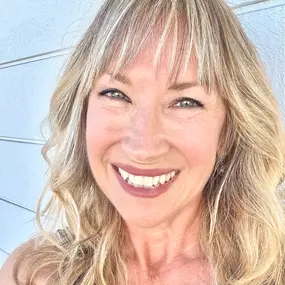
Jen Anderson is a seasoned theologian who has spent decades studying spiritual practices of major faith traditions: Christianity, Islam, Judaism, Buddhism, Jainism and Hinduism as well as Earth based rites and rituals. She is a Wilderness Rites-of-Passage counsellor with years of experience working as a spiritual guide for individuals and retreat groups.
Jen is an accomplished teacher, writer, researcher and spiritual director who can synthesize practical contemplative healing programs tailored to the individual needs of her subjects whether they are individuals, groups, or spaces. Her extensive spiritual background, both academic and personal, enables her to identify and empathize with all forms of trauma and develop meaningful healing practices that will lead sufferers to a path of recovery. She is adept at teaching mindfulness techniques, non-violent communication, empathy, and assisting with the spiritual challenges of major life transitions.
Jen is creating a wilderness retreat center in the Arizona wilds; the Sonoran Desert Sanctuary which is home to the Anderson-Arroyo Foundation (501c3). The foundation and sanctuary will provide spiritual direction for Veterans and other trauma survivors suffering from PTSD and Moral Injury. She is also incorporating permaculture food forests and botanical gardens to provide dietary and spiritual nourishment to visitors as well as contribute to a re-greening of the desert itself.
Jen’s practical accomplishments include over two decades in the film industry on both the creative side and in upper managemen… Read More