
 Amazon Music
 Apple Podcasts
 Audible
 Castbox
 Deezer
 Fountain
 iHeartRadio
 Pandora
 PocketCasts
 Podcast Addict
 Spotify
 YouTube
  RSS Feed
 S5E7: The Battle for Grand Staircase Escalante National Monument
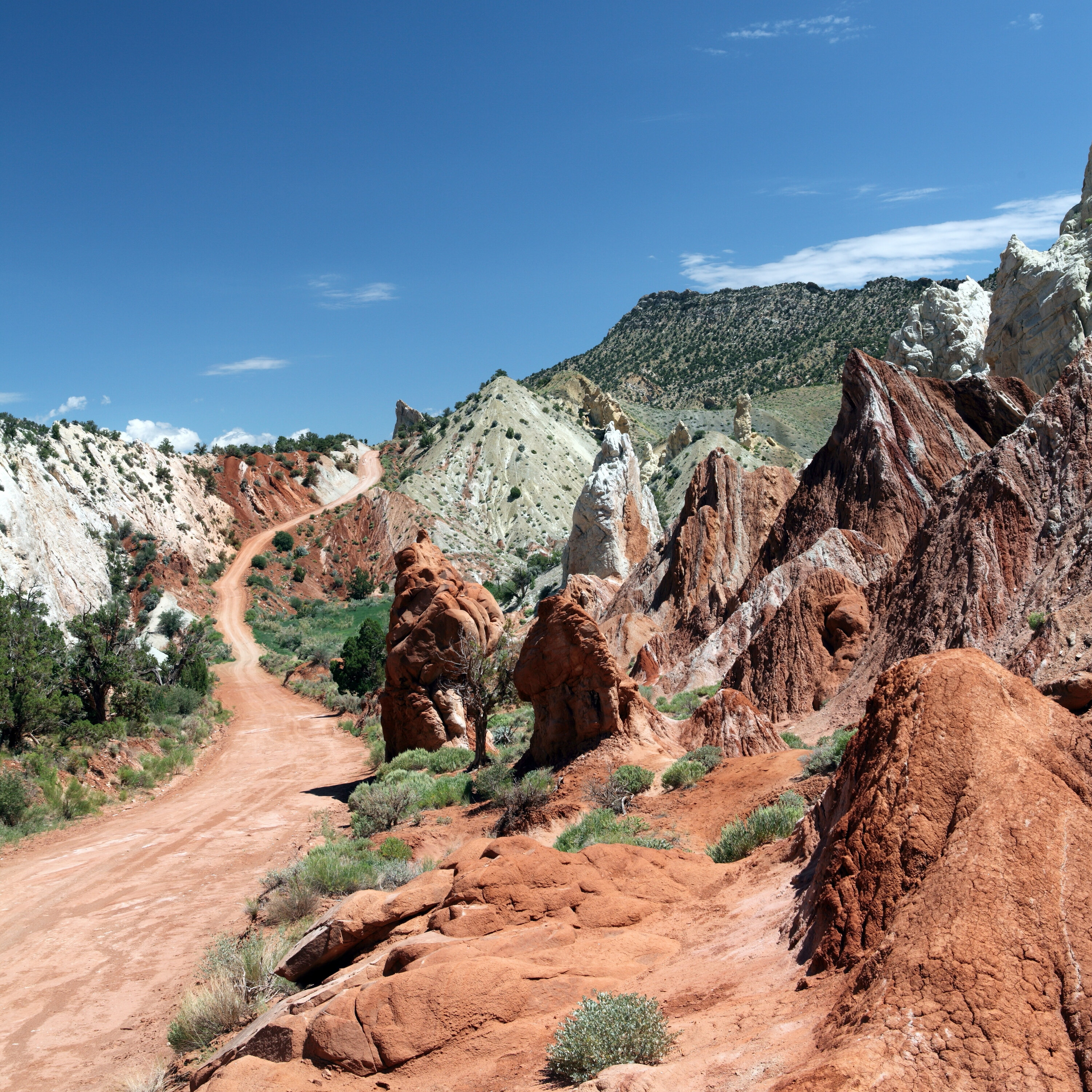
Dr. Jackie Grant explains how a Congressional Review Act attack on Grand Staircase–Escalante’s management plan could destabilize public-land planning nationwide, despite extensive local participation and the monument’s ecological and economic importance.
Urgent: Find your member of Congress and tell them to vote no on the Lee-Malloy resolution
Episode Summary:
In this timely and engaging episode of the "90 Miles from Needles" podcast, we look into the ongoing legislative challenges faced by Grand Staircase Escalante National Monument. In conversation with Dr. Jackie Grant, Executive Director of Grand Staircase Escalante Partners, the discussion unravels the intricacies of environmental policy, community engagement, and the unforeseen impacts of political maneuvers on public lands. This episode is a must-listen for those passionate about conservation and environmental justice.
The episode sheds light on the latest efforts by Utah politicians, including Senator Mike Lee, to overturn the monument's management plan using the Congressional Review Act. Dr. Grant elaborates on the implications of such actions, emphasizing how it could cause chaos across all public lands with management plans. The discussion also highlights the socioeconomic benefits derived from the monument's existence, opposing the idea that these lands are barren and underutilized. Through a meticulous examination of the issue, the conversation underscores the vital importance of community voices and scientific reasoning in land management decisions.
Key Takeaways:
- Congressional Review Act Impact: The recent moves by Utah legislators pose a threat not only to Grand Staircase Escalante's management plan but also to the concept of public land management nationwide.
- Diverse Stakeholder Engagement: The formation of the monument's current management plan involved extensive input from varied community representatives, highlighting the need for balanced perspectives in environmental policy.
- Economic and Ecological Significance: The Grand Staircase Escalante National Monument supports local economies through tourism and recreation while preserving diverse ecosystems and night skies.
- Urgency of Advocacy: Listeners are encouraged to speak out to their elected representatives to protect public land management plans from being undermined.
- Wider Conservation Context: This episode contextualizes Grand Staircase Escalante as a crucial link in the larger preservation corridor stretching from Moab to Mojave.
Notable Quotes:
- "The Grand Staircase Escalante National Monument is almost 2 million acres in size… We don't really know how big a monument needs to be to protect 660 species of native bees." – Dr. Jackie Grant
- "If we err on the side of the bigger is more protective, then we know for sure we have protected those bees." – Dr. Jackie Grant
- "It seems unlikely, but in this administration, nothing's unlikely anymore." – Dr. Jackie Grant
Resources:
- Grand Staircase Escalante Partners
- Headwaters Economics Report on National Monuments
- Grand Canyon Trust – Information on Grand Staircase Escalante
- BLM Grand Staircase Escalante National Monument Page
- Trinational Sonoran Desert Symposium
Explore the urgent and profound issues featured in this informative episode of 90 Miles from Needles; The Desert Protection Podcast. Stay tuned for more remarkable insights and stories addressing the protection of these precious desert landscapes.
Become a desert defender!: https://90milesfromneedles.com/donate
See omnystudio.com/listener for privacy information.
UNCORRECTED TRANSCRIPT
0:00:00 - (Chris Clarke): 90 miles from the desert Protection Podcast is made possible by listeners just like you. If you want to help us out, you can go to 90 miles from needles.com donate or text needles to 53555.
0:00:25 - (Joe Geoffrey): Think the Deserts are Barren Wastelands? Think again. It'S time for 90 miles from Needles the Desert Protection Podcast.
0:00:45 - (Chris Clarke): Thank you Joe and welcome to 90 miles from the desert Protection Podcast. As always, I'm your host Chris Clark and this week we have a long awaited interview with Dr. Jackie Grant from the Grant's Jackass Escalante Partners, a group working to preserve and protect Grand Staircase Escalante National Monument in South Central Utah. And it is a fascinating and extremely timely conversation as we will discuss in a minute because as of today I'm recording this on March 4th, the Utah legislators at Dr. Grant spoke about trying to undermine the entire process of National Monument management plans and their attempt to delegitimize Grant Staircase Escalante National Monument. It's actually happening and we have a press release segment from my former colleagues at the National Parks Conservation association that dropped dropped into my inbox not long ago.
0:01:32 - (Chris Clarke): So this is a well timed episode. But before we start I want to thank some folks for first off responding extremely kindly to the news that I shared with you last week in a PSA for this podcast and that is that we had a little bit of a house fire here and that interfered with my ability to put out a full episode last week. Everyone's fine, no structural damage to the house, it just stinks. Like Eleanor we are a all a little bit stressed out, but we're essentially fine.
0:02:02 - (Chris Clarke): It's just a huge hassle. We may be losing some of our prized personal possessions as well as some personal possessions that we forgot we had and don't really care about. Mixed news all around, but people reached out with offers of condolences and similar stories when they went through same things and advice for how to contend with insurance companies and most of all with kindness. And Lara and I are really touched and we are incredibly grateful to you for listening and for reaching out.
0:02:27 - (Chris Clarke): And it's still ongoing. I mean we're lucky enough to been able to rent a really nice house in a beautiful part of Joshua Tree for the next month or two. Friend of a friend is renting it to us and with any luck our insurance company is going to pay that rent. So go us. As life changing catastrophes go, this one wasn't so bad. That said, as I mentioned in that little update that we sent out last week, I am really upset about the books that I may lose. They have smoke smell to be cleaned out of them and the contractors may decide that some are total losses.
0:02:58 - (Chris Clarke): I have a lot of auto print books. I have a lot of small press and museum press books. So if you happen to see me in the next couple of weeks and you're into that kind of thing, I could probably use a hug. I mean I generally can anyway, even if I'm in a good mood and there wasn't a fire or anything like that. In addition, I wanted to give you a heads up that it is unlikely that there will be an episode next week because I'm traveling.
0:03:21 - (Chris Clarke): I am going to the Trinational Sonoran Desert Symposium in Ajo, Arizona, which is one of my favorite small desert towns grown on me all the time. If you happen to be an air too, let me know. We can make plans to grab a cup of coffee. Really looking forward to meeting some new folks and possibly having some of them consent to having me jam a microphone in their face and talk to me about the work that they're doing.
0:03:42 - (Chris Clarke): At the very least I'll get a little time to decompress to breathe the oxygen that the organ pipe cacti are putting out and we will be back with a for sure new episode at the end of the week. After that, if you are going to Ajo, I'm going to be bringing some podcast T shirts that I will be happy to hand out to folks. So just let me know. Finally, I want to thank a few people that have responded to our usual and perennial plea to help keep us going by donating some cash. And we've had a nice set of donations in the last couple of weeks, including a couple of anonymous donations. In addition to the anonymous donors, we want to thank Andrew Alden, Gillian Sandel, Peter and Gene Osorio, Mike Stillman, who's a wonderful local writer here in the Joshua Tree area. His book in the Joshua Sea is a beautiful piece of historical fiction about the Mojave Desert. Highly recommended.
0:04:37 - (Chris Clarke): I enjoyed it a great deal. But that's not all. We also got donations from Emily Sinkhorn, Melanie Anderson Marshall, and Martha Benioff. We are just really grateful to all of the folks we mentioned and to the folks that we deliberately avoided mentioning by lumping them into the Anonymous anonymous category. If you want to help us out and join these wonderful people so that you can sit at the metaphorical cool kids table in the 90 miles from Needles cafeteria, you can go to 90 miles from needles.com
0:05:07 - (Chris Clarke): donate some of our friends mentioned earmark their donations for our Fellowship for Desert Reporting and you can reach that fund by going to 90 miles from needles.com Fellowship. That fund, which enjoys some matching funds donated by a generous anonymous supporter, will go to hire freelance emerging journalists who work on desert environmental issues. Love to get some voices other than mine in this podcast.
0:05:30 - (Chris Clarke): While we're talking about donations, wanted to mention that we spent a little bit of time earlier this year going over the donation levels at 90 miles from needles.com donate and changing them a little bit to make them make more sense. I mean going from $4.50 to $5, things like that. And it occurred to me pretty recently that we really need to have what I will just call a broke ass level or dead ass broke level for those of you half my age, for all my dead ass broke friends out there. So starting this week we are implementing a dollar a month option.
0:06:06 - (Chris Clarke): Should be low enough that most of you wouldn't even really notice it coming out of your budget. 12 bucks a year. But if 10,000 people sign up at the dollar a month level, we can get a lot of really good work done. So again, 90 miles from needles.com donate or you can text the word needles to 53555. So like I said, this is a timely interview with Dr. Jackie Grant of Grand Staircase Escalante Partners as I record this again on the 4th of March Wednesday, a press release from the National Parks Conservation association has come out letting us all know that Representative Malloy and Senator Lee of the State of Utah introduced a joint resolution to overturn the management plan for Grand Staircase Escalante National Monument in Utah.
0:07:08 - (Chris Clarke): And that resolution relies on the Congressional Review act, even though the law was intended only to apply to formal rules and not to agency policies like land management plans. As the NPCA release says, the resolution disregards and overturns decades of community input, tribal engagement and hard won progress. The management plan guides future decisions for the monument's 1.9 million acres, including access for recreation and protection of cultural sites, safeguards for wildlife habitat, off road vehicle restrictions for sensitive areas, and so forth. Now, Senator Mike Lee is famously opposed to the very existence of public lands.
0:07:48 - (Chris Clarke): That's a remarkably unpopular position. And because he's had his last two attempts to undermine public land protection in the western US Fail miserably in Congress because of national outcry spanning the political spectrum, very, very few people want public lands to get sold off to the highest bidder. Lee and Malloy are using this really bureaucratic, sounding, wonky workaround to undermine not just the management plan that came out late last year for Grand Staircase Escalante, but any other national monument with a management plan.
0:08:21 - (Chris Clarke): And so my friend Corey McNulty, one of my favorite Utahns who is Southwest campaign director at npca, is quoted in a release as saying, this is a blatant attack that fundamentally ignores the purpose of this monument. And the voices of the people who value and fought so hard to Protect was decided 30 years ago that Grand Staircase Escalante would be protected for its remarkable landscape and scientific and historic resources.
0:08:46 - (Chris Clarke): And the monument is strongly supported by the American people. Now, members of Utah's congressional delegation want to throw out years of work designing a careful management plan that involved tribal consultation and community voices. This is another thinly veiled attempt to exploit this landscape for mining, oil and gas drilling, unchecked, off road vehicle use, and more. Grand Staircase Escalante has become a center of scientific discovery, from dinosaur fossils to human history to plant and animal diversity.
0:09:18 - (Chris Clarke): It's also a centerpiece of Utah's booming outdoor recreation economy, serving as a critical link between three crown jewels of the National Park System, Bryce Canyon and Capitol Reef national parks, and Glen Canyon National Recreation Area, which together preserve the region's incredible and interconnected cultural landscape. Clean air, dark night skies and sweeping vistas. End of quote. By Corey. So that's what we're talking about with Jackie Grant and let's get to that interview right now.
0:09:48 - (Chris Clarke): We're very, very privileged to have Dr. Jackie Grant, the executive director of Grand Staircase Escalante Partners, on the podcast. And this has been an interview that we have scheduled and rescheduled a few times. You've been very, very busy and having to respond to things going on in D.C. as well as in the monument. They are obviously intertwined. And you just told me about something that happened pretty recently that you've had to respond to. Do you want to tell tell our
0:10:20 - (Jackie Grant): listeners about that a little bit and just brace yourselves. This is going to be full of jargon because that's how the government works. Senator Mike Lee from Utah just introduced an opinion from the Government Accountability Office, and that opinion says that the current management plan, which was approved in 2025 for the grand Staircase Escalante National Monument, is now considered a rule under the Congressional Review Act.
0:10:50 - (Jackie Grant): And what this means is that the government can now decide to rescind that rule and replace it with another rule or management plan. However, that management plan cannot be substantially similar to the existing management plan, which throws everything into legal chaos, not just for the Grand Staircase Escalante National Monument, but Also for all the other national monuments and public lands that are managed by management plans, which is a lot of them. Right.
0:11:23 - (Chris Clarke): And having had my fingers in development of a couple of management plans, including the still still being weighted on management plan for Mojave Trails National Monument, I was, I was intrigued to see that the management plan for Grand Staircase came out last year and it in some ways seemed kind of familiar. Do you want to talk about how, how that looked from a 25,000 foot level?
0:11:47 - (Jackie Grant): Sure. Management plans, especially for national monuments are guided in part by the presidential proclamation that was used to designate the national monument in the first place. And the management plan then allows the Bureau of Land Management staff to help guide the public on how to use these resources while protecting them. So that's the very, very basic overview of an over 200 page long document. The current 2025 management plan was put together over the course of about two years with input from hundreds to thousands of people right throughout the country and locally as well. So there it is a fact that local voices were heard as well as voices of the American public, which has access to America's public lands. And I was part of the Grand Staircase Escalante National Mon Advisory Committee while the discussions about this plan were taking place.
0:12:47 - (Jackie Grant): And that committee consisted of around a dozen people with different perspectives. And I represented the general public, but there were also voices for conservation. There were voices from the grazing industry, Recreation was represented on this committee as well as county commissioners from Kane county and Garfield County. So it was a pretty diverse group of people. And sometimes our conversations lasted all day long as we discussed the potential items and rules that would go into the plan and how that would affect people who use the national monument.
0:13:22 - (Chris Clarke): Were those conversations pretty convivial or combative or a mixture?
0:13:26 - (Jackie Grant): A mixture, I'd say sometimes they were just fine and other times some of the stronger personalities would clash. I was a professor at the time and so I tried to use my classroom management skills and to bring the level down a little bit. But sometimes I also would drop in a piece of information because there were comments from the general public, because the general public was invited to attend all the meetings of the monument advisory committee.
0:13:53 - (Jackie Grant): And sometimes those comments would get people upset. And then I would ask the people on the committee, well, what do you think you've said that would have made these people so upset? And that would often cause quite a discussion.
0:14:06 - (Chris Clarke): Well, it sounds like we could have used you in some of the meetings about Mojave Trails management plan.
0:14:12 - (Jackie Grant): Well, Mojave Trails, you know, you guys are in a different position and maybe a slightly better one because your resource management plan has not been yet approved. So it will likely have to go through the House of Representatives and the Senate, but it won't be rescinded at this point because it hasn't been passed. So in some ways, grand staircase is a little bit jealous. Right. Of the monuments that don't have their plans in place, because it takes thousands and thousands of hours to put these plans together, to collate everyone's input, to make sure that all the resources are being protected as described in the presidential proclamation. And there are three presidential proclamations for the Grand Staircase Escalante national monument, but the most recent one that happened under the Biden administration basically takes precedence for now.
0:15:04 - (Chris Clarke): What are the key features of the management plan that came out last year for Grand Staircase Escalante?
0:15:09 - (Jackie Grant): One of the main items that comes up is the protection of the resources identified under the presidential proclamation. So this management plan specifically calls out in some really nice detail how to protect some of those resources, like cultural resources and natural resources. Right. We maybe have seen the report on the number of bee species in the Grand Staircase Escalante National Monument, which is over 660 native bee species, which is almost as much as all of the bee species east of the Mississippi River.
0:15:44 - (Jackie Grant): Right. So if you compare those two places to each other, it's an astounding amount of bee diversity, which means that, in turn, we probably have a lot of plant diversity and a lot of mammal diversity. So all of the diversity is there in the monument because it spans, I think, four or five different life zones. So that means different types of forests and different types of desert are all encompassed in this one area, which makes it really, really important for the animals and plants that live there. It also calls out the night sky and protecting the stars. You know, I just was looking at a report from 2016 that said that 80% of Americans can no longer see the Milky Way, and across the world, it's 30% of humanity. And that was in 2016. So it's probably worse now. Right. And that makes the grand staircase incredibly important for protecting our night skies and all of our nighttime adapted animals, like moths and owls and bats and all the other animals that come out and use the world during the night when we're asleep.
0:16:52 - (Chris Clarke): It's a gorgeous place. And speaking of night sky, my one visit, I was driving between Escalante and Boulder because I was going to go have dinner in Boulder at that. That restaurant that everybody has on their bucket list. Shout out to Blake and there was a stretch where all of a sudden there was this just incredible fireball that fell out of the sky that a couple days later I realized had been seen everywhere from southern Utah to Los Angeles and San Diego. It's just this really, really big meteor that hit.
0:17:24 - (Chris Clarke): And then driving back after dinner to where I was staying in Escalante, and then the next day making that same drive in daylight and seeing just how easily I could have killed myself by being by meteors. Absolutely stunning night skies there, for sure. So this plan that really respects and reflects the biological diversity that's in the monument and the lack of artificial lighting in communities nearby, and it just sounds like pretty good management plan. And so, of course, Mike Lee, who seems like he is opposed to everything that is good and decent in this world, has got some problems with it.
0:18:03 - (Jackie Grant): Well, I would also point out that it was not a perfect plan from anyone's position. Right. Which means that maybe it was a really good plan because there were things in it that the conservation community didn't like. There were items in there that the grazing community didn't like. There were restrictions and rules in there that the mining community didn't like. Recreation did pretty well in the plan, though, but that's a different story.
0:18:29 - (Jackie Grant): So, yes, the plan was definitely an amalgamation of many different perspectives from many different user groups. There was not just one group that dominated the plan, but in the end, as the Monument Advisory Committee, and then aside in the conservation smaller groups, we all agreed we needed to have this plan in place so that the land could be managed appropriately and still protect all of the items and objects described in the Presidential Proclamation.
0:19:02 - (Chris Clarke): So what do you think the chances are that this, this initiative by Lee is going to get any traction? I mean, he's famously flamed out on a couple of different projects of his in the past 18 months or so. Do you think he's likely to make any headway in basically undermining the whole concept of national monument management plans?
0:19:22 - (Jackie Grant): It's really hard to say. It seems unlikely, but in this administration, nothing's unlikely anymore. Right. The main issue is what will happen if he is successful with Utah and the Grand Staircase Escalante National Monument. How will that affect all the other national monuments? You know, some of those national monuments are in states where they are supporting the public lands and they don't want to see a change in their natural resource management plan.
0:19:52 - (Jackie Grant): You know, there's other concerns from the extractive industries that they currently know what the rules are on how to go in and do some mining on public lands. And if we start tearing down all of these approved resource management plans, then everyone is put into a situation of chaos. It's not going to be mining for coal. You get to do whatever you want. But everyone else has to follow the rules, Right? There will be new rules.
0:20:18 - (Jackie Grant): They will apply to all the different user groups. And we may have to build a lot of them from scratch. And we may have to finesse the language so it's not substantially similar to previous language, because that's part of the Congressional Review Act. If it is used, then all the subsequent rules cannot be substantially similar, which means that the lawyers are going to have a field day because we haven't gotten a strong definition of what it means to be substantially similar.
0:20:47 - (Jackie Grant): You know, is it Quantitative? Is it 90% similar? Is it 45% similar? Is it more of a qualitative measurement? Does it feel similar? So that is the big question. What is substantially similar? And then how is it going to affect the management of all other public lands that have management plans in place? Lots of unknown questions, right? Yep.
0:21:09 - (Chris Clarke): And we should be all used to that by now, this far into the second term.
0:21:13 - (Jackie Grant): Recently, I did take a trip to Washington, D.C. to go to Congress and visit with various congressional representatives and a few senators, but mostly their staffers. Right. Very few actual legislators met with our team. It was a group of people from KANAB in Escalante, and I'm from Cedar City, Utah, who were representing business interests of businesses associated with the Grand Staircase Escalante National Monument and our public lands.
0:21:43 - (Jackie Grant): And then we had a sister team come with us that represented members of the tribes from the Grand Staircase Escalante Inter Tribal Coalition, which is quite a mouthful. Yeah. So we all went. We split up into two different groups. Tribal group went and had their set of people they met with and the business group, because nonprofits are businesses. You know, people tend to think that nonprofits don't earn any money, and I'm sure some of them don't.
0:22:13 - (Chris Clarke): This seems like a good place for me to poke my head in and say, 90 miles from needles.com donate and thank you.
0:22:22 - (Jackie Grant): But we are businesses and we do earn money and manage people and are impacted by what's happening in the communities around us. However, it wasn't just nonprofits. It was restaurant owners, guides and outfitters, people who have lodging facilities in those communities around Grand Staircase Sulani National Monument. And in general, we just presented the case of being very concerned as business owners that removing the management plan is going to insert some chaos into our communities.
0:22:56 - (Jackie Grant): Is going to make it difficult for us to hire people that we need to do the work and is going to have a negative impact on the economies of these very small communities. And it sounds like you understand what it's like to be in a very small community. It does not take much to cause a ripple effect in the economy of these communities where fewer than, say, 800 people might be living at any one time.
0:23:20 - (Chris Clarke): Right.
0:23:21 - (Jackie Grant): So we mostly talked about what is the Congressional Review Act. Some of the staffers had not heard of it and they did not know what was happening at the time. Representative Celeste Malloy from Utah was going to introduce this resolution to disapprove the resource management plan for Grand Staircase Escalante National Monument. But now that has moved over to the Senate side with Senator Mike Lee. So we didn't.
0:23:48 - (Jackie Grant): My group did not talk to Senator Lee's staff at all, but we had really good discussions with a variety of different legislators. And it was more of an educational visit on here's what's happening coming out of Utah. Here's how it might affect constituents in your state or district, and here are some things to think about.
0:24:09 - (Chris Clarke): I was really struck by the number of small businesses throughout the area there that had very clear expressions of support for the continuation of Grand Staircase Escalante under its original boundaries. Just diners and hardware stores. And it was really, really inspiring to just see the local support for the monument.
0:24:30 - (Jackie Grant): Yeah, definitely. You know, there was recently a report by Headwaters Economic, which is a nonpartisan group that does economic reports on a variety of different topics, but they just published a report on the economic impacts of national monuments throughout the country. And if we look at the report that's specific to Grand Staircase Escalante National Monument, we can see that there is a nice, steady, predictable rate of economic growth over.
0:24:59 - (Jackie Grant): It's actually over like 40 or 50 years. So there's slow growth when they started tracking it, I believe in the 70s. And then you see a bit higher rate of growth after the monument was designated in 1996. And so as a business owner, that's what you want to see. You don't want to see the boom-and-bust economies associated with extractive industries. And you want that slow, steady growth because you know, you can depend on that and you know you can predict how many people to hire for your next year's activities.
0:25:29 - (Jackie Grant): So we brought that report to the attention of several different legislative offices.
0:25:34 - (Chris Clarke): And one hopes that the communities don't come out on the other side, as we have here near Joshua Tree and have people starting to wonder if we need to cut back on the number of people visiting and spending money. But fortunately, that doesn't seem to be an immediate threat for Escalante or Boulder.
0:25:49 - (Jackie Grant): Not yet. Right. It's such a big area. For your listeners who don't know, the Grand Staircase Escalante national monument is almost 2 million acres in size. And that's one of the reasons why the Utah legislators don't like it, or would they would like to what they call right, size it and make it the exact size necessary to protect the objects identified in the presidential proclamation. But do we really know how big a monument needs to BE to protect 660 species of native bees? We probably don't have that information just yet. So if we err on the side of the bigger is more protective than we know for sure, we have protected those bees. And that bees are just one example of the many, many different types of organisms and resources within the monument.
0:26:36 - (Chris Clarke): Yeah, I'm reminded of the giant Sequoia National Monument and the controversy over that and the Clinton administration's position and, you know, dating myself here, but Clinton administration's position that the giant sequoia forest was a monument object and therefore needed to be protected by protecting the context in which it grew. You know, that even if a stretch of land didn't have sequoias on it at all, that it was protective there. And are there similar sort of broad contextual objects in the Grand Staircase? In any of the three Grand Staircase
0:27:15 - (Jackie Grant): proclamations, you know, they. They all have a similar thread of. The monument is important for science. There are different levels of mentioning the importance of the monument for the tribes that are connected to that land and their very long history on the land. Just each one has different levels of specificity and detail because of the time in which they were written. Right. So Clinton wrote the first one, and it was almost like, wow, this place is really cool, and it protects a large area and there's a lot of good stuff in here.
0:27:53 - (Jackie Grant): And then in the Trump administration, the proclamation was much shorter, maybe much more to the point. And then finally in the Biden administration, which is right around when I came on board to the executive director position, that proclamation was much more detailed in terms of what is protected and what we should even think about. You know, things like night skies.
0:28:16 - (Chris Clarke): This is a really unpredictable administration, and its allies and Congress are equally as unpredictable, especially people like Mike Lee. But what, what do you see going forward here? I mean, what's, what's the, what's the fight against this look like? Are People paying attention to it. I mean, I. I recognize that the Mike Lee resolution is pretty new, and so people haven't really had a chance to incorporate it into their worldview yet. But what do you. What do you think is likely to happen as this gets debated?
0:28:47 - (Jackie Grant): Sure. So the first thing that's going to happen is that Mike Lee or perhaps someone else would bring a resolution to the floor of Congress. And once that happens, then a clock starts ticking where they have 60 legislative days. And I don't know how that actually translates to regular days of the week. It's probably similar to business days, but it's when, I guess when Congress is in session.
0:29:10 - (Chris Clarke): Right.
0:29:11 - (Jackie Grant): So once the resolution is introduced, there are 60 legislative days available to have a vote. And if they vote to disapprove the management plan, there's actually not a lot that can be done in terms of public input or even, I think, legal, like direct legal action, because it's the rules of the Congressional Review Act. Just say once the vote is had, then we're done with this. We move on to the next thing.
0:29:42 - (Jackie Grant): And the next thing would be all the legal disputes over, well, what are the rules going to be for this resource management plan, and how is that going to play out? And that could take many years to happen. So in between in those 60 days, there will be a big push from a lot of the bigger environmental nonprofits to get out their people to contact their legislators and ask them to not support this resolution, to use the Congressional Review act to rescind the management plan.
0:30:14 - (Chris Clarke): And how can listeners help out with that?
0:30:16 - (Jackie Grant): They can interact with their local nonprofit that supports public lands. And that is a wide range of groups, right? From hunters and fishers, fishermen associations, to environmental nonprofits, to specific friends’ groups like our group, Grand Staircase Escalante Partners. There are also legal nonprofits like Advocates for the west, who specifically provide legal services for cases like these. And of course, you know, contacting your legislators and letting them know your thoughts about this process and the impacts that it might have beyond the Grand Staircase
0:30:52 - (Chris Clarke): itself, and broadening the context of the question a little bit, how can people find out more about what Grand Staircase Escalante Partners is doing, Find out more about the monument, find out where best places to go in the monument, you know, because it is a blank spot on the map for a bunch of people, including myself, up until three years ago. So it, you know, I know it's on a lot of people's bucket lists.
0:31:14 - (Jackie Grant): Yeah, definitely. So our website is gsenm.org so Grand Staircase escalaninationalmonument.org, which brings you to our site for Grand Staircase Escalante Partners. You can also look up the monument on the Bureau of Land Management site. And if you just search Grand Staircase Escalante National Monument, BLM, that information will come up for you there. Other organizations like Grand Canyon Trust also have information about the monument. And I'm sure there are other ones that I'm forgetting right now.
0:31:46 - (Chris Clarke): It is one big sprawling meta ecosystem for sure. We were very excited actually around the time that the Biden administration proclaimed the Chuckwalla National Monument, that we had this unbroken string of protected lands from Canyonlands all the way down to south of Joshua Tree. And it was a pretty spectacular event. And obviously Grand Staircase Escalante is a critical and huge part of that chain of protected lands.
0:32:14 - (Jackie Grant): Yeah, Moab to Mojave Corridor. Right. And that would be something to see in the future. An actual formal recognition of the Moab to Mojave Corridor, similar to what we see in the Yukon to Yellowstone corridor, providing all of those migration pathways for animals and just this unbroken protection of water, air and other natural resources that are so important to us.
0:32:39 - (Chris Clarke): Yeah, that is exactly the parallel that I've been using to describe how monumental to accidentally back into a really bad pun this, this accomplishment is. And you know, I remember hanging out with Earth firsters in the 90s and Yellowstone to Yukon was this visionary pipe dream, you know, and here we have it in the Southwest and it's a spectacular accomplishment and well worth defending. And thank you so much for doing what you do to protect this critical linkage and that chain of wonderful ecosystems and beautiful lands and just really, really important places to visit and leave pieces of your heart.
0:33:20 - (Jackie Grant): Absolutely. You know, we welcome volunteers and people from all over the whole country to come and participate in our projects. Cleaning up the monument, picking up trash, and helping with restoration of the Escalante river by removing some non-native trees that are pretty thorny and nasty. So have a look at our webpage and see how you can help us if you don't want to get into a legal fight.
0:33:43 - (Chris Clarke): And if you do, just check out our show notes and we'll have all kinds of links. Dr. Jackie Grant, thank you so much for joining us. You know, we've been looking forward to this interview for a while and it's definitely worth the wait and just very pleased that you were able to talk to us.
0:33:58 - (Joe Geoffrey): Don't go away. We'll be right back for this episode's
0:34:01 - (Chris Clarke): contribution by our friend Fred Bill. We have A recording from Big Springs at Ash Meadows National Wildlife Refuge in southern Nevada, where you will hear red winged blackbirds and perhaps controversially, some bullfrogs. They are introduced to the area and they do eat other species, some of which are endangered, endemic, protected. But they're just doing what they do. We're the people that put them there. So even natural sounds can sometimes carry a narrative that has to do with what we're talking about on this podcast all the time.
0:34:35 - (Chris Clarke): Either way, it's a lovely recording. Let's listen.
0:34:50 - (Joe Geoffrey): You're listening to 90 miles from Needles, the Desert Protection podcast. You can help the desert by picking up those dang Mylar balloons.
0:36:04 - (Chris Clarke): Talk about, admittedly a fairly wonky topic, but one that's really, really important, the attempts to undermine the management plan of Grand Staircase Escalante. It's a really important time for you to reach out to your congressional representative or your senator. No matter how hopeless they are, they need to hear from you or even if you assume that they're going to be on your side. Some of us are lucky enough to be able to have faith in our elected representatives that they'll do the right thing. They still need to hear from you anyway.
0:36:33 - (Chris Clarke): Check our show notes for a link for you to find out exactly how you get a hold of your representatives in the House and the Senate. It's really important that you do this even if you don't give a packrat's ass about Grand Staircase Escalante. And if you don't, what's wrong with you? But even if you don't, there's some monument that you care about. Maybe it's a viquame in Southern Nevada. Maybe it's chuckwalla that we mentioned here.
0:36:59 - (Chris Clarke): Could be something venerable like John Day fossil beds. Who knows? This is a direct frontal assault on our ability to manage the landscape in a way that doesn't always give extractive industry dibs on everything that is part of that landscape that we want to protect. Do it now. Now. Now. Now. Do it now. Pause this playback. Go look at the show notes. Do that now. Okay, thank welcome back. Again. I want to thank Martha Benioff, Miralee Sethi, Michael Stolman, Gillian Sandel, Andrew Alden, Melanie Anderson Marshall, Peter and Jean Osorio, Emily Sinkhorn, and our anonymous friends for giving generously in the last couple of weeks.
0:37:51 - (Chris Clarke): It is so appreciated and I can't imagine where this podcast would be if it wasn't for folks like all y' All. 90 miles from needles.com donate if you want to give to our Felllowship for desert reporting. That's 90 miles from needles.com Fellowship and I am grateful to folks that have donated to give this podcast a little bit of travel fund and grateful to the members of my household for being willing to do without me for a few days, as well as to the wonderful activists that have set this conference in AJO up. Especially looking forward to meeting those of you that have already reached out.
0:38:27 - (Chris Clarke): I don't advocate having life changing crises come up. They come up whether or not I advocate them. Whether or not you're ready for them. This is pretty good trial run in some ways. You know, we all eventually lose everything, including our capacity to care about losing things. But the important thing is that sometimes when bad things happen and it isn't really helping to remind yourself that other people have it a lot worse, which I certainly been doing and it's certainly true.
0:38:59 - (Chris Clarke): Even when that doesn't help, having fellow Desert defenders out there in the world offering support and companionship and a knowing nod or a pat on the back, it means the world. It absolutely means the world. So thank you all for that. Thank you for listening. Poke me on the shoulder if you are in AJO this coming week and please take care of yourselves because the desert needs you.
0:39:27 - (Joe Geoffrey): And that brings us to the end of this episode of 90 Miles from Needles, the Desert Protection Podcast. You can find show notes for this episode along with links and background@90miles from needles.com we're also on social media. You can find us on Facebook, Instagram, Bluesky and Threads. Just search for 90 miles from Needles and if you'd like a more direct line, you can reach us on signal at hey90mfn67 if you'd like to support the show, you can make a donation of whatever size and frequency feels right to you and 90 miles donate.
0:40:13 - (Joe Geoffrey): Listener support is what makes this podcast possible. Our voiceover is by Joe Jeffrey. Podcast artwork is by Martine Moncham. Nature sounds are recorded by Fred Bell. Our theme song, Moody Western is by Bright side Studio with additional music licensed from Independent Artists.
0:40:34 - (Chris Clarke): Additional music in this episode is by Tomas Redman.
0:41:00 - (Joe Geoffrey):. 90 miles from Needles is a production of the Desert Advocacy Media Network.