
 Amazon Music
 Apple Podcasts
 Audible
 Castbox
 Deezer
 Fountain
 iHeartRadio
 Pandora
 PocketCasts
 Podcast Addict
 Spotify
 YouTube
  RSS Feed
 S5E5: From Nuclear Waste to Restoring Glen Canyon
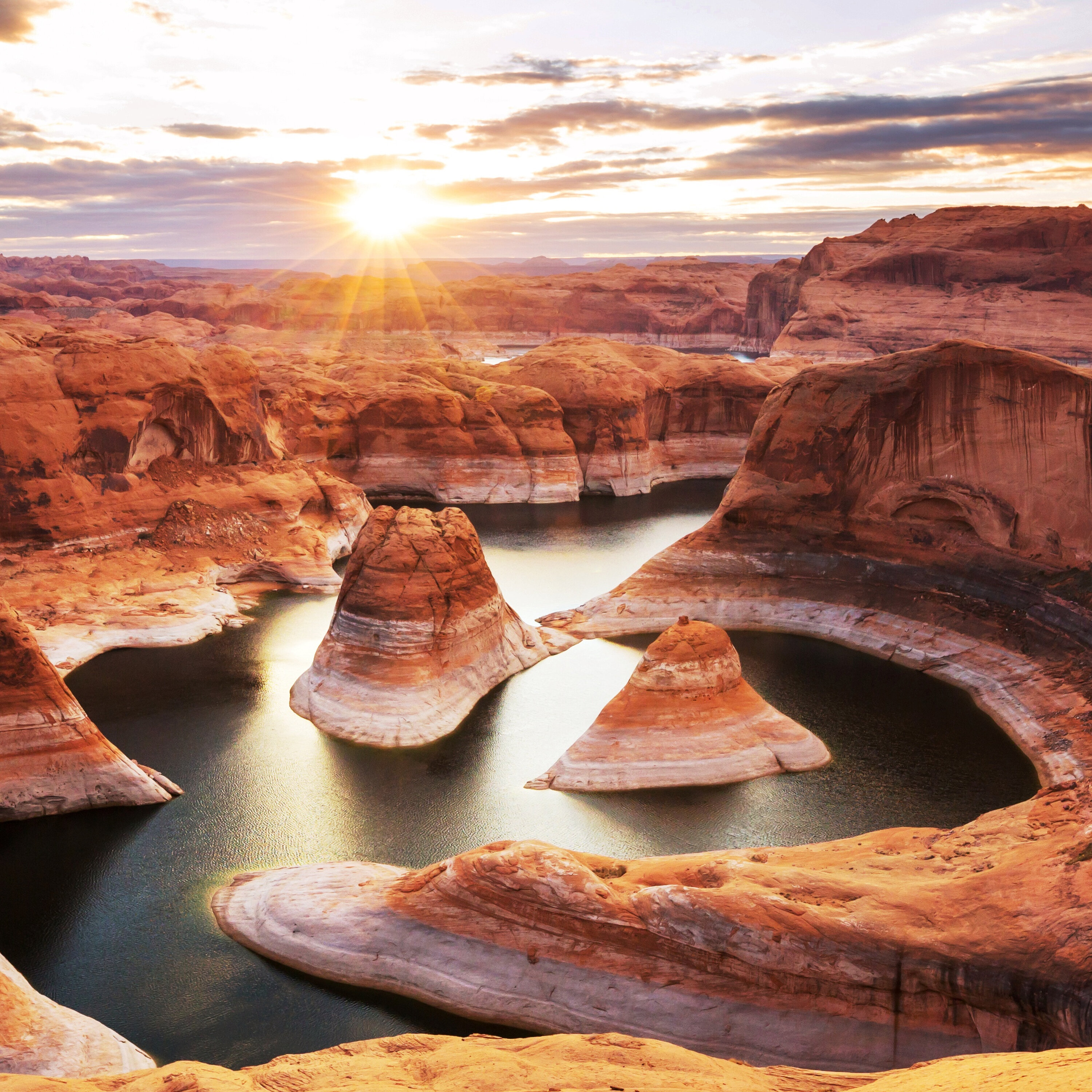
Journalist Zak Podmore connects proposed nuclear-waste storage in southeastern Utah with the rapid ecological recovery emerging from Lake Powell, asking who bears the nuclear fuel cycle’s costs and what a restored Glen Canyon could become.
Episode Summary:
In this episode of "90 Miles from Needles: The Desert Protection Podcast," host Chris Clarke discusses the pressing environmental issues faced by the American Southwest with guest Zak Podmore. The discussion centers around the potential for San Juan County, Utah, to become a storage site for nuclear waste. The conversation explores the environmental and social justice implications of such initiatives, pointing out the burden placed on historically underserved communities that have already borne a disproportionate share of impacts from the nuclear industry.
The episode also explores the possibilities for the future of the Colorado River and the diminishing Lake Powell. Zak Podmore provides insights into what lower reservoir levels mean for the region's ecosystems and water management strategies. Encouraging discussions about restoring Glen Canyon and possibly decommissioning Glen Canyon Dam, the conversation transcends mere environmental discourse, hinting at a broader narrative of resilience and adaptation.
Key Takeaways:
- Nuclear Waste Storage Concerns: The proposal to store nuclear waste in Southeast Utah raises significant environmental and social justice issues.
- Glen Canyon Restoration: Lower water levels in Lake Powell reveal the adaptive potential of natural ecosystems, opening doors for restoration opportunities like decommissioning the Glen Canyon Dam.
- Climate Change Impacts: The episode reflects the looming threat of climate change-induced drought in the Colorado River Basin and its implications for water management in the Southwest.
- Community Resistance: Zak Podmore emphasizes the importance of community awareness and resistance against potentially harmful environmental policies.
- Historic Environmental Advocacy: Insights into past environmental battles, including the roles of figures like David Brower, remind listeners of the enduring fight for ecological preservation.
Notable Quotes:
- "These meetings were held, the nonprofits involved said they were just listening sessions. They said, we're not trying to actually bring radioactive waste to your area. We're just here to listen and provide information." — Zak Podmore
- "I don't think that's a very valid argument. But even if you really believe that, they still leave out the impacts from all the rest of the nuclear fuel cycle." — Zak Podmore
- "The ecosystems are incredibly resilient and they're recovering faster than anyone expected." — Zak Podmore
- "It's a dire situation for 40 million people who get water from the Colorado River throughout the Southwest." — Zak Podmore
- "If you give Glen Canyon, this famous place that was lost to the Glen Canyon Dam in the 1960s, a chance to recover, it will come back." — Zak Podmore
Resources:
- Zak Podmore's Website
- Zak’s Substack
- "Life After Deadpool: Lake Powell’s Last Days and the Rebirth of the Colorado River"
Listen to the full episode to engage deeply with these issues and explore further enlightening insights from "90 Miles from Needles: The Desert Protection Podcast." Stay tuned for more episodes that continue to unveil the stories and voices of the desert.
Become a desert defender!: https://90milesfromneedles.com/donate
See omnystudio.com/listener for privacy information.
UNCORRECTED TRANSCRIPT
0:00:00 - (Chris Clarke): 90 miles from the desert Protection Podcast is made possible by listeners just like you. If you want to help us out, you can go to 90 miles from needles.com donate or text needles to 53555.
0:00:25 - (Joe Geoffrey): Think the Deserts are Barren Wastelands? Think again. It'S time for 90 miles from Neil's the Desert Protection Podcast.
0:00:44 - (Chris Clarke): Thank you, Joe, and welcome to this episode of 90 Miles from Needles, the Desert Protection Podcast. I'm your host, Chris Clarke, and we have a fascinating episode for you in which we're going to be talking to journalist Zak Podmore from Southern Utah, author of the wonderful book out two years ago, Life After Deadpool, Lake Powell's Last Days, and the Rebirth of the Colorado River. We're going to be talking to Zak about that book and about some recent writing he's done on attempts to persuade local governments in southeastern Utah, one of the poorest places in the country, to accept nuclear waste as an economic development scheme.
0:01:24 - (Chris Clarke): He has some fascinating things to say. We're really grateful to Zak for joining us. Couple things. First, I want to wish three of my closest friends a happy 10th birthday. Yes, they are triplets, namely Castle Mountains National Monument, Mojave Trails National Monument, where I spend a lot of my time, and Santa Snow National Monument, which if I were to stand up and walk over to the window in the studio, I could see from the window they were all three established on the same day in February 2016 under the powers of the Antiquities act by then President Barack Obama. And so happy birthday, Ali is Secondly, as I mentioned last time around, we are launching a reporting fellowship program.
0:02:06 - (Chris Clarke): It's called the Fellowship for Desert Reporting. We have a generous donation of matching funds from a longtime listener, and we are taking advantage of that donation to raise, we're hoping at least 10k. We're not going to turn up our nose at higher sums than that, but the idea basically is that mainstream media is on the decline. We mentioned last week that the Washington Post had just laid off a third of its reporting staff.
0:02:28 - (Chris Clarke): That's an extreme example of what's happening at other newspapers, especially mainstream newspapers in the desert and nearby. And there's, you know, still some fantastic reporting going on by journalists that are hanging onto their jobs by the skins of their teeth. But it looks like the future of journalism, certainly in the desert, probably elsewhere in the US as well, is going to be small folks like yours truly taking on stories that the Jeff Bezos of the world think are either too challenging or too expensive or too risky to cover desert specific issues with subtleties and nuances.
0:03:01 - (Chris Clarke): We want to make sure those stories get out there. And we also want other voices on this podcast, especially younger ones, but also a more diverse range of voices. Our goal here is to raise enough funds that we can offer a few deserving, probably emerging environmental journalists in the desert some cash in order to pursue the stories they want to pursue and do a little training and podcast, audio recording, editing, that kind of thing, as well as some mentorship. I mean, I've got 35 years of skin in this game, so it's time for me to help pass that along.
0:03:38 - (Chris Clarke): So if you're interested in supporting this project, you can go to 90 miles from needles.com Fellowship look in the show notes. There'll be a link there. In case you forget, all donations are tax deductible because the Desert Advocacy Media Network is a 501c3 nonprofit. And as of this point, thanks to donations from those like Noel Rhodes a few days back with a good-sized contribution, we are 2% of the way to our goal.
0:04:06 - (Chris Clarke): And that's before the hard launch of this this campaign. So we can use your help, but it's already promising. And again, that's nine zero miles from needles.com Fellowship we really appreciate the support that people have shown and we're going to be launching our fellowship campaign in earnest in the weeks to come. But you guys get a heads up because you're faithful listeners. We're hoping that this all will manifest in some wonderful stories we wouldn't have otherwise gotten to share with you, reported by people that know the communities that they're talking about, and potentially people one third my age. Old enough to vote, old enough to drive, old enough to drink in all 50 states, but sometimes left in the lurch as far as job advancement kind of goes.
0:04:47 - (Chris Clarke): So with that, let's get to our interview with Zak Podmore from Bluff, Utah. I think you're going to like this one.
0:05:24 - (Chris Clarke): We are very pleased to be joined in our virtual studio by the writer Zak Podmore, who lives in Bluff, Utah. He is a journalist who spent a decade plus writing about water and conservation issues in the Western U.S. I just finished reading his recent 2024 book, Life After Deadpool, Lake Powell's Last Days and the Rebirth of the Colorado river, which is highly recommended. Zak also wrote Confluence Navigating the Personal and Political on the Rivers of the New west, which came out in 2019. I look forward to getting a copy of that one. Zak put in time. As a Southern Utah reporter for the Salt Lake Tribune, Zak has recently been having interesting interactions with a theoretically grassroots pro nuclear organization Zak, thank you for joining us at 90 miles from Needles.
0:06:14 - (Zak Podmore): Hey, thanks so much for having me. It's great to be here.
0:06:17 - (Chris Clarke): So let's just jump in with the nuclear waste issue. You recently had a piece in Writers on the Range, which is a wonderful syndicated column with various good writers that High Country News started, and it's sort of taken on a life of its own.
0:06:31 - (Zak Podmore): Yeah, I've written a few pieces for Writers on the Range. They're a great nonprofit, as you said, that promotes these op eds through dozens of publications throughout the west and offers them for free to different outlets. So it's a great way to get word, the word out about different environmental issues, especially in the West. And I was very grateful they published this latest piece, which is on a renewed effort to bring spent nuclear fuel, kind of, you know, spent radioactive material that comes out of nuclear power plants and then has to be stored for hundreds of thousands of years, to southeast Utah, where I live. I live in a tiny town called Bluff, a couple hours south of Moab, not far from the Four Corners.
0:07:16 - (Zak Podmore): There's a lot of nuclear history here, a lot of history of uranium production, mining, milling. I'm 15 miles from the only conventional uranium mill that's still operational in the United States. I've done a lot of reporting on that. So I saw this group called Mothers for Nuclear was hosting meetings throughout San Juan county, which is Utah's only majority minority county, majority Native American.
0:07:43 - (Zak Podmore): And they were working with this group called Native Nuclear. And it struck me as something to pay attention to, but also it just made me upset, I guess, to be quite honest, that this area that's still dealing with the contamination from the nuclear boom, the uranium boom that happened in the 40s and 50s and 60s in the four Corners area, there's still unreclaimed mines Everywhere. There's over 500 unreclaimed mines on the Navajo Nation alone. And there's contamination of water, contamination of air.
0:08:16 - (Zak Podmore): There's this outdated uranium mill, the White Mesa mill, that's built right on Ute Mountain, Ute land, not far from where I live. They're mining in the Grand Canyon right now, six miles from the boundary of Grand Canyon National Park. And so to have on top of all of that, these groups coming and saying, oh, it'd be totally safe to take nuclear waste, spent nuclear fuel and store it in San Juan county as well, made me want to write this op ed to try and get ahead of that and to try and avoid any further progress on getting nuclear storage in southeast Utah. Yeah, so that was a lot, but.
0:08:52 - (Chris Clarke): It was, it was thorough. Tell us a little bit more about Mothers for Nuclear. I mean, that seems like an object position that immediately calls into question whether or not this is like an astroturf group or some folks that have an axe to grind or something like that. Have you found out where they are, where they're coming from and why they're doing this?
0:09:13 - (Zak Podmore): Yeah. Both these groups, Mothers for Nuclear and Native Nuclear, come out of the fight to keep the Diablo Canyon nuclear power plant open in California. There was some discussion about closing that, I think 2018, 2019 around there. I think it's the only power nuclear power plant that's still open in California at the moment. Is that right?
0:09:38 - (Chris Clarke): That is correct, yep.
0:09:39 - (Zak Podmore): So, yeah, these were employees of the plant that saw a lot of value in keeping nuclear power on the grid and they have good reasons for doing that. I mean, they, they're coming at it from a climate perspective. So they've formed these nonprofit groups pretty much. As far as I can tell, most of the founding members and most of the employees are from that area around Diablo Canyon and have ties to that, that plant. And I think they, you know, started the groups for, for reasons that they saw as, you know, part of the environmental fight against climate change. Right.
0:10:12 - (Zak Podmore): And I can, I can totally buy that argument that we might want to keep some of these plants online a little longer while we figure out how to transition to renewables. But they're also talking about, you know, building many more nuclear power plants and then trying to figure out what to do with this radioactive waste that's being stored on an interim basis all around the country. Over 50 sites around the country right now.
0:10:37 - (Zak Podmore): And their department of Energy is trying to figure out a long term plan for where to put that waste. You know, there was famously Yucca Mountain was considered in Nevada in the 90s that got shut down because of safety concerns and local opposition. Now the, the plan that kind of came out of the, I think Obama and Trump won and Biden departments of Energy was to try and get local buy in for hosting some of this waste from local communities, as opposed to forcing it on a community.
0:11:11 - (Zak Podmore): So the Biden administration offered $16 million in grants to a number of groups to go through this process of trying to find a community partner. Mothers for Nuclear and North Carolina State got a $2 million grant and they ended up hosting these meetings in southeast Utah and San Juan county as a potential place to start working on finding a community that wants to accept nuclear waste. And this is nothing new. There's been efforts to do the exact same thing right outside of Canyonlands national park in the 1980s. And because there is such a rich history and productive history of uranium production in the area, there are people who want to see more. More jobs related to the nuclear industry in the area because they.
0:12:00 - (Zak Podmore): There used to be a lot of them, and there aren't as much anymore.
0:12:03 - (Chris Clarke): And that history is continuing. I mean, I was just last year in the Lisbon Valley.
0:12:09 - (Zak Podmore): Oh, yeah.
0:12:11 - (Chris Clarke): Trying to get a sense of, you know, for a potential future podcast episode, which is still possible, you know, trying to get a sense of what the. What the impact of a proposed new uranium mine would be, you know, all the way at the other end of the nuclear fuel cycle.
0:12:26 - (Zak Podmore): Right.
0:12:27 - (Chris Clarke): And it just seems like. Seems like southeastern Utah is, I don't want to say ground zero, because that's really just ominous in a different way. But it's. It's definitely continuing to be looked at as a sacrifice area.
0:12:42 - (Zak Podmore): It sounds like, I mean, there's kind of how it was pitched from some of these groups and how some of the probes nuclear local politicians have received. It is to say, like, we need to have the whole fuel cycle. We need to have infrastructure and facilities around the whole fuel. Fuel cycle in San Juan County. So we need uranium mines, we have the uranium mill. And then we could take spent nuclear fuel at the end and have that all contained. So that's, you know, one way to do economic development, maybe from a certain perspective, also another way to say sacrifice zone and, you know, to have it in such a long history of, you know, indigenous people in this area facing health consequences from uranium production to add even more radioactive material to the area that is Utah's only indigenous majority counties.
0:13:33 - (Zak Podmore): It's, you know, either a way to help people out of poverty is how it's sometimes phrased, but it doesn't usually work that way. And it's also, you know, could rightly be called environmental racism because we're not going to affluent majority white areas to store radioactive waste. We're talking about doing it in this. In Utah's poorest county, which is San Juan county, there's a pretty robust ecosystem of these astroturfed or maybe grassroots groups that are pushing for more nuclear power in the U.S.
0:14:05 - (Zak Podmore): i mean, there's a lot of people who have climate as their number one issue that see a way out of the climate crisis through the construction of a lot more nuclear power. That argument, in my opinion, is getting harder to maintain when the price of solar panels is dropping so dramatically. Even China which is not as historically concerned with environmental regulations and gets permitting done much more quickly than the US Does. Which is what some of these groups complain about in the US Is that permitting takes too long, especially something like nuclear. They're shifting more and more to solar. They've installed more solar panels in the last year, I think, than the US has in history.
0:14:48 - (Zak Podmore): And it's just so cheap to do. And it doesn't require having to store highly hazardous material for hundreds of thousands of years when you're done with it. So I think a lot of these folks have their heart in the right place because I'm very concerned about climate change as well. But I think they get pretty myopic in looking at what the impacts are. I mean, they just. Often these nuclear advocates just talk about how safe it is to have a power plant, which is a little bit questionable as well, because we've had some disasters related to that.
0:15:23 - (Zak Podmore): But they say all those, you know, big Chernobyl like incidents are in the past and that Fukushima wasn't that bad is what these. The North Carolina State Professor Robert Hayes said at these meetings in San Juan county that no one got hurt from it. And even if that's true, I mean, I don't think that's a very valid argument. But even if you really believe that, they still leave out the impacts from all the rest of the nuclear fuel cycle. So this the same company. I don't know if you want to get into the Grand Canyon mine, but I think it's a part of this story as well.
0:15:57 - (Chris Clarke): Yeah, let's talk about it. I don't know much about it other than that people have been fighting it for quite a while.
0:16:02 - (Zak Podmore): Yeah. Yes. That's this company called Energy Fuel, which is a Canadian company that's kind of relocated to the Denver area. And they're the ones that owned the White Mesa Uranium Mill. That's near the Ute Mountain Ute Reservation in San Juan County, Utah, that I was talking about. The only conventional uranium mill in the country when price of uranium was low. Their main business model was accepting radioactive waste from all around the world, from all across the continent, but also from Estonia and Japan.
0:16:35 - (Zak Podmore): I did a lot of reporting on this at the Salt Lake Tribune, and they were able to get around some of the regulations for disposing of nuclear waste because they would run that waste, which would be waste in any other circumstance through the mill and they would call it ore instead of waste. So there's these barrels of highly radioactive material that this company in Estonia couldn't Figure out anywhere to dispose of in Europe. And they shipped it all the way to Utah, ran it through the mill, and then were able to, you know, store that, the byproduct from that process at the mill site and not have to store it as radioactive waste.
0:17:14 - (Zak Podmore): So that's. That was their business model for a while. But with the war in Ukraine, there were more sanctions put on some of the uranium sources from Russia and its allies. The price of uranium went up, and energy fuels, which has a lot of idled mines in southeast Utah and northern Arizona, started to try and reopen some of these uranium mines. The only mine that I'm aware of that they've opened so far is this one called canyon mine, or it's been renamed Pinyon plain Mine. Six miles from Grand Canyon national park, on the south rim of the Grand Canyon, on Havasupai sacred land, though not in the. In the reservation, but right near red Butte, which is a sacred site, they have a shaft that goes hundreds of feet down into the aquifer that is probably connected to many of the springs that come out of the bottom of the Grand Canyon.
0:18:11 - (Zak Podmore): Just amazing waterfalls that come out of the cliffs or places like elves chasm. If people have been rafting in the Grand Canyon, just these oases at the bottom of the Grand Canyon national park. And there's, you know, a real concern that the uranium and arsenic and the lead that the company is stirring up in the shaft as they're doing this mining could start to move through the aquifer and eventually come out some of those springs, including on Havasupai land.
0:18:39 - (Zak Podmore): So there's been a lot of efforts to fight that mine. Those have failed. The mine opened a couple of years ago, and they're currently transporting 10 to 20 trucks of uranium or, you know, semi trucks a day come through Flagstaff from the Grand Canyon. They go across the Navajo nation, across Hopi land, through bluff where I live on the Ute Mountain, Ute land, into the white mesa uranium mill. I see these trucks all the time. They barrel through. They have radioactive placards on the back.
0:19:14 - (Zak Podmore): Mothers for nuclear said at one of the meetings that the only concern people need to have with this ore is that if one of the trucks were to capsize and you were to eat the uranium ore, you'd get sick from the dirt, but not from the radiation. So that's not the way that most people who are along the haul route have seen the hazard of this material. The Navajo nation actually sent out Navajo police to block these trucks when they first started to.
0:19:42 - (Zak Podmore): To go through the Navajo Nation a couple of years ago, and then it was clear that they weren't going to be able to maintain that blockade in court. So they struck a deal with Energy Fuels to allow the transport in exchange for some money and some safety guarantees. But this is. I mean, it's just the environmental racism on a different scale. Right. You have mining happening on Havasupai land. You have hauling across the Navajo Nation and Hopi land, and the uranium is getting processed right next to Ute Mountain Ute land.
0:20:16 - (Zak Podmore): So it's pretty much this whole route from mine to mill is. Is on or near reservation land.
0:20:24 - (Chris Clarke): Yeah. Yeah. It's astonishing to me, and it shouldn't be because I've been doing this kind of stuff for a while, but it's astonishing to me that just the Blythe dismissal of potential risk from something that I think even. Even a pro nuclear ideologue like Edward Teller wouldn't have gone so far as to say you could eat the nuclear waste and you'd just have to worry about tetanus or something like that.
0:20:49 - (Zak Podmore): Yeah.
0:20:49 - (Chris Clarke): You know, it's just gobsmacking to me that they would. They would take that approach.
0:20:54 - (Zak Podmore): It's. Well, I mean, it's. Yeah, this is uranium, or it's like 1% uranium before it gets processed through the mill. So it isn't nearly as hazardous as what they want to bring to San Juan county, which is spent nuclear fuel, which is much more radioactive, much more hazardous. You know, the radon that comes off of the uranium ore is bigger concern than gamma radiation and stuff like that, is my understanding.
0:21:18 - (Zak Podmore): And there's been, you know, violations of the Clean Air act or alleged violations of the Clean Air act around the White Mesa mill. Just from the radon that's. That's blowing off of that. That mill site to the Ute Mountain Ute town of White Mesa into Blanding. And yeah, it's. It's. Even if, you know, these. These groups really don't think it's hazardous, it just seems so tone deaf to me as well, to come to this area that has, you know, there's billboards around southeast Utah that talk about federal funding for uranium workers who are suffering from health conditions. There's all sorts of federal programs to help mitigate some of the damage that was done in this.
0:21:57 - (Zak Podmore): In the 70s, 60s, you know, to come here and say it's completely safe.
0:22:02 - (Chris Clarke): Yeah.
0:22:03 - (Zak Podmore): You know, rooms of, you know, as part of a tribal outreach initiative, which is how one of these meetings was framed, is. I don't know, it gets. It gets me angry. Yeah.
0:22:14 - (Chris Clarke): Understandably. I mean, we're talking about the same part of the country that the Rio Puerco flows through with that famous and really destructive radioactive wastewater spill. That was. That was about 50 years ago at this point.
0:22:29 - (Zak Podmore): Yeah. And not famous enough, in my opinion, maybe to your audience, but it was the largest release of radioactive material in U.S. history and the second largest in world history. The only time more radioactive material has been released into the environment accidentally was Chernobyl. The Church Rock spill on the Navajo Nation into the Rio Porco was the second biggest. So bigger than Three Mile island or Fukushima or anything like that. So it's, it's a, it's, you know, the governor of New Mexico at the time didn't even declare a state of emergency, and because it was mostly on Navajo Nation land.
0:23:05 - (Zak Podmore): So it's like it's causing problems today. I mean, there's still contamination in groundwater from. Related to that, that a researcher named Dr. Tommy Rock, who's. Who's from Monument Valley on the Navajo Nation, uncovered maybe five or eight years ago. And we haven't even dealt with the consequences of the last uranium boom. And, and you have these groups saying it's completely safe to bring more material into the area.
0:23:29 - (Chris Clarke): So you had your writers on the Range essay, and then for people that keep up with your substack, which I highly recommend, you described some further interactions with mothers for nuclear. You want to talk about that a little bit?
0:23:43 - (Zak Podmore): Yeah, I've referring to that a little bit in. In some of their talking points. Yeah, they, they didn't like the Writers on the Range article because it wasn't pro nuclear. And they, you know, started emailing me some of their representatives, and they asked me if I'd do some corrections or revisions of the piece. I asked what was wrong, and it was all stuff that was considered opinion, in my opinion.
0:24:11 - (Zak Podmore): They didn't like how different pieces of the history were put together in the paragraphs. They didn't actually identify anything that was factually incorrect. But they, you know, I talked about the. The dust that used to blow from the uranium mill in Monticello, Utah, onto the town, the spike in cancer cases 20 and 30 years later after that mill shut down in the area. And then talked about, as I've just been saying, you know, bringing more radioactive material to this area that's already suffered.
0:24:43 - (Zak Podmore): And they, they said, well, you know, is that really fair to say that you should. To compare dust blowing from a mill that was not properly contained to radioactive waste? That's encased in concrete and will be safe for millions of years to come. And it just. It's just such a leap of faith to assume that even if things are properly stored, in our opinion right now, something that's hazardous for so long will be always safe or won't cause problems or we can make promises around that.
0:25:14 - (Zak Podmore): And so, yeah, I wrote the piece referring a little bit to that email exchange, but also I wasn't aware when I wrote the Raiders on the Range piece that a coalition of southeast Utah governments took the first step towards starting this process with the Department of Energy to accept some of this waste in the future. Back in September, right after the Mothers for Nuclear meetings. So these meetings were held, the nonprofits involved said they were just listening sessions. They said, we're not trying to actually bring radioactive waste to your area. We're just here to listen and provide information.
0:25:49 - (Zak Podmore): But a few weeks after those meetings were held, county commissioners from four southeast Utah counties passed a resolution that said they're going to apply to be one of the host sites for this material. I had missed it because I looked at the meeting minutes for the actual county commission and town council meetings in San Juan county and didn't see any reference to it. But this took place in kind of a regional body that usually doesn't make decisions on. On that scale.
0:26:18 - (Zak Podmore): And it had support from both a grand county commissioner where Moab is located, and the Moab mayor. This is the only solidly blue area in rural Utah is Moab. And Moab has just spent decades removing 16 million tons of radioactive waste from the banks of the Colorado river, from an old uranium mill site to a safer location 30 miles away out of the floodplain of the Colorado River. The mayor was very active in that effort. So I was pretty shocked to hear her making a motion to start pursuing the acceptance of radioactive waste in southeast Utah, though it probably wouldn't be in Moab or Grant county if it did happen. But it's something that. Yeah, for people in this area, I hope people who don't want to see this happen can and get ahead of it and start to fight it before it progresses any further, because it's still years away if it were to happen.
0:27:15 - (Chris Clarke): So speaking of people that might want to fight this, what does the opposition look like? I mean, I assume that there's opposition from the sort of traditional green groups like SUWA and folks like that, as well as from some tribal sources, but what does that look like?
0:27:32 - (Zak Podmore): Yeah, I mean, I think there's nothing a lot of opposition that's formed explicitly against this yet because it is so new. And that's part of why I was trying to get the word out. I think it's something that I hope to see more organized opposition soon. I haven't seen anything. I don't even think groups like SUA were aware of this. I don't know anyone who is aware of the vote that happened at the regional meeting of county commissions and towns in September.
0:27:59 - (Zak Podmore): I saw no news coverage of it or anything like that. So Grand Canyon Trust has been very active in opposing the energy fuels activity near the Grand Canyon and in, in southeast Utah at the White Mesa Mill, which is just outside of Bears Ears National Monument. SUA has been involved in that a little bit, but I think there's living rivers in MOAB is certainly opposed and is going to be fighting against this.
0:28:25 - (Zak Podmore): And then I think just people living in these areas, once the word starts to get out more, we'll, we'll be organized against it. It's not a very popular thing to bring highly radioactive waste into your area, even if you see some economic benefits there. And there wouldn't be, you know, enormous economic benefits from this either. It's kind of like there'd be some construction jobs and then not very many long term jobs after the fact.
0:28:49 - (Zak Podmore): Right.
0:28:49 - (Chris Clarke): Couple of Rent A cops.
0:28:51 - (Zak Podmore): Right.
0:28:52 - (Chris Clarke): Well, this is an interesting look at a, an issue that seems to be just launching and be really grateful to you for, for keeping us updated on this as it progresses. And if there's anyone out there that is thinking about mounting an organized opposition, let us know and we'd be happy to have you on the show.
0:29:11 - (Joe): Don't go away. We'll be right back.
0:29:14 - (Chris Clarke): So for those of you who mainly turn in to listen to Fred Bell's nature recordings, you may have noticed that we haven't used any the last couple of weeks. We're making up for that now. Here is a recording of the dawn chorus of birds as day breaks in Sabino Canyon in the Catalina Mountains near Tucson. Enjoy.
0:30:52 - (Joe): You're listening to 90 miles from Needles, the desert Protection podcast. Confusion and irritability are the first signs of heat injury and of hosting a podcast.
0:31:06 - (Chris Clarke): And this is all taking place in the general vicinity of one of the wildest parts of the Colorado river drainage. So here is the really expert segue to talking about the work you've done on Colorado river issues. I know I sung the praises of your work on Life After Deadpool, which I highly recommend. I mean, I've been reading about Lake Powell and the Glen Canyon Dam and the Green and Colorado rivers. 40 years. And there was stuff that I learned that really surprised me in Life after Deadpool, which was just a wonderful read, I think, especially in the realm of some of the nuance that is involved with Lake Powell going away.
0:31:57 - (Chris Clarke): And I just found it. I just found it really interesting. I wonder if you could talk a little bit about.
0:32:03 - (Zak Podmore): Yeah, well, thanks for saying all that and thanks for reading the book. It's a little bit more of a happier topic is what's happening in Lake Powell right now, even though it doesn't seem like it should be. The Colorado River Basin is entering a deeper crisis every day, especially this winter, which is coming after 25 years of drought in the basin. Lake Powell and Lake Mead haven't been full since 1999. They're heading towards record low levels sometime this year as Utah faces the worst snowpack on record.
0:32:36 - (Zak Podmore): Colorado's not far behind. It's a pretty dire situation for 40 million people who get water from the Colorado river throughout the Southwest. But in Glen Canyon itself, it's very good news because Glen Canyon has had 25 years to recover in some places since Lake Powell was last full. There's 100,000 acres of land that were once flooded by Lake Powell that have reemerged in those areas. Places that have had 10, 15, 20, 25 years since they were last flooded.
0:33:12 - (Zak Podmore): 60 foot tall Cottonwood trees that are growing up next to streams. There's beavers building dams, there's these dense stands of willows just full of birds out there. Fish and frogs in the pools along these streams. And it's their ecosystems, they're just as healthy as they were before they flooded, or just as healthy as areas that never flooded that are just adjacent to them. So we have proof that if you give Glen Canyon, you know, this famous place that was lost to the Glen Canyon dam in the 1960s, if you give it a chance to recover, it will come back.
0:33:50 - (Zak Podmore): You know, there's a bathtub ring on the walls in some places. There's old sunken motors and lawn chairs, umbrellas that are in the sand. But the actual ecosystems are incredibly resilient and they're recovering faster than anyone expected. So one of the opportunities that's presented by this water crisis is to finally do what people dreamed about doing in the 1970s as Lake Powell was filling. And that's to decommission the Glen Canyon Dam and move the water that's in Lake Powell to Lake Mead to just make the system function better under these extremely dry conditions.
0:34:31 - (Zak Podmore): So it's not really an environmental dream anymore of just, oh, bring back Glen Canyon, like the way it was discussed by Katie Lee and Edward Abbey and others in the 70s. Now it's a very practical proposal for water management. Even if you don't really care about the history of Glen Canyon, it doesn't make sense to have the two largest reservoirs in the country, Lake Powell and Lake Mead, both 25% full, when you could consolidate that water into one reservoir and have things operate more smoothly. Arizona, California and Nevada have all said that they'd like to see the Glen Canyon Dam be modified. And that's in the last couple years. And that's something that no one expected to see from representatives of these states.
0:35:21 - (Zak Podmore): And as we move through a very dry winter, I hope that there's more discussion about that in the future and more discussion about the benefits of restoring Glen Canyon, which is a big focus of my book.
0:35:33 - (Chris Clarke): And Life After Deadpool is a really good source for, you know, information and what's going on. But it's also got some, some travelog aspects to it, which I enjoyed a lot. And in that section you talk about, you have a little bit of a tongue in cheek description of what I suppose you could call the, the newest batch of sedimentary rock to come out of. Yeah, the, come out of the Colorado Basin, which you call the Dominy Formation. You want to talk a little bit about that?
0:36:01 - (Zak Podmore): Yeah, yeah, that's. I didn't come up with that name. That was actually a name that was given to the. All the sediment that's been trapped in Lake Powell since the dam was completed in the 60s by geologists who are studying that sediment. I mean, kind of as a joke at first, but then it became a useful term to reference that sediment as the unofficial term for this geologic layer. But there's an incredible amount of sediment that's been trapped in Lake Powell since 1963.
0:36:30 - (Zak Podmore): I'm sure people are familiar with, with the muddy Colorado river that flows through places like Moab Canyonlands National Park. And then if you've been to Lees Ferry at the top of the Grand Canyon, water that flows past there is incredibly clear. All the sediment that naturally flows down the Colorado river is being trapped in Lake Powell because when the river hits the lake, all that sediment drops to the bottom. So that sediment is the Domini Formation. In some places it's 200ft thick.
0:37:04 - (Zak Podmore): It creates these very strange rapids and islands and slumps in Canyonlands national park on the, on the Colorado river or in the lower San Juan river. And for People who have seen that those giant walls of sediment lining the Colorado river as Lake Powell shrinks and the river goes further into the reservoir bed. It's tempting to, or, you know, just intuitive to assume that that's what you'd see throughout all of Glen Canyon if Lake Powell were to disappear tomorrow.
0:37:37 - (Zak Podmore): That's what I assumed when I started this project. I thought, like, oh, well, you know, it's. Glen Canyon looks like an amazing place from the old photos. It would be cool to see again someday. But if we were to remove the dam for one reason or another, we just have these giant banks of mud throughout all of Glen Canyon that would take hundreds of years to wash away. What I didn't realize is that's.
0:37:59 - (Zak Podmore): That's pretty incorrect. At least right now. The mud is trapped in the upstream reaches of the reservoir, over 100 miles from the dam on the Colorado river still. So there's 100 miles of glen Canyon that's still underneath the clear waters of Lake Powell that might have 10 or 20ft of sediment in it, as opposed to 200ft of sediment you see in Canyonlands. So if we have to modify the Glen Canyon Dam, which I think we should do as quickly as possible just to, you know, help address the water crisis, and the river were allowed to return through Glen Canyon, that mud wouldn't redeposit. It would, you know, carry through the Grand Canyon and create beaches and restore some of the sediment that's been lost down there and then end up in Lake Mead.
0:38:43 - (Zak Podmore): And it wouldn't, you know, fully choke Glen Canyon, which is what it will do. If we wait 50 years to remove the. The Glen Canyon Dam, that. That mud will push further and further into. Into Glen Canyon and make the recovery very different in the long term.
0:39:00 - (Chris Clarke): Yeah, it's one of those startling things in the. The course of my life where I've, you know, just seen things happen that I never would have thought possible. And sort of along the lines of the Berlin Wall coming down or, you know, marriage rights being endorsed by the U.S. supreme Court or things like that. And just having people who are not one degree of separation from David Brower, like I am talking about decommissioning Glen Canyon Dam. It was almost like we missed an opportunity in the early 80s when the dam was in the process of decommissioning itself.
0:39:38 - (Zak Podmore): Right. Yeah. No, it is an amazing shift that's occurred because of climate change, because of this mega drought that the Southwest is facing to, you know, have discussion of decommissioning the dam, go from the realm of people like Abbey and Brower who saw Glen Canyon before it was drowned, who were outraged by the. What was lost underneath Lake Powell, and who created a very vocal but small, I'd say in the scheme of the American public movement to discuss removing the Glen Canyon Dam in one way or another, either in the fiction of the Monkey Wrench Gang or David Brower, who is still pushing for that into his 80s to go from, from Glen Canyon Dam restoration being discussed as kind of a radical thing to being something that's being considered by the Bureau of Reclamation itself right now quietly, but it's being studied and being requested by the lower basin states is an enormous shift. And I think it should be celebrated that water managers are starting to see the folly behind the construction of the Glen Canyon Dam in the first place and that there's a huge opportunity to get back a national park quality landscape that was drowned for no good reason, but can recover quickly if we give it an opportunity to.
0:41:08 - (Chris Clarke): And Floyd Dominy provided the details for how to do that with a pen and a napkin at one point.
0:41:15 - (Zak Podmore): Right, right. Yeah, I shouldn't. I didn't mention that in the discussion of the Dominy Formation before. Yeah. Dominy Formation, of course, refers to Floyd Dominy, who is the commissioner of the Bureau of reclamation throughout the 60s, a very famous and vocal advocate for the Glen Canyon Dam. And in the mid-1990s, Richard Ingebretsen, a physician in Utah who had floated through Glen Canyon as a, as a Boy Scout in the early 60s, decided he was going to create a group to try to restore Glen Canyon, which became the Glen Canyon Institute.
0:41:49 - (Zak Podmore): And his first event that he held as part of the Glen Canyon Institute was a debate between David Brower and Floyd Dominy, the old famous foes from the encounters with the Archdruid. They were Both in their 80s at that point, both larger than life characters still. And they had a debate in Salt Lake City about removing the damn money against. And through that Ingebretson became friends with Floyd Dominy. Floyd Dominy died in 2010, I think at the age of 100.
0:42:22 - (Zak Podmore): And Ingebretsen went to his house in Virginia one time and he, Domini started talking about how people who are talking about removing the dam had the engineering all wrong. They wanted to blast a hole in the middle of the dam or something like that. That's not how you do it. You drill tunnels through the sandstone cliffs on either side of the dam, through that soft sandstone, which was done during the dam's construction, and you put big gates over those tunnels and then let the water out slowly.
0:42:53 - (Zak Podmore): So he drew the. The plans for how to do this on a napkin, gave it to Ingebretson. Ingebretson said, no one's gonna believe me that you. That you actually handed me the plans for decommissioning the dam. So he had Floyd Dominy sign it. So Ingebretson still has the signed Floyd Domini napkin on his. On his mantelpiece. And that's the plan that is still being considered. I think it's the most likely way that the.
0:43:21 - (Zak Podmore): The dam would be modified. Yeah. Were modified is new tunnels through the sandstone cliffs as opposed to through the dam itself. Yeah.
0:43:29 - (Chris Clarke): I had the good fortune to work with David Brower in the last few years before he passed, and I was running Earth Island Journal at Earth Island Institute. And so we'd have staff wide meetings and Dave would show up, and during the meeting, part of the meeting, he'd have his hearing aids off. But then when. When we took a break and we're having conversations, he'd turn them back on and engage and just probably the smartest approach to having meetings that I've ever heard. But the last conversation I had with him was at one of these meetings, and I had just rewatched Cadillac Desert, the documentary version of the Mark Reisner book.
0:44:10 - (Chris Clarke): And he. I mentioned that to him and he said something kind about Floyd, and I said, sort of off the cuff that I had realized that my goal was to think like Brower and dress like Dominy because, you know, Floyd had impeccable and over the top taste in western wear, you know, gigantic belt buckles and things like that. And Dave's response, which I'm still trying to figure out what he meant, if anything, was that he thought I had that backwards.
0:44:39 - (Zak Podmore): But.
0:44:42 - (Chris Clarke): That was an interesting relationship the two of them had. You know, arch enemies, but grudging respect for each other. Less grudging on Dave's part, I think, than on Domini's. But it was.
0:44:52 - (Zak Podmore): Yeah, yeah, it's a. Yeah, it's a fascinating relationship. And they're both. They're both, as I mentioned, such great characters. I love that your plan for thinking like Brower and dressing like Dominy. I mean, I think Dominy had. Maybe what Brower could have meant by that is that, you know, Dominy was such a controlling megalomaniac, an effective administrator, that if you wanted to be an environmentalist titan, you should think like Dominy and get everyone in your orbit to, you know, in your control and really push for a movement that way.
0:45:25 - (Chris Clarke): And do it all in Columbia. Fleece and hiking boots.
0:45:28 - (Zak Podmore): Yeah, right. Do you remember discussions of the Glen Canyon Dam with Brower from that period?
0:45:35 - (Chris Clarke): The first time I ever talked to him, it was before I joined Earth island, but we had interviewed him for a radio show I did on KPFA back at the time. This was the early 90s. We were in a crowded restaurant afterwards, and I just. I didn't know if I was going to get another chance to say something to him. So I. I thanked him for saving Dinosaur, and he kind of, if I remember right, he kind of flinched a little bit because he, you know, this is a fraught topic for him. He had agreed not to oppose the Glen Canyon Dam in exchange for keeping a dam out of Echo park and Dinosaur National Monument. And I.
0:46:14 - (Chris Clarke): I cannot say honestly that if I had been in his position, I wouldn't have done the same thing. And I said that. But he's just so focused on righting his wrongs throughout his life that I think that was difficult for him to hear. And he said a few things that were sort of lost in the restaurant commotion, but had his hand on my shoulder the whole time when he said.
0:46:36 - (Zak Podmore): It, so that's incredible. You got to spend time with him.
0:46:40 - (Chris Clarke): He was a good guy. I'm privileged to have known him and worked with him, and I wish I had known him better.
0:46:46 - (Zak Podmore): Yeah, I've heard quite a few interactions with people who knew him in the. In the 90s, and everyone speaks about him in terms like you do, just that he was just sincere and. And thoughtful and passionate and inspirational figure even to the end of his life, that there's people who are just from a few interactions with him when he was in his. When he was close to 90 years old, that they've built their environmental careers around.
0:47:11 - (Zak Podmore): Just the inspiration from that interaction alone.
0:47:14 - (Chris Clarke): Well, Dave, if you are able to listen to podcasts wherever you are, we all miss you. We are getting close to an hour here and wanted to make sure that we give our listeners a handle on how they can respond to the good and bad news that we've talked about here. I think probably a good place to start out is by plugging your substack.
0:47:34 - (Zak Podmore): Sure. Yeah. This is kind of a newer thing that I've been using, but my substack, just under my name, Zak Podmore Z A K Podmore P O D M O R E. Just type in that and substack and you'll be able to find it. And I'll definitely, if I have any updates around the uranium or radioactive waste issue in southeast Utah. Be sure to share them on the sub stack. Just kind of some other, you know, different musings, articles, histories that I've been publishing on there as well, related to the lake pow and the ski industry and then this uranium issue. So diverse set of topics.
0:48:11 - (Chris Clarke): Yep. And you also have a website that is distinct from the substack.
0:48:16 - (Zak Podmore): Yeah. Zackpodmore.com has information on the book Life After Deadpool, which is published by Tory House Press. Yeah. If anyone's interested in some of the science that's being done in Glen Canyon and the potential opportunities that are arising around restoring Glen Canyon, that book is available anywhere books are sold.
0:48:39 - (Chris Clarke): Well, thank you for the work you're doing on behalf of one of the most beautiful places in the world. And thanks for sitting down with us 90 miles from Needles and talking.
0:48:49 - (Zak Podmore): Yeah, likewise. Yeah, thank you so much for having me. It was great, great talking to you as well, Chris.
0:49:09 - (Chris Clarke): I want to thank Zak Podmore for joining us. We had a great conversation. If you want to check out more of his work, in addition to going to zackpodmore.com Z A K P O D M O R E or checking out his substack, you can also pick up a copy of either Life After Deadpool, like Powell's Last Days and the Rebirth of the Colorado river, which we discussed just now, or his book Navigating the Personal and Political On Rivers of the New West.
0:49:34 - (Chris Clarke): And you can pick those up from our bookstore at 90 miles from needles.com books. We have a setup with bookshop.org that'll allow you to buy either or both of those books from your favorite local independent bookstore. And we get a little bit of a cut. Also, we would like to thank Noel Rhodes for donating to our fellowship for desert reporting. You can help us help emerging journalists from desert communities by going to 90 miles from needles.com
0:50:01 - (Chris Clarke): Fellowship. If you want to donate for other reasons. We don't want to undercut our fellowship fundraising, but if you want to give us some money that's not restricted to working on that, you can also go to 90miles from needles.com donate. Either way, you get a range of options of amounts and frequencies. Pick the one that works best for you. It's been an interesting week and a half or so at our homestead here in Twentynine Palms. We're just taking every minute as it comes.
0:50:27 - (Chris Clarke): Hanging out with the dogs, trying to make the best of things. Heart continues to hang on despite her really kind of shattering diagnosis of having soft tissue sarcoma on one of her legs, which is essentially inoperable. Just taking every minute as it comes. Like I said, had an interaction at a demonstration in downtown Twentynine Palms last Saturday that was interesting. We had a small vigil out there opposing the administration and their nefarious plots to undermine American democracy and send our beloved neighbors off to concentration camps in Texas and Louisiana and El Salvador.
0:51:03 - (Chris Clarke): At the demonstration, we had a whole bunch of what appeared to be off duty Marines. We didn't ask, so they might have just been extremely neatly dressed with recent haircuts, but they appeared to be off duty Marines. We do have the world's largest U.S. marine base just a few miles from here, and these guys were apparently hanging out downtown and they walked past the demonstration and they smiled at us and exclaimed loudly that they did not support ICE and that they hated ICE and that they hated everything it stood for.
0:51:33 - (Chris Clarke): And we got some fist bumps all around. I thanked them for saying something. It was nice to see the active duty personnel speaking up in defense of democracy and in defense of the Constitution that they swore no to protect with their lives. So thank you guys. If any of you are listening, that was a really nice moment. We've got some great interviews coming up in the next few episodes. Thanks for listening and remember to keep breathing.
0:51:59 - (Chris Clarke): Aside from it, making sure that you stay alive, it's what connects us to the desert most solidly. We take in that oxygen from those desert plants. We breathe out that carbon dioxide to feed the plants. We appreciate you doing that, continuing to do that because we need your breathing and we'll talk to you next week.
0:52:22 - (Joe): And that brings us to the end of this episode of 90 Miles from Needles, the Desert Protection Podcast. You can find show notes for this episode along with links and background@90miles from needles.com we're also on social media. You can find us on Facebook, Instagram, Bluesky and Threads. Just search for 90 miles from Needles and if you'd like a more direct line, you can reach us on signal at hey90mfn67 if you'd like to support the show, you can make a donation of whatever size and frequency feels right to you.
0:53:03 - (Joe): And 90 miles from needles.com donate. Listener support is what makes this podcast possible. Our voiceover is by Joe Jeffrey. Podcast artwork is by Martine Moncham. Nature sounds are recorded by Fred Bell. Our theme song, Moody Western, is by Bright side Studio with additional music licensed from Independent Artists.
0:53:29 - (Chris Clarke): Additional music in this episode was by Bright Light.
0:53:56 - (Zak Podmore): Sam.
0:54:27 - (Joe): 90 miles from Needles is a production of the Desert Advocacy Media Network.