
 Amazon Music
 Apple Podcasts
 Audible
 Castbox
 Deezer
 Fountain
 iHeartRadio
 Pandora
 PocketCasts
 Podcast Addict
 Spotify
 YouTube
  RSS Feed
 S5E9: Why Salt Lakes Matter More Than Ever
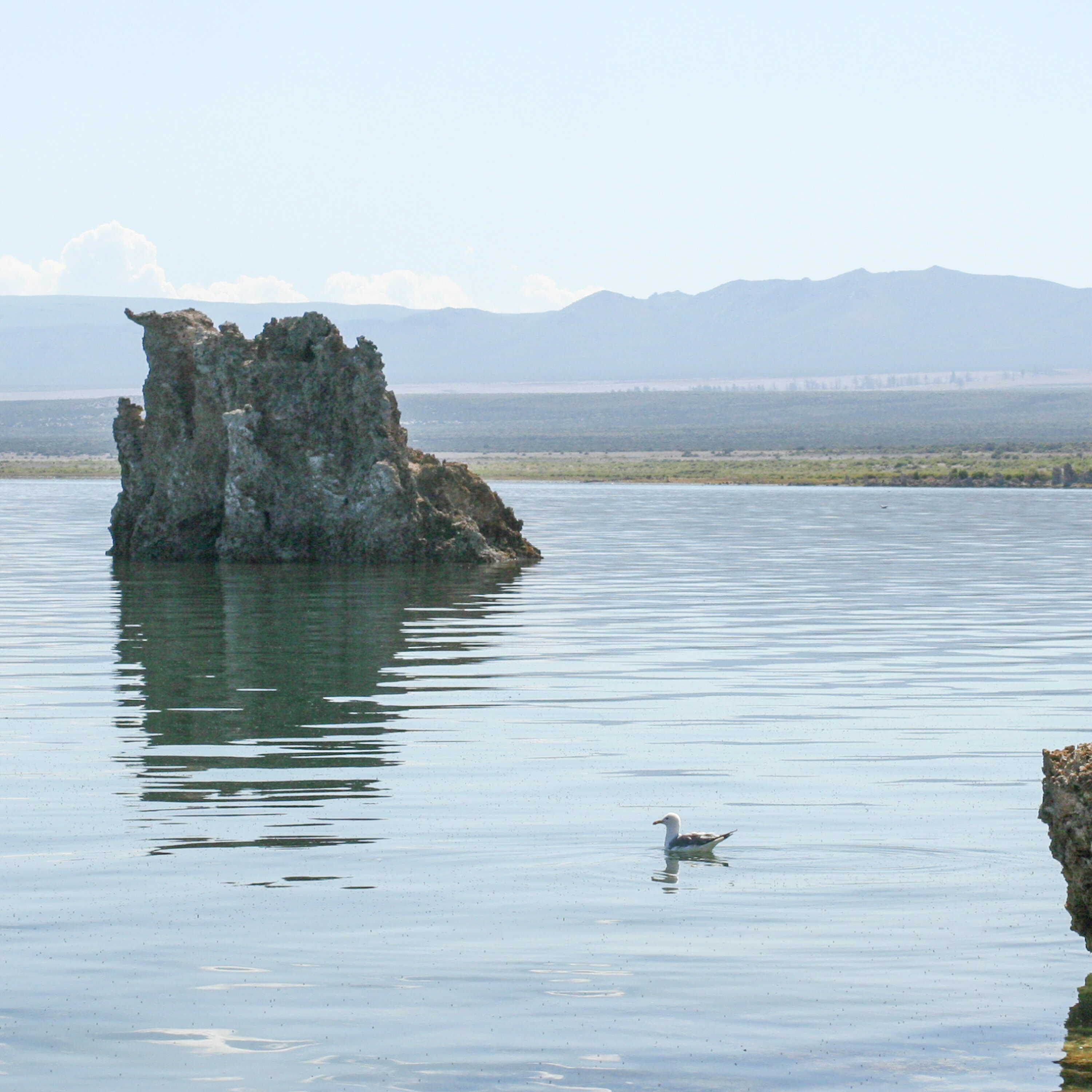
Caroline Tracey discusses Salt Lakes: An Unnatural History, tracing how water diversion transforms terminal lakes while using natural history, queer theory and personal narrative to challenge the idea that saline landscapes are barren or disposable.
In this engaging episode of "90 Miles from Needles: The Desert Protection Podcast," host Chris Clarke invites Caroline Tracey, author of "Salt Lakes: An Unnatural History," to discuss her newest work and its publication on March 17th. The conversation navigates from Caroline's initial inspiration at the Salton Sea in 2014 to the array of topics covered in her book, including the ecology of salt lakes, their historical significance, and the weaving in of queer theory as a lens for understanding these unique ecosystems.
The episode dives deep into Caroline's exploration of salt lakes around the world, illustrating unexpected commonalities in their ecological functions and human impacts. By employing queer theory, she highlights non-normative reproductive structures and challenges traditional perceptions of barren desert landscapes. Chris and Caroline further discuss the personal evolution that paralleled the book’s creation, providing listeners with an enriched understanding of the world’s salt lakes' environmental and cultural intricacies. This episode serves as a compelling invitation to rethink the narratives around desert ecosystems, encouraging proactive preservation through enriched storytelling.
Key Takeaways:
-
Caroline Tracey began her journey to writing "Salt Lakes: An Unnatural History" after visiting the Salton Sea in 2014, inspired by the interplay of natural history, policy, and personal narrative.
-
The book highlights the global patterns of ecological degradation in salt lakes due to factors like water diversion for agriculture, drawing parallels between lakes in North America, Central Asia, and Mexico.
-
Caroline incorporates queer theory to explore ecological dynamics, introducing a fresh perspective on the biodiversity and resilience of salt lakes.
-
Deserts and their salt lakes are misunderstood landscapes, often labeled as wastelands, yet they are biologically and culturally rich.
-
The interview sheds light on various ecosystems, advocating for conservation efforts by demonstrating how altered perceptions can foster environmental appreciation and advocacy.
Notable Quotes:
-
"I think for some people just the idea of what a salt lake is, it helps to ground them in terms of not just the utility but the beauty."
-
"Queer theory played a role in that because I really wanted to think about those conceptual issues of 'how do you feel at home in a place that's changing very fast?'"
-
"Salt lakes are...like a canary in a coal mine...because they are at the end of the water system."
-
"If I can convince other people that these landscapes are beautiful and fertile and worth protecting, that has a ripple effect upwards."
Resources:

Become a desert defender!: https://90milesfromneedles.com/donate
See omnystudio.com/listener for privacy information.
UNCORRECTED TRANSCRIPT
0:00:00 - (Chris Clarke): 90 miles from needles the desert Protection Podcast is made possible by listeners just like you. If you want to help us out, you can go to 90 miles from needles.com donate or text needles to 53555.
0:00:25 - (Joe Geoffrey): Think the Deserts are Barren Wastelands? Think again. It’s time for 90 miles from Needles the Desert Protection Podcast.
0:00:00 - (Chris Clarke): 90 miles from the desert Protection Podcast is made possible by listeners just like you. If you want to help us out, you can go to 90 miles from needles.com donate or text needles to 53555.
0:00:25 - (Joe Geoffrey): Think the Deserts are Barren Wastelands. Think again. It's time for 90 miles from Needles the Desert Protection Podcast.
0:00:46 - (Chris Clarke): Thank you Joe and welcome to this episode of 90 Miles from Needles the Desert Protection Podcast. I'm your host Chris Clarke and today we have a really wonderful conversation I'm bringing to you with Caroline Tracey who just had her newest book, Salt Lakes An Unnatural History go public on the 17th of March just last week and we had a fairly wide ranging conversation talking about salt lakes we have known and the history of colonialism, queer theory, lots and lots of other stuff. It's just a fantastic conversation and I think you're going to really enjoy it. Before we get to that though, I want to thank some of the folks who have given to either the Desert Advocacy Media Network's Fellowship for Desert Reporting or to general support for the podcast and they are James Costello, Robert Bagel, Marlene Brockman, Jym Dyer, Jaxon Ramsel, and Jacob Engel. We are really appreciative of all you folks. If you want to give to our General Support Fund that is at 90 miles from needles.com
0:01:50 - (Chris Clarke): donate, you can pick a frequency and an amount of donation that makes sense to you, whether it's $1 one time or $200 a month. Obviously some of you are going to fall somewhere in between those two if you want to give to the Fellowship for desert reporting 90 miles from needles.com Fellowship we are trying to raise an additional 10k after some matching funds were donated to us and that's going to go to hiring emerging desert environmental journalists from around the North American deserts. It's a really exciting project and I hope you will find it exciting enough to help us make our matching funds goal. That said, let's get to our conversation with Caroline Tracey, author of Salt Lakes An Unnatural History.
0:02:41 - (Chris Clarke): If at the end of this conversation you decide you really need to get a copy of this book, which we strongly encourage, there will be a link in the show notes and without further ado, let's go to the Interview Studio and Caroline Tracey, author of Salt Lakes
0:02:55 - (Caroline Tracey): An Unnatural History Sam,
0:03:25 - (Chris Clarke): We're extremely pleased to have Caroline Tracey on with us in our virtual studio and Caroline just had a title drop, Salt Lakes An Unnatural History. I just finished reading it like literally 20 minutes ago. Actually had time to go through some of the notes which was pretty fun, but welcome back to 90 miles from Needles and just really looking forward to chatting about this book.
0:03:49 - (Caroline Tracey): Thank you. I'm happy to be here, too.
0:03:51 - (Chris Clarke): So you've been working on this for a while, it sounds like.
0:03:53 - (Caroline Tracey): Yeah, I visited the Salton Sea in 2014, and that was really kind of the moment that this book started. Whether consciously or unconsciously, you weave together
0:04:04 - (Chris Clarke): a number of different threads in this book. Obviously, there is the natural history end of things and politics and environmental policy end of things, and those two get woven together in a lot of works. But you also have some significant amounts of autobiography in there, as well as Queer Theory, which is really interesting to me. I wonder if you can talk a little bit about how you decided on that structure. I assumed that it evolved as you were working on it.
0:04:36 - (Caroline Tracey): It definitely evolved. I think when I started working on the book, I didn't initially conceive of it as a book called Salt Lakes. I initially wanted to, you know, learn to write beautiful essays. I was really into reading writers like Joan Didion or, you know, Wallace Stegner. I talk about a lot in the book, his essays about the west, and that was the type of genre I wanted to write in. But of course, that led me down a lot of different rabbit holes. So I found myself needing to be able to explain the history of water law in the west, and I found myself needing to understand salt Lake ecology. And then I, because I was incorporating my own life and my own twists and turns, I started reading a lot of Queer Theory because I had broken up with my college boyfriend and I had begun dating the woman that I've now married.
0:05:28 - (Caroline Tracey): And so I was reading these works that were really speaking to me in an important way, but that I also found reflected back on the landscape in pretty interesting ways.
0:05:36 - (Chris Clarke): I learned a significant amount from this book, which is always fun. You know, I've been studying especially, you know, mono and Owens, like, given various jobs I've had in the past for. For some time. But it was really cool to dig into some of the commonalities between all these different salt lakes from, you know, Zuni in New Mexico and the lake basin in Mexico City, which is a fascinating chapter.
0:06:02 - (Chris Clarke): I wonder if you could talk a little bit about what you found that surprised you as you were digging into this.
0:06:08 - (Caroline Tracey): Yeah, I think that there. There are a lot of similarities across the world. Of course, you know, the main one is the sort of formation that makes the lakes, which is they all form in these closed basins, which are usually in arid environments, not exclusively. Mexico City, of course, is not an Arid environment. And that basin is just massive, basically is why it has a closed lake at the bottom of it. But sort of beyond that, just basic geology. Also I found that around the world there were many different cultures that had cosmologies that featured these lakes. So of course Mexico City of the Great Basin with different Paiute tribes and the Zuni tribe, the Shoshone. And then in Central Asia and in Australia too, these lakes are just, I think, such, such impressive features in the landscape and so striking to come across that it's almost as though you couldn't avoid incorporating them into the worldview and the belief system.
0:07:04 - (Caroline Tracey): So that, that was really inspiring to me. But then of course also the way that they've declined is also pretty similar around the world. In the American west, we have alfal that the water is diverted to or you know, we, in the case of Mono and Owens, it's. It's diverted to serve the city of Los Angeles. And in Central Asia, the Aral Sea was. The cotton industry was diverting that water. And in Mexico City it's a slightly different situation because they really wanted to drain the lake so they could put the city exactly there, but they essentially, you know, diverted the water out of the basin so that it wouldn't be filling anymore. And so they all have this really similar story of diversions.
0:07:45 - (Chris Clarke): Yeah, the RLC chapter was possibly the least hopeful in the book, I think, and it seemed like just the inertia of Soviet era policy and the national border running through the sea and a few other things really conspired to make that more of a. More of an uphill battle than say Mono Lake or Walker Lake or some of the, some of the other places. Am I getting the right impression there?
0:08:10 - (Caroline Tracey): Yeah, I think that it is. You know, it's an enormous environmental catastrophe. It's. It was the world's fourth largest lake and now it's less than a tenth of that original size. And that happened at a moment when the, I think, I think the water stopped reaching the lake sometime in the 1980s. So really at the end of the Soviet Union, you suddenly had these brand new countries, Kazakhstan and Uzbekistan, that were still figuring out their governments and they didn't have the resources to solve this sort of world scale environmental catastrophe.
0:08:44 - (Caroline Tracey): So unfortunately, I do think that sort of the future of the Aral Sea is not to be refilled because that water is spoken for elsewhere by this point. It has been for decades. And I think that this book is a hopeful book because in many cases I do think that in the Scheme of environmental problems, Salt lakes are among the easier ones to solve. They really just need the water to be refilled. But the issue is there is a lot of legal technicalities and political will that has to go into getting that water and getting it to the lakes.
0:09:17 - (Caroline Tracey): And I think, you know, one thing that I think some people want the optimism in my book to do is to present a clear path to solving these problems. And in some of these lakes, I think we have to accept that they are not going to be solved. And that's also part of the book for me is sort of thinking about how do you, how do you still appreciate a landscape that is sort of irreparably changed.
0:09:40 - (Chris Clarke): We worked on a light trespass ordinance here in San Bernardino county some years ago and our line was that light pollution is the easiest kind of pollution to remediate because all you got to do is turn the light off. And it seems like protecting salt lakes is going to be similar to that in that all you got to do is turn somebody's tap off and within a couple of years the Salt Lake will get healthier.
0:10:03 - (Caroline Tracey): Yeah, I mean, that to a certain extent has been seen at Mono Lake. The Mono Lake cases is this famous court case where the, a group of environmental coalitions sort of tried to hold the city of Los Angeles and its Department of Water and Power accountable for diverting water from Mono Lake. And it resulted in, as you know, a state mandated sort of target elevation for the lake. That level has not been reached because they didn't know to factor in climate change into the hydrological calculations they were doing in 1984, whichever year it was.
0:10:39 - (Caroline Tracey): And so it has been more complicated because climate change has made the water availability so much less and so much more unpredictable. At Walker Lake, there has been sort of a similar effort to that at Mono. And the challenge is that there it's not one single entity to hold accountable. It's not just Los Angeles Department of Water and Power, it's an irrigation district that has something like 300 users. And so even just the simple issue of serving all the defendants on the case, the notice that this, the lawsuit was going to happen took a long time because they couldn't find, find all the individual farmers. And so it, it becomes much more complicated the more complex these irrigation systems become. And of course, Walker Lake is a fraction of the size of Great Salt Lake, where it's a similar dynamic. We have a lot of farmers using the water that is diverted from reaching the lake. And so it is, is like environmentally definitely a possibility, the sort of saving of these lakes. But politically, it's, it's going to be a big challenge. It has already been for years, a political challenge, and it's only ramping up.
0:11:46 - (Chris Clarke): Yeah. It was interesting to see the, the discussion of the Salt Lake issue. I mean, the Great Salt Lake issue. I need to be more specific, especially considering that it's one of those situations. And I've had two of this situation pop up in the last couple of weeks where reading something that describes an event that we covered for the podcast as I was sitting there on the steps of the Utah State Capitol with my, my shotgun mic and had the seemingly once in a lifetime opportunity to interview Terry Tempest Williams and just, you know, it was a great event. It was just a wonderful, wonderful event.
0:12:24 - (Caroline Tracey): Yeah.
0:12:24 - (Chris Clarke): And you know, the other one being a demonstration in the middle of the Mojave Desert in Nevada that shows up slightly fictionalized in Claire Vay Watkins new book, Yellow Pine.
0:12:35 - (Caroline Tracey): I want to read that new book. I'm looking forward to it.
0:12:38 - (Chris Clarke): It is a really, really good book.
0:12:40 - (Caroline Tracey): Great.
0:12:41 - (Chris Clarke): How, how have people, I mean, I recognize that the book hasn't even been publicly available for a week yet, but how have, how have people in the salt lakes preservation movement if, if we could posit that there is such a thing, how have people responded?
0:12:56 - (Caroline Tracey): So far, I haven't talked with a lot of people who are involved in the conservation and activism and science as much yet. I'm sure I will. I'll be in Utah next week. I hope to talk with people. You know, there was a review of the book in Nature, and that was one of the reviews that said that the book didn't, didn't do as much as it could to present the political solutions for saving the lakes. And I think, you know, it also, it also doesn't go into the weeds of all the things that are on the table for Great Salt Lake right now. But I think I recognized first of all that the politics were changing each year that I was working on the book. And so I didn't want to necessarily commit myself to, like, the 2024 bill, which already, you know, is different in 2026.
0:13:46 - (Caroline Tracey): And I think it was sort of more important to me to talk about the conceptual issues of, you know, how do you feel at home in a place that's, in a landscape that's changing very fast, and what can the lakes teach us about, about that? And so I guess my hope is that the scientists who, who might find my errors in understanding of the, or the people who are really adept at policy who might feel like I glanced over it will understand that I, I really wanted to think, think about those, those types of questions and it wasn't, it wasn't a deliberate sort of oversight.
0:14:20 - (Chris Clarke): Yeah, well, I mean, this is not a textbook, right? It's, it's not a how to manual to, for fixing the lakes or for understanding them even.
0:14:30 - (Caroline Tracey): Exactly. There are a lot of resources for, for those things.
0:14:34 - (Joe Geoffrey): Don't go away. We'll be right back.
0:14:36 - (Chris Clarke): Those of you who listened to the episode last time will perhaps remember that I promised to bring back Fred Bell's nature recordings in this episode. And so by way of keeping that promise, here is Lamoille Canyon in the beautiful Ruby Mountains in north central Nevada. Please enjoy.
0:16:17 - (Joe Geoffrey): You're listening to 90 miles from Needles, the desert Protection podcast. Confusion and irritability are the first signs of heat injury and of hosting a podcast.
0:16:31 - (Chris Clarke): I was especially taken with the weaving in of queer theory and queer ecology as lens through which to look at the lakes. And it actually reminded me quite a bit. You know, I'm not the right person to really have informed opinions about either of these lenses, but it reminded me a lot of the work that Sonora Taylor has done with disabled ecology and the disability lens of looking at, in her case, lakes that are completely covered with soil and rock, you know, the aquifers in southern Arizona. I wonder if that's a parallel lens that had occurred to you as you were putting this together.
0:17:12 - (Caroline Tracey): Definitely. Sonora Taylor's work has been so present in Tucson in the last few years. And I got the opportunity to review the show that she was a part of at the Tucson Museum of Contemporary Art recently. And I definitely found it really inspiring and it felt like it was in conversation with this book. Queer Ecologies was something that I think I probably came upon about at the midpoint of the book. I had, I had always liked reading Queer Theory. I mean, I think, I think anyone can have an informed opinion about queer ecology or queer theory, whatever. It's, you know, it's there for everyone to read and for everyone's benefit.
0:17:48 - (Caroline Tracey): I mean, so I'd always really enjoyed reading it. But I, during the pandemic, I think I stumbled across, or I just happened to Google, you know, this field of not, not a particularly well defined field, but a body of body of writing about queer ecology that has to do with creatures that don't reproduce in heteronormative ways or, or creatures that have family structures that sort of defy the really simplistic type of thing we're taught in like 9th grade biology about the male and the female species that they produce. And I found that that resonated a lot with salt lakes, with the type of creatures that live at salt lakes. The, you know, brine shrimp can reproduce in pretty much any possible way that invertebrates reproduce. They can do them all. Phalaropes, which are the bird that migrates the entire length of the Western hemisphere via salt lakes, are polyandrous. So the male is the one that cares for the birds, the young, and the female takes multiple partners and she's bigger and flashier. And that's very unusual in the bird world.
0:18:53 - (Caroline Tracey): So there was a lot of resonance between this sort of queer ecology, theorizing and salt lakes. And that's to speak of the species. There's also a part of queer ecology that talks about sort of valuing landscapes that have been abandoned or scorned or impacted by humans. And that of course, you know, the sort of resonance with, with Owens Lake, places like Owens Lake or the Salton Sea that have a really big ecological value, but that aren't by any stretch of the imagination, pristine, intact landscapes.
0:19:26 - (Chris Clarke): My friend Marusudan Kati has written extensively on how people with a sort of the Western mindset, you know, with a divide between wilderness and urban, that kind of overall concept of how the natural world works, miss out on things like the San Joaquin kit fox, which is critically endangered, is living and thriving in downtown Bakersfield. And obviously this is something that native activists talk about as well. But just the idea that I will use the word advisedly, man and nature are two separate things. And it just, it strikes me that there's, there's just so much creative room for, for challenging that mindset because it seems essentially counterfactual.
0:20:07 - (Caroline Tracey): My favorite, my favorite article that is about queer ecology is by this geographer named Matthew Gandy, who talks about this cemetery in London, this sort of abandoned and overgrown cemetery in London that starts to be used for cruising. Eventually, like a mycologist went out there and realized that like the humans walking around for cruising was spreading the spores of mushroom and sort of having really positive effects on the ecosystem. And I thought that that sort of this like non normative human use of the landscape could have a really positive effect on the biodiversity, was really compelling. I mean, not that queer life needs to be reduced to just cruising, but I thought that there are many other possible examples of that type of kind of synergy between human use of an abandoned or scorned landscape and ecological value.
0:20:57 - (Chris Clarke): So did incorporating the discussion of and consideration of queer theory and queer ecology change the arc of the book as you were working on it?
0:21:07 - (Caroline Tracey): Yeah, definitely. I think when I started working on the book, you know, I. The what is now Chapter 2 is a revised version of an essay I wrote in 2015. And so at that time, I was dating my college boyfriend, and I had one certain kind of vision of my future laid out for me. And over the course of the years that I was learning about salt lakes and reading all kinds of things and just living my life, I also kind of drifted away from that vision for the future for myself.
0:21:38 - (Caroline Tracey): And certainly queer theory played a role in that because I was able to sort of envision alternatives and think about what I actually might want more. So I think queer theory takes on a bigger role across salt lakes because it was also something I was thinking about more over the course of that time.
0:21:54 - (Chris Clarke): I wonder if there are other aspects of the landscapes around salt lakes. I mean, you talk a lot about the salt lakes. You talk about the watersheds. Salt lakes, for the most part, as you mentioned, are in arid lands. And, you know, you. You live in a desert, and this is a desert protection podcast. And salt lakes are like sort of inverse sky islands in some way for desert landscapes. I wonder if you've found ways in which the queer theory lens affects your perception of the broader desert in addition to the salt lakes.
0:22:27 - (Caroline Tracey): Yeah, one of the things that I've thought about with regard to deserts, I, you know, of course, I spend a lot of time thinking about deserts, both ecologically and culturally, because I, like you said, live in one and read about them. And so there's. There's this sort of discourse and then corrective to discourse that deserts have been thought of as wastelands or sacrifice zones for a long time and treated as such.
0:22:54 - (Caroline Tracey): And. And the corrective is, of course, we need to appreciate the desert and value its biodiversity and its cultural heritage and everything like that. And one thing that, you know, I think that's actually been pretty successful. I think that at least from my vantage point in Tucson, people love the desert. So people come to visit it because they want to see it and experience it. People, you know, seek out the desert as a place for tourism, for better or for worse.
0:23:16 - (Caroline Tracey): And so some of that corrective has been pretty successful. But what I came to think was that salt lakes in some ways are sort of like the wasteland of the wasteland, because even within deserts, it's like, oh, well, that's just a salt flat. Nothing lives there. Or like, oh, a salt lake, it's just flies, you know, like, it's just bugs. And so I think that from. From my perspective, salt lakes, it was.
0:23:38 - (Caroline Tracey): It was almost this challenge of, you know, of course, to me, they had just been very striking and compelling. But as I started writing about them, I felt like, you know, if I can convince other people that these landscapes are beautiful and fertile and worth protecting, that that kind of has a ripple effect up the system. Right. You start with the wasteland of the wasteland, and you can go up to the beautiful verdant headwaters backwards.
0:24:08 - (Caroline Tracey): It's not starting with protecting the headwaters and sort of accidentally forgetting to conserve the lake that's at the end of it. And so I think that the sort of desert discourse was something that I. I thought about, especially toward the end of the book when I was reading more about deserts, that salt lakes are. I think that they're kind of like a canary in a coal min. Kind of. Because they. Especially for the water system, they're at the end of the water system. And so it's when they're signaling an alarm that things are wrong, that means that things are wrong throughout the water system.
0:24:42 - (Chris Clarke): Right. Yeah. There's probably a really provocative tangent we could go on here, too, with regard to the whole wasteland of the wasteland idea with regard to Burning Man.
0:24:53 - (Caroline Tracey): Right. Or, I mean, some of the tourism around the Salton Sea recently also. Yeah, I think. Yeah. But Burning man is the sort of example here. I just read a book, actually, that you might be interested in called Desert Imaginations. It's by a scholar from Morocco named Brahim El Ghoubly. He's now a professor in the United States. But he sort of goes through this cultural history of the French presence in Algeria, especially has this term that he calls Saharanism. And it's why deserts specifically are cast as this place that is sort of ripe for becoming an experimental zone or a sacrifice zone and says this term can be applied around the world. And Burning man, of course, is one of his examples that there's sort of this, like, lawless, spiritual pursuit that people think deserts naturally lend themselves to.
0:25:45 - (Caroline Tracey): And I think that the Salton Sea, of course, has this mythology around it that is something similar that it's like, oh, we want to go. And I was the subject of this, too, right. I mean, I went to the Salton Sea because I was curious about this. This. This history and this reputation that it had as. As a place of, like, created by catastrophe, but that had this sort of staying power. You know, you want to see this sort of, like, strange, strange place in the Landscape and feel what it's like to be in an unusual place.
0:26:19 - (Chris Clarke): Yeah, it's. It seems in some ways like that sort of post apocalyptic sense of the desert is what's propelling a lot of, you know, the last 15 or 20 years, interest in the desert as a backdrop for, you know, your steampunk wild west kind of fantasies. And I mean, not your generic yore. I know that when I've talked in various media about the environmental impact of events like Burning man that people will respond and say there's nothing there. And you know, really the only reason that Black Rock Desert isn't a salt lake is because it doesn't have any water in it most of the time.
0:26:57 - (Caroline Tracey): Yeah.
0:26:58 - (Chris Clarke): Except during the two Burning mans ago when, you know, people like Chris Rock had to take helicopters out.
0:27:04 - (Caroline Tracey): Right, right. Yeah. All the fairy shrimp, the invertebrates were coming out. Yeah, yeah. I mean, it's hard because I think it is. The people see the playa landscape specifically, and because it's so white, it just looks like it's devoid of life. But actually it's white because it's a place where water gathers. And whenever water gathers there, it becomes a very vibrant ecosystem, just not one that humans sort of are keyed to pay attention to. But yeah, with regard to the sort of apocalyptic interest in deserts, I think that it's odd because there's this like parallel kind of, There is the apocalyptic tourism, you know, there's. There is the desire to go see the plain graveyard and the other types of things that deserts have just been used as sacrifice zones for.
0:27:53 - (Caroline Tracey): And then there's also this sort of like much more influencer toned kind of like Van Life or you know, the big hats. I think that they're, they're like these aesthetics that are existing in parallel but that are both sort of acting on deserts right now. Yeah. Be interesting to. Yeah. Think about this, this book about Saharanism and in light of contemporary tourism.
0:28:19 - (Chris Clarke): Yeah, I'm definitely gonna have to check that out. And by way of, by way of wrapping up, first off, not only do I absolutely adore the work that you and others are doing over at the Border Chronicle, but also because they've already done the work to link your book, I think we'll just link to them rather than setting it up on our own website, but given that this interview will be coming out, we're recording this on Monday the 23rd.
0:28:43 - (Chris Clarke): So the end of the week, where can people see you doing events next week?
0:28:47 - (Caroline Tracey): Next week? Let's see. I will be in Phoenix On Monday, March 30, at Changing Hands Bookstore and the information is available on their website. Website. The following day I will be in Salt Lake City at the Westminster University Auditorium. I'll be in conversation with Bonnie Baxter, who's an amazing microbiologist of Great Salt Lake. And I. I can't wait. I have so much to learn from her. So I'm really excited to get to talk with her at that event.
0:29:17 - (Caroline Tracey): And then later I will be in Las Vegas on April 10th at the Writer's Block. And that's a great story. Yeah, I really look forward to. I know. I think it's so funny because I know there are lots of great writers in Las Vegas. I know some of them. And yet it was so funny to sort of convince the folks in New York that Las Vegas was a good book tour stop because no one thinks of Las Vegas as much of a literary city as it is.
0:29:47 - (Caroline Tracey): And then finally I'll be in Oregon in Corvallis, Dallas and Portland on April 16th and 17th.
0:29:52 - (Chris Clarke): Wonderful.
0:29:53 - (Caroline Tracey): So I would love to see any desert and Salt Lake shands at those different events.
0:29:57 - (Chris Clarke): Yeah. And we definitely encourage listeners to go pick one of those in the city that's closest to you. And Caroline Tracey, thank you so much for joining us. It's always a pleasure to talk to you and just best success with this book.
0:30:11 - (Caroline Tracey): Thank you so much. It's a pleasure for me too to always come back to 90 miles from Needle.
0:30:35 - (Chris Clarke): Once again I want to thank Caroline Tracey for joining us here at 90 miles from Needles. That was a fantastic conversation. I learned a whole lot. I hope you did as well. I also want to once again thank our friends James Costello, Robert Beigel, Marlene Brockman, Jim Dyer, Jackson Ramsel and Jacob Engel for supporting this podcast and the Fellowship for desert reporting. Again 90 miles from needles.com
0:31:00 - (Chris Clarke): donate if you want to give to our general fund. If you want to support our fellowship for Desert Reporting and help us meet our matching funds goal, you can go to 90 miles from from needles.com Fellowship now for those of you who listened to the last episode which I recorded in a living room that was not sound treated because there was a power outage in the studio and a bunch of crews working on remediating our house. I want to thank you for being patient with a lax production quality.
0:31:30 - (Chris Clarke): It was possibly the worst engineered episode that we have done since the first couple. But it was an important topic and I really needed to say what I needed to say. So I appreciate you listening. It was not a good week, but it seems like most of us survived it. I also want to thank those of you who've been reaching out about our dog heart. She probably doesn't have a lot of time left, I suspect, but she is enjoying life the way only an old dog can, and every moment that I get with her from here on out is an intense treasure and I'm very conscious of that as she wakes me up at 4 in the morning to go outside.
0:32:18 - (Chris Clarke): I will miss being woken up at four in the morning to go outside, I think. Anyway, we have a lot of fascinating interviews that I'm lining up here and still getting in touch with folks that I talk to in ajo at the Trinational Sonoran Desert Symposium, we are following the story of the proposed border wall in Big Bend in West Texas, which is a horrible idea. We are also paying attention to the secondary border wall idea in places like Oregon Pipe Cactus National Monument.
0:32:46 - (Chris Clarke): No end of stuff for us to report on. And I'm just really grateful to you for spending time with us learning about the desert we all love and how we can defend it. Until next week. Do me a favor, take your dog out on an extra walk for me, even if you have to put off something to do it. And please take care of yourselves. The desert needs you. Bye now.
0:33:18 - (Joe Geoffrey): And that brings us to the end of this episode of 90 Miles from Needles, the Desert Protection Podcast. You can find show notes for this episode along with links and background@90miles from needles.com we're also on social media. You can find us on Facebook, Instagram, Bluesky and Threads. Just search for 90 miles from Needles and if you'd like a more direct line, you can reach us on signal at Hey90MFA.
0:33:53 - (Joe Geoffrey): If you'd like to support the show, you can make a donation of whatever size and frequency feels right to you at 90miles from needles.com donate. Listener support is what makes this podcast possible. Our voiceover is by Joe Jeffrey. Podcast artwork is by Martin Mancham. Nature sounds are recorded by Fred Bell. Our theme song, Moody Western is by Bright side Studio with additional music licensed from Independent Artists.
0:34:26 - (Chris Clarke): Additional music in this episode is by Premium Beat.
0:35:22 - (Joe Geoffrey): 90 miles from Needles is a production of the Desert Advocacy Media Network.

Caroline Tracey is a writer and journalist whose work focuses on the Southwestern US, Mexico, and the US-Mexico Borderlands. She covers environment and the arts for the Border Chronicle (theborderchronicle.com), in addition to writing for numerous other publications. Her first book, Salt Lakes, is forthcoming from W.W. Norton in 2026.