
 Amazon Music
 Apple Podcasts
 Audible
 Castbox
 Deezer
 Fountain
 iHeartRadio
 Pandora
 PocketCasts
 Podcast Addict
 Spotify
 YouTube
  RSS Feed
 S5E4: Celebrating 25 Years: The Timbisha Shoshone's Fight for Their Homeland
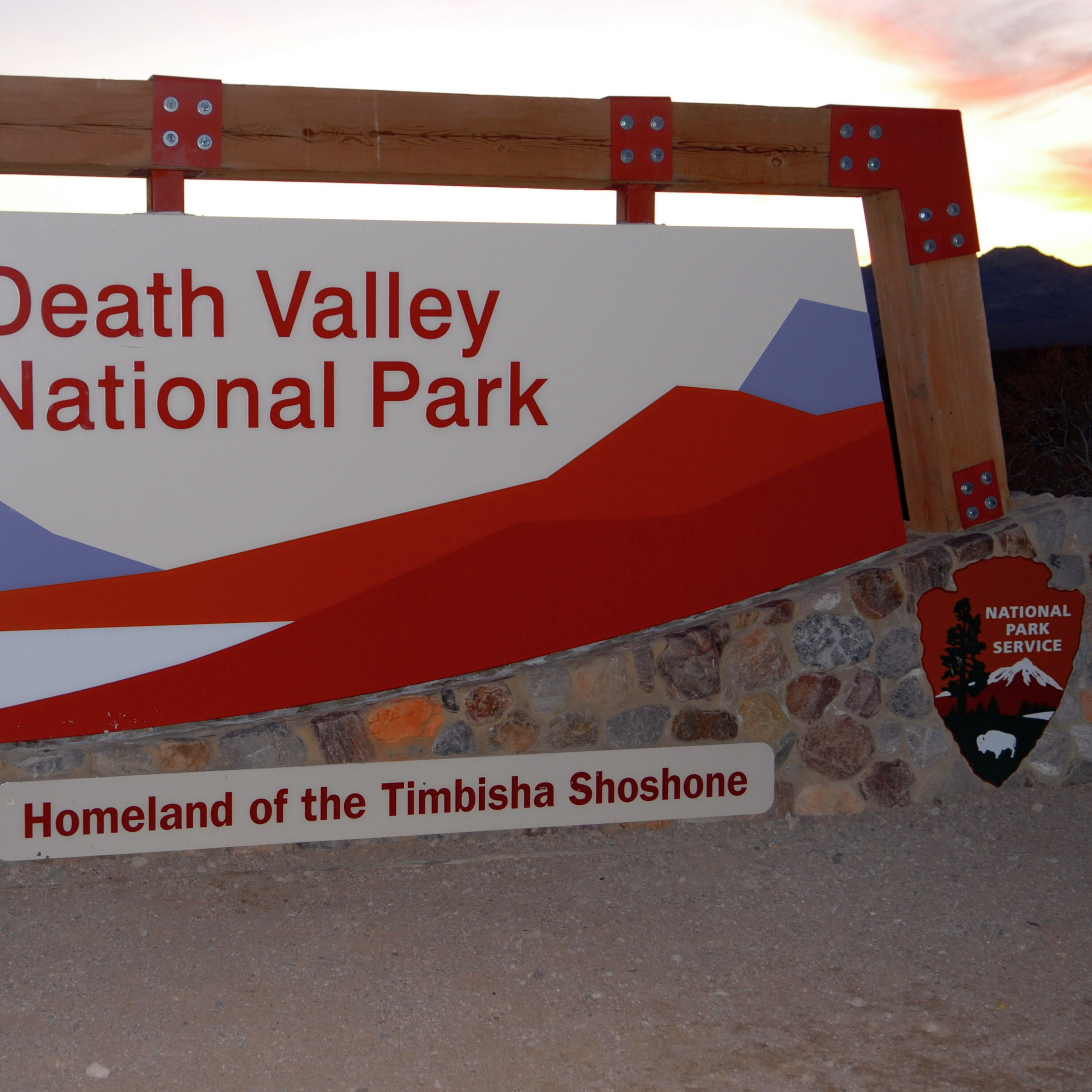
Timbisha Shoshone leaders commemorate the Homeland Act’s 25th anniversary in Death Valley, recounting displacement, return and the continuing struggle for honest representation, cultural survival and respectful federal partnership.
In this enlightening episode of "90 Miles from Needles," host Chris Clarke takes listeners to the heart of the desert Southwest for a special commemoration of the 25th anniversary of the Timbisha Shoshone Homeland Act. The episode celebrates the journey of the Timbisha Shoshone Tribe in reclaiming their ancestral lands in Death Valley National Park. Tribe members, including Jimmy John Thompson, Mandy Campbell, and George Gholson share their stories and highlight ongoing collaborations with the National Park Service.
Rich in history and advocacy, this episode explores both the triumphs and challenges faced by the Timbisha Shoshone Tribe in the years since the landmark legislation was enacted. Jimmy John Thompson and Mandy Campbell express their frustrations over recent censorship concerning the tribe's narrative in the park's visitor center materials. The episode conveys the tribe's resilience and determination to protect and celebrate their culture while addressing contemporary environmental and social challenges. The discussion doesn't shy away from revealing the systemic issues still at play, urging listeners to reflect on the broader implications on cultural preservation and environmental justice.
Key Takeaways:
-
The Timbisha Shoshone Homeland Act was a significant event for the Tribe, granting them 7,800 acres of ancestral land within Death Valley National Park, a singular achievement for a Native American tribe.
-
The collaboration between the Timbisha Shoshone Tribe and the National Park Service highlights a critical step in building partnerships for the preservation and recognition of indigenous lands and culture.
-
Current tribal council members, including Jimmy John Thompson, stress the ongoing need to address issues like censorship and the importance of reflecting true tribal narratives in public spaces.
-
The Timbisha Shoshone people continue to fight for their rights and cultural survival, underscoring the importance of indigenous advocacy and environmental justice in modern society.
Notable Quotes:
-
"I see partners, I see friends, I see family. These relationships would not work if we do not respect each other and trust each other." – Jimmy John Thompson
-
"We're here to honor those that came before us who got this accomplished." – Jimmy John Thompson
-
"We were pushed from land to land around here, from home to home. It kind of felt like when I figured it out, it felt like we were nobody then, but now we are somebody, and we are still here." – Mandy Campbell
-
"Imagine for a second, if you did not know if your home was going to be there when you went home." – George Gholson
Resources:
-
Timbisha Shoshone Tribe Website: timbisha.com
-
Desert Advocacy Media Network: Desert Advocacy Media Network
-
Raising funds for Desert Journalism Fellowship:
-
Website: 90milesfromneedles.com/fellowship
-
The compelling narratives and insights from this episode provide a deep understanding of the Timbasha Shoshone Tribe's heritage, challenges, and collaborations. Tune into the full episode for more profound stories and stay connected with "90 Miles from Need
Become a desert defender!: https://90milesfromneedles.com/donate
See omnystudio.com/listener for privacy information.
UNCORRECTED TRANSCRIPT
0:00:00 - (Chris Clarke): 90 miles from the desert Protection Podcast is made possible by listeners just like you. If you want to help us out, you can go to 90 miles from needles.com donate or text needles to 53555.
0:00:25 - (Joe Geoffrey): Think the Deserts are Barren Wastelands? Think again. It'S time for 90 miles from Neil's the Desert Protection Podcast.
0:00:45 - (Chris Clarke): Thank you Joe, and welcome to this episode of 90 Miles from Needles, the Desert Protection Podcast. I'm your host Chris Clarke, and we have an interesting episode for you this time around. And we wouldn't have this episode if not for my friend Ruth Nolan giving me the heads up that there was an event going on up in Death Valley the last weekend in January, which is a somewhat belated celebration of the 25th anniversary of the signing of the Timbisha Shoshone Homeland Act.
0:01:13 - (Chris Clarke): Thanks to Ruth for giving me the heads up and I think you're going to like this episode. We also have some really exciting news that I'm going to talk about later in the episode. But just as a preview, we are now raising funds with some very generous matching grant funding provided to hire desert reporting fellows. We're trying to raise at least 10k to take advantage of the matching funds, and this money will go to support emerging journalistic voices in the desert Southwest, anywhere from the deserts of northern Mexico on up to southern Idaho, from West Texas to California and more on that later. But we're really excited about it. Check out our show notes if you don't want to wait for the episode to be over.
0:01:53 - (Chris Clarke): As you'll hear a couple people mentioned in this episode, the relationship between the Timbisha Shoshone and the National Park Service has not always been completely collegial. In fact, at one point in the late 1950s and early 1960s, and perhaps before this as well, the National Park Service essentially adopted a policy of nonviolent eradication of Timbisha culture. People were living in adobe buildings and they would go up into the higher elevations during the hot months and the National Park Service would take water hoses and try and wash down the adobe buildings, which is a really good way of making them go away. I mean, those buildings are basically mud and straw.
0:02:33 - (Chris Clarke): Adobe works really well in a place like Death Valley where there's very little rain unless somebody aims a hose at your house. It's essentially like setting a house on fire, except that actually the house is at Timbisha. Would have survived better if they'd been set on fire as opposed to being washed away. The relationship between the Timbisha Shoshone and environmental activists, even desert protection activists also has not always been friendly.
0:03:05 - (Chris Clarke): As recently as the turn of this past century, the year 2000, when the Timbisha Shoshone Homeland act was being discussed in environmental activists responding to the thought of a Timbisha homeland and Death Valley responded with stereotypes and bigotry and ahistorical claims that there was no interest in the area by the Shoshone. Up until, I don't know, the 60s or something, those thoughts were in the background, still present among the people celebrating.
0:03:33 - (Chris Clarke): People's memories are long, but they were in the background because this was a celebration of new relationships, ongoing work together. So here's the context. The Timbisha Shoshone Homeland act, signed into law in November 2000, returned more than 7,500 acres of ancestral land to the Timbisha Shoshone tribe, which has lived within and around what is now Death Valley national park since time immemorial.
0:04:00 - (Chris Clarke): The act established a framework for the tribe to live, govern and maintain cultural ties in a place from which they had long been excluded. Officially, though, the tribe members were tough enough that they hung on for decades despite being excluded. This year marked the act's 25th anniversary, a milestone the tribe had planned to celebrate earlier but had to postpone due to the federal government shutdown last year, during which the park remained open.
0:04:30 - (Chris Clarke): But many staff were furloughed and that made plans for large, coordinated gathering much harder. So when the celebration finally took place, it carried both the joy of marking a hard-won victory and the weight of unresolved tensions over how the Homeland act is being implemented in practice. And that's why I found myself walking with about 100 members of the tribe and their supporters toward the visitor center at Furnace Creek, 190ft below sea level.
0:05:01 - (Chris Clarke): And this episode is going to be a little different from a lot of them because I'm going to sideline my own voice a little bit. I'll ask a couple of questions here and there, but I'm going to let other people's words speak for them. I'll do maybe a little bit of explanation of something if it needs it. But this is about the Timbisha and her allies who work to create a situation that just continues to improve despite attempts by the current administration to erase the Timbasha from history.
0:05:29 - (Chris Clarke): We'll talk a little bit more about that too. But right now let's head to Furnace Creek, 140ft below sea level, as the Timbisha Shoshone and their friends do a celebratory march to commemorate the 25th anniversary of the Timbasha Shoshone Homeland act and the decade plus of pitched organizing that made that act a reality.
0:06:13 - (George Gholson): You guys know that's the Shoshone sun song, and we sing that in the morning when the sun's coming up.
0:06:17 - (Chris Clarke): That's.
0:06:18 - (George Gholson): That's an old traditional song that we learn. Learn from Portman Harney, if you guys remember Cortman. So that's what that song is talking about.
0:06:30 - (Mandy Campbell): All right.
0:06:35 - (Mandy Campbell): Let's do this.
0:07:31 - (Chris Clarke): When the march got to the Furnace Creek Visitor center, half a mile from the junction where it started and 50ft further down below sea level at 190ft, everyone trooped into an auditorium that's part of the visitor center, filling up all the chairs, people standing on the edges of the room. And the ceremony was kicked off by a prayer by Elder Pauline Steeves, which I did not record because I was not certain that it was appropriate.
0:08:02 - (Chris Clarke): So that lovely moment will just have to leave to your imagination. But after Pauline Steve's prayer in the Shoshone language, we heard from Death Valley National Park Superintendent Mike Reynolds, and this is what he said.
0:08:16 - (Mike Reynolds): I want to welcome you to the Furnace Creek Visitor center in Death Valley National Park. Thank you for attending today. To help acknowledge this significant milestone, 25 years ago, Congress passed the Timbisha Shoshone Homeland act of 2000. This act is one of the most foundational the Timbisha Shoshone Tribe Penn Death Valley National Park's shared history. Achieving consensus on the details and outcomes of this landmark legislation was a challenging endeavor. The relationship between the National Park Service and the Timbisha Shoshone Tribe has not always been a cause for celebration and has at times been strained.
0:08:56 - (Mike Reynolds): Collaborating to advance this legislation became a watershed moment, one that reshaped that relationship. The legislation transferred nearly 7,800 acres of federally managed National Park Service and Bureau of Land Management land to tribal control, including 314 acres right here at Furnace Creek, one of the only places in the National Park Service with the tribal village. It also calls for the tribe and the National Park Service to work collaboratively to manage certain aspects of Death Valley national park, the tribe's homeland.
0:09:27 - (Mike Reynolds): Since 2000, the relationship between the tribe and the National Park Service has continued to strengthen through growing collaboration on conservation initiatives, visitor education, sharing information about current conditions and past traditional practices, places of cultural significance and sensitivity, and efforts to share the many stories of this remarkable landscape. While the groundwork and the fight to have a formally dedicated homeland began years before, much credit goes to Pauline Esteves, who's here with us today.
0:09:59 - (Mike Reynolds): Barbara Durham, Grace Goad, Richard Boland, Spike Jackson, Gail Hansen Johnson, Joe Kennedy and many others from the Timbisha Shoshone Tribe, as well as John Reynolds, Dick Martin, Pat Parker and Don Barry from the National Park Service. There were many others who contributed to help draft and finalize the act. Personally, I have come to deeply love and cherish this place in the time I've been gifted to see been here. It's been a privilege.
0:10:26 - (Mike Reynolds): I am honored to work alongside and learn from the traditional residents of this valley they call life. I can speak on behalf of all of my colleagues at the National Park Service saying that we deeply value and take great pride in the relationship we share with our friends in the Timbisha Shoshone Tribe and look forward with gratitude and hope for the next 25 years. There is much more to do. Trust, friendship and true heartfelt partnerships do not happen magically.
0:10:54 - (Mike Reynolds): It takes effort from each and every one of us to not be afraid to think of things differently, be open minded to different ways and methods of doing things, while also balancing all the challenges of 2026.
0:11:08 - (Chris Clarke): There were a lot of wonderful things said in the auditorium at Furnace Creek and aside from Ms. Pauline Steve's prayer, we did get all of them recorded. We're going to give those recordings to the Timbisha Shoshone Tribe so they can add them to their records. But for the purpose of keeping this podcast under an hour, I'm going to limit what we share here. Along with Mike Reynolds comments to a particularly germane comment by Jimmy John Thompson, Timbash Hashoni, tribal member, former chairman of the Tribal Council and current council member on that council.
0:11:39 - (Chris Clarke): He said some things I think you'll appreciate and certainly appropriate to share here. Let's listen.
0:11:46 - (Jimmy John Thompson): Thank all y’all.
0:11:47 - (Jimmy John Thompson): When I first showed up here this morning, I wasn't too sure how this was going to go. We finished together so fast. Even though it's been 25 years, this kind of came together really quickly. And I look out here in the audience. I see a lot of partners that we work with at the tribe, but not only did we I see partners, I see friends, I see family. These relationships would not work if we do not respect each other and trust each other.
0:12:10 - (Jimmy John Thompson): And there's so much more that we can do do here. I'm excited to be here. I'm truly excited to be here. It's 25 years too late. This should be an annual event. Starting 25 years ago, we should have completed all These items that are in the Homeland act, including our co management agreement, there's a lot involved in there. We talked about relationships. I travel this nation quite extensively and most of your tribal nations do not get along with the park Service. They are constantly fighting. They are still trying to get land back.
0:12:39 - (Jimmy John Thompson): I often get asked how did they do it? And honestly I wasn't there at the point to our elders who put in that work and they did this before there was social media, before there was Internet. Imagine that they did that. They pulled it across and got it accomplished right here in our village. This is our homeland. So please enjoy it, do not make a mess. Please take care of it, respect it. Everything here is alive.
0:13:07 - (Jimmy John Thompson): This is not dead dead death valley. You go out here, take a good look. Everything is turning green. This valley is about to blossom here. It's going to be amazing. Like I said, we're here to honor our elders. We're here to honor those that came before us who got this accomplished. Most of them are no longer here. I really wish that we could have got this done before that happened so they could have witnessed it, should have enjoyed it, should have seen what their fruits going to make. When I mentioned this, this was mentioned a while back regarding the Homeland act and some of the things, you know that we have yet to accomplish in that we had an elder mention that she wished that maybe we should have stayed renegades.
0:13:48 - (Jimmy John Thompson): You know, maybe that was better. But that comes down to us as tribal council comes down to us as to making sure these things are conversations that these things are followed through not just as during our term to make sure the folks following us follow through with that. And it's continues until it's completed. There's just so much to do and I look forward to our future. We work with the park service here and there's so much that we can do.
0:14:13 - (Jimmy John Thompson): All these signs and streams and all these places that you guys did it should bear to mission A. You should understand when you show up there, you should understand a story behind what you're looking at. It's not not just a photo walk or quick pic selfie but there's meaning behind it. There's trails that we travel for thousands of years be in your photo but you might not notice there's signs of our our existence there and those things we feel like we should be sharing with you as visitors.
0:14:43 - (Jimmy John Thompson): What is the panoramic beautiful photo? It's at our existence. We are thumb here and we are still here.
0:14:48 - (Chris Clarke): Thank you. The anniversary ceremony is joyful. There's really no other word to describe it better. But it wasn't the only thing in the year. Just beneath the celebration was a current of anger and disappointment tied to long running concerns that had manifested pretty recently about Interior Department censorship of timbitious signage and interpretive material in the park. That feeling came out onto the surface the second day of the celebration at the tribal potluck where Jimmy John Thompson spoke about what's been happening and why it still matters.
0:15:26 - (Jimmy John Thompson): I'm going to kind of keep this short. Name is Jimmy John Thompson. I think most of you all know me or know of me. Prior chairman, current councilman for Timbisha Shoshone tribe. I want to talk a little bit about what happened regarding a new exhibit that we are going to display in the visitor center. The park has to send forth.
0:15:51 - (Jimmy John Thompson): Guess, a request when they're going to put in a new exhibit at the visitor center. And that's just nationwide. And the Department of Interior decided to step on that. And I kind of throw tribes into that, I guess, DEI category or just kind of, I guess follow orders from the president regarding his secretary order. That's affecting us. We've seen on national news where we think it's just African Americans, it has to do with slavery and we've seen all that going on in the south and such, even in Philadelphia. But that's affecting us as well.
0:16:24 - (Jimmy John Thompson): When we cannot display our history and be proud to display it in a visitor center that's homed in our homelands. It sits, the footprint is on our old village here. Our membership used to live there. So it's extremely important that that is expressed when you can't say, use the word homeland and the name of the act is Homeland Act. Okay. You can't display language stating that we are still here. We are still here.
0:16:55 - (Jimmy John Thompson): Are you blind? You know, we're the only nation that has actually fought during this Homeland act to get these parcels here. 317 acres right here next to the visitor center. But that's what makes this so cool, in my opinion. You know, we're able to build those partnerships in that respect. I have the utmost respect for my grandma's here and their staff. We have that connection. We can sit at a table and talk about what we see here.
0:17:25 - (Jimmy John Thompson): I feel his desire to know more, to know our history though, how we're connected to it, because we have membership here that live their whole lives and we talked about that too. When you're able to step into an area like this all by yourself and be comfortable, comfortable in your own skin and not have no concerns. That takes a special person, and that's who Tamisha is. We're comfortable in our own skin, and we're ready for any fight you want to throw at us. We're tough people.
0:17:58 - (Jimmy John Thompson): I just want to thank you guys. I appreciate your time and efforts. Thank you.
0:18:56 - (Mandy Campbell): My name is Mandy Campbell. I'm one of the Timbisha Shoshone members here in Death Valley.
0:19:01 - (Chris Clarke): Ms. Campbell also, he said, parenthetically, serves as the tribal historic preservation officer for the Timbisha Shoshone.
0:19:11 - (Mandy Campbell): This is the 25th anniversary of our Homeland Act. I've watched my mother, my family, my aunties, my cousins, and everybody fight for recognition at first, and then we didn't have a land base, so they fought for our homeland. And now, just to hear us not be able to say homeland was a heartache, we wanted to do a memorial march just to show them the world, that we can get along with everybody, all the organizations, Park Service as well. We have a great relationship with Park Service. So this is kind of another celebratory march just to show that we did it 25 years ago.
0:19:43 - (Mandy Campbell): But we were fighting then to win our land base. But now we're showing them that we do have a collaboration. We do have a great relationship with Park Service and the different organizations, and we're partners with everybody around here. So I just want to show the world and everybody that, you know, we get along. We're working together as a team. I remember up at the road, at the highway, there was a sign that said, no access road.
0:20:06 - (Mandy Campbell): Now we have a road that says Timbisha Shoshone. You know, and before, we had a barbed wire fence that was put here in the 1930s. I never really understood what that meant. But when we got to Homeland, they were able to take it down. And then that time, you know, we didn't, I guess you could say, because we were pushed from land to land around here, from home to home. It kind of felt like when I figured it out, it felt like we were nobody then, but now we are somebody, and we are still here.
0:20:32 - (Mandy Campbell): You know, we have friends here, and we belong here, too. So my auntie said. She said, you know, everybody called us renegades, but we are the people of the land. And we go out out here. It's. There's food, there's vegetables. There's. You know, we take care of the animals. We protect everything out there. We don't just go and terrorize it. It's the water that's life. Everything's life to Us, we don't destroy it when we go to protect water.
0:21:03 - (Mandy Campbell): We protect the water because it's healing. If you don't have water, who are you? You know, if you ain't got that water to drink when you get dehydrated, you're gone. People need to realize what they're really destroying when they destroy things out there. You know, the plants that they're destroying is food. It's not only food for us, it's food for other people. The animals, the four legged, and it's medicine.
0:21:26 - (Mandy Campbell): They look at the world and just think, this is a desert out here. It's not just a desert. All these miners and solar, they're coming out here. But what about the turtles? What about the, you know, the little animals that are running around, the birds? Do they realize how much they're terrorizing them and traumatizing them? Do they realize that there's food and medicine out there that they're finding out now is curing things?
0:21:48 - (Mandy Campbell): But that's what you're tearing up. And a lot of this medicine that they're using, a lot of the stuff that needs to be cured, it's what's out there on the land that's curing people nowadays.
0:22:01 - (Chris Clarke): Is there a recipe for some kind of thing that will cure greed? Because we could probably use that.
0:22:07 - (Mandy Campbell): We could. Greed is very ugly and I don't know how to cure that. I don't. But hopefully we figure out something before it's too late because, you know, water is getting scarce and the land too. We're tearing up more and more land. It's sad. It's not like it used to be. Nothing's like it used to be.
0:22:27 - (Chris Clarke): It is sad. And at the same time we have really joyous events like the last couple of days. And I'm just personally grateful to you for all the work you've put in and taking time to talk to us despite having all the stuff on your plate the last couple of days. But also just because we all need joy right now, especially. And maybe some people would think this was an unlikely source of joy at Furnace Creek, but it's always worked for me. And thank you for adding to it.
0:22:57 - (Mandy Campbell): Thank you. It was much needed. We need the music, we need the children here. We needed this. And I'm glad everybody showed up and supported us.
0:24:00 - (George Gholson): My name is George Gholson. I am a tribal council member for the Timbisha Shoshone tribe based in Death Valley, California. Furnace Creek, to be more exact. You know, out of the 25 years this is the first time I remember holding this event, and it's the 25th anniversary, which was actually in November, of the signing of the Homeland act, which granted us land in the park. And there's no other tribe in the nation that has land inside a national park. We're the only ones.
0:24:27 - (George Gholson): And we're very thankful to the House and the Senate and the President for making that happen at that time.
0:24:34 - (Chris Clarke): At that time. That's some important words there.
0:24:36 - (George Gholson): Yeah, tremendously important words at that time, because I think that is a time when both parties did what they needed to for America and not what they needed to do for their own party. And I've always been. I've always voted for which group is going to be better for my people and better for me, and I think America does that today. But, oh, man, isn't it tumultuous out there?
0:25:03 - (Chris Clarke): Yeah, it's scary times, and I think that's. It's especially important for us to have events where joy is kind of the watchword.
0:25:14 - (George Gholson): Yeah. This is, as far as I can remember, the first gathering we've had here on this land since I've been involved. I've been involved on tribal council for 17 years. And it's got a special feeling to it. The land's got a special feeling to it for us, and now we get to share that with the public, which is tremendous.
0:25:34 - (Chris Clarke): How has the passage of the act changed life for people living in Furnace Creek?
0:25:41 - (George Gholson): Well, you go from before the act having your house washed away with a. With a water hose to them having to ask permission to come onto your land. So it's a tremendous difference. You feel secure. Could you imagine just. Just imagine for a second, if you did not know if your home was going to be there when you went home, could you imagine the stress that that would cause you and the resentment that would cause you?
0:26:08 - (George Gholson): So that resentment has built up over the years, but now we're getting past that. It's a new generation. We're a new generation. I'm a boomer, so I guess we're an older generation now, but.
0:26:19 - (Chris Clarke): Okay, boomer, I. I hear that a lot myself.
0:26:22 - (George Gholson): So, yeah, our generation has said, hey, we're done with that. We want to move on. So. And that's what we're doing, and that's what this celebration today and yesterday is doing. We're moving on, and we're celebrating the freedom of being on our own land.
0:26:35 - (Chris Clarke): So what remains to be done here?
0:26:37 - (George Gholson): Oh, there's a lot inside the Homeland Act. I think we're probably the only group in the nation that has a law that says we can build a hotel and it's a federal law. So we're gonna, we're gonna work on doing that. We're gonna do some economic development because our people get educated, they move away. There's no economy here. We're going to change that. We're going to bring the economy back. We're going to inject our, our tribal system with some funds, because right now we're currently 100 funded by grants.
0:27:05 - (George Gholson): And when you're a grant fund receiver, you're a slave to the grantee. And this way, we're going to, we're going to, we're going to exercise our sovereignty and become that sovereign nation by developing economic development on our land.
0:27:19 - (Chris Clarke): So along those lines, what can listeners do if they are not familiar with the Timbisha or for that matter, the park here, but they want to come visit or they want to lend support? How can they do that?
0:27:33 - (George Gholson): We have a website, it's called timbisher.com, it's got all the contact information and it's got a little bit of our history and our Constitution. And that'd be an interesting conversation about the Constitution, but you can go there. We're also on Facebook, but we're going to be increasing our social media presence. I'm sure this event will be on social media so people can take a look at that. But if you get on the website, contact the office. There are ways to help us that, that would be very welcomed.
0:27:58 - (George Gholson): And the Constitution. So I don't know if most people know, but in 1934 there was a reorganization act, and tribes either had to have a constitution or they could opt out. But since we weren't recognized in 1934, we have to be what they call an IRA tribe. So we have to have a constitution. And we took our Constitution a few years ago and rewrote it and we thought, oh, well, you know, we gotta have it like the U.S. constitution.
0:28:23 - (George Gholson): No, we can make the law the way we are with our culture. So we put some things in there. Our membership's protected and we did a lot of work on that. So we're very proud of that work as well.
0:28:36 - (Chris Clarke): Well, what kind of things are in the Constitution to protect members of the tribe?
0:28:42 - (George Gholson): The number one thing that I feel that protects our people is that if you. Some tribes have been disenrolling people and you've seen that in the news, well, it takes all of our membership to say, yeah, yeah, you're disenrolled. It can't be just a group of people anymore. Prior to us changing it, it was a group of people that could disenroll you. Now you're protected by that. What a Constitution is supposed to do, protect you from your leadership. And that's what it does. And that was the most significant change that we made.
0:29:07 - (Chris Clarke): Can us nonnative folks living in the US borrow that and put that into our Constitution? Our government can't just like kick us out.
0:29:15 - (George Gholson): I certainly wish we could, you know, because it made a huge difference to how we function. We had two year terms on our, on our elected officials. Well, by the time the second year hits, you're barely, you've had what, 24 meetings. You're not, you're not ready to be leadership. So now it's 24 meetings plus another 24 meetings. So four year terms, that made a big difference too. But yeah, I really value the Constitution. I've been to Philadelphia, I've looked at the, where the first Congress and everybody met. And I'm highly disappointed in where we're at right now as a society.
0:29:50 - (George Gholson): I'm disheartened, as I'm sure a lot of people are. I served in the military, fought for those rights to be what they are, and they seem to not be what.
0:29:57 - (Chris Clarke): They'Re supposed to be. Well, thank you once again for everything you're doing to work on behalf of this beautiful valley here and the people that live in it, the people that have taken care of it for thousands of years.
0:30:11 - (George Gholson): Thank you very much. Happy to speak with you.
0:30:16 - (Chris Clarke): Well, I hope you enjoyed this episode. Huge thanks to Mandy Campbell and George Gholson, along with Jimmy John Thompson of the Timbisha Shoshone Tribe and everybody that worked toward making this whole thing a reality. From the celebration of the 25th anniversary to that event that we were celebrating the 25th anniversary of. We all need good news in this world. And speaking of good news, I want to thank our new donors, Kim Reeser, Christiana Manville, and all of the folks who gave to our year end campaign through the PayPal Giving Fund, which finally cut us a check.
0:31:00 - (Chris Clarke): But I want to tell you about something we're building over the next year. The Desert Advocacy Media Network, which is the Nonprofit mothership of 90 miles from Needles, will be launching a desert Journalism Fellowship. This is a program meant to support reporters and storytellers who want to spend real time in desert communities doing careful on the ground reporting. At a moment when a lot of the outlets that cover these places in the past just aren't there anymore.
0:31:29 - (Chris Clarke): The Idea is simple. Journalism takes time. Good journalism takes more time. Time costs money. And deserts, despite everything that's happening in them right now, from data centers to water diversion, to wildfire in areas that never had wildfire before, to suburban development, despite all that, deserts are still treated as empty space by the media world all too often. And this fellowship is meant to change that, to make it possible for journalists to slow down, to go deep, and to tell stories that reflect how complex and consequential desert places actually are.
0:32:13 - (Chris Clarke): Now, the funds we're raising now, matched with a very generous donation to establish matching funds, will go directly toward paying people to do the work of reporting on desert environmental issues. And we announced this campaign just a day ago as I record this, and we've already had some people step up to say they like this idea and they want to back it. So, Nancy Cusumano, Michael Stillman, and Eva Soltes, thank you for stepping up early to support this fellowship. And this support matters more than you probably realize, and we are incredibly grateful.
0:32:57 - (Chris Clarke): If this podcast has helped you see the desert a little differently, if it's made you more curious, more attentive, or more skeptical of claims about the desert coming from other places or even coming from us, I hope you'll consider helping us make this fellowship real. You can learn more at 90milesfrom needles.com Fellowship or look in the show notes we are trying to raise. We have a goal of 10k, but, you know, $5 helps. $5 shows that there are people that support this idea.
0:33:32 - (Chris Clarke): If you make it a recurring donation on a monthly basis, that's 60 bucks a year. That's huge. $25, that's even better. All of it moves closer to building something durable for reporting on the desert. But it's not just about donations. Even if you're already donating as much as you can to us or to other folks, there's a lot of causes out there asking for your money. We can use your help to spread the word.
0:33:58 - (Chris Clarke): Check us out on social media. If you can share what we put out there. That helps more than you know, especially in a week where Jeff Bezos has just gutted the Washington Post. Nonprofit media, independent media, small scale media like us becomes ever more important. And we can use your help to make sure it's not just my voice you're hearing, that we're not just asking people to cover stuff on a volunteer basis, that we're paying at least a little bit of money for people doing the hard work of journalism in the desert.
0:34:31 - (Chris Clarke): You can help us make that a reality. Thanks and we will talk to you next week.
0:34:45 - (Joe Geoffrey): And that brings us to the end of this episode of 90 Miles from Needles, the Desert Protection Podcast. You can find show notes for this episode along with links and background@90miles from needles.com we're also on social media. You can find us on Facebook, Instagram, Bluesky and Threads. Just search for 90 miles from Needles and if you'd like a more direct line, you can reach us on signal at HEY90MFN67.
0:35:20 - (Joe Geoffrey): If you'd like to support the show, you can make a donation of whatever size and frequency feels right to you at 90miles from needles.com donate listener support is what makes this podcast possible. Our voiceover is by Joe Jeffrey. Podcast artwork is by Martine Moncham. Nature sounds are recorded by Fred Bell. Our theme song, Moody Western is by Bright side Studio with additional music licensed from Independent Artists.
0:35:53 - (Chris Clarke): Additional music heard in this episode includes drumming and singing by Jeremiah Raymond and Shauna at the march and by the Man Killers at the Potluck. We thank them for making this event even more beautiful..
0:36:50 - (Joe Geoffrey): 90 miles from Needles is a production of the Desert Advocacy Media Network.