
 Amazon Music
 Apple Podcasts
 Audible
 Castbox
 Deezer
 Fountain
 iHeartRadio
 Pandora
 PocketCasts
 Podcast Addict
 Spotify
 YouTube
  RSS Feed
 S5E16: The Double Border Wall: A New Environmental Catastrophe
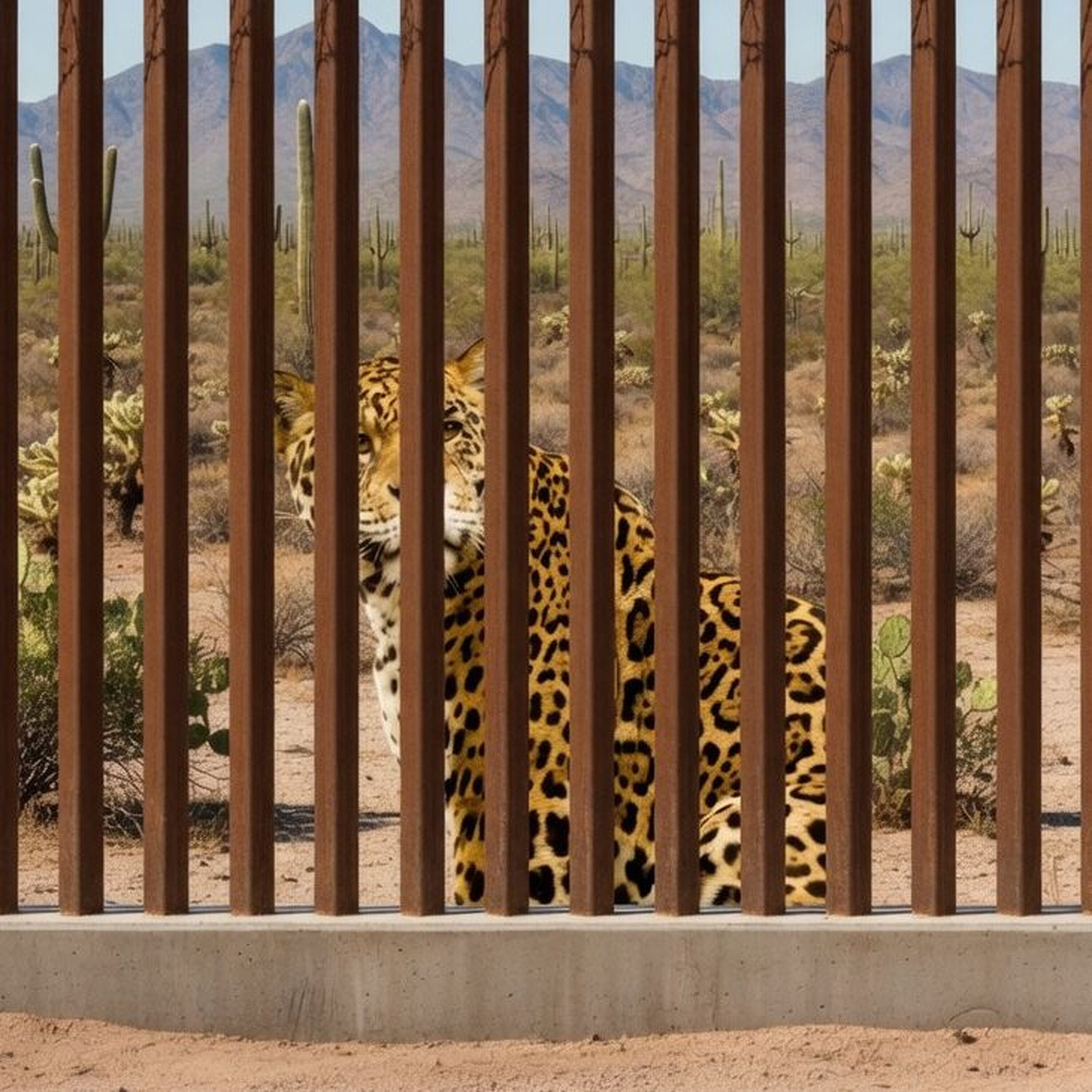
Russ McSpadden documents plans for a second wall through Organ Pipe and Cabeza Prieta, including damage to sacred geoglyphs, groundwater and wildlife habitat made possible by sweeping REAL ID Act waivers.
In this episode, Chris talks with longtime border environmental activist Russ McSpadden about the controversial plans to erect a second border wall on the U.S.-Mexico borde. From the devastating effects on the Cabeza Prieta National Wildlife Refuge and Organ Pipe Cactus National Monument to the desecration of a sacred geoglyph, Russ details the harm this unnecessary project would cause. The discussion emphasizes the challenges posed by waived environmental and cultural protection laws.
Russ also speaks about new hope—the sighting of a jaguar in the Arizona skies offering a glimmer of resilience in the face of destruction. The episode also highlights his new poetry book "Borderlings," depicting life and conservation struggles along the border. Dive into this compelling dialogue for an in-depth understanding of desert conservation challenges and the ongoing fight to protect these precious landscapes from further harm.
Key Takeaways:
-
Ecological Impact of Border Wall: The construction of a second border wall poses critical challenges to biodiversity and destroys valuable habitats for numerous species, including the danger of groundwater depletion affecting Quitobaquito Springs.
-
Cultural Destruction Alert: The episode highlights the significant damage done to ancient geoglyphs and indigenous cultural sites, emphasizing the negligence in preserving sacred sites.
-
Legal Loopholes: The Real ID Act allows the waiver of significant environmental laws, facilitating unchecked progression of border wall construction, underscoring a critical need for legislative review.
-
Spotting Conservation Hope: The recent sighting of a new jaguar in Arizona demonstrates the continued, albeit precarious, presence of these majestic creatures in their historical habitats.
-
Personal Reflections in Poetry: Russ McSpadden's book "Borderlings" offers personal insight and reflections on the emotional and environmental turmoil of border regions, combining advocacy with creative expression.
Notable Quotes:
-
"These contractors who can't be even trusted to protect cultural sites sitting on the surface can really not be trusted to protect our groundwater sources as well."
-
"We can't sue under the Endangered Species act because the Endangered Species act has been waived."
-
"This area represents this whole circuit of trade networks amongst various peoples... it was a place of exchange and movement and trade."
-
"These are jaguars that are rewilding themselves across the southern border into incredible habitat in their traditional mountain ranges."
-
"The federal government has declared it [the border] an invasion and a sort of a war."
Resources:
-
Russ McSpadden’s Book: "Borderlings"
- See the Jaguar camera trap video
-
"90 Miles From Needles" Podcast on Facebook, Instagram, Bluesky, and Threads.
Become a desert defender!: https://90milesfromneedles.com/donate
See omnystudio.com/listener for privacy information.
UNCORRECTED TRANSCRIPT
0:00:00 - (Chris Clarke): 90 miles from the desert Protection Podcast is made possible by listeners just like you. If you want to help us out, you can go to 90 miles from needles.com donate or text needles to 53555.
0:00:25 - (Joe Geoffrey): Think the Deserts are barren wastelands. Think again. It's time for 90 miles from Needles the Desert Protection Podcast.
0:00:45 - (Chris Clarke): Thank you Joe, and welcome to 90 Miles from Needles, the Desert Protection Podcast. I'm your host, Chris Clarke. What would you think if I told you that the border wall along the US Mexico border is about to get a twin sibling? There are plans in the works for a second layer of border wall, at least along the Arizona section of the border, with even more attendant ecological destruction and destruction of cultural resources, examples of which we talk about in this episode with Russ McSpadden from the center for Biological Diversity. Now, Russ has been documenting the atrocious things going on in the name of border security for a few years now, and I think you're going to find this conversation alternately enraging and hopeful and illuminating, and sometimes all three at once.
0:01:33 - (Chris Clarke): We are really grateful to Russ for spending some time with us. Before we get to that conversation, though, I have some donors to thank. We have new donors to our general fund, Pat Flanagan and Jennifer Ruggiero, both of them neighbors of mine, really appreciate you both. Thank you so much. And then we also had some quite generous donations to our Fellowship for Desert Reporting, in which we are trying to raise 10k with some matching funds in order to pay journalists and emerging reporters working on desert environmental issues to work for us at least one story at a time.
0:02:05 - (Chris Clarke): If we're really successful in our fundraising on this, then I'd love to put some people on the payroll, but we're taking baby steps here. So new donors to the Fellowship for Desert Reporting are Larry Fike, Peter Ossorio, John Green, Andrew Alden, and Karin Rosman. We are so grateful to all of you for giving our work a vote of confidence. We are now officially 20% of the way to our goal for the Fellowship for Desert Reporting.
0:02:32 - (Chris Clarke): If you want to help us get further towards that goal, you can go to 90 miles from needles.com Fellowship if you want to give to our general fund that's 90 miles from needles.com donate either place will allow you to make a one time or recurring donation of a size and frequency that works for you, and either site will also allow you to feel pretty good about yourself and justifiably so. So thanks again to our donors. Without further ado, let's get to our conversation with Russ McSpadden of the center for Biological Diversity about the looming second border wall.
0:03:29 - (Chris Clarke): I am very pleased to be joined in our virtual studio by Russ McSpadden, Southwest Conservation Advocate with the center for Biological Diversity. Russ has been documenting some really upsetting news on the border in the context of plans to build a second border wall paralleling the first one through important protected places like Cabeza Prieta National Wildlife Refuge and Organ Pipe Cactus National Monument. Russ, thanks so much for joining us.
0:03:55 - (Russ McSpadden): Yeah, happy to be on this podcast. Thanks for having me. And yeah, I spend a lot of time talking about upsetting news lately.
0:04:03 - (Chris Clarke): So we keep hearing from the administration how successful the wall has been and what a great idea it has been to have that wall. If the first wall is working so well, why do we need a second one?
0:04:17 - (Russ McSpadden): Yeah, that's a good question that I can largely, I can only speculate about. I mean, my first thought goes to the $47 billion set aside in the one big beau, as they call it, for border wall construction. And that gives them enough money, you know, for three walls if they see fit and they had the time to do it. You know, I've heard arguments from Customs and Border Protection agent that I spoke to in the field. He said a second wall gives us an extra 10 minutes maybe.
0:04:49 - (Russ McSpadden): You know, that's about how long I guess it is to breach both barriers. You know, they. That they anticipate what it would take to breach both barriers. I guess the other idea is maybe if the first wall didn't work, the second one will. I just really don't know the thinking. I do know that in October, and this went pretty under the radar in October, the Department of Homeland Security waived procurement laws for the entire border from the Pacific Ocean to the Gulf of Mexico.
0:05:22 - (Russ McSpadden): And because it's procurement laws, people didn't really pay that much attention. These weren't all the environmental laws and cultural protection and public health law were really wonky laws, but I looked into a lot of them and the laws were waived. That requires the federal government to have competitive bidding. That requires the federal government to hire engineers that can prove competency. So this is a, you know, a goal to sort of fast track even just the allotment of contracts, which can really increase cronyism and just all kinds of issues with the federal government just doling out money to wealthy construction companies. These construction companies, this is really a breadbasket for them. The cost to the government is between 10 and $30 million a mile for border wall.
0:06:10 - (Russ McSpadden): And it's just really an incredible amount of money. And there's certainly graft involved.
0:06:15 - (Chris Clarke): I am always looking for the bright side of things like this. And I wonder if the absence of qualified engineers means that in three or four years we'll be able to just go down there with a winch attached to a Jeep Wrangler and pull the thing down.
0:06:31 - (Russ McSpadden): Yeah. Just three weeks ago I was in the San Rafael Valley in Arizona and you know, they've just put up about six miles of wall and one section that was fairly new, you know, within the last month or so was already bent over. So if there's a silver lining, maybe that's it.
0:06:48 - (Chris Clarke): Do we have any glimpse into what this second wall is going to be? I mean, is it going to essentially be the same design as the first wall?
0:06:59 - (Russ McSpadden): So right now what you have across most of these areas is one 30-foot-tall bollard steel wall with about 4-inch gaps in between each bollard. And then there's about a 30-foot-wide border road in most of those places. And what we've heard is that they plan to build another secondary wall, basically identical to the first one 30 foot tall bollard steel wall, 100 or 150ft north of that first wall and then another 30- to 50-foot-wide road north of that second barrier.
0:07:40 - (Russ McSpadden): You know, someone had, I don't remember the exact details, but someone had run the number and you know, every mile is, is a significant amount of wildlife acreage that will be removed for sure.
0:07:51 - (Chris Clarke): That would be a little over 2,000 acres just for the section of the wall that runs through Cabeza Prieta and Organ Pipe. And it leads me to some concerns about Quitobaquito, which is one of my favorite places in the world. And you know, I was really worried during the construction of the first wall that the need for mixing concrete was going to tap the groundwater to the point where Quitobaquito dried up. And I was very glad to visit a little after that and find out that the pond was still there, the spring was still there.
0:08:26 - (Chris Clarke): But Quitobaquito is not 200ft from the border. It is really close to the existing border wall. And so I am wondering exactly how they're going to deal with this pond being right in the path of their construction.
0:08:42 - (Russ McSpadden): Correct? Yeah, yeah. I mean that's really of great concern. I think this, this issue that we'll get into about the intaglio that was destroyed has really set off deep, deep and deeper concerns about Quitobaquito, local conservationists, tribes and everyone. Congresswoman Adelita Grijalva has talked about this recently.
0:09:04 - (Chris Clarke): Now, we've mentioned Quitobaquito a couple of times in this podcast in past episodes, but I wonder if you could give us just sort of the elevator version of what Quitobaquito is and why it's important.
0:09:16 - (Russ McSpadden): Yeah, Quitobaquito is just. It's a desert oasis. It's almost cartoon like when you're there, you're like, wow, this is an oasis. It's this beautiful spring system that pours out of desert mountains, you know, several hundred feet north of the border. And it flows into a sort of retaining pond. And it has, you know, just incredible riparian wetland plants. And it harbors, you know, at least three endemic or near endemic species. The Quitobaquito pupfish, the Quitobaquito Trionia, which is this little spring snail, which we have petitioned the US Fish and Wildlife Service to be listed as endangered under the Endangered Species act, and the Sonoida mud turtle.
0:10:01 - (Russ McSpadden): And, you know, for the Trionia, this is the only place it lives on the planet. And the pupfish as well, there's some zoo specimens, but this is their last refuge. And it provides water. You know, it's the. It's the. The best and. And really the only natural sur water for hundreds of miles. And, you know, it is critical for wildlife, like bighorn sheep will come down and drink from there, and endangered snoring pronghorn, but just all, all the wildlife. And it's a stopover place for migratory birds as well.
0:10:32 - (Russ McSpadden): And of course, you know, it was critical to wildlife in this broader protected desert landscape that includes Organ Pipe Cactus National Monument, Cabeza Prieta National Wildlife Refuge, and south of the border, the Pinacate and Gran Desierto Reserve, which all together make up a new UNESCO World Heritage Site. This was, you know, the largest protected desert landscape in the world with this level of protection. And now it has a wall that runs right through the middle of it. And wildlife south of the border, you know, if they're much larger than a rabbit, can no longer reach Quitobaquito Springs, which is critical.
0:11:13 - (Russ McSpadden): And folks working south of the border have found the death sites of bighorn and javelinas and other species that, you know, just couldn't get across.
0:11:22 - (Chris Clarke): So clearly this would be a huge problem if they ran a wall north of the spring sealing off all the wildlife from the north from getting to this really important source of water. So do we have any idea what they have planned for getting past Quitobaquito?
0:11:36 - (Russ McSpadden): There's been nothing public about it. You Know, we've heard whispers of ideas, but we don't know of anything concrete, any concrete plan of what they're doing. A few weeks ago, some folks out there that I'm in contact with did see a site about 10 miles from Quitobaquito that looked to be the start of kind of a lay down yard for the construction of the second wall. We haven't seen the bollards be trucked in yet, so we haven't fully confirmed that. So there really is no transparency coming out of CBP in terms of when and where and how this project will go forward.
0:12:10 - (Russ McSpadden): And you mentioned concerns about all the water for the concrete footers for they pumped locally. They didn't do the studies to really figure out and understand the groundwater system and the aquifer there. And we saw some slowing of the flow of Quitobaquito when that happened. But luckily that flow returned and things are looking pretty good there. You know, that doesn't mean that a second go round doesn't punch a hole in the wrong place.
0:12:38 - (Russ McSpadden): These are really complicated systems and certainly these contractors who can't be even trusted to protect cultural sites sitting on the surface can really not be trusted to protect our groundwater sources as well. And you know, it wouldn't take much to destroy Quitobaquito. So that continues to be a concern with second border wall construction. You know, where are they going to put the wells? Where are they going to get all this water?
0:13:02 - (Russ McSpadden): Yeah, it's very troubling. I mean, my hope is they just don't put a second wall at Quitobaquito, but we'll see.
0:13:11 - (Chris Clarke): So Quitobaquito has some huge cultural importance to the local tribes. And in that vein, you've been publicizing some destruction that the contractors did to another really important cultural site a little bit further west. Can you tell us a little bit about the geoglyph that the contractors permanently damaged?
0:13:33 - (Russ McSpadden): Yeah, I went a couple weeks ago when I'd heard, you know, there was some Tohono O’odham and Hia Ced O’odham runners who were on a ceremonial run and they had first discovered, I guess a portion of it had been bulldozed. And we didn't have any photos or anything, so I decided to go out there and yeah, just for background for listeners, this is the Las Playas intaglio and it's a massive ground figure also called a geoglyph. You know, people say intaglio or ground figure or geoglyph, but it's, it's in the Sonoran Desert in the Cabeza Prieta National Wildlife Refuge right at the Arizona Sonora border.
0:14:17 - (Russ McSpadden): It's about 270 ft long and about 50 ft wide. So it's almost as long as a football field. It's this massive thing and when you're out there, you can't fully take it all in. It's suspected to be, you know, over a thousand years old. And whoever did this, you know, it's, it scrapes the desert pavement, as it's sometimes called. It's this sort of volcanic crust over the top of the desert right there. And it's scraped pretty deep to the lighter color soil beneath it.
0:14:48 - (Russ McSpadden): And from the air you can see clearly it's this large fish shaped intaglio with the head of it pointing south towards the Gulf of California or Sea of Cortez. It sits about 30 ft from the border, but it sits just inches from the border wall road. What I saw was the contractors for CBP and the Trump administration scraped about a 50-foot-wide path as far as the, as I could see in both directions, east and west to make way for that second border wall.
0:15:22 - (Russ McSpadden): And about a third of the intaglio has been destroyed. It's basically cut the head off from the rest of the body that's further north.
0:15:32 - (Chris Clarke): I assume that this is a really big problem for the autumn.
0:15:35 - (Russ McSpadden): Yeah, you know, the tribe is not happy. This is a site that the tribe has a living connection to and has, you know, in the past, as far back as I believe 2005 and since then alerted CBP to the presence of this site and alerted them that this, this is a site that should be, you know, considered sacred and should be protected. I just saw a video clip of Adelita Grijalva asking Doug Burgum about this issue.
0:16:08 - (Russ McSpadden): And he mentioned that Mark Wayne Mullen had apologized profusely to the tribe. And so, you know, I think they recognize that they made a huge mistake here. But it's not clear that they didn't make that mistake on purpose. That's still yet to be known. There's a big focus on the intaglio which is important because that's what's destroyed. But I think this speaks to a larger issue. The Las Playas area was part of a continental scale exchange system that connected shell and salt deposits at the Gulf of California and obsidian sources from the volcanic fields in the Pinacate with pottery traditions from the Hohokam and other ancient peoples further north.
0:16:53 - (Russ McSpadden): So this was a major indigenous trade and travel network. So just near the fish, when I was out there, the fish Intaglio. There are these ancient trails that have been used for trade for thousands of years. And I saw those worn deep into the lava crust by, by feet of ancient traders near the ground. And archaeologists have found evidence that this corridor that's right here in this area, these corridors were used across multiple time periods.
0:17:21 - (Russ McSpadden): And what's really spectacular about this area is how long it has been used. You know, the playas themselves trap seasonal rainwater and it's believed that they held water longer in deep history. And this is in one of the harshest desert environments in North America. In the past, this would have held, you know, temporary wetlands that would have supported plants and wildlife and, and the traders that moved through here in camps and even long-term human occupation for thousands of years. And there's evidence of that all over the place spectacularly, I think. I'm just really fascinated by this.
0:17:57 - (Russ McSpadden): And I saw these crushed shells in lots of piles in different places on my hike out there. Archaeologists have found specialized shell working tools there. There was basically an ancient desert jewelry workshop here. And you know, there are thousands of shell fragments. And archaeologists have found, you know, ornaments, bracelet fragments, shell beads and pendants. And they, they date this back to the early Archaic period, which is, you know, as, as long ago as 10,000 years ago.
0:18:28 - (Russ McSpadden): So this is a place where who knows what else they've bulldozed. You know, this isn't a fully surveyed cultural space, but we know that this is an important cultural space for Native Americans dating back, you know, at least 10,000 years. And it's really incredible that the federal government is just brazenly bulldozing through this place. And one reason they can do that is because of, you know, a little-known section of the Real ID act that allows them to waive all state and federal laws for the construction of border wall. They can just waive cultural protection laws that would protect sites like this and require at the very least cultural surveys so that ancient materials could at least be moved out of the way before just being destroyed.
0:19:17 - (Chris Clarke): The Real ID act was signed by George W. Bush, I believe, right?
0:19:20 - (Russ McSpadden): Yeah. This is in the height of, you know, 9, 11, fear mongering. It was kind of a bipartisan congressional act because it's hard to put yourself back in that time period. But there was all these news headlines about, you know, the fear of Al Qaeda pouring across the southern border. And it really gave the unelected Department of Homeland Security secretary unconstitutional authority to waive laws. It's Congress handed that over. And really according to the US Constitution, only Congress can make or remove laws, but.
0:19:55 - (Russ McSpadden): And they've delegated that power to this unelected official, and it's decimated wildlife and conservation lands and cultural landscapes ever since.
0:20:03 - (Chris Clarke): Yeah. I often find myself feeling like I need to remind folks that while Trump's actions are really egregious and worse than his predecessors, in a lot of ways, this is not a Trump administration phenomenon. This stretches back across administrations and across the aisle, back at least to the Clinton administration, if not before.
0:20:26 - (Russ McSpadden): Yeah, that's correct. I mean, that's. You know, it was a. It was a bipartisan support in Congress as well. So, you know, we can't. We can't blame one side or the other necessarily here. I would say that, you know, Trump has used it the most egregiously. As you point out, both parties are responsible here.
0:20:48 - (Chris Clarke): So the news about the desecration of this geoglyph has gotten pretty widespread. People are paying attention to it. What's the response been like from the public that you've seen?
0:20:58 - (Russ McSpadden): Yeah, I mean, we've seen a lot of news on it, and I know the AP has covered it and the Washington Post, so there's been a lot of public outrage, for sure. And I've gotten a lot of emails of folks upset and wondering, you know, just what exactly can be done.
0:21:16 - (Russ McSpadden): And the answer is, you know, almost as painful as the action that created this issue is that the laws were waived that would allow for protection or. Or even to allow us to hold the government accountable for what has happened. And I think this is really the hard part about working in the borderlands landscapes, whether it's, you know, as an archaeologist or as an environmentalist or even someone in public health, all of the laws that, you know, the rest of the country is afforded are just waived for this project.
0:21:53 - (Russ McSpadden): And it's a real difficult situation. You know, I work in an organization full of badass lawyers, but in general, the law has been removed. You know, we can't sue under the Endangered Species act because the Endangered Species act has been waived. We can't sue under the Clean Water act because it's been waived, or we can't sue under the Native American Graves Protection act because it's been waived.
0:22:17 - (Russ McSpadden): We have filed several lawsuits on constitutional grounds, and, you know, one is working its way through the courts concerning Big Bend, and, you know, we just have to see how that goes. But, you know, we're trying, but this is a really difficult situation, largely because of the waiver authority. I think, you know, the one thing people ask, what can I do? You know, it's write your congressperson with concerns about the authority to waive laws for border wall construction because we really need to get rid of that. And that's going to take Congress to do that.
0:22:52 - (Chris Clarke): If listeners want more information on the Big Bend aspect of the border wall, we just did an interview with Laiken Jordahl, Russ's colleague at CBD, who spoke about the Border Patrol's attempts to get new wall built and one of the wildest desert landscapes to be found in North America. And we'll have a link in the show notes to that episode if you're interested.
0:23:13 - (Joe Geoffrey): Don't go away. We'll be right back.
0:23:16 - (Chris Clarke): Let's take a minute for our weekly offering from Nature Sounds recordist and friend of the podcast Fred Bell. This week, according to Fred's notes, we have the ubiquitous cactus wren. As Fred writes, almost anytime you watch a movie set in the desert southwest, you'll hear this wren in the soundtrack. In my track, the wren is accompanied by his buddies, the Gambol's quail and the ash throated flycatcher.
0:23:41 - (Chris Clarke): Let's listen.
0:24:58 - (Joe Geoffrey): You're listening to 90 miles from Needles, the Desert Protection podcast. Craig Childs was right. The two most common ways to die in the desert are thirst and drowning.
0:25:12 - (Chris Clarke): So thanks for bringing us up to speed on the vandalism of this intaglio and we're gonna keep our eye on this issue. Obviously, it's going to be ongoing for, for a while. But you said you had some good news for us.
0:25:28 - (Russ McSpadden): Yeah, Correct. Correct.
0:25:30 - (Chris Clarke): Please, Russ, give us some good news.
0:25:33 - (Russ McSpadden): I should say it's a mixed bag of news, but it's largely incredible news. You know, I went on a camera check just this Monday, along with Lake and Jordal, who you just mentioned, we went on a trip to one of the Sky Islands south of Tucson, Sky Island Mountains. And we checked a couple cameras and lo and behold, one of the cameras, you know, had three clips of a big male jaguar on it. And it was just, you know, really incredible to see this big beautiful beast walking where we were just sitting, you know, eating a sandwich and checking the cameras.
0:26:16 - (Russ McSpadden): And, you know, that's, that's always big news when you find a big cat like that. A big part of my job is working to protect threatened and endangered species. And the jaguar is a significant one of them. For those listeners who aren't aware, the US Southwest for millennia was the northern habitat of jaguars. They ranged at least as far north as the Grand Canyon. And due to government sponsored predator control programs, most of them were killed throughout the 1900s and by about the 1950s. And, you know, the last female in Arizona was killed in the 1960s, effectively ending any possibility of a breeding population north of the border.
0:27:04 - (Russ McSpadden): But since then, jaguars have continuously moved north. There are breeding populations in northern Mexico and Sonora that are not that far from the border. In some places, just, you know, miles from the border, there's a female. So the center, in 2014, after years of legal challenges and petitions with the U.S. fish and Wildlife service, got hundreds of thousands of acres of critical habitat for jaguars in Arizona and New Mexico.
0:27:32 - (Chris Clarke): So is this a new jaguar or is this one we've seen before?
0:27:35 - (Russ McSpadden): This jaguar that we picked up on camera was first detected several months ago. But it's always great to see a jaguar again. I brought the image home, and I cross referenced it with other images of other jaguars we've had in Arizona as of late. And it was really clear that it was this jaguar that's been nicknamed senko by the wildcat research and conservation center. They detected them recently. So, yeah, we see him again, and maybe in another mountain range, and it's. It's just pretty incredible.
0:28:11 - (Russ McSpadden): I've been doing this work with jaguars for. For quite some time. You know, we were a part of releasing the first ever video of a jaguar in Arizona, and that was about jefe back. We released that in 2016, and it just spread like wildfire in the media. We saw it in. On the news in China and Cambodia and other places, but obviously across the United States. And it's just really incredible because, you know, there. These aren't collared cats.
0:28:41 - (Russ McSpadden): There is no reintroduction program at the moment for jaguars. These are jaguars that are reestablishing territory. These are jaguars that are rewilding themselves across the southern border into incredible habitat in their traditional mountain ranges. In Arizona, we've had jaguars in the Santa Rita mountains and the Whetstone mountains and the Huachuca mountains and the Chiricahua mountains. And it's just great to see these cats returning. And every time they do, it's really this kind of charging moment of hope.
0:29:16 - (Russ McSpadden): But as of late, that hope often, you know, sadly leads into a bit of despair, because what you realize is, you know, where they came through, there's border wall slated for. For wherever it is they came through. Basically, the entire southern border is slated for border wall. And so, you know, what are. What are the options for this cat if it stays? Which would be great. He's trapped on this side with the females on the other side, and that's you know, a sad and lonely death.
0:29:44 - (Russ McSpadden): So I don't know what the answer is. Retroactively, during the Biden administration, folks were able to get small wildlife passages put into the border wall. From the first Trump administration, they're about the. Of a loaf of bread, so not really the size of jaguar could get through. You're talking bobcats and smaller. Really, they can move through those. And they're, you know, the spacing is not even appropriate for real cross border connectivity.
0:30:11 - (Russ McSpadden): You know, the grander hope is for a sort of change in the zeitgeist of this country away from giant prison wall across the entire border to understanding this place of great connectivity. This goes back in my mind to the intaglio in this Las Playas area. This area represents this whole circuit of trade networks amongst various peoples, ancient peoples in the archaic and late archaic period. And it was a place of exchange and movement and trade.
0:30:46 - (Russ McSpadden): And, you know, it's telling that we're in a period where a steel wall is being driven right through this area, destroying these ancient symbols of exchange and connection.
0:30:58 - (Chris Clarke): Yeah. It seems like this administration is sort of constitutionally opposed to any kind of thing that reminds us about the principles of reciprocity and community.
0:31:07 - (Russ McSpadden): Yeah.
0:31:08 - (Chris Clarke): And in this past week, the administration just reaffirmed that they're going to give a green light to using cyanide bombs on public lands and in other places as a way of randomly executing large predators. It's not an ideal landscape that the jaguars are trying to move north into, is it?
0:31:27 - (Russ McSpadden): Yeah. Yeah. I just hope that, you know. Yeah, we can, we can shift this mentality back, you know, this, that, that we're in a moment of insanity and that we can get through this, mitigating as much as possible during this time. I mean, that's what we're doing.
0:31:44 - (Chris Clarke): So let's switch to some uncomplicated good news for a minute. When we last saw each other in Ajo at the Trinational Sonoran Desert Symposium, which was a blast from beginning to end, you had just published a book.
0:32:00 - (Russ McSpadden): Yeah, yeah. Back in October, I published a book of poetry called Borderlings. Yeah.
0:32:05 - (Chris Clarke): Can you tell us a little bit about how the book came to be?
0:32:08 - (Russ McSpadden): Yeah. I mean, that book really arose out of a lot of work at the border, a lot of time spent at the border, at spring systems in the sky islands, checking wildlife cameras and documenting border wall construction. And, you know, that's a pretty intense experience. And, you know, I didn't really know exactly how to deal with it. My colleague Laken and I would Talk about this, just how intense it is to watch, you know, a wildlife refuge bulldozed and destroyed or watch a mountain blown up with dynamite or to see, you know, critical habitat for jaguar walled off. And, you know, we were seeing all of that and to see, you know, at points I might be out looking for endangered cactus fridges, pygmy owls in the desert.
0:32:59 - (Russ McSpadden): And, you know, and I'll see one and then I turn around and there's sign of a migrant death, a person who had died crossing the border. And so we're in this, you know, it's sort of a interesting line of work, working to protect the environment in the borderlands. It's like working to protect the environment, you know, almost in a war zone. The federal government has declared it an invasion and a sort of a war.
0:33:23 - (Russ McSpadden): And so that sits heavy on the shoulders and in the gut and in the heart. And, you know, I did what I think a lot of people do when they don't have the words to communicate clearly their feelings. I wrote poetry based on field notes from all of those operations. And I, you know, I worked with the Tucson poet laureate, Logan Phillips. You know, I shared it with him and he was really excited to publish it through his poetry publishing company, Art Speak. And yeah, it's been great. You know, I've, I tend to be quite busy, but I've been able to, like, get out and do readings, you know, in Bisbee and in Tucson and in Patagonia and around this region.
0:34:04 - (Russ McSpadden): And it's been really great to connect with people in that regard.
0:34:08 - (Chris Clarke): Well, I really enjoyed hearing you read from it in Ajo and enjoyed reading the copy I picked up. And if listeners want to learn more, link in the show notes as usual, this has been a really interesting conversation, and I am glad that you were able to fit us into your busy schedule. Russ McSpadden, thank you so much for joining us.
0:34:30 - (Russ McSpadden): Thanks, Chris. It's been a pleasure to talk with you. Thanks for having me on.
0:35:00 - (Chris Clarke): Thanks again to Russ McSpadden of the Center for Biological Diversity for sitting down with us to talk. And perhaps unsurprisingly, given how software works these days, or should I say doesn't, we had some glitches that were a little bit hard to get around, but we managed to triumph. I appreciate Russ sticking with it. In addition, I am also grateful to the donors that I mentioned. Thanks again to Pat Flanagan, Jennifer Ruggiero, Karin Rosman, Andrew Alden, John Green, Peter Ossorio, and Larry Fike.
0:35:31 - (Chris Clarke): Again, our donors are the force that allows us to keep going with this podcast and with the Desert Advocacy Media Network. If you'd like to be counted among their number, you can go to 90miles from needles.com donate. If you want to help us hire and mentor emerging journalists in the desert environment field, you can donate at 90 miles from needles.com.Fellowship. You may be able to tell this already, but I have worn out my voice in the last few days and especially in the last few hours, so I'm going to keep this nice and short.
0:36:04 - (Chris Clarke): I just really appreciate you for listening. We have some more excellent episodes coming up, some of which cover topics that I mentioned sidelong. In this particular episode, I am just really glad you are on this journey with us because the desert needs you.
0:36:23 - (Joe Geoffrey): And that brings us to the end of this episode of 90 Miles from Needles, the Desert Protection Podcast. You can find show notes for this episode along with links and background@90miles from needles.com we're also on social media. You can find us on Facebook, Instagram, Bluesky and Threads. Just search for 90 miles from Needles and if you'd like a more direct line, you can reach us on signal at HEY90MFN67.
0:36:57 - (Joe Geoffrey): If you'd like to support the show, you can make a donation of whatever size and frequency feels right to you at 90miles from needles.com donate. Listener support is what makes the podcast possible. Our voiceover is by Joe Jeffrey. Podcast artwork is by Martine Mancham. Nature sounds are recorded by Fred Bell. Our theme song, Moody Western is by Bright side Studio with additional music licensed from Independent Artists.
0:37:30 - (Chris Clarke): Other music in this episode is by Alex Byrd.
0:37:36 - (Joe Geoffrey): Sam. 90 miles from Needle is a production of the Desert Advocacy Media Network.
0:00:00 - (Chris Clarke): 90 miles from the desert Protection Podcast is made possible by listeners just like you. If you want to help us out, you can go to 90 miles from needles.com donate or text needles to 53555.
0:00:25 - (Joe Geoffrey): Think the Deserts are barren wastelands. Think again. It's time for 90 miles from Needles the Desert Protection Podcast.
0:00:45 - (Chris Clarke): Thank you Joe, and welcome to 90 Miles from Needles, the Desert Protection Podcast. I'm your host, Chris Clarke. What would you think if I told you that the border wall along the US Mexico border is about to get a twin sibling? There are plans in the works for a second layer of border wall, at least along the Arizona section of the border, with even more attendant ecological destruction and destruction of cultural resources, examples of which we talk about in this episode with Russ McSpadden from the center for Biological Diversity. Now, Russ has been documenting the atrocious things going on in the name of border security for a few years now, and I think you're going to find this conversation alternately enraging and hopeful and illuminating, and sometimes all three at once.
0:01:33 - (Chris Clarke): We are really grateful to Russ for spending some time with us. Before we get to that conversation, though, I have some donors to thank. We have new donors to our general fund, Pat Flanagan and Jennifer Ruggiero, both of them neighbors of mine, really appreciate you both. Thank you so much. And then we also had some quite generous donations to our Fellowship for Desert Reporting, in which we are trying to raise 10k with some matching funds in order to pay journalists and emerging reporters working on desert environmental issues to work for us at least one story at a time.
0:02:05 - (Chris Clarke): If we're really successful in our fundraising on this, then I'd love to put some people on the payroll, but we're taking baby steps here. So new donors to the Fellowship for Desert Reporting are Larry Fike, Peter Ossorio, John Green, Andrew Alden, and Karin Rosman. We are so grateful to all of you for giving our work a vote of confidence. We are now officially 20% of the way to our goal for the Fellowship for Desert Reporting.
0:02:32 - (Chris Clarke): If you want to help us get further towards that goal, you can go to 90 miles from needles.com Fellowship if you want to give to our general fund that's 90 miles from needles.com donate either place will allow you to make a one time or recurring donation of a size and frequency that works for you, and either site will also allow you to feel pretty good about yourself and justifiably so. So thanks again to our donors. Without further ado, let's get to our conversation with Russ McSpadden of the center for Biological Diversity about the looming second border wall.
0:03:29 - (Chris Clarke): I am very pleased to be joined in our virtual studio by Russ McSpadden, Southwest Conservation Advocate with the center for Biological Diversity. Russ has been documenting some really upsetting news on the border in the context of plans to build a second border wall paralleling the first one through important protected places like Cabeza Prieta National Wildlife Refuge and Organ Pipe Cactus National Monument. Russ, thanks so much for joining us.
0:03:55 - (Russ McSpadden): Yeah, happy to be on this podcast. Thanks for having me. And yeah, I spend a lot of time talking about upsetting news lately.
0:04:03 - (Chris Clarke): So we keep hearing from the administration how successful the wall has been and what a great idea it has been to have that wall. If the first wall is working so well, why do we need a second one?
0:04:17 - (Russ McSpadden): Yeah, that's a good question that I can largely, I can only speculate about. I mean, my first thought goes to the $47 billion set aside in the one big beau, as they call it, for border wall construction. And that gives them enough money, you know, for three walls if they see fit and they had the time to do it. You know, I've heard arguments from Customs and Border Protection agent that I spoke to in the field. He said a second wall gives us an extra 10 minutes maybe.
0:04:49 - (Russ McSpadden): You know, that's about how long I guess it is to breach both barriers. You know, they. That they anticipate what it would take to breach both barriers. I guess the other idea is maybe if the first wall didn't work, the second one will. I just really don't know the thinking. I do know that in October, and this went pretty under the radar in October, the Department of Homeland Security waived procurement laws for the entire border from the Pacific Ocean to the Gulf of Mexico.
0:05:22 - (Russ McSpadden): And because it's procurement laws, people didn't really pay that much attention. These weren't all the environmental laws and cultural protection and public health law were really wonky laws, but I looked into a lot of them and the laws were waived. That requires the federal government to have competitive bidding. That requires the federal government to hire engineers that can prove competency. So this is a, you know, a goal to sort of fast track even just the allotment of contracts, which can really increase cronyism and just all kinds of issues with the federal government just doling out money to wealthy construction companies. These construction companies, this is really a breadbasket for them. The cost to the government is between 10 and $30 million a mile for border wall.
0:06:10 - (Russ McSpadden): And it's just really an incredible amount of money. And there's certainly graft involved.
0:06:15 - (Chris Clarke): I am always looking for the bright side of things like this. And I wonder if the absence of qualified engineers means that in three or four years we'll be able to just go down there with a winch attached to a Jeep Wrangler and pull the thing down.
0:06:31 - (Russ McSpadden): Yeah. Just three weeks ago I was in the San Rafael Valley in Arizona and you know, they've just put up about six miles of wall and one section that was fairly new, you know, within the last month or so was already bent over. So if there's a silver lining, maybe that's it.
0:06:48 - (Chris Clarke): Do we have any glimpse into what this second wall is going to be? I mean, is it going to essentially be the same design as the first wall?
0:06:59 - (Russ McSpadden): So right now what you have across most of these areas is one 30-foot-tall bollard steel wall with about 4-inch gaps in between each bollard. And then there's about a 30-foot-wide border road in most of those places. And what we've heard is that they plan to build another secondary wall, basically identical to the first one 30 foot tall bollard steel wall, 100 or 150ft north of that first wall and then another 30- to 50-foot-wide road north of that second barrier.
0:07:40 - (Russ McSpadden): You know, someone had, I don't remember the exact details, but someone had run the number and you know, every mile is, is a significant amount of wildlife acreage that will be removed for sure.
0:07:51 - (Chris Clarke): That would be a little over 2,000 acres just for the section of the wall that runs through Cabeza Prieta and Organ Pipe. And it leads me to some concerns about Quitobaquito, which is one of my favorite places in the world. And you know, I was really worried during the construction of the first wall that the need for mixing concrete was going to tap the groundwater to the point where Quitobaquito dried up. And I was very glad to visit a little after that and find out that the pond was still there, the spring was still there.
0:08:26 - (Chris Clarke): But Quitobaquito is not 200ft from the border. It is really close to the existing border wall. And so I am wondering exactly how they're going to deal with this pond being right in the path of their construction.
0:08:42 - (Russ McSpadden): Correct? Yeah, yeah. I mean that's really of great concern. I think this, this issue that we'll get into about the intaglio that was destroyed has really set off deep, deep and deeper concerns about Quitobaquito, local conservationists, tribes and everyone. Congresswoman Adelita Grijalva has talked about this recently.
0:09:04 - (Chris Clarke): Now, we've mentioned Quitobaquito a couple of times in this podcast in past episodes, but I wonder if you could give us just sort of the elevator version of what Quitobaquito is and why it's important.
0:09:16 - (Russ McSpadden): Yeah, Quitobaquito is just. It's a desert oasis. It's almost cartoon like when you're there, you're like, wow, this is an oasis. It's this beautiful spring system that pours out of desert mountains, you know, several hundred feet north of the border. And it flows into a sort of retaining pond. And it has, you know, just incredible riparian wetland plants. And it harbors, you know, at least three endemic or near endemic species. The Quitobaquito pupfish, the Quitobaquito Trionia, which is this little spring snail, which we have petitioned the US Fish and Wildlife Service to be listed as endangered under the Endangered Species act, and the Sonoida mud turtle.
0:10:01 - (Russ McSpadden): And, you know, for the Trionia, this is the only place it lives on the planet. And the pupfish as well, there's some zoo specimens, but this is their last refuge. And it provides water. You know, it's the. It's the. The best and. And really the only natural sur water for hundreds of miles. And, you know, it is critical for wildlife, like bighorn sheep will come down and drink from there, and endangered snoring pronghorn, but just all, all the wildlife. And it's a stopover place for migratory birds as well.
0:10:32 - (Russ McSpadden): And of course, you know, it was critical to wildlife in this broader protected desert landscape that includes Organ Pipe Cactus National Monument, Cabeza Prieta National Wildlife Refuge, and south of the border, the Pinacate and Gran Desierto Reserve, which all together make up a new UNESCO World Heritage Site. This was, you know, the largest protected desert landscape in the world with this level of protection. And now it has a wall that runs right through the middle of it. And wildlife south of the border, you know, if they're much larger than a rabbit, can no longer reach Quitobaquito Springs, which is critical.
0:11:13 - (Russ McSpadden): And folks working south of the border have found the death sites of bighorn and javelinas and other species that, you know, just couldn't get across.
0:11:22 - (Chris Clarke): So clearly this would be a huge problem if they ran a wall north of the spring sealing off all the wildlife from the north from getting to this really important source of water. So do we have any idea what they have planned for getting past Quitobaquito?
0:11:36 - (Russ McSpadden): There's been nothing public about it. You Know, we've heard whispers of ideas, but we don't know of anything concrete, any concrete plan of what they're doing. A few weeks ago, some folks out there that I'm in contact with did see a site about 10 miles from Quitobaquito that looked to be the start of kind of a lay down yard for the construction of the second wall. We haven't seen the bollards be trucked in yet, so we haven't fully confirmed that. So there really is no transparency coming out of CBP in terms of when and where and how this project will go forward.
0:12:10 - (Russ McSpadden): And you mentioned concerns about all the water for the concrete footers for they pumped locally. They didn't do the studies to really figure out and understand the groundwater system and the aquifer there. And we saw some slowing of the flow of Quitobaquito when that happened. But luckily that flow returned and things are looking pretty good there. You know, that doesn't mean that a second go round doesn't punch a hole in the wrong place.
0:12:38 - (Russ McSpadden): These are really complicated systems and certainly these contractors who can't be even trusted to protect cultural sites sitting on the surface can really not be trusted to protect our groundwater sources as well. And you know, it wouldn't take much to destroy Quitobaquito. So that continues to be a concern with second border wall construction. You know, where are they going to put the wells? Where are they going to get all this water?
0:13:02 - (Russ McSpadden): Yeah, it's very troubling. I mean, my hope is they just don't put a second wall at Quitobaquito, but we'll see.
0:13:11 - (Chris Clarke): So Quitobaquito has some huge cultural importance to the local tribes. And in that vein, you've been publicizing some destruction that the contractors did to another really important cultural site a little bit further west. Can you tell us a little bit about the geoglyph that the contractors permanently damaged?
0:13:33 - (Russ McSpadden): Yeah, I went a couple weeks ago when I'd heard, you know, there was some Tohono O’odham and Hia Ced O’odham runners who were on a ceremonial run and they had first discovered, I guess a portion of it had been bulldozed. And we didn't have any photos or anything, so I decided to go out there and yeah, just for background for listeners, this is the Las Playas intaglio and it's a massive ground figure also called a geoglyph. You know, people say intaglio or ground figure or geoglyph, but it's, it's in the Sonoran Desert in the Cabeza Prieta National Wildlife Refuge right at the Arizona Sonora border.
0:14:17 - (Russ McSpadden): It's about 270 ft long and about 50 ft wide. So it's almost as long as a football field. It's this massive thing and when you're out there, you can't fully take it all in. It's suspected to be, you know, over a thousand years old. And whoever did this, you know, it's, it scrapes the desert pavement, as it's sometimes called. It's this sort of volcanic crust over the top of the desert right there. And it's scraped pretty deep to the lighter color soil beneath it.
0:14:48 - (Russ McSpadden): And from the air you can see clearly it's this large fish shaped intaglio with the head of it pointing south towards the Gulf of California or Sea of Cortez. It sits about 30 ft from the border, but it sits just inches from the border wall road. What I saw was the contractors for CBP and the Trump administration scraped about a 50-foot-wide path as far as the, as I could see in both directions, east and west to make way for that second border wall.
0:15:22 - (Russ McSpadden): And about a third of the intaglio has been destroyed. It's basically cut the head off from the rest of the body that's further north.
0:15:32 - (Chris Clarke): I assume that this is a really big problem for the autumn.
0:15:35 - (Russ McSpadden): Yeah, you know, the tribe is not happy. This is a site that the tribe has a living connection to and has, you know, in the past, as far back as I believe 2005 and since then alerted CBP to the presence of this site and alerted them that this, this is a site that should be, you know, considered sacred and should be protected. I just saw a video clip of Adelita Grijalva asking Doug Burgum about this issue.
0:16:08 - (Russ McSpadden): And he mentioned that Mark Wayne Mullen had apologized profusely to the tribe. And so, you know, I think they recognize that they made a huge mistake here. But it's not clear that they didn't make that mistake on purpose. That's still yet to be known. There's a big focus on the intaglio which is important because that's what's destroyed. But I think this speaks to a larger issue. The Las Playas area was part of a continental scale exchange system that connected shell and salt deposits at the Gulf of California and obsidian sources from the volcanic fields in the Pinacate with pottery traditions from the Hohokam and other ancient peoples further north.
0:16:53 - (Russ McSpadden): So this was a major indigenous trade and travel network. So just near the fish, when I was out there, the fish Intaglio. There are these ancient trails that have been used for trade for thousands of years. And I saw those worn deep into the lava crust by, by feet of ancient traders near the ground. And archaeologists have found evidence that this corridor that's right here in this area, these corridors were used across multiple time periods.
0:17:21 - (Russ McSpadden): And what's really spectacular about this area is how long it has been used. You know, the playas themselves trap seasonal rainwater and it's believed that they held water longer in deep history. And this is in one of the harshest desert environments in North America. In the past, this would have held, you know, temporary wetlands that would have supported plants and wildlife and, and the traders that moved through here in camps and even long-term human occupation for thousands of years. And there's evidence of that all over the place spectacularly, I think. I'm just really fascinated by this.
0:17:57 - (Russ McSpadden): And I saw these crushed shells in lots of piles in different places on my hike out there. Archaeologists have found specialized shell working tools there. There was basically an ancient desert jewelry workshop here. And you know, there are thousands of shell fragments. And archaeologists have found, you know, ornaments, bracelet fragments, shell beads and pendants. And they, they date this back to the early Archaic period, which is, you know, as, as long ago as 10,000 years ago.
0:18:28 - (Russ McSpadden): So this is a place where who knows what else they've bulldozed. You know, this isn't a fully surveyed cultural space, but we know that this is an important cultural space for Native Americans dating back, you know, at least 10,000 years. And it's really incredible that the federal government is just brazenly bulldozing through this place. And one reason they can do that is because of, you know, a little-known section of the Real ID act that allows them to waive all state and federal laws for the construction of border wall. They can just waive cultural protection laws that would protect sites like this and require at the very least cultural surveys so that ancient materials could at least be moved out of the way before just being destroyed.
0:19:17 - (Chris Clarke): The Real ID act was signed by George W. Bush, I believe, right?
0:19:20 - (Russ McSpadden): Yeah. This is in the height of, you know, 9, 11, fear mongering. It was kind of a bipartisan congressional act because it's hard to put yourself back in that time period. But there was all these news headlines about, you know, the fear of Al Qaeda pouring across the southern border. And it really gave the unelected Department of Homeland Security secretary unconstitutional authority to waive laws. It's Congress handed that over. And really according to the US Constitution, only Congress can make or remove laws, but.
0:19:55 - (Russ McSpadden): And they've delegated that power to this unelected official, and it's decimated wildlife and conservation lands and cultural landscapes ever since.
0:20:03 - (Chris Clarke): Yeah. I often find myself feeling like I need to remind folks that while Trump's actions are really egregious and worse than his predecessors, in a lot of ways, this is not a Trump administration phenomenon. This stretches back across administrations and across the aisle, back at least to the Clinton administration, if not before.
0:20:26 - (Russ McSpadden): Yeah, that's correct. I mean, that's. You know, it was a. It was a bipartisan support in Congress as well. So, you know, we can't. We can't blame one side or the other necessarily here. I would say that, you know, Trump has used it the most egregiously. As you point out, both parties are responsible here.
0:20:48 - (Chris Clarke): So the news about the desecration of this geoglyph has gotten pretty widespread. People are paying attention to it. What's the response been like from the public that you've seen?
0:20:58 - (Russ McSpadden): Yeah, I mean, we've seen a lot of news on it, and I know the AP has covered it and the Washington Post, so there's been a lot of public outrage, for sure. And I've gotten a lot of emails of folks upset and wondering, you know, just what exactly can be done.
0:21:16 - (Russ McSpadden): And the answer is, you know, almost as painful as the action that created this issue is that the laws were waived that would allow for protection or. Or even to allow us to hold the government accountable for what has happened. And I think this is really the hard part about working in the borderlands landscapes, whether it's, you know, as an archaeologist or as an environmentalist or even someone in public health, all of the laws that, you know, the rest of the country is afforded are just waived for this project.
0:21:53 - (Russ McSpadden): And it's a real difficult situation. You know, I work in an organization full of badass lawyers, but in general, the law has been removed. You know, we can't sue under the Endangered Species act because the Endangered Species act has been waived. We can't sue under the Clean Water act because it's been waived, or we can't sue under the Native American Graves Protection act because it's been waived.
0:22:17 - (Russ McSpadden): We have filed several lawsuits on constitutional grounds, and, you know, one is working its way through the courts concerning Big Bend, and, you know, we just have to see how that goes. But, you know, we're trying, but this is a really difficult situation, largely because of the waiver authority. I think, you know, the one thing people ask, what can I do? You know, it's write your congressperson with concerns about the authority to waive laws for border wall construction because we really need to get rid of that. And that's going to take Congress to do that.
0:22:52 - (Chris Clarke): If listeners want more information on the Big Bend aspect of the border wall, we just did an interview with Laiken Jordahl, Russ's colleague at CBD, who spoke about the Border Patrol's attempts to get new wall built and one of the wildest desert landscapes to be found in North America. And we'll have a link in the show notes to that episode if you're interested.
0:23:13 - (Joe Geoffrey): Don't go away. We'll be right back.
0:23:16 - (Chris Clarke): Let's take a minute for our weekly offering from Nature Sounds recordist and friend of the podcast Fred Bell. This week, according to Fred's notes, we have the ubiquitous cactus wren. As Fred writes, almost anytime you watch a movie set in the desert southwest, you'll hear this wren in the soundtrack. In my track, the wren is accompanied by his buddies, the Gambol's quail and the ash throated flycatcher.
0:23:41 - (Chris Clarke): Let's listen.
0:24:58 - (Joe Geoffrey): You're listening to 90 miles from Needles, the Desert Protection podcast. Craig Childs was right. The two most common ways to die in the desert are thirst and drowning.
0:25:12 - (Chris Clarke): So thanks for bringing us up to speed on the vandalism of this intaglio and we're gonna keep our eye on this issue. Obviously, it's going to be ongoing for, for a while. But you said you had some good news for us.
0:25:28 - (Russ McSpadden): Yeah, Correct. Correct.
0:25:30 - (Chris Clarke): Please, Russ, give us some good news.
0:25:33 - (Russ McSpadden): I should say it's a mixed bag of news, but it's largely incredible news. You know, I went on a camera check just this Monday, along with Lake and Jordal, who you just mentioned, we went on a trip to one of the Sky Islands south of Tucson, Sky Island Mountains. And we checked a couple cameras and lo and behold, one of the cameras, you know, had three clips of a big male jaguar on it. And it was just, you know, really incredible to see this big beautiful beast walking where we were just sitting, you know, eating a sandwich and checking the cameras.
0:26:16 - (Russ McSpadden): And, you know, that's, that's always big news when you find a big cat like that. A big part of my job is working to protect threatened and endangered species. And the jaguar is a significant one of them. For those listeners who aren't aware, the US Southwest for millennia was the northern habitat of jaguars. They ranged at least as far north as the Grand Canyon. And due to government sponsored predator control programs, most of them were killed throughout the 1900s and by about the 1950s. And, you know, the last female in Arizona was killed in the 1960s, effectively ending any possibility of a breeding population north of the border.
0:27:04 - (Russ McSpadden): But since then, jaguars have continuously moved north. There are breeding populations in northern Mexico and Sonora that are not that far from the border. In some places, just, you know, miles from the border, there's a female. So the center, in 2014, after years of legal challenges and petitions with the U.S. fish and Wildlife service, got hundreds of thousands of acres of critical habitat for jaguars in Arizona and New Mexico.
0:27:32 - (Chris Clarke): So is this a new jaguar or is this one we've seen before?
0:27:35 - (Russ McSpadden): This jaguar that we picked up on camera was first detected several months ago. But it's always great to see a jaguar again. I brought the image home, and I cross referenced it with other images of other jaguars we've had in Arizona as of late. And it was really clear that it was this jaguar that's been nicknamed senko by the wildcat research and conservation center. They detected them recently. So, yeah, we see him again, and maybe in another mountain range, and it's. It's just pretty incredible.
0:28:11 - (Russ McSpadden): I've been doing this work with jaguars for. For quite some time. You know, we were a part of releasing the first ever video of a jaguar in Arizona, and that was about jefe back. We released that in 2016, and it just spread like wildfire in the media. We saw it in. On the news in China and Cambodia and other places, but obviously across the United States. And it's just really incredible because, you know, there. These aren't collared cats.
0:28:41 - (Russ McSpadden): There is no reintroduction program at the moment for jaguars. These are jaguars that are reestablishing territory. These are jaguars that are rewilding themselves across the southern border into incredible habitat in their traditional mountain ranges. In Arizona, we've had jaguars in the Santa Rita mountains and the Whetstone mountains and the Huachuca mountains and the Chiricahua mountains. And it's just great to see these cats returning. And every time they do, it's really this kind of charging moment of hope.
0:29:16 - (Russ McSpadden): But as of late, that hope often, you know, sadly leads into a bit of despair, because what you realize is, you know, where they came through, there's border wall slated for. For wherever it is they came through. Basically, the entire southern border is slated for border wall. And so, you know, what are. What are the options for this cat if it stays? Which would be great. He's trapped on this side with the females on the other side, and that's you know, a sad and lonely death.
0:29:44 - (Russ McSpadden): So I don't know what the answer is. Retroactively, during the Biden administration, folks were able to get small wildlife passages put into the border wall. From the first Trump administration, they're about the. Of a loaf of bread, so not really the size of jaguar could get through. You're talking bobcats and smaller. Really, they can move through those. And they're, you know, the spacing is not even appropriate for real cross border connectivity.
0:30:11 - (Russ McSpadden): You know, the grander hope is for a sort of change in the zeitgeist of this country away from giant prison wall across the entire border to understanding this place of great connectivity. This goes back in my mind to the intaglio in this Las Playas area. This area represents this whole circuit of trade networks amongst various peoples, ancient peoples in the archaic and late archaic period. And it was a place of exchange and movement and trade.
0:30:46 - (Russ McSpadden): And, you know, it's telling that we're in a period where a steel wall is being driven right through this area, destroying these ancient symbols of exchange and connection.
0:30:58 - (Chris Clarke): Yeah. It seems like this administration is sort of constitutionally opposed to any kind of thing that reminds us about the principles of reciprocity and community.
0:31:07 - (Russ McSpadden): Yeah.
0:31:08 - (Chris Clarke): And in this past week, the administration just reaffirmed that they're going to give a green light to using cyanide bombs on public lands and in other places as a way of randomly executing large predators. It's not an ideal landscape that the jaguars are trying to move north into, is it?
0:31:27 - (Russ McSpadden): Yeah. Yeah. I just hope that, you know. Yeah, we can, we can shift this mentality back, you know, this, that, that we're in a moment of insanity and that we can get through this, mitigating as much as possible during this time. I mean, that's what we're doing.
0:31:44 - (Chris Clarke): So let's switch to some uncomplicated good news for a minute. When we last saw each other in Ajo at the Trinational Sonoran Desert Symposium, which was a blast from beginning to end, you had just published a book.
0:32:00 - (Russ McSpadden): Yeah, yeah. Back in October, I published a book of poetry called Borderlings. Yeah.
0:32:05 - (Chris Clarke): Can you tell us a little bit about how the book came to be?
0:32:08 - (Russ McSpadden): Yeah. I mean, that book really arose out of a lot of work at the border, a lot of time spent at the border, at spring systems in the sky islands, checking wildlife cameras and documenting border wall construction. And, you know, that's a pretty intense experience. And, you know, I didn't really know exactly how to deal with it. My colleague Laken and I would Talk about this, just how intense it is to watch, you know, a wildlife refuge bulldozed and destroyed or watch a mountain blown up with dynamite or to see, you know, critical habitat for jaguar walled off. And, you know, we were seeing all of that and to see, you know, at points I might be out looking for endangered cactus fridges, pygmy owls in the desert.
0:32:59 - (Russ McSpadden): And, you know, and I'll see one and then I turn around and there's sign of a migrant death, a person who had died crossing the border. And so we're in this, you know, it's sort of a interesting line of work, working to protect the environment in the borderlands. It's like working to protect the environment, you know, almost in a war zone. The federal government has declared it an invasion and a sort of a war.
0:33:23 - (Russ McSpadden): And so that sits heavy on the shoulders and in the gut and in the heart. And, you know, I did what I think a lot of people do when they don't have the words to communicate clearly their feelings. I wrote poetry based on field notes from all of those operations. And I, you know, I worked with the Tucson poet laureate, Logan Phillips. You know, I shared it with him and he was really excited to publish it through his poetry publishing company, Art Speak. And yeah, it's been great. You know, I've, I tend to be quite busy, but I've been able to, like, get out and do readings, you know, in Bisbee and in Tucson and in Patagonia and around this region.
0:34:04 - (Russ McSpadden): And it's been really great to connect with people in that regard.
0:34:08 - (Chris Clarke): Well, I really enjoyed hearing you read from it in Ajo and enjoyed reading the copy I picked up. And if listeners want to learn more, link in the show notes as usual, this has been a really interesting conversation, and I am glad that you were able to fit us into your busy schedule. Russ McSpadden, thank you so much for joining us.
0:34:30 - (Russ McSpadden): Thanks, Chris. It's been a pleasure to talk with you. Thanks for having me on.
0:35:00 - (Chris Clarke): Thanks again to Russ McSpadden of the Center for Biological Diversity for sitting down with us to talk. And perhaps unsurprisingly, given how software works these days, or should I say doesn't, we had some glitches that were a little bit hard to get around, but we managed to triumph. I appreciate Russ sticking with it. In addition, I am also grateful to the donors that I mentioned. Thanks again to Pat Flanagan, Jennifer Ruggiero, Karin Rosman, Andrew Alden, John Green, Peter Ossorio, and Larry Fike.
0:35:31 - (Chris Clarke): Again, our donors are the force that allows us to keep going with this podcast and with the Desert Advocacy Media Network. If you'd like to be counted among their number, you can go to 90miles from needles.com donate. If you want to help us hire and mentor emerging journalists in the desert environment field, you can donate at 90 miles from needles.com.Fellowship. You may be able to tell this already, but I have worn out my voice in the last few days and especially in the last few hours, so I'm going to keep this nice and short.
0:36:04 - (Chris Clarke): I just really appreciate you for listening. We have some more excellent episodes coming up, some of which cover topics that I mentioned sidelong. In this particular episode, I am just really glad you are on this journey with us because the desert needs you.
0:36:23 - (Joe Geoffrey): And that brings us to the end of this episode of 90 Miles from Needles, the Desert Protection Podcast. You can find show notes for this episode along with links and background@90miles from needles.com we're also on social media. You can find us on Facebook, Instagram, Bluesky and Threads. Just search for 90 miles from Needles and if you'd like a more direct line, you can reach us on signal at HEY90MFN67.
0:36:57 - (Joe Geoffrey): If you'd like to support the show, you can make a donation of whatever size and frequency feels right to you at 90miles from needles.com donate. Listener support is what makes the podcast possible. Our voiceover is by Joe Jeffrey. Podcast artwork is by Martine Mancham. Nature sounds are recorded by Fred Bell. Our theme song, Moody Western is by Bright side Studio with additional music licensed from Independent Artists.
0:37:30 - (Chris Clarke): Other music in this episode is by Alex Byrd.
0:37:36 - (Joe Geoffrey): 90 miles from Needles is a production of the Desert Advocacy Media Network.
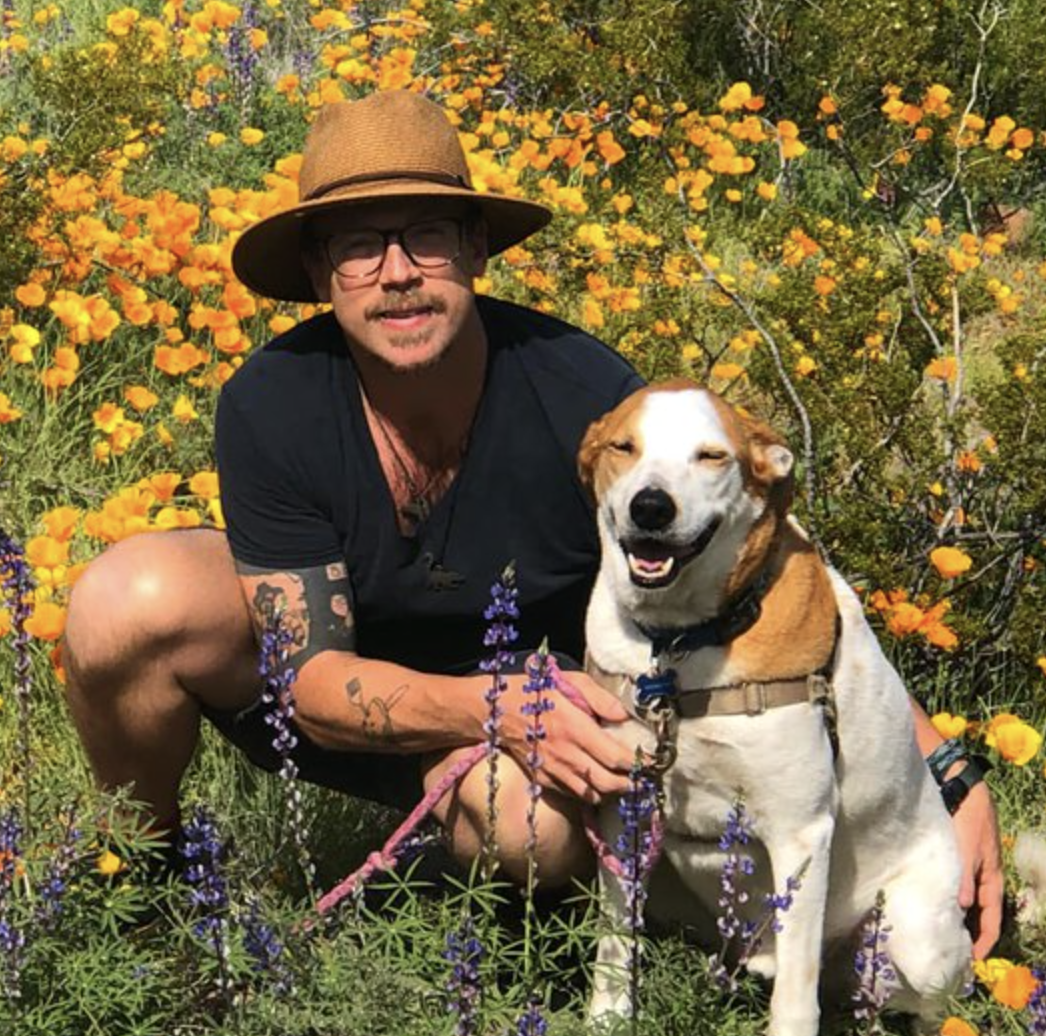
Russ McSpadden is the Southwest Conservation Advocate with the Center for Biological Diversity. He plays an integral role in documenting the ecological and cultural impacts of U.S.-Mexico border wall policies. Russ focuses on protecting endangered species and preserving critical habitats, especially in the desert landscapes of the borderlands. He contributes valuable insights through his fieldwork, capturing the pressing issues surrounding border wall construction and its repercussions on the environment and indigenous communities. Russ is also an accomplished poet, having published a book titled "Borderlings," reflecting his deep connection to and concern for the borderlands.