
 RSS Feed
 Amazon Music
 Apple Podcasts
 Audible
 Castbox
 Deezer
 Fountain
 iHeartRadio
 Pandora
 PocketCasts
 Podcast Addict
 Spotify
 YouTube
 S5E12: Whose Desert Is It Anyway? Navigating Change in the Mojave
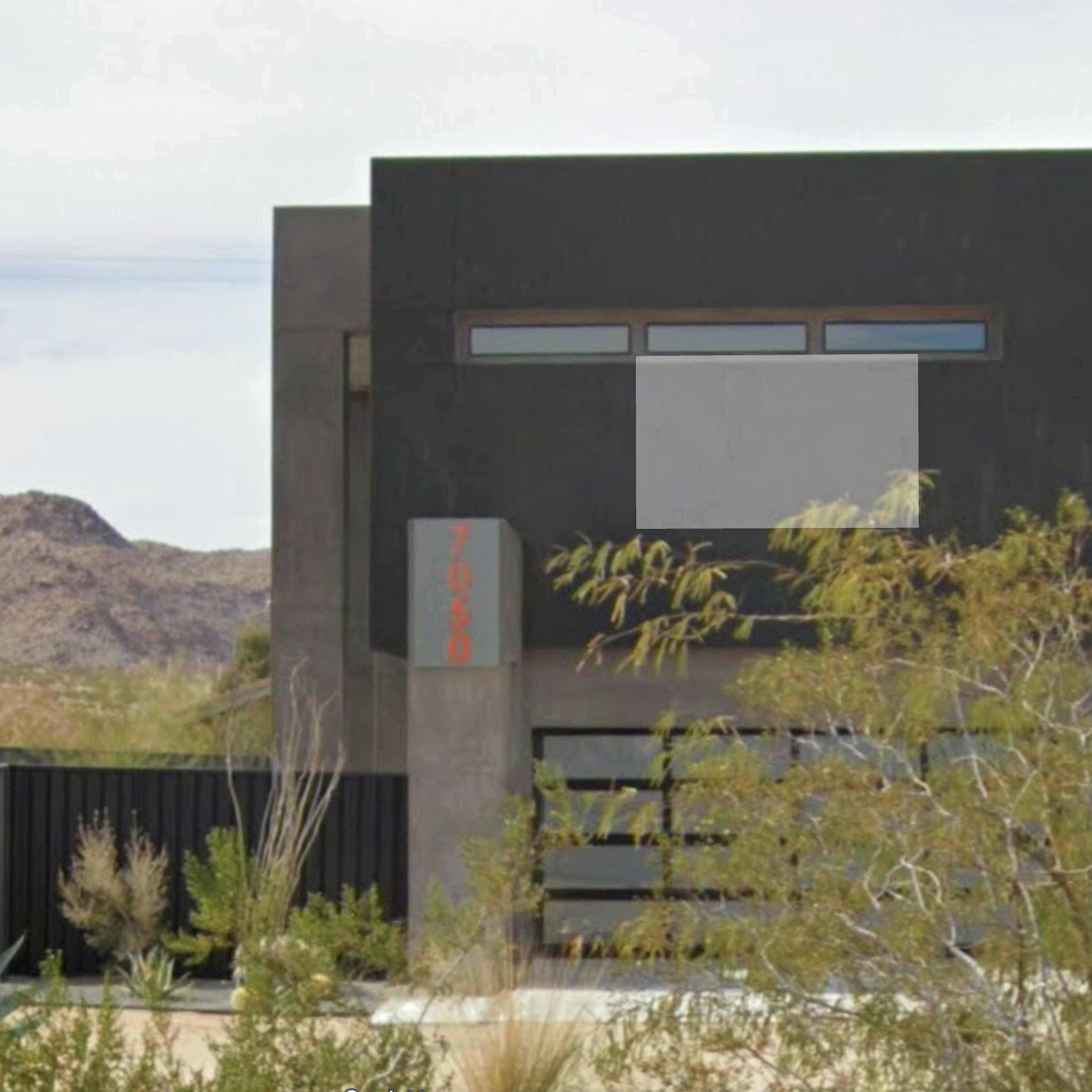
Ruth Nolan and Chris examine how promotional media, upscale art events and imported visions can accelerate gentrification in the Morongo Basin, arguing that newcomers should listen to the land and existing communities before remaking either.
About the Guest(s):
Ruth Nolan: Ruth Nolan is a distinguished poet, educator, and an ardent desert advocate residing in the Joshua Tree area. With extensive experience living in Coachella Valley and the Mojave Desert, she has become a central figure in desert literature and education. Ruth serves as a Professor of English and Creative Writing at College of the Desert and was honored as the first Mojave Desert Literary Laureate in 2021. She is the editor of "No Place for a Puritan: The Literature of California's Deserts" and the author of "After the Dome Fire". Her work emphasizes the cultural and environmental significance of the desert.
Episode Summary:
In this compelling episode of "90 Miles from Needles: The Desert Protection Podcast," host Chris Clarke engages in a thought-provoking discussion with Ruth Nolan, examining the impacts of art festivals on the desert community, specifically focusing on the High Desert Art Fair near Joshua Tree. Clarke and Nolan critically analyze the language and intentions behind a recent LA Times article that portrayed Pioneertown's art fair as a cultural mecca, akin to the Hamptons or Marfa. This raised significant concerns among locals about the gentrification and ecological footprint on their cherished desert.
Through an insightful conversation, Nolan shares her discontent with the article's portrayal of the desert as an exploitable blank slate, intended as a playground for affluent city-dwellers. Nolan, rooted in a deep appreciation for the desert's unique charm, critiques the growing trend of large-scale cultural incursions that disregard the needs and voices of local residents. The episode further explores the concept of desert protection by urging new inhabitants and visitors to approach the desert with respect and stewardship rather than seeking to transform it into an urban extension.
Key Takeaways:
- Gentrification Concerns: Ruth Nolan expresses concern over the influx of affluent outsiders transforming the Joshua Tree area, highlighting community displacement and environmental implications.
- Media Influence: The interview critiques media portrayals which often serve as promotional content rather than objective journalism, significantly impacting local perceptions and realities.
- Local Voices Matter: The need for community involvement and acknowledgment of local voices in discussions about development and conservation is emphasized.
- Desert's Unique Identity: Nolan advocates for the protection and appreciation of the desert's intrinsic beauty and fragility, pushing back against external visions imposing changes.
- Environmental and Social Stewardship: Encouraging newcomers to embrace sustainable practices and support local conservation efforts is vital for the desert's future.
Notable Quotes:
- "Ask what you can do for the desert, not what the desert can do for you." – Ruth Nolan
- "Are we not learning that there's nowhere else to go after this?" – Ruth Nolan
- "The magic's already here. Just get out of your own head and go listen." – Ruth Nolan
- "There's a difference between moving here and connecting and respecting, and importing yourself because you have a vision." – Ruth Nolan
- "Eventually, what had looked like a monotonous expanse of boring, scraggly shrubs reveals itself as a magnificent expanse of boring, scraggly shrubs." — Chris Clarke
Resources:
- The Border Chronicle: What Do Argentina's Disappeared Have to Do With Unidentified Migrants on the U.S.-Mexico Border?
- "Just outside Joshua Tree, this art fair set in a desert motel is building something you can’t get in L.A.": Los Angeles Times
- Ruth Nolan's Latest Work: "After the Dome Fire"
- Mojave Desert Land Trust: Mojave Desert Land Trust
- Morongo Basin Conservation Association: Morongo Basin Conservation Association
- Native American Land Conservancy: NALC
This episode of "90 Miles from Needles" invites listeners to reconsider how art, development, and culture intersect with conservation in sensitive desert ecosystems. Tune in to the full episode for a deeper exploration into these pressing topics and subscribe for more insights on desert protection and community advocacy.
Become a desert defender!: https://90milesfromneedles.com/donate
See omnystudio.com/listener for privacy information.
Chris Clarke (0:00): 90 miles from needles, the desert protection podcast, is made possible by listeners just like you. If you wanna help us out, you can go to nine 0milesfromneedles.com/donate or text needles to 53555.
Joe Geoffrey (0:25): Think the deserts are barren wastelands? Think again. It's time for 90 miles from Neals, the Desert Protection Podcast.
Chris Clarke (0:45): Thank you, Joe, and welcome to 90 Miles from Needles, the Desert Protection Podcast. I'm your host, Chris Clark. And I have a really interesting conversation today with my friend, Ruth Nolan, who's an accomplished poet and educator and desert advocate living in the Joshua Tree area after a couple of decades. Spent living in the Coachella Valley and before that, elsewhere in the Mojave. We are talking about an art festival in the Joshua Tree area that has been going on for about five years called the High Desert Art Fair, which got some recent coverage in the LA Times that has, it's fair to say, pissed off a whole lot of locals.
Chris Clarke (1:20): Now Ruth and I talk a bit about the tone deafness of the language surrounding the high desert art fair in this LA Times article. I will link to that article in the show notes. The headline of that article was outside Joshua Tree, this art fair set in a desert motel is building something you can't get in LA, which sounds innocuous enough, and maybe in reality it is. But there are statements connected with the high desert art fair in that article that are just troubling. So Bruce and I talk about that, and you may find it interesting.
Chris Clarke (1:53): Before we get to that, though, first off, I wanna thank our newest donor, Anne Marie Summerhays, who we also thanked in the last episode, and she doubled down by adding a recurring donation to her one time donation that she made a couple weeks ago. Anne Marie, thank you so much for the vote of confidence. If you wanna join Anne Marie in being one of the cool kids, you can go to 90milesfromneedles.com/donate. If you wanna support our fellowship for desert reporting, which will pay emerging journalists to work on desert environmental issues, go to 90milesfromneedles.com/fellowship. One other thing I wanted to mention to you all, our friends over at the border chronicle, which is just really knocking things out of the park these days.
Chris Clarke (2:32): They have a substack newsletter and a podcast, and we highly recommend them. They cover the entire US Mexico border and many other contested borders as well. And this week, the border chronicle is featuring a short premiere of a documentary film by Bernardo Ruiz, who is an excellent filmmaker. The title of this short feature is what do Argentines disappeared have to do with unidentified migrants on The US Mexico border? Now strictly speaking, this is not taking place in the desert section of the border.
Chris Clarke (3:00): It's in the Rio Grande Valley towards the low end of that river. This feature is a telling and compelling look at the forensic anthropologists who are working to identify the remains of anonymously buried migrants. And it talks about how forensic anthropologists in Argentina who are working on identifying the bones of the disappeared from that country's dirty war a couple decades back are providing material and training assistance to the folks in Texas. It's well worth the seven minutes and eighteen seconds it'll take you to watch it. Again, link in the show notes, or you can go to the borderchronicle.com and find it there.
Chris Clarke (3:37): And now without further ado, let's get to our conversation with Ruth Nolan on gentrification and the arts and similar issues in the Joshua Tree National Park area. I want to welcome my pal Ruth Nolan to our virtual studio. Ruth is a friend of almost twenty years at this point. Yep. One of the very first writers I met after I moved to the desert.
Chris Clarke (4:22): She is the editor of the wonderful book, no place for a puritan, the literature of California's deserts, Hay Day Books, and more recently, after the dome fire, a 2022 publication by Shortridge Books where she is the author. Ruth serves as professor of English and creative writing at College of the Desert and was the first ever Mojave Desert Literary Laureate in 2021. Ruth, thank you so much for joining us.
Ruth Nolan (4:49): Thank you for having me.
Chris Clarke (4:52): So an article came out in the LA Times about three weeks ago at this point that talked about an art festival near Joshua Tree. And, ordinarily, that would be no big deal. There are art festivals that happen out here all the time. Sometimes they attract criticism. Desert x, which is a really popular festival, has come into some criticism for various works of art that were not particularly appropriate for the desert in different ways, and we could talk about those.
Chris Clarke (5:21): But the thing that really jumped out at me with this article was one of the proponents of this art festival said, we want to turn this place into Los Angeles' version of the Hamptons or Marfa. Yeah. And that understandably rubbed a lot of people in this neighborhood the wrong way.
Ruth Nolan (5:43): Yeah. I think one of the things that jumped out at me reading that was the LA Times has a long history in recent years of publishing these basically PR pieces that don't seem to be journalism. They're more like marketing. And I know the Desert Sun and the Coachella Valley has also been doing this for years. And then you find out the Desert Sun is actually a partner of Coachella Fest and Desert X.
Ruth Nolan (6:07): And you start linking all these different things together and you realize that rather than providing journalism and reporting, some of these outlets have been just promoting these promotional pieces to publicize large scale events and ostensibly to attract attention to the events and to the people producing them, the majority of whom don't live in the desert. They're from cities and lots of money. And as you and I both know, Chris, we have been here both in the desert a long time, and we have seen this area being targeted on the dart gourd of, oh, it's a great place to do whatever you want because there's not as many rules. There's a lot of space. And it has just gotten to be an overload as we both can attest.
Unknown Speaker (6:53): Yep.
Ruth Nolan (6:54): And increasing so it seems every day, just getting more and more to the feeling where people these people, these organizations are squeezing the life out of the place, suffocating the life out of the place.
Unknown Speaker (7:04): Yep.
Ruth Nolan (7:05): And it's painful when you live here and love here and this is your home. You and I both have real deep relationships to being here and caring for the desert, building community with people who live here. And to be living through this kind of thing happening is very and you're probably feeling it too very distressing and frustrating and suffocating. So yes, this LA Times article also really jumped out at me, I just got instantly triggered when I saw it.
Chris Clarke (7:35): And you wrote a comment that is viewable on the LA Times website. Do you wanna share that with us?
Ruth Nolan (7:42): Yeah. To the LA Times, please do more research. There is already wide and growing concern leaning towards opposition and even anger among Morongo Basin residents and desert lovers at this effort to redo Pioneer Town and turn it into that esoteric, well saturated Marfa arts colony you glowingly write about. In which case, all that is and has been cherished about the homegrown wholesomeness, what's left after more than a decade of aggressive gentrification of Pietown, as locals call it, gets loved to death and squeezed into nothing more than a used up pulp of something magical and immaterial, a gaudy facsimile of what once had a soul. I have to say I rather hate your tendency towards writing groveling PR puff pieces about LA adjacent desert areas where many working people, families are being displaced and forced out or into homelessness.
Ruth Nolan (8:37): Their lives are massively turned upside down and disregarded by all this kind of stuff. And in a time when more and more good desert folk are struggling to buy groceries and fill their gas tanks. This kind of mouthpiece to the rich kind of writing is garish and tone deaf. Where is your coverage of their voices, opinions, responses to the impacts of this proposal? Do you care?
Ruth Nolan (8:58): You should. So that's what I wrote. And I've heard nothing from the LA Times. I didn't expect to. But Right.
Ruth Nolan (9:04): And I actually a good friend of mine, I don't know if you know her, Chris Ann Japenga, who formerly wrote for the LA Times for years as an investigative journalist, wrote for Palm Springs Life and other outlets doing a lot of great reporting and investigation and long form journalism pieces. She actually emailed me after I posted my post and said, did you know the person who wrote this article has a consulting press relation company? She said she was just very disappointed. The LA Times would have a PR consultant write an article and not even disclose that they're not a regular reporter.
Chris Clarke (9:39): So And Anna is one of the people that made those criticisms of a couple of the exhibits at Desert X a few years back that were really Yes. Really influential. I think it was doing a slideshow on a cliff that is a desert bighorn habitat in the Whitewater Preserve. And
Ruth Nolan (9:56): Not just a slideshow. They were gonna illuminate, like, huge light hundreds of feet high, like, with audio as well. Like, basically screening a film kind of a thing on the side of the cliff where the bighorn sheep are often seen. And then you have to wonder, you know, like, why would anybody at the conservancy agree to that? Same thing at the Living Desert.
Ruth Nolan (10:13): There was gonna be a big smoke show from Judy Chicago, the big Chicago artist. And I was actually contacted by a writer about a year ago. She said that those large scale smoke related events, she's doing them all over the world and a lot of people are having like environmental concerns. And this person was actually writing a piece about it she was gonna publish in a Canadian magazine. Yeah.
Ruth Nolan (10:34): This idea, why are we doing it here? Because there's not as many rules. We're not doing these things in LA because there's more rules and restrictions. But also The Desert just being designated as this open season, do whatever you want playground, and that's a real problem. The Desert X was in addition to being like there was no community interaction with any communities, I lived in an area in Palm Desert where one of the large scale installations was cited.
Ruth Nolan (11:01): And that's just a little neighborhood park, and it's right on the edge of where the Santa Rosa San Jacinto National Monument begins. And I've seen a lot of bighorn in those cliffs. And the first year they did the Desert X show there, there was no parking, no bathrooms, and they were also projecting loud music at night. And I'm like, I've seen bighorn sheep on these trails right above it. And their attitude's like, well, guys just don't like art.
Ruth Nolan (11:25): You know? You're accused of being parochial or stupid if you're in the desert and you speak up about these things. So the desert ex, as long as as well as these other things coming to Morongo Basin, are very invasive also to locals, people who live here. So it's in addition to the environmental concerns and the changes they're reeking upon the people who live here. Like, you and I both know many people who have been displaced from the Morongo Basin.
Ruth Nolan (11:52): Right. The Airbnb explosion and the exile of city people moving here in large numbers, most of who have privilege and money. And, you know, we've seen a lot of our friends get pushed out and it's very painful. Where are they supposed to go? So anyway, yeah, Angie Panga, also another person I want acknowledge who's been such an important person in speaking up and pushing back and asking questions.
Unknown Speaker (12:18): Right.
Ruth Nolan (12:19): When I posted this on my Facebook, I got a lot of comments. I was really surprised actually. And some people I didn't even know, people reached out to me on Instagram and other ways saying they appreciated what I said. I'm really glad that a lot of people are feeling the same way because I think that's really important.
Chris Clarke (12:36): Yeah. And just for listeners who are not in the Southern California area, Pioneer Town is a Wild West movie set that was set up by Gene Autry and Roy Rogers back in the day that was rediscovered in, I would say, the nineteen nineties was when it really started to morph into a bit of an arts hangout. Pappy and Harriet's was a biker bar at that point. That was not the trendy place that it is now. And at any rate, Pioneer Town is in the hills above Yucca Valley, which is west of the unincorporated community of Joshua Tree, but it gets lumped in with Joshua Tree a lot in the public mind.
Ruth Nolan (13:14): Yeah. I guess my real concerns are everything changes, everything grows. What I just really have concerns with are these kind of things that are just importing themselves with power and money and self serving narcissism into a place that isn't even that large. The Morongo Basin is not that big when you relatively speaking, right next to a very popular national park, which is also bringing up hordes of people all the time. And just in a very self serving way wants to do their own thing that is basically not accessible and doesn't serve the local people or people who live here.
Ruth Nolan (13:57): And there just is such a proliferation of this stuff happening. And it's all like to serve certain interests like entertainment, arts, and at what cost to the community? And what community involvement is there? Are locals being able to have a voice in this or concerns that are already a big problem and growing in the Morongo Basin such as traffic and the lack of services for the huge amounts of people that come up here to have all their parties and music stuff and have their national park experience, I can see just a huge change in just the last few years. And what rights do the people who own property and live here have?
Ruth Nolan (14:39): And where are our voices in this? There's a lot of things going on between local people and all these other entities we have to work with just to protect some of the basic things about where we live.
Joe Geoffrey (14:50): Yep. Don't go away. We'll be right back.
Chris Clarke (14:54): A barking kaibob squirrel on the North Rim Of The Grand Canyon. Enjoy.
Joe Geoffrey (16:25): Listening to 90 miles from Needles, the desert protection podcast. There are no Saguaro's in South Dakota.
Chris Clarke (16:34): This is a community that is not averse to activism. I'm thinking of a bunch of proposals for high end tourism that people have gotten together and killed as a result of just the overwhelming changes that have happened to the area and the anger that people have about their voices not being heated.
Ruth Nolan (16:56): Right.
Chris Clarke (16:56): But I do wanna point out that this is not arts versus desert dwellers. We have a thriving art community here Yeah. That is local. We have a bunch of people who have modest second homes here that come out for inspiration. That's a great thing.
Chris Clarke (17:13): In this article, a couple of locals were interviewed, Bernard Leiboff. Bernard is a wonderful person. He's Yeah. He cares deeply about the community, and he did get a quote in there about hoping that there was some way to maintain the affordability of the neighborhood.
Ruth Nolan (17:31): Which is generous. Yeah. And that's exactly what needs to be talked about. Affordability, accessibility for people who live here, not everything is bent towards taking care of rich people. Just hate to say it, but that's what we see.
Ruth Nolan (17:46): And that's happening in a lot of places. We're not the only place where these kind of incursions are taking place. It seems that a lot of the small towns and townships of the West are experiencing similar issues. Except our thing is we're very close to Los Angeles, and we're so close to a massive population base and a very famous national park that is within a day's driving a valley, which makes it especially difficult for us to maintain any kind of normalcy as a community, meaning it's a place where people live and work and have kids and deserve and need affordable housing and safe traffic and safe roads and basic services. Where's the call for all of that?
Ruth Nolan (18:30): Are the people coming in such as this Pioneer Town thing, are they interested in the local communities, or is it just all about them?
Chris Clarke (18:39): I noticed that one of the proponents of this high desert art fair is Nicholas Fahey. And in the article, he's talking well, I'll just read the section that really jumped out at me as being very telling about the approach and the perspective on the desert. For Fahey and Lawler, the fair emerged from years spent persuading friends and collectors to visit the region. Both purchased second homes in the desert in the mid twenty tens and found themselves frequently extolling what Lawler calls the magic of the desert. And then here's the quote that got under my skin.
Chris Clarke (19:15): We needed to give them a reason to come here, Faye, he said.
Ruth Nolan (19:18): Yeah. And what is that supposed to mean?
Unknown Speaker (19:20): Yep. Blank slate. We're a blank slate.
Ruth Nolan (19:22): Enough here. It comes back to the same thing. The desert is just this big open wasteland or space. Yep. It's just there for the taking, and this definitely ties in with the long trajectory of colonialism, capitalism in our country.
Ruth Nolan (19:35): And this is just an extension of that. Even Desert X, the founder, who's actually quoting, like, Manifest Destiny and saying, our art show is gonna be the first to go into the wilderness and the first to penetrate the wilderness. And I'm like, that's just ugly colonizing language that is has been very destructive and displacing and genocidal for native people. And that somebody would be quoting that to promote their big art vision is vulgar to me. And, you know, just this idea what you said that the desert is this empty space, and it's just there for the taking.
Ruth Nolan (20:12): And you don't have to answer to anybody. You can just do whatever you want. And I know there's many people that also experience it that way, but they treat it with respect and honor. They don't feel like they have some big need to come in and change everything. Mhmm.
Ruth Nolan (20:27): That is just such a Western mindset that you have to alter it somehow to fit somebody's taste. And Wallace Stegner, the great conservation writer, I'm sure you're familiar with. I remember reading in one of his books talking about when Palm Spring was starting to get, like, people with money and privilege coming and building big houses and mansions on the hillsides. And he had written some pretty skating stuff about it, like how much water it was taking to fill in one man's pool. And him and his wife found this one mansion particularly vulgar because it was so huge and dominated the whole hillside.
Ruth Nolan (21:04): And his experience with living in the Coachella Valley, which was in pretty rural, was that he was enjoying feeling immersed in the desert itself. But the desert itself was just as a place, its own ecology was enough for him. And he felt that going overboard and having to pronounce yourself there and build up was just ridiculous and violating. So I think it's the scale and level to which we see these things. Yeah.
Ruth Nolan (21:34): There was nothing there until I arrived and gave people a reason. Like, that's arrogant, and it's just misguided in my opinion.
Chris Clarke (21:42): Yeah. It's, I think, akin to and this might not mean much to people that are listening from outside the area, but we can explain it a bit. But for Joshua Tree locals, this will be immediately recognized. The idea that in order to be a stylish desert retreat, your place has to be a giant box that's painted black Right.
Ruth Nolan (22:02): In the desert. The importation of large scale box homes that are painted black has been such a violation to, like, the aesthetic of the desert architecture that's already been there. Panorama Heights in Joshua Tree is one area that I've noticed. Like, there's a nice modest three bedroom home on an acre. And right next door, there's some, like, 8,000 square foot box that's designed to bring Airbnb customers on a large scale.
Ruth Nolan (22:31): The ones in Indian Cove, those two story, it's, like, literally five feet away from the little house next door. And neighbors have talked about how they have their lights on all the time. It's causing light pollution. And, you know, these are party houses, so people aren't just coming like with a little family or coming with 50 people. We have to laugh about it really because who in f would build a black house in the desert?
Chris Clarke (22:55): Yeah. I'm sure that 99% of the people that choose those colors do so because it's stylish or it looks nice to them. But it really is a way of saying, I don't care about local conditions. Don't care what the desert is really. This is my vision.
Ruth Nolan (23:13): You gotta wonder, like, where is this vision coming from? Is it based on somewhere where black houses actually make sense if you're in Minneapolis or New York? I don't know. It's out of sync, tone deaf. LA is full of this, right? Like people tear down a wonderful old house and they put a big giant chockablock mansion. That's what I call them. And it's just so out of place and it dominating and doesn't it just is almost like I gotta be the king of the hill.
Ruth Nolan (23:42): And is there no end to this? In a lot of the literature I've read and studied, there's always this depiction of the desert as being like the last place that we have on Earth. And you know this too, Chris, that the Mojave Desert is still one of the last ecologically intact places. There's six places, and the Mojave Desert's one of them left on Earth. And here we are just like tearing it up and dividing it up and just stepping all over it with these big footprints, so to speak.
Ruth Nolan (24:09): Yep. Are we not learning? Like, there's nowhere else to go after this. There's nowhere else to go. People didn't want the deserts before because they have all these other beautiful greener places and those places are getting trashed and toxic.
Ruth Nolan (24:23): And I hear this a lot from people. Every day I meet people in the Morongo Basin, I'm sure you do. I moved here from somewhere else. It was getting too crowded. I moved here from the front country of the Rockies by Denver.
Ruth Nolan (24:37): It was too crowded. So I moved here. It's better. I hear that all the time. And I'm thinking, Okay, you came from somewhere that was worse, but what do you expect from here if there's so many people doing that?
Ruth Nolan (24:53): What do we have after this?
Chris Clarke (24:55): And I'm part of the problem. I moved here from the Bay Area in Yeah. But,
Ruth Nolan (24:59): Chris, you're not somebody coming here with this big vision of a giant boot print crushing a bunch of stuff.
Chris Clarke (25:07): No. I bought a house that was built in the nineteen fifties.
Ruth Nolan (25:10): Yeah. I mean, there's a difference between moving here and connecting and respecting and importing yourself because you have a vision and your vision is big and grand and you just you don't understand the fragility and the critical stakes that are here with so much that's going on in the desert that's exploitative, destructive. You know, the solar industry, the reopening of mining. Joshua Tree National Park is being hit by that. So it's just a matter of wouldn't you think the desert would be the great teacher to help people understand how fragile our ecologic world is?
Ruth Nolan (25:46): Because it is hard to live out here. You have to work at it. We don't have that much water, and yet there's so many people that seem to be just trying to override that. And superglue this fantasy onto it that isn't really sustainable. And that's where I have a lot of concerns.
Ruth Nolan (26:02): And I'm someone that's been in the desert most of my life, so I've seen this desecration on a really huge scale over in the Victor Valley, which was much like Joshua Tree. And it's just overrunning the amount of Joshua Tree habitat destroyed, and it's still building. But there's half a million people over there now and just devastation of the beautiful natural desert environment there over, what, thirty or forty years. Yeah. And I think it's really good that there's people that are pushing back.
Ruth Nolan (26:30): What we're facing here is it's just turning into a big playground for parties. And is it going to be a place people can live anymore?
Chris Clarke (26:40): Yep. This is an excellent question that is to be determined, and we're coming up on half an hour here. K. One thing I do wanna say that there are a couple of really good organizations that are working on making sure that there's something left of the desert in the Morongo Basin. The Mojave Desert Land Trust is one of them.
Chris Clarke (26:59): Oh, yeah. Morongo Basin Conservation Association is another, and they've put out a couple of reports on housing that are really important. We'll link to those in the show notes.
Ruth Nolan (27:09): And I also wanna add the Native American Land Conservancy.
Ruth Nolan (27:11): That's a
Ruth Nolan (27:11): great organization to support. And finally, I just wanna add one more thought, and this is something I'm thinking a lot of even for myself. I don't wanna be calling the kettle black. I wanna also be someone who's serving and caring and always exhibiting those qualities in my educational work and as a writer and just resident, but ask what you can do for the desert, not what the desert can do for you. And I wanna say there are a lot of great people here that are really caring for the desert, and that's a wonderful thing.
Ruth Nolan (27:42): We need to keep connecting with these people. We need to keep supporting what they're doing. And I just think it's also very important for people locally and outside the area to understand what's happening here with these large scale incursions coming in that just seem to have so much deepened sensitivity and sort of a tone deaf approach
Ruth Nolan (28:02): Yep.
Ruth Nolan (28:03): Local issues of conservation, society, social environmental justice, and all of those things.
Chris Clarke (28:09): Yep. And it is not really locals versus newcomers. There's No. There are locals who would be very happy to bulldoze the entire desert, and there are newcomers who are exactly the kind of people we want living here.
Ruth Nolan (28:23): Yep. I wanna give a shout out to everybody I know and all those, everybody, new people, everybody that's coming here with the mindset of being stewards of the desert, of this fragile, special place that we live in. And there are a lot of them. So I want anybody who's listening that knows me to know that. I really appreciate and care what you're doing.
Ruth Nolan (28:43): Right. And the magic's already here. Just get out of your own head and go listen and the magic will come to you. I know that's a very hard thing for a lot of people to do if they've especially been conditioned on a city mindset way of living because the desert is lacking. You have to be okay with that.
Ruth Nolan (28:59): It may not be so apparent, but you gotta let it sift in and sit with that.
Unknown Speaker (29:04): Yep.
Ruth Nolan (29:04): And then you'll start to understand what we're talking about.
Chris Clarke (29:07): The way I like to put it is eventually what had looked like a monotonous expanse of boring scraggly shrubs Yeah. Reveals itself as a magnificent expanse of boring, scraggly shrubs.
Ruth Nolan (29:19): I love that. Exactly. You have to be okay with the lack, the deprivation.
Chris Clarke (29:25): Ruth Nolan, thank you again for coming back to 90 and talking with us. It's always a delight.
Ruth Nolan (29:31): Yeah. Thanks for all the great work you do, Chris. A lot of people are really appreciating this.
Chris Clarke (30:00): I want to thank Ruth Nolan for joining us here. We didn't solve any problems in the desert, but it's the start of a conversation that I think needs to be had and frequently. So thanks to Ruth. Thanks again also to Ann Marie Summerhays for her donation. Again, 90milesfromneedles.com/donate.
Chris Clarke (30:25): And remember, we are looking for volunteers. If you have skills in social media or in audio editing or in fundraising or if you'd like to take a voice recorder and go interview people at demonstrations in your neck of the woods, or you have ideas for stories and ideas for the right people for us to interview for those stories, get in touch. Chris90milesfromneedles dot com.
Joe Geoffrey (30:52): And that brings us to the end of this episode of 90 miles from needles, the desert protection podcast. You can find show notes for this episode along with links and background at 90. We're also on social media. You can find us on Facebook, Instagram, Blue Sky and Threads. Just search for 90 miles from Needles.
Joe Geoffrey (31:18): And if you'd like a more direct line, you can reach us on signal at 67. If you'd like to support the show, you can make a donation of whatever size and frequency feels right to you at 90milesfromneedles.com/donate. Listener support is what makes this podcast possible. Our voiceover is by Joe Jeffrey. Podcast artwork is by Martin Moncham.
Joe Geoffrey (31:47): Nature sounds are recorded by Fred Bell. Our theme song, Moody Western, is by Bright Side Studio with additional music licensed from independent artists.
Chris Clarke (32:01): The other piece of music in this episode, which is entitled beautiful heart, is by Victory Audio.
Unknown Speaker (32:56): 90 Miles from Needles is a production of the Desert Advocacy Media Network.
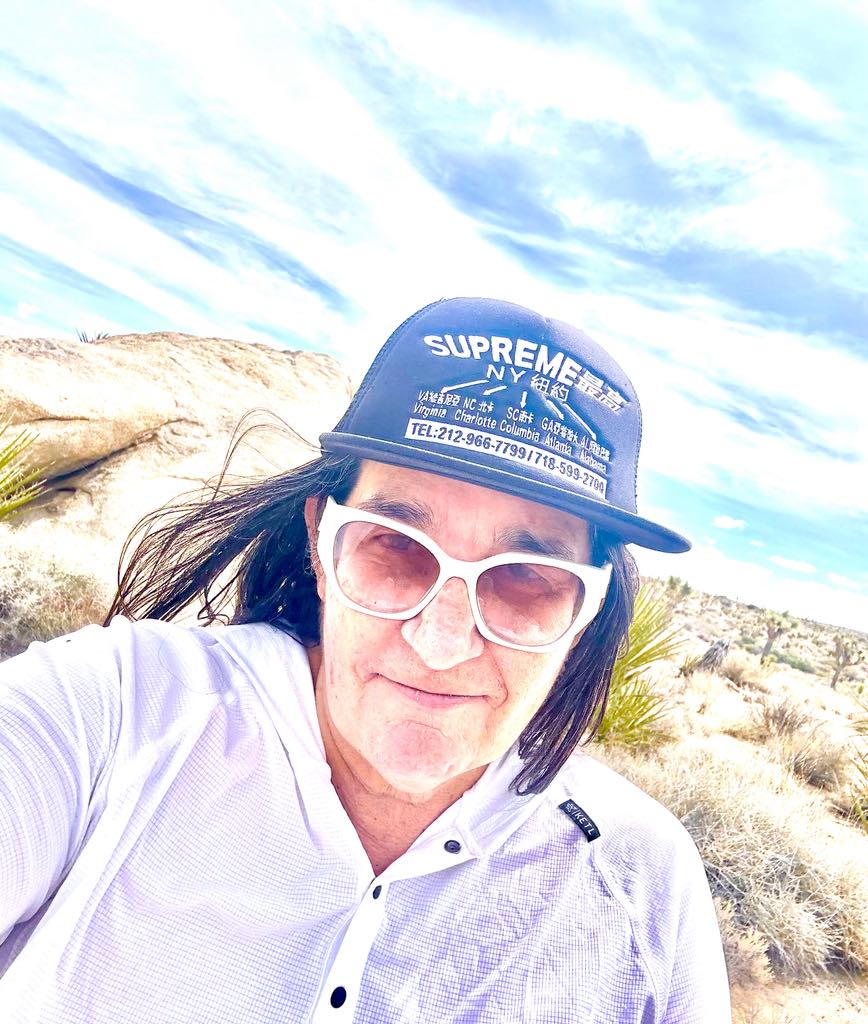
Ruth Nolan is a renowned poet and former wildland firefighter with significant contributions to desert conservation and literature. An English, Creative Writing, and Native American Literature professor at the College of the Desert, Palm Desert, she has authored and edited numerous works like "Ruby Mountain" and "No Place for a Puritan: The Literature of California's Deserts." A dedicated advocate for preserving California's desert landscapes, Ruth uses her writing to highlight environmental issues, intertwined with her heritage and deep connection to the Mojave Desert.