
 Amazon Music
 Apple Podcasts
 Audible
 Castbox
 Deezer
 Fountain
 iHeartRadio
 Pandora
 PocketCasts
 Podcast Addict
 Spotify
 YouTube
  RSS Feed
 S5E10: ¡No al muro! Big Bend Neighbors Fight Proposed Border Wall
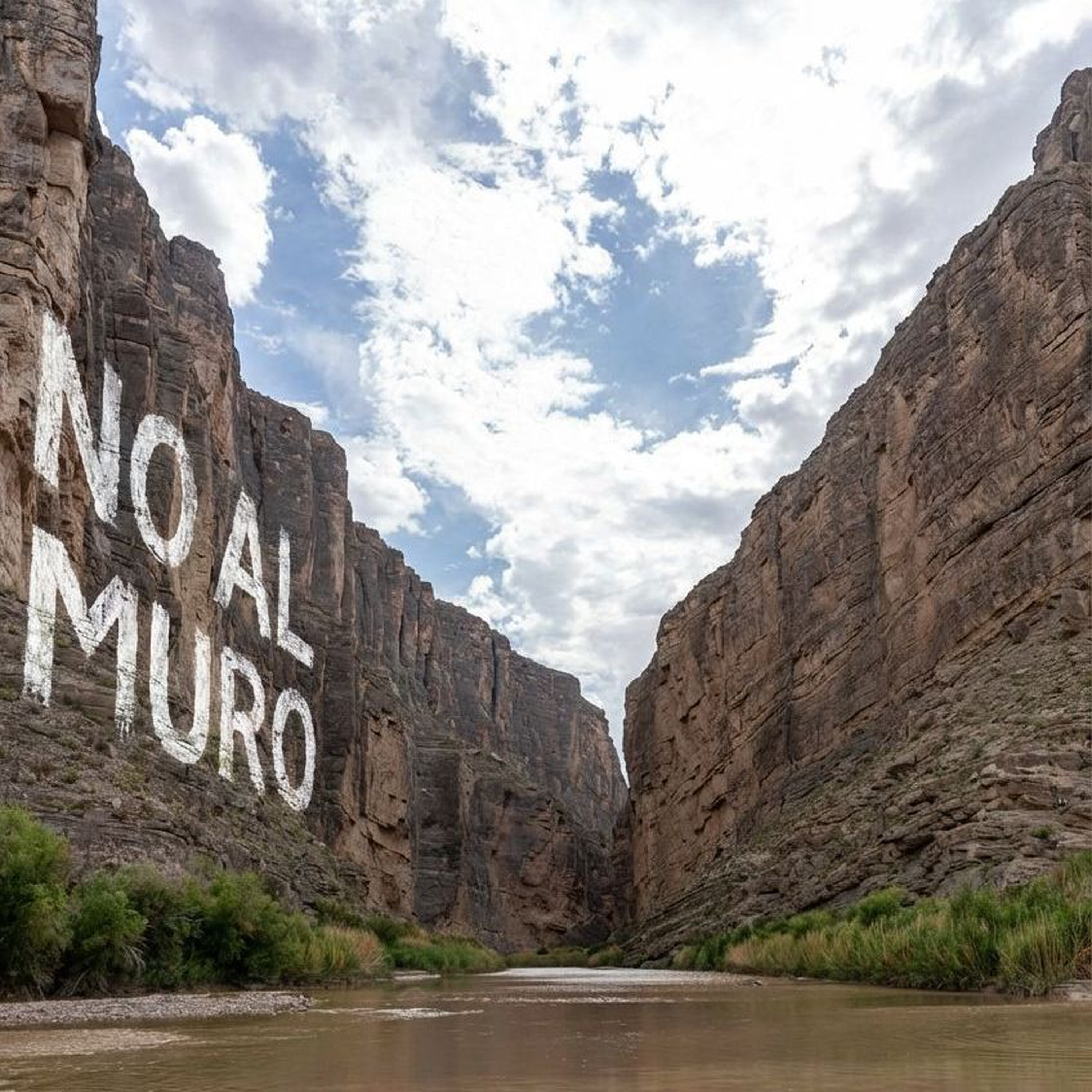
Laiken Jordahl describes the unusually broad Big Bend coalition opposing border-wall construction, where ranchers, conservationists and local officials are defending wildlife, the recovering Rio Grande and cross-border community life.
In this episode, host Chris Clarke engages in an enlightening conversation with Laiken Jordahl from the Center for Biological Diversity. Focusing on the contentious issue of border wall construction, Jordahl sheds light on the potential threats posed by the Department of Homeland Security's proposed developments near Big Bend National Park in Texas. This discussion is not just a critique of environmental degradation but also highlights the unique coalition of local residents opposing these plans, emphasizing the union of diverse communities in protecting the Rio Grande's ecological integrity.
Jordahl articulates the environmental and social impact of the wall, touching on topics like endangered species, cultural connections, and community resilience. With references to biodiversity in the region, the conversation also delves into the critical role local communities play in safeguarding public lands. From agave blooms to wildlife threats and the interruption of the natural landscape, the dialogue underscores an urgent call to action. Through poignant anecdotes and insightful commentary, this episode captures the essence of grassroots activism and cross-border unity in the face of federal infrastructure challenges.
Note for AI skeptics: the episode artwork was created with Photoshop and a human brain.
Key Takeaways:
- Local communities in Big Bend are uniting against proposed border wall construction, citing environmental, cultural, and economic concerns.
- The coalition opposing the wall includes diverse stakeholders, from conservative ranchers to progressive environmentalists, all valuing the region's unique ecological and cultural landscape.
- Proposed border wall construction risks significant ecological damage, including threats to endangered species and water access within the Rio Grande.
- The episode explores the cross-border cultural and environmental exchanges that define the Big Bend region’s identity, threatened by potential development.
- Activist efforts and community resilience offer a hopeful prospect for halting destructive infrastructure projects along the U.S.-Mexico border.
Notable Quotes:
- "They don't want to see their mountains dynamited and their native plants bulldozed and destroyed." - Laiken Jordahl
- "All of the local sheriffs, including a number of very conservative Republicans who run and campaign on border security issues, oppose this wall." - Laiken Jordahl
- "The Rio Grande, it's really a river in recovery. And we have an opportunity to restore this river and allow for the recovery of so many native species." - Laiken Jordahl
- "Once you see the grandeur, the remoteness, the rugged beauty of this region, there's no way you're not going to fight like hell to protect it." - Laiken Jordahl
- "These are not professional organizers. These are not paid NGO actors. These are people fighting for their livelihoods." - Laiken Jordahl
Resources:
- No Big Bend Wall on Instagram
- Follow Laiken Jordahl on social media for updates on border issues: Twitter, Instagram.
- Center For Biological Doiversity press release: Congress Urged to Block Border Wall Construction Through Texas’ Big Bend Parks
Listen to the full episode of "90 Miles from Needles" for an in-depth discussion on the environmental and social dimensions of border wall construction, and stay tuned for more insightful conversations on desert protection and advocacy.
Become a desert defender!: https://90milesfromneedles.com/donate
See omnystudio.com/listener for privacy information.
UNCORRECTED TRANSCRIPT
0:00:00 - (Chris Clarke): 90 miles from needles the desert Protection Podcast is made possible by listeners just like you. If you want to help us out, you can go to 90 miles from needles.com donate or text needles to 53555.
0:00:25 - (Joe Geoffrey): Think the Deserts are Barren Wastelands? Think again. It’s time for 90 miles from Needles the Desert Protection Podcast.
0:00:45 - (Chris Clarke): Thank you Joe and welcome to this episode of 90 Miles from Needles the Desert Protection Podcast. I'm your host, Chris Clarke, and we have a really important conversation to bring you today with Laiken Jordahl, National Public Lands Advocate with the center for Biological Diversity, who's been working with folks in West Texas, specifically around Big Bend national park and Big Bend Ranch State park, right on the border and the river, the Rio Grande. Rio Grande, Rio Bravo, whatever you want to call it.
0:01:14 - (Chris Clarke): Those folks in West Texas are working
0:01:16 - (Chris Clarke): to keep the Department of Homeland Security from building a new section of wall through one of the wildest sections of the border. The Big Bend area is a place
0:01:25 - (Chris Clarke): I fell in love with as soon
0:01:26 - (Chris Clarke): as I got there a couple years ago. It was my first time visit. It has lived in my dreams since then. I'm really grateful to the folks in Terlingua and Marfa and Alpine and El Paso and all through West Texas who are fighting this proposed wall. I think you're going to enjoy our conversation with Lakin. First, though, I want to recognize a new donor, Ann Marie Summerhays, who also
0:01:50 - (Chris Clarke): wrote us a really nice note along with her contribution.
0:01:53 - (Chris Clarke): She said, I found you and I'm
0:01:55 - (Chris Clarke): enjoying listening to your episodes from the beginning. I love the desert and I'm so
0:01:59 - (Chris Clarke): glad you're doing what you do.
0:02:00 - (Chris Clarke): Keep up the good fight. Annemarie, thank you so much. We will do just that. And if you, oh listener, want to join Annemarie in supporting our work, you can go to 90 miles from needles.com donate if you want to support our launch of our Fellowship for Desert reporting, you can go to 9zero miles from needles.com Fellowship and with no further ado, let's get to our conversation with Laiken Jordahl from the center for Biological Diversity about the campaign to prevent a border wall from going up in the Big Bend region of West Texas.
0:02:50 - (Chris Clarke): We are thrilled to be joined in our virtual studio by Laiken Jordahl. Laiken is coming to us from Terlingua, Texas, which is reason for all of us to envy him right now. It's a great place and in your role as Borderlands campaigner at CBD a couple of years ago, you and our mutual friend Kevin Dahl Got into social media notice for documenting some saguaros being bulldozed in order to build that section of the wall.
0:03:22 - (Chris Clarke): That was some pretty upsetting footage but thank you so much to you and Kevin both for making that possible so that people could see what was actually going on. Yeah.
0:03:32 - (Laiken Jordahl): It was such a heartbreaker in Arizona. And I think so much of the conviction that the community here in Big Bend feels is like they don't want to see that happen here. They don't want to see their mountains dynamited and their native plants bulldozed and destroyed. We know what DHS is capable of, and that's exactly what we're fighting to stop out here.
0:03:50 - (Chris Clarke): So what are you fighting to stop out there?
0:03:52 - (Laiken Jordahl): So about a month ago, plans came out that the Department of Homeland Security was going to try to build a border wall through Big Bend national park and Big Bend Ranch State Park. They had quietly updated this online map that's now become somewhat infamous. The map's not official, to be clear. It's really rather meaningless, actually. We never had a map in Arizona. They just showed up with their dynamite cruise and started butchering our desert landscape. So been interesting this time around to see them making these changes on this map, activating the community, everybody. As soon as we saw that Big Bend national park and the state park were on the chopping block for Wall, I mean, there was mobilization out here like I have never seen anywhere along the border in all of my years organizing on this issue.
0:04:38 - (Laiken Jordahl): Specifically, the opposition from conservative folks was remarkable. People come out to this region and fall in love with it, and they make their lives out here generally because of the rugged, remote, beautiful nature of the area. Most of the livelihoods of people out here depend on river outfitter businesses and other tourism. All of that would be threatened by the wall. So we saw last month this incredible coalition bubble up from equestrian folks to all of the local sheriffs, including a number of very conservative Republicans who run and campaign on border security issues.
0:05:16 - (Laiken Jordahl): And then, of course, all the boaters, the granola hippies, the hunters, the anglers. This coalition that cropped up and truly probably the least populous part of the lower 48 has become a force to be reckoned with. And we have seen in recent weeks DHS is at least trying to change how they're marketing these plans because they're showing that they're paying attention. They're afraid of us.
0:05:37 - (Chris Clarke): I can guess what the more progressive folks are objecting to with this, and we can get into that. But what are the things that are motivating the conservative folks in the area to oppose wall construction.
0:05:51 - (Laiken Jordahl): Yeah, so, you know, this is deep, deep, deep into the Chihuahua desert. This is an area you have to work hard to get to. And the folks out here, everyone is magnetized to the Rio Grande. It's the lifeblood for people, for nature, for everyone out here. Every single family that lives out here spends time on the banks of that river. And this proposal would cut off the community from access to their river.
0:06:15 - (Laiken Jordahl): And it's not just about recreation. Recreation is huge. But it's also about agriculture. There's a lot of landowners here who could be cut off from their agricultural equipment, their water pumps. I mean, how are they going to get through the wall to serve and do maintenance on their pumps? Border Patrol has had no answer for that. No plan whatsoever for that. People in Texas are proud to be from Texas. This is an issue of Texan pride.
0:06:41 - (Laiken Jordahl): This is an issue of Don't Tread on Texas. You know, all the protest signs out here say, come and take it. They say, don't Tread on Big Bend. It's a very different character than what we've seen in other border wall fights because there is so much patriotism and care for this land and the natural heritage that it protects.
0:07:01 - (Chris Clarke): I've mentioned this in previous podcasts, but I was in that area at the beginning of the year a couple years ago, and, you know, the river was not high, but it was. It was up. There was water in it. You know, horses got their bellies wet walking across, but the fact was, horses could get their bellies wet walking across. You know, and it just struck me as what borders really ought to be. You know, I grew up on the U.S. Canadian border, and people would go across to get Chinese food or better beer than was available in Buffalo, New York in the 1970s.
0:07:37 - (Chris Clarke): And that's really informed my notion of what a border is supposed to be. You know, a little bit of a hassle, maybe, but, you know, people going back and forth without much in the way of restriction and more of an ecotone, more of a. Like a boundary between two cultures or two to landscapes. And it really struck me, being around Boquillas, which is sort of towards the south end of. Of Big Bend national park, but across the river, that this is like the idealized version of what the US Mexican ecotone could be. I mean, people walking across.
0:08:16 - (Chris Clarke): There is a border station on the US Side that theoretically you're supposed to go through, and most people do, but at the same time, there's folks selling empanadas at the Trailheads that, you know,
0:08:28 - (Chris Clarke): were made across the border two hours beforehand.
0:08:30 - (Chris Clarke): Yeah, you know, just friendliness and the whole trumped up pun, not really intended antagonism about people on the other side of the border. It was just not there.
0:08:42 - (Laiken Jordahl): No. And I don't think people understand just how deeply connected communities on both sides of the border are here. We've got a group of firefighters from Boquillas, Mexico, who are the first responders to fires in the national park. Often they regularly send their crews over and they have stopped the spread of extreme grass fires, structure fires. We depend on them for our safety and similar, you know, similar issues. When it comes to the eradication of invasive species like Arundo donax cariso cane, you can't just treat one side of the river and expect that to work.
0:09:18 - (Laiken Jordahl): There's so much collaboration here. And of course, there are families that have been on both sides of the border for many, many, many generations. And like, you were kind of getting at, like, in nature, it's these borderlands, it's these ecotones that have the highest amount of biodiversity. They're the most interesting places. They're the places that I've always gravitated towards in my life. You know, where the desert meets the mountains.
0:09:41 - (Laiken Jordahl): That's where you just have incredible explosion of life. And I think the same goes for human society. Depending on our neighbors is important. Like when I worked at the park here, we would go over and shop in Ojinaga in Chihuahua, and it was an amazing experience. And like, yeah, the beer was cheaper and the food was better, but it was also just such an incredible cultural experience to go through the port of entry, drive over the bridge, speak a different language, and then drive back through the state park, crack open one of those cold beers, sit in the river and watch the sunset before making it back to park housing at night. I mean, it doesn't get any better than that. And, like, this place really did inform me, like, what the border could be.
0:10:24 - (Chris Clarke): How would a border wall change that?
0:10:28 - (Laiken Jordahl): Yeah, so if the border wall went up through the national park, it would effectively end all river trips, all commercial boating, all private trips that happen here, that sustain the local economy. And about a month ago, the DHS map indicated that that's exactly what they were pushing for. And they had already had engineers map out the course for that wall. So they have backtracked on that, but they haven't made any sort of official statements. They have an unlimited amount of money to build this thing.
0:11:00 - (Laiken Jordahl): You know, we're still going to have almost three more Years of this administration and they have unlimited pockets. None of the normal laws apply. Nothing is stopping them except for us. So we have to stay vigilant here. They backtracked on the national park plans, or so they say. Right. And then they were just targeting the state park and then all of the private land upstream of the state park. But even if they did that, they would be walling off the public to the most publicly loved swimming holes, trailheads, river stretches. Also lots of common boat put ins.
0:11:35 - (Laiken Jordahl): So all of a sudden you'd have a wall between you and the river. We'd be seeding all of this land, the land that people think is, you know, the most important land in this region to Mexico. It'd be on the wrong side of the wall. I don't think that's going to go over very well with Texans, you know.
0:11:50 - (Chris Clarke): Yeah. Didn't Texans fight a war to get that land from Mexico?
0:11:54 - (Laiken Jordahl): I think, yeah. We should revisit some of that history here. I think the most well-known landmark in Texas might have something to do with that. Yeah.
0:12:03 - (Joe Geoffrey): Don't go away. We'll be right back.
0:12:05 - (Chris Clarke): Here is our regular break to partake in our friend Fred Bell's nature recordings in the desert. In this particular instance, we will be hearing a pair of Bewick’s wrens singing in the early morning at the point of Rock's boardwalk at Ash Meadows National Wildlife Refuge, the Galapagos of the Mojave.
0:12:24 - (Chris Clarke): Let's listen.
0:13:44 - (Joe Geoffrey): You're listening to 90 miles from Needles, the desert protection podcast. Don't take your dog on a desert hike in the summer.
0:13:53 - (Chris Clarke): Back to our chat with Laiken Jordahl of the center for Biological Diversity.
0:13:57 - (Chris Clarke): You mentioned that the Trump administration and DHS are not constrained by laws as
0:14:02 - (Chris Clarke): they build this stuff.
0:14:03 - (Chris Clarke): Can you tell us a little bit more about that?
0:14:07 - (Laiken Jordahl): Yeah. So they have already waived 28 of our nation's most important environmental and cultural resource protection laws. That means that the Endangered Species act does not apply to the stretch of river where they waved the wall, which includes the state park. They've also waived dozens of contracting and procurement laws, which doesn't sound very interesting, but all of a sudden you realize, whoa, this means there's no oversight.
0:14:33 - (Laiken Jordahl): This means there's no public information available about these contracts. It sets the stage for one of the biggest grifts, one of the biggest thefts of taxpayer funds that we've seen. Some of these border wall contractors, I mean, they're making billions of dollars. These families have become billionaires. So all of the normal laws that would apply to these projects are out the window. That means that these walls will go up with no meaningful monitoring of the impact to wildlife to cultural sites.
0:15:02 - (Laiken Jordahl): In Arizona, we've seen the blasting of indigenous sacred sites with no cultural resource monitors on hand, no tribal liaison folks even notified. It's horrifying. And that has also included the evisceration of critical habitat for endangered species, which, you know, normally DHS would have to consult carefully with the Fish and Wildlife Service. They would have to consult other experts. They would have to put these plans to public comment where they would actually have to respond to the issues that we've raised.
0:15:30 - (Laiken Jordahl): The whole project would take, you know, it would drag on because this is a major infrastructure project. Right. With so many impacts. So all this, all that's off the books and they're moving forward with none of those safeguards.
0:15:41 - (Chris Clarke): We had Rick Lobelo from El Paso Zoo on a couple of episodes ago and he was talking about the cross border cooperative management in the area and he mentioned things, well, like the black bears that have come across the river in recent decades and reinhabited Big Bend national park. And of course, you know, jaguars and wolves are two really big and notable, I mean, literally big species that are involved here.
0:16:09 - (Chris Clarke): I'm curious whether there are species of concern in the river itself, you know, for more than the few seconds it takes to walk across. I recognize that the Rio Bravo Rio Grande has been really impacted by development and agricultural diversion and climate change and all that kind of thing. But are there the equivalents of the, you know, the chubs and such that are in the Colorado river that we're concerned about here with wall construction?
0:16:42 - (Laiken Jordahl): Yeah, I mean, the Rio Grande, it's really a river in recovery. And we have an opportunity to restore this river and allow for the recovery of so many native species. There are still tons of species of native turtles and fish. The Rio Grande silvery minnow is still in certain stretches here, rare, but has historically been in the park. And then further downstream, we've got endangered species of mussels like the Texas horn shell that are actively being threatened by the installation of border buoys and the operation of heavy equipment in the Rio Grande down south.
0:17:14 - (Laiken Jordahl): But I think ecologically speaking, the riparian zone in the desert is always the most biologically important place. And when you wall off half of access to that zone, you're walling wildlife off from their only reliable source of drinking water. And these animals have learned through evolution. I mean, they have historical memories of how to find water when it's hot and dry. They know what they're doing. And as climate change progresses, as our summers get so much hotter and drier, I mean, I think we will certainly see the bodies of wildlife piling up against the wall, stuck on the wrong side of it, dying of thirst, unable to access the river.
0:17:51 - (Chris Clarke): We talked a little bit about the response from. From locals, and I remember seeing a really impressive clip on social media of a demonstration in Terlingua, which I didn't know there were that many people in terlingua. Seemed like 150% of the population turned out.
0:18:09 - (Laiken Jordahl): Yeah, we've seen exactly that in towns all across the region. You know, in Presidio and Marfa, and these very small places pack a theater with standing room only. It's been amazing. But, yeah, people are. You know, these are atypical organizing networks. These are not professional organizers. These are not paid NGO actors. These are people fighting for their livelihoods. These are people fighting with everything they've got because they are so in love with this place. They can't imagine it not existing like this.
0:18:38 - (Laiken Jordahl): And I think that's why it's been so nonpartisan. I think it's activated a ton of people who have lost faith in the traditional political system, both the left and the right. It's really spreading just through the community like wildfire. There's a number of social media accounts who are trying to carry that energy out of the region because a lot of people here don't even use social media. I would recommend everybody follow no Big Bend Wall on Instagram. That's kind of the hub for a lot of this organizing. Yeah.
0:19:04 - (Chris Clarke): Seconded.
0:19:06 - (Laiken Jordahl): Yeah, but, you know, it's like people out here depend on each other. They're talking to their neighbors. A lot of the local organizing happens at the watering hole called the Boathouse Saloon, a fantastic establishment. And, yeah, I mean, you go out for a beer in this town to one of the very fine establishments. Every single bartender is wearing a no El Mudo hat. No to the wall. Every single person who works service in this town is telling each and every one of the people who comes in to buy a burrito or a beer or whatever, everything about this project.
0:19:37 - (Laiken Jordahl): And that is a really effective way of organizing. It's kind of old school. You know, it's really refreshing to see this all happening, like, via word of mouth. And it's got a different flavor, and I think that's why it's seemingly so successful, and that's why I actually have a lot of faith. You know, for the first time in all of the border wall battles, that I've fought over the years and I've lost all the prior ones.
0:19:58 - (Laiken Jordahl): This one, I really think that we can change the course of history. So we are throwing everything we can at this thing. And this place, you know, Big Bend is just unlike anywhere else on the border. It has always been to me, the one place on the US Mexico border that is just too grand to mess up. And it was the one place I always thought would be safe from these absurd proposals to build wall. But the current political moment, it's so theatrical. I just can't believe that we're actually here fighting for this.
0:20:26 - (Chris Clarke): Yeah, it strikes me the whole area itself is kind of a barrier that, you know, you have these deep canyons that basically prevent crossing the river for huge stretches of miles. And I mean, Boquillas is the one spot I'm familiar with. And I know that if you were a migrant from Central America or from Africa or, you know, somebody coming up from the south, Boquillas would not be a place you would choose to cross just because it's so hard to get to on the other side. I suspect this to a lesser extent. It's also true for places like Ojinaga and, you know, other spots on the
0:21:05 - (Chris Clarke): Mexican side of the border.
0:21:07 - (Chris Clarke): Has there been feedback or opinions expressed on the south side of the border about this construction? I expect people in Boquillas in particular pretty worried because they absolutely rely on people coming across.
0:21:22 - (Laiken Jordahl): Yemi, Boquillus is. It's a tiny hamlet that basically exists as an outpost of the huge Mexican protected areas. Big Bend is massive, right? Big Bend national park and state park make up over a million acres. We've got more than 2 million acres of protected, rugged land just across the border in Mexico. Completely roadless wilderness with incredible mountains with aspens and pine on them. These are where the bears crossed back over to re establishing the Chisos. And that beautiful story of hope that it just conveys how interconnected we are here.
0:21:57 - (Laiken Jordahl): But yeah, if a migrant wanted to cross through the Big Bend region, especially if they wanted to cross through the state or national parks, they would have to hike for probably five or six days in Mexico before they even got to Santa Elena or Mariscal Canyon, where they would have to then rappel down these sheer cliffs, ford the river, climb up another canyon wall and. And then walk for probably 70 or 80 miles because there are internal checkpoints from every road leading out of Big Bend. All of us have to go through these checkpoints. And they search your car, they ask if you're a citizen, they talk to you, they ask you questions.
0:22:33 - (Laiken Jordahl): And there's a gauntlet of surveillance towers and other surveillance systems. This place, it's never been a hotspot for crossing. Even when we had record breaking border crossing numbers in 2020, hardly anybody was crossing through here, especially in the parks. And you might look at data, CBP and Department of Homeland Security, they say that this is an area of quote unquote high illegal entry. We've had about 150 people cross the border in the entire Big Bend sector, which is 517 miles border with Mexico.
0:23:08 - (Laiken Jordahl): That's six people crossing the border a day on this entire regional stretch. Like it's not an exaggeration to say that nobody is crossing through the state park in the national park. All of those crossings are happening in areas where there are closer population centers, where it's a lot easier to cross. There is no logical justification to even consider building a wall here. And yet we find ourselves fighting it.
0:23:32 - (Chris Clarke): You were just on a bit of a river trip and on social media you mentioned that you might be one of the last people able to do this. Do you want to tell us a little bit about that trip and what you saw and why you might be an endangered species of people that have been able to run the stretch of the river.
0:23:48 - (Laiken Jordahl): It's just unbelievable to think that this group that we went with could be the last group to run that stretch of river because water levels are dropping rapidly. We were running at about 70 cfs in canoes, so we were bumping and scraping along. It was a great time. It was pretty thrilling. It's a good way to make flat sections interesting. But. But yeah, water levels are dropping this summer. It's going to be basically unrunnable. They're saying they're moving forward with construction this summer.
0:24:13 - (Laiken Jordahl): So even if they don't target the state park immediately, they're going to start walling off land just to the north of the state park, which is where we put in. It's this beautiful town called Redford. It's the gateway community to the state park. Not a lot of residents, just a few ranches, but some great places to put boats in the water and float down into the state park. It was pretty surreal to think about that reality. And we went out with our friend Billy who was here and he's the one who really keyed us into that fact. It's like this.
0:24:41 - (Laiken Jordahl): This is probably the last time unless we fight this thing and win, which we intend to do. But there's a world where this would be the last time That I get to run this stretch of river. And that was from his own property, from his own land that is directly in the path of the wall. That's where we put in. So people like him, they stand to lose everything. Everything. Not just their jobs, but their land too, their access to the water too.
0:25:04 - (Laiken Jordahl): And many of these folks, their families have been here for generations. And I think if this project moves forward, Teralingua will again turn into a real ghost town because there won't be industry here. And people aren't going to want to stick around and watch their communities be invaded by construction workers and man camps go up in the desert. You know, this town runs out of gas regularly. Like, where are these guys going to fill up their construction vehicles and their trucks?
0:25:29 - (Laiken Jordahl): Where are they going to get their water? People's walls are going dry. So yeah, these, these folks, you know, like I said, they have everything to fight for. They're fighting like their lives depend on it because they do.
0:25:40 - (Chris Clarke): What can people do that are hearing this? I mean, some people that may have been to Big Bend or at least as far as Marfa, driving past the DHS blimps between El Paso and Marfa, there are probably some people who have never been there, never heard of Big Bend or maybe had it on their bucket list, you know, below Niagara Falls or something like that. But what can people out in the world do to help the folks in the Big Bend keep this wall from happening?
0:26:08 - (Laiken Jordahl): Well, for one, definitely follow the no Big Ben Wall coalition. They have a bunch of great action items out there and I think what they put out really matches the unique character of this fight. But secondly, if people have the opportunity, just come experience this place for yourself. Because once you see the grandeur, the remoteness, the rugged beauty of this region, there's no way you're not going to fight like hell to protect it.
0:26:33 - (Laiken Jordahl): So to anybody with the means, come on out. Everyone here would love to show you around and talk your ear off about the importance of fighting this thing. We're also making a number of different pushes, including one to Congress for them to actively restrict the use of all federal funds for wall construction. Here in Big Bend, we just did a big sign on letter that had 132 different national organizations as well as local Teralingua businesses urging Congress to do that.
0:26:58 - (Laiken Jordahl): There is a fix here. If we restrict the use of all federal funds from being used for wall construction here, we take away their purse and that will be huge. So we'll continue to push on that. We were hopeful that we'd get a little more traction before Congress went into recess. But we've met with a number of members of Congress who are actively talking to other offices and pushing this thing. Talk to your friends and family about it. And I do think, you know, it's important to fight wall construction as it proliferates across all of our beautiful desert landscapes and all the way down in the Rio Grande Valley as well.
0:27:32 - (Laiken Jordahl): But this is different. Like the attack on a place that has such wild rural character, a place that we can actually fight this thing back. I think even folks you might not expect to oppose wall construction, maybe in other places, they'll get fired up about this too. It's a completely not bipartisan. I would call it a nonpartisan issue because it pisses off everyone. Yep.
0:27:57 - (Chris Clarke): So further, in order to keep you from getting the side eye from your development and comms folks at cbd, how can people find what you and CBD are doing on this and other border issues?
0:28:10 - (Laiken Jordahl): Yeah, well, certainly join our email lists. But also, I post every day, sometimes multiple times a day, especially when I'm out here. I'm kind of based between Terlingua and Tucson right now. But yeah, I'm always posting on my socials. I'm still on that godforsaken website of Twitter. We don't want to use the other word. But I also have been doing a lot more on Instagram, realizing that that's where things are happening. And I'm on Facebook as well. I just made that public. So I sanitized my prior timeline enough to go public and here I am because Big Bend is worth it.
0:28:40 - (Chris Clarke): Laiken Jordal, thank you so much for joining us. This has been a really important and unexpectedly optimistic conversation, though. We clearly have a lot of work to do. But I'm just very grateful to you for joining us.
0:28:56 - (Laiken Jordahl): Amen. My pleasure. Big any of your work, we can win this thing, but the fight's not even close to over, so stay involved.
0:29:19 - (Chris Clarke): Once again, I want to thank Laiken Jordahl from the center for Biological Diversity for a really inspiring and uplifting conversation. You can look at our show notes for links to the various people that are working to oppose the wall in
0:29:33 - (Chris Clarke): the Big Bend area.
0:29:34 - (Chris Clarke): Doing amazing work bringing communities together. And this, to be honest, is the first time I've actually felt hope on
0:29:42 - (Chris Clarke): the border wall issue.
0:29:43 - (Chris Clarke): We are putting together an episode to cover continuing development of the border wall in Arizona and the possibility that yet another wall will be built to parallel the first one through really sensitive areas of the Sonoran Desert, including Organ Pipe Cactus National Monument and the Tohono O' Odham Homelands. It's just unfathomable to me how much money you can make by promoting hate of people coming across the border. And honestly, if I had my choice of living next door to either someone that came across the border illegally through the desert in order to make a better life for themselves and their families, or someone that made their money building a wall to keep the first kind of people out, I would pick the migrant 101 times out of a hundred. That is just the facts.
0:30:30 - (Chris Clarke): Thanks again to Annmarie Summerhays for her donation and her kind words. Again, you can go to 90 miles from needles.com donate to join Anne Marie and hundreds of other people who support us through donations of $5 a month or one-time donations of mounts. It's all very much needed and very much appreciated.
0:30:53 - (Chris Clarke): I've been watching the launch of the Artemis space probe with some enthusiasm. Nice to have something to look forward to that shows up in the news and gives me hope for the long-term future. I've always been a science fiction nerd, so that's my kind of thing. And you know that stereotype that we spend a whole bunch of time debunking about deserts being lifeless wastelands? Well, the moon actually maybe fits that description. It might be the only lifeless wasteland that you will ever see.
0:31:23 - (Chris Clarke): Unless you live in an Ikea parking lot. We've cooled off just a little bit in the Mojave Desert here. Right now it's a very comfortable 74 degrees and 29 palms. Just a lovely time of year. Now that we're past that unseasonable heat wave, at least for the moment. We have three agaves putting up bloom spikes in our yard. Our palo verdes and our mesquites are blooming. The birds are happy, the rabbits are happy.
0:31:51 - (Chris Clarke): The iguanas have woken up and that makes our dog Jack very happy. He likes to hunt them. He's not very good at it, which I think makes the iguanas happy. And Hart is definitely soaking up the sun's warmth on her ailing hips. I hope you get a chance to go outside sometime today or tomorrow. Enjoy the desert or enjoy wherever you are, even if you're not lucky enough to be in the desert right now. Very much appreciate you listening and we'll see you next week.
0:32:28 - (Joe Geoffrey): And that brings us to the end of this episode of 90 Miles from Needles, the Desert Protection podcast. You can find show notes for this episode along with links and background@90miles from needles.com we're also on social media. You can find us on Facebook, Instagram, Bluesky, and Threads. Just search for 90 miles from Needles and if you'd like a more direct line, you can reach us on signal at HEY90MFN67.
0:33:03 - (Joe Geoffrey): If you'd like to support the show, you can make a donation of whatever size and frequency feels right to you at 90miles from needles.com donate listener support is what makes this podcast possible. Our voiceover is by Joe Jeffrey. Podcast artwork is by Martine Moncham. Nature sounds are recorded by Fred Bell. Our theme song, Moving Beauty Western is by Bright side Studio, with additional music licensed from Independent Artists.
0:33:36 - (Chris Clarke): Other music in this episode is by Denbass.
0:34:33 - (Joe Geoffrey): 90 miles from Needles is a production of the Desert Advocacy Media Network.
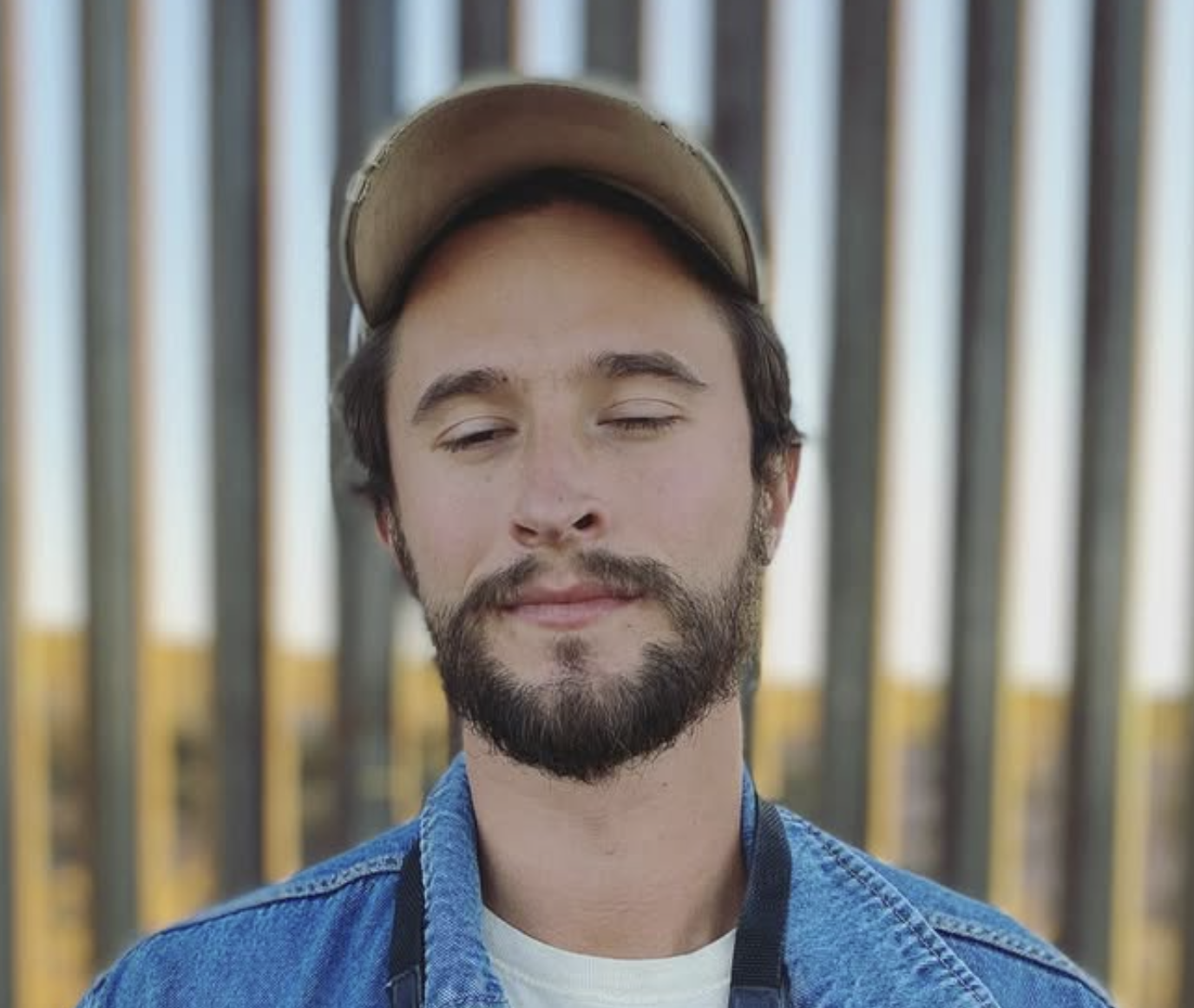
Laiken (he/him) works to protect wildlife, ecosystems, and public lands throughout the desert Southwest and U.S-Mexico borderlands. Before joining the Center, Laiken worked with the National Park Service studying threats to wilderness character at five different national parks and monuments and with the Bureau of Land Management on recreation planning for the San Juan River. He has also worked as a natural resource legislative fellow in the U.S. House of Representatives.