





 RSS Feed
 Amazon Music
 Apple Podcasts
 Audible
 Castbox
 Deezer
 Fountain
 iHeartRadio
 Pandora
 PocketCasts
 Podcast Addict
 Spotify
 YouTube
Joined by guest Gilberto Manzanarez from Valle Imperial Resiste, Chris explores the community's opposition to an AI data center due to potential environmental impacts, including noise pollution and increased water usage. Despite promises of economic growth, residents face uncertainty regarding property values and health concerns. The episode features community voices and insights into local governance challenges, highlighting ongoing efforts to prevent the data center's construction.





In this episode of "90 Miles from Needles," host Chris Clarke looks into the contentious topic of a proposed AI data center in Imperial County, California. As the largest project of its kind proposed in the state, local residents, led by community advocates like Gilberto Manzanarez of Valle Imperial Resiste, express concerns over the establishment's potential environmental and social impacts. The discussion emphasizes the community's grassroots efforts to halt the project through public awareness and strategic mobilization against a backdrop of economic challenges in one of California's most underrepresented regions.
The episode offers a first-hand account of the local opposition to the data center, with residents citing noise pollution, potential environmental degradation, and the betrayal of municipal promises regarding water and electricity resources. Gilberto Manzanarez shares insights on the movement he represents, explaining the importance of community-driven advocacy against powerful interests. The episode underscores ongoing battles for environmental justice and the struggle for local communities to safeguard their living conditions against speculative developments with uncertain long-term consequences.
Key Takeaways:
Gilberto Manzanarez and his organization, Valle Imperial Resiste, advocate for grassroots mobilization to oppose a proposed AI data center in Imperial County due to its potential negative impacts.
Residents voiced concerns about noise pollution, diminished property values, and uncertain environmental repercussions during a contentious Imperial County Planning Commission meeting.
The Planning Commission's decision to delay the project and set up workshops reflects local pushback and the effort to educate and engage the community more meaningfully in decision-making.
The episode highlights broader issues surrounding data centers, including the socio-environmental considerations lacking in many current developmental plans, as seen through examples from other U.S. cities.
A call for a moratorium on data center projects until comprehensive policies are in place signals a movement toward more cautious and community-focused development practices.
Notable Quotes:
“This is no exception. The LLC that's trying to put the project here was only established one year ago. It's a playbook that's been played out in the entire country.”
“One of the things that I noticed, was that there was a lack of information that these organizations gathered, but that information never really made it out to the people.”
“I come from a town called Calexico, California... I'm not putting my entire faith in electeds right now.”
“We want a comprehensive policy revolving around data centers around the Imperial County.”
Resources:
Valle Imperial Resiste Instagram
Listeners are encouraged to tune into the full episode to grasp the complexities and emotional currents of this important local issue.
Become a desert defender!: https://90milesfromneedles.com/donate
See omnystudio.com/listener for privacy information.
Like this episode? Leave a review!
Check out our desert bookstore, buy some podcast merch, or check out our nonprofit mothership, the Desert Advocacy Media Network!
UNCORRECTED TRANSCRIPT
0:00:00 - (Chris Clarke): 90 miles from the desert Protection Podcast is made possible by listeners just like you. If you want to help us out, you can go to 90 miles from needles.com donate or text needles to 53555.
0:00:25 - (Joe Geoffrey): Think the deserts are barren wastelands. Think again. It's time for 90 miles from Needles the Desert Protection Podcast.
0:00:46 - (Speaker): There is actually a plan. The county adopted that plan. My job is to go out and Actually market that plan. This is a plan that was put in place with the public sector and private sector together. That said, this is what we want. Go out and bring it here and then we bring it here and this is what we hear. You're right. Keep it down out there.
0:01:16 - (Speaker 2): We're going to go to break and This can take all day. We're going to vote you out.
0:01:25 - (Speaker 2): Five minute break.
0:01:25 - (Speaker 2): Is that what you want?
0:01:26 - (Crowd): Yeah.
0:01:28 - (Speaker 2): Five minute break.
0:01:45 - (Chris Clarke): Hello and welcome to the first episode of season five of 90 Miles from Needles, the Desert Protection Podcast. I am your host, Chris Clark and I'm really glad to be here with you at the start of our fifth season. We wouldn't have anticipated that we'd be able to keep this going this long. When we first started out back in 2021 before our hard launch, it's been a few weeks since we've had an episode due to the holidays. I hope yours were good and I promised you last time we had an episode that the next one would cover a proposed data center in Imperial County, California.
0:02:19 - (Chris Clarke): A small speculative company is proposing the largest data center in the state of California, which they would get approved and then turn around and sell to Google. This data center would be in a frontline community called Imperial, California. It's the fastest growing community in Imperial County. And so this episode is about that. We're kicking off the new year and the new season with an episode on AI data centers, which is going to be a hot topic in 2026, I think.
0:02:47 - (Chris Clarke): Well, you know, we covered the Project Blue data center in Tucson, which is still an ongoing battle even though opponents have won a couple of important victories there near Tucson against Project Blue, still technically on the books, still could go forward. And there are other data centers in El Paso. People are concerned about one being proposed for Santa Teresa, New Mexico, right across the state line, a bunch of them around Reno and Northern Nevada.
0:03:12 - (Chris Clarke): There's even one that the community of Page, Arizona is considering that would be essentially right on top of the canyon downstream from the Glen Canyon Dam. We're actually going to be raising funds this year to do a report on AI data centers in the deserts of North America to get that regional comprehensive viewpoint on these projects for activists, for people that are opposed to AI and even just for people that want to know more about it but don't have their minds made up yet.
0:03:40 - (Chris Clarke): And we are in a really good position to distill that information into usable form. And I'm optimistic about our fundraising possibilities. It will not surprise you to hear that it's a bit more nuanced of an issue than a lot of people think. That's getting ahead of ourselves. For this episode, we have a really good conversation for you with Gilberto Monsonares from Baie Imperial Resiste, which is a sort of rapid response grassroots environmental group that's been working on environmental justice issues and similar in Imperial county for a couple of years.
0:04:13 - (Chris Clarke): I think it's a good interview. Gilberto is a really compelling person to talk to. Before we get to that, though, I want to thank some folks who gave resoundingly, generously to our end of year appeal. Here in no particular order is the list. Bruce Graver. Thank you, Bruce. Kevin Emmerich, regular guest on this program. Jym Dyer, an old, old friend of mine. How old is he? Not really sure. I think he's younger than me, but we've known each other since the early 1990s.
0:04:48 - (Chris Clarke): Hal Rager. Thank you, Hal. Good to see your name pop up. Alina Kelly. Thank you, Alina. Richard Laugharn, I am looking forward to seeing you in Ajo, Arizona in March. Richard Florian Boyd, a longtime friend and supporter here in the Palm Springs area. Yvonne Legrece thank you, Yvonne. Patrick o', Driscoll, a longtime contributor who chipped in quite generously. Cindee Segal, my old housemate from the Cold Spring Warehouse Collective in Buffalo in the 1970s, Fred Rinne. Thank you, Fred. John Griesemer of New Hampshire, who I nonetheless run into from time to time in the supermarket in 29 Palms.
0:05:31 - (Chris Clarke): Jamie Moore, another good friend of many years. Thank you, Jamie. Tad Coffin, our dog, Jack's other dad. Thank you, Tad. Richard Garrison, Thomas Alban and John Griffin. You guys all rock. I can't really tell you how much the support means to me. It sometimes feels a little isolating sitting here in this shack in the middle of the Mojave Desert recording this and hoping people listen. And it's just really, really gratifying to hear from all y' all with your $5 or thousand-dollar contributions.
0:06:11 - (Chris Clarke): I I'm just touched. 90miles from needles.com donate if you want to make me feel even happier. At any rate, on December 18th of this past year, I went down to Imperial County, a couple of hours drive away from Desert Advocacy Media Network's world HQ here in Twentynine Palms. And I attended an Imperial County Planning commission meeting to discuss preliminary zoning adjustments that would enable the state's largest data center to be built just outside of a residential neighborhood in Imperial, California.
0:06:57 - (Chris Clarke): Now, Imperial County is one of the poorest and least employed places in California. It's a kind of forgotten set of communities in the state. People outside California might think of the state as Beverly Hills and Marin County and the beach and San Francisco, the Golden Gate Bridge. And maybe if you know California pretty well, you'll think of, I don't know, Mount Shasta or Berkeley or Joshua Tree, the desert north of Interstate 10.
0:07:27 - (Chris Clarke): Imperial county doesn't get a lot of notice. It's kind of the lost child of California. The community is majority minority, mostly Hispanic. Unemployment runs somewhere between 1 in 5 and 1 in 4 residents. That's the highest unemployment in the state of California. And the county's longtime economic mainstay of agriculture, growing crops for winter for sale to the rest of the country, is in the process of slowly getting displaced, water getting sent elsewhere.
0:08:03 - (Chris Clarke): As a rule, Californians outside Imperial County don't spend a lot of time thinking about the Californians inside of Imperial County. And speculators take advantage of that sort of broad scale apathy. They took advantage of that with a solar boom. They went in, they promised jobs and people jumped on it. And photovoltaic solar doesn't really mean a lot of jobs once it's installed. So that was kind of a bait and switch for them.
0:08:32 - (Chris Clarke): Similarly, the so-called lithium valley quest to get lithium out of the geothermal brine water for existing and operating geothermal plants in the valley. The devil is in the details there. And for very few jobs, people are being asked to breathe in additional particulate matter in communities where the majority of people have asthma already. And that under the radar character of goings on in Imperial Valley is happening in the data center field. And what you heard at the beginning of this episode was a particularly contentious moment in that planning commission meeting that I went to in which people in the communities of Imperial and El Centro and Calexico and other places in the middle part of Imperial county were up against a planning commission that while not every member of the commission agreed in supporting the data center project, it was pretty much being treated as a done deal and people resented that.
0:09:31 - (Chris Clarke): It's quite clear that the people who are normally in charge of running Imperial County are not used to people speaking up. The supporters of the project on the planning commission did not respond in a collegial or even a cynically sophisticated way to citizens showing up and expressing concern. And people got angry. People get angry when they're taken advantage of for their entire lives. And they get strong signals from the powers that be that those powers that be don't care.
0:10:03 - (Chris Clarke): So they were outraged. And then the people in control of the meeting were outraged that people were speaking up. And so that's some of what you heard. So we're going to get more into that with Gilberto Manzanares from Valle Imperial Resiste. But first, let's cleanse our palace just a little bit with some nature sound recording from the desert, courtesy our friend Fred Bell. We'll be hearing the dawn chorus at Great Basin national park in northeastern Nevada.
.
0:11:51 - (Diana Salcedo): Good morning, everyone. Normally don't do this, but I am Diana Salcedo. I reside at Posada Del Sol. I've been there approximately three years. I had no idea that AI center would be proposed to be built across the way. I knew it was an industrial, but I was thinking maybe a warehouse or what have you never an AI Data center. The county not too long ago had us restricted in water, had us restricted in electricity.
0:12:33 - (Diana Salcedo): All of a sudden, AI center comes in and we have enough water. We have enough electricity. What happened?
0:12:42 - (Diana Salcedo): My plants died because I couldn't give them water.
0:12:47 - (Crowd): It's about money.
0:12:53 - (Diana Salcedo): This data center hogs enough electricity and water to supply electricity to an entire city. How on God's earth is this okay? It's not. Furthermore, this, that because this facility will have so much water and electricity, our electricity bills and water bills are going to go up. And you can't tell me it's not because supply and demand makes a difference. The affected home, Victoria Ranch courtyard condominiums that are still being constructed.
0:13:35 - (Diana Salcedo): Victoria Ranch is still constructing. An elementary school is being constructed. Still you have Cross Elementary. You guys have to remember; these are our homes.
0:13:49 - (Crowd): Yeah.
0:13:54 - (Diana Salcedo): The largest facility, AI Data center in Virginia. The residents there constantly, 24/7 hear humming, loud noises. This is every day. That's not including the generators. When they have to be kicked in. These generators are huge. And you imagine the humming on top of the generators. Come on. You know, I'm telling you this because these people, this is what they're suffering through right now in Virginia.
0:14:41 - (Diana Salcedo): The residents there are experiencing loud humming which restricts their sleep. Walls vibrating, their windows rattling.
0:14:58 - (Diana Salcedo): Remember when you first bought your first home, how it felt to hold that key? I Leave you with that. And God, I ask you all to please reach in your hearts and remember that.
0:15:21 - (Chris Clarke): That was Diana Salcedo of Imperial, California, addressing the Imperial County Planning Commission in opposition to a large AI data center essentially across the street from her home. Ms. Salcedo was one of, I'd say, 30 or 40 people who showed up at the planning commission meeting who were in opposition to this project. In the virtual studio with us, we have Gilberto Manzanares of Valle Imperial Resiste, who is one of the people that facilitated and organized that really impressive response to the possibility of getting the state's largest data center plunked down in a frontline community in Imperial County.
0:16:02 - (Chris Clarke): Gilberto, can you give us a little bit of a history of Valle Imperial Resiste?
0:16:08 - (Gilberto Manzanarez): Yeah. So Valle Imperial Resiste was born late 2024, and resist was born out of a necessity that I witnessed in the community because we already have environmental justice groups here, like nonprofits in the Valley. One of the things that I noticed, though, was that there was a lack of information that, like, these organizations gathered, but that information never really made it out to the people. That's usually what happens when bureaucracy gets involved. There's a lot of gatekeeping of information for whatever purposes. We don't believe in gatekeeping information.
0:16:49 - (Gilberto Manzanarez): We do strategic storytelling to advance social, economic, and environmental justice in the region.
0:16:56 - (Chris Clarke): I wonder if you could give us a timeline of how you found out about the proposed data center in the city of Imperial.
0:17:03 - (Gilberto Manzanarez): There's a California's largest data center being proposed. I don't proclaim that I know everything that is going on in the Valley, but I think I'm pretty aware of a lot of things that regular residents are not aware of even. I was really surprised that this was going on because I had heard that during the Lithium Valley development, like, they were starting to allow data center industries to come in and set up shop in an even easier manner.
0:17:30 - (Gilberto Manzanarez): Right. It's kind of part of the plan. The city of Imperial was starting to get a lot of public backlash because people were confused. They thought the city of Imperial had approved and was building this. And the city of Imperial was forced to be like, whoa, whoa, whoa. This has nothing to do with the city of Imperial. This is the county of Imperial doing this. Right. So that's that initial post of the city of Imperial basically clarifying to people.
0:17:54 - (Gilberto Manzanarez): That post is pretty much going viral locally. That's how I found out. And I was surprised that this was even happening. A lot of people immediately started to mobilize because this type of developments they move really, really fast most of the time because there's economic incentives. Governments promise like less red tape, less bureaucracy so they can just come and set up shop as easy as possible. Right.
0:18:19 - (Gilberto Manzanarez): So we started to mobilize quickly and fast forward three weeks, we were able to put a temporary delay on the project. I think that speaks volumes to how the community feels about this project. That's how we found out just like the rest of the people.
0:18:35 - (Chris Clarke): So what are some of the negative impacts that people are concerned about for the Imperial proposal?
0:18:41 - (Gilberto Manzanarez): One of the impacts that people are really concerned about here is due to the proximity of the project and homes. The project is about 120 ft away from the nearest home, which is a cul de sac. So several homes actually. They're worried about noise pollution. Notoriously. Data centers produce like this very hard like humming sound 24. 7, which I can't imagine living next to that 20. I get pissed off by the 3 am train that crosses near my house and I'm like, oh, there it goes again. Right? That's why I get briefly interrupted, sleep at like 3am ish and then go back to sleep.
0:19:17 - (Gilberto Manzanarez): But I cannot imagine a constant 24,7. Doesn't matter what time of day it'll be there, the humming. And for sure those people are very aware and concerned about that because they're thinking about their property values. I've spoken to at least two residents in that neighborhood who are saying if this project passes, I'm going to have to sell my home before it really goes down in value. And it's very unfortunate. If this project passes, according to the developer, it won't really start operations until two years after the fact.
0:19:50 - (Gilberto Manzanarez): People will have two years to sell their homes. Another thing they're worried about is the fossil fuels pollution because these data centers, although popularized as green energy, do produce quite a bit of carbon emissions. This project has several gigantic industrial sized natural gas generators, just in case, you know, they call it for emergency, although they are routinely used as well for like testing that they're still working and whatnot.
0:20:19 - (Gilberto Manzanarez): And those produce carbon emissions. The other things that people are worried about, and this is something that I'm like, the thing is this is what the impact on water, like the quality of the water. Because even though they are claiming right now that the data center will run in a closed loop system so it won't touch municipal waters or portable water, that's what they told the people of Dallas, Texas as well.
0:20:43 - (Gilberto Manzanarez): Dallas, Texas proposed data center that was approved was also sold to the people like hey, it's a closed loop system. We're only going to use reclaimed water. There's nothing to worry about. Look it up on the Internet right now and you will find that they are using portable water after all. Because a lot of these agreements that they sell to people, they're not in official writing. And that's also an issue with lithium value. There's a lot of promises, but like we say in Mexico, paper on hand is the one that like says it's the law because they can tell you all these pretty words and don't worry about it.
0:21:15 - (Gilberto Manzanarez): But if there's no real legally binding contract, then I can't trust you. I know that who I'm talking to is like you're just here for the money. You're going to take that money when you sell these projects to, you're going to go back to your home in Huntington beach or wherever you live in Coachella Valley. That'll be the end of it and you won't hear from us ever again. You got your 200 million, whatever it is a delta to Google for and we're going to be left alone with the consequences.
0:21:40 - (Gilberto Manzanarez): Long term effects. That's a whole other conversation because we have very little data in regards to long term effects. What is coming out of Oregon is really concerning. We're seeing reports of the data center that is using potable water since it goes through all these electronic chips like graphics cards. All those minerals go back into the drinking water. So now we're seeing cases of cancer racing in the city of Dalles, Oregon.
0:22:08 - (Gilberto Manzanarez): It's hard to pinpoint if it's because of the data center or not. A lot of data centers that are getting built right now. The hyperscaler has only been built within the last two to three years. It makes sense. Since the boom of AI, we don't really have the statistical data to point out the real environmental effects.
0:22:26 - (Chris Clarke): What can you tell us about the city of Imperial, which I think is maybe not familiar to a lot of our listeners just because it's a relatively new community compared to El Centro and Brawley and Calexico and other communities in the Imperial county area.
0:22:41 - (Gilberto Manzanarez): The city of Imperial is one of the few actual cities with their own government in the Imperial Valley region, which is Imperial County, the city of Imperial itself. You know, Imperial County is going through hard times, although it seems like those times have been a few decades now. We currently have the highest unemployment rate in the entire state of California. I believe it's 21%. If it sounds ridiculously high, you only have to come down here to witness it yourself.
0:23:08 - (Gilberto Manzanarez): This county has been here for over 100 years, and we still are barely breaking 100,000 people here. Our sister city, Mexicali, right across the border, 1.5 million people like quite literally like a five-minute walk from my house right now. And then you go over the fence and it's this super small rural community. So something is off. The city of Imperial itself is one of the bigger cities here, but it's still pretty small relatively to in population to like Calexico or the city of El Centro.
0:23:41 - (Gilberto Manzanarez): It is however, ironically the fastest growing city economically and housing wise in the entire county. So that's why it makes it even more striking that this project is being positioned in one of those neighborhoods that is literally still under construction. If you drive three minutes east to that location, you will see houses and developments still being built. It's a pretty striking thing. There's a brand-new school being built. You can see the wood going up as a skeleton right now.
0:24:13 - (Gilberto Manzanarez): And it's just so striking that they won't even let this community fully flourish before trying to ruin it. They're just trying to go right now and I think it speaks to the speed in which a lot of these developments are happening nationwide.
0:24:25 - (Chris Clarke): Yeah, and the planning commission meeting was pretty contentious. It was actually, I think the most exciting planning commission meeting I've ever been to in my life. And I've done a lot of them. I got the sense at the meeting that people were completely taken by surprise and feeling very unconsulted and disempowered by the powers that be in deciding about this.
0:24:49 - (Gilberto Manzanarez): And it is true, it was a process that's very non high stakes, non invasive. They want to build this giant data center in almost a million square feet, is like around five, six properties. And they just need to fuse them together, merge them so that it's just one big property and they can make things easier to build. But we didn't want to wait until the actual project is on the table to start educating against this because it's a lot harder because already there's all this money that was invested.
0:25:19 - (Gilberto Manzanarez): A county is going to feel more inclined to prove it because hey, look, we just need this one last step and start building. So it kind of makes it seem as like they have no option. I spoke to some folks from Media Justice and we were bouncing off ideas about data centers and what's happening nationwide. They said we did a really good job. The community here to start resisting and pushing back at these early stages in the Planning Commission because they said a lot of the projects that successfully are fought off, they are stopped at the Planning Commission meetings because once again, council members and supervisors, there's the question of are they compromised or not. I mean, look, I always want to give people the benefit of the doubt, not want to go around and point fingers and say that this person's taking money and that person's taking money.
0:26:09 - (Gilberto Manzanarez): They could very well be well intentioned and just want economic development no matter the cost. Right. But I come from a town called Calexico, California, which one of the council members was sent to jail for taking $50,000 in a suitcase just for permitting cannabis businesses here. I'm not putting my entire faith in elected right now. So that's just the reality of where I'm from.
0:26:36 - (Chris Clarke): Yeah. And the Planning Commission obviously is appointed. You have people that are joining planning commissions that really to some degree, want to do good for their community and make sure that things work smoothly. They tend not to be politicians. And it's kind of easier to reach them on a human level In a lot of cases.
0:26:57 - (Gilberto Manzanarez): Yeah, definitely. For example, like the Board of Supervisors, by the time you get to supervisors, the way that it works down here, and I'm sure maybe it's the same over there, but they usually run for like school trustee, city council, some other elective position before running for supervisor. Right. They're kind of building a resume. By the time they get to supervisor, they've been through the weeds, they've been PR prepped, they know how to talk, what to say in public and what not to say in public.
0:27:23 - (Gilberto Manzanarez): So for the most part, they're pretty much trained. Right. As opposed to people in Planning Commission who are just regular citizens getting appointed. Although the other side of the coin is that they're not really elected. So they don't have to fear making an unpopular choice because like, hey, I don't have to worry about my 2026 campaign, you know.
0:27:45 - (Chris Clarke): And it was interesting. I don't think I'd seen a Planning Commission chair be as condescending to the public as some of the comments that were made. Not by all the planning commissioners, obviously. There's some diversity of opinion on that commission, it seems, but just the way that the audience was spoken to by the people running the meeting was surprisingly hostile. Yeah.
0:28:09 - (Gilberto Manzanarez): And I'm just really glad that you were there to witness that because that is not an unnatural occurrence. That happens even during the supervisor meetings themselves. And it's very disheartening to see that people were pouring Their emotions, how they really feel about the project. I don't believe that people need to be a complete expert on this subject to speak out. Why are they against it? It could be something as simple as I literally just don't want it 50ft away from my kids.
0:28:42 - (Gilberto Manzanarez): I don't care how environmentally friendly and green energy you try to greenwash this project. I just don't want this entire facility behind my backyard. And it seems like they're completely disregarding. The most striking feature of this project to me is the proximity to family homes. Although if you ask me, it really doesn't matter where you put these data centers. Like, if it's in the very last partial of the Imperial Valley, the effects on the electrical grid and water are going to be the same. Right.
0:29:16 - (Gilberto Manzanarez): But like I said, like, one of the most striking and unpopular things is that they show their true colors and how much they really don't care. These companies and developers who expect to make a ton of millions about where they go because at the end of the day, they're really just chasing a project and money. The way that these developers work is that they use shell LLCs to conduct business, go through permitting. It's really a playbook that's been played out in the entire country.
0:29:46 - (Gilberto Manzanarez): This is no exception. The LLC that's trying to put the project here was only established one year ago. And it's going to try to go through all the permitting and leave it up to the point where it's ready to build. They'll take this over to Google and sell it to them. Ready to build for I don't know how many millions. Right. That's on this closed. But there's tend to make a profit. And I was thinking that, you know, a lot of the negative effects with these giant hyperscale data centers, you don't see them immediately, but you see them seven, eight years, ten years down the road.
0:30:22 - (Gilberto Manzanarez): And once I don't believe that in 10 years down the road the LLC that started this project is even going to be in existence. Who do we hold accountable then, if not the developer that started this? Because he's going to take the money and run. That's the way that's playing out down here.
0:30:37 - (Chris Clarke): Can you go into a little detail about what it was that the planning commission agreed to after this very contentious meeting a couple weeks ago?
0:30:45 - (Gilberto Manzanarez): Yeah. So on December 18, the Planning Commission meeting was close to four hours. You were there, right. Like, it was a. It was a tiring meeting. Even though we're the organizers and we go with the intention of fighting. Four hours will take a toll on anyone. Right? So you get. You get pretty tired. You know, we're only humans, but it's necessary. Necessary. We're happy to got four hours of public comments. Right.
0:31:06 - (Gilberto Manzanarez): And the decision, ultimately there was a motion which to me was pretty striking, how there was very little justification. You know, I've been in positions of power, and you usually make a motion after you justify your reasoning. So when they move to almost immediately approve the project, I was in office because after four hours, how did you just dismiss that like that? Thankfully, the vote didn't go through. They needed one more vote.
0:31:38 - (Chris Clarke): Just a quick note on that. In Imperial county, the standard practice is you need a minimum of six votes in favor of a motion to have that motion carry. So even though you might have a majority of people voting, if you don't have six of them voting for something, it doesn't pass.
0:31:58 - (Gilberto Manzanarez): But almost immediately after that motion died, another planning commissioner made the motion to table the item until there are workshops set up. That includes the city of Imperial, the city of El Centro, Imperial county, and the community, as they call it. Just to kind of educate. Before we can bring this back to the table and see if people feel different about it,
0:32:20 - (Chris Clarke): let's dip back into the audio of that planning commission meeting. Here's how that motion went.
0:32:25 - (Commissioner): I would like to make a motion to table this project.
0:32:30 - (Crowd): It already failed, right?
0:32:31 - (Commissioner): It already failed. That's correct. They're asking for another motion.
0:32:39 - (Crowd): Right.
0:32:39 - (Commissioner): So please listen to me. I respect all of you guys. Let me. I'm asking for a motion to table this project until the developer, the city Imperial, the city of El Centro, and the community, which is all here represented by you guys, get together, get some workshops and come into an agreement if this project is valuable in that location or should be moved to another location, but not before everybody has a chance to listen to the project, the pros and the cons, as my motion.
0:33:15 - (Crowd): Did that pass or not pass?
0:33:19 - (Crowd): Is there a chair or a clerk like.
0:33:34 - (Crowd): Mr. Min?
0:33:36 - (F): The motion numbers presented by supervisor are by Commissioner Kalin.
0:33:40 - (Chris Clarke): Failed to pass.
0:33:41 - (Crowd): Exactly. Not to approve.
0:33:42 - (F): So there is no motion.
0:33:43 - (Crowd): The object is still out.
0:33:46 - (F): Okay, we now have a second. And we now have a new motion that was presented by commissioner.
0:33:55 - (Crowd): And that.
0:33:55 - (F): Has not been seconded.
0:34:00 - (Crowd): To table something that didn't pass.
0:34:02 - (Crowd): Yeah.
0:34:07 - (Crowd): You can't do that.
0:34:12 - (Commissioner): I'm giving you and all the people who spoke in here.
0:34:18 - (Crowd): We'Re not stupid. It failed. Leave it like that.
0:34:26 - (Crowd): You praised hypocrisy.
0:34:29 - (Gilberto Manzanarez): I'm not gonna put up with this crap. Can we get an actual lawyer on the D. Council?
0:34:41 - (Crowd): Can we get an actual lawyer on the D. County council?
0:34:49 - (Gilberto Manzanarez): We have a motion. But not a second. You got a second? Okay. All right. We can't do that.
0:34:57 - (Crowd): Call her.
0:34:57 - (Gilberto Manzanarez): A sha. Yes. Kaylin?
0:35:01 - (Joe Geoffrey): Yes.
0:35:01 - (Chris Clarke): Reuben? Yes.
0:35:02 - (Joe Geoffrey): Gas.
0:35:03 - (D): Yes.
0:35:04 - (Chris Clarke): Yes.
0:35:05 - (Gilberto Manzanarez): Right? Yes.
0:35:07 - (Chris Clarke): Yes.
0:35:10 - (Gilberto Manzanarez): All right.
0:35:10 - (F): The motion to table this project itself.
0:35:14 - (Crowd): Are you guys going to tell us.
0:35:15 - (Crowd): One day in advance.
0:35:23 - (F): The motion that was approved, which was to continue the item until such time that it has been workshopped with the agencies that the commissioner stated. Then the project will come back to the planning commission for reconsideration.
0:35:42 - (D): Let me add to your agency which everybody in this room is standing against the project. There are part of those tables of communication with the developer and the county and the city imperial of the city.
0:35:57 - (F): Of elsewhere the county. And we will get together and have workshops and they'll be available to the.
0:36:03 - (Chris Clarke): Public based on your motion. Our communication with the community.
0:36:08 - (F): Be notified through the newspaper.
0:36:32 - (Crowd): Your job is to serve the people.
0:36:34 - (Crowd): What are you doing?
0:36:39 - (Crowd): We can't hear you.
0:36:41 - (Chris Clarke): The lot merger has been continued. Speaking of the mic, in order to.
0:36:44 - (F): To have a lot merger, should the applicant choose to proceed with the lot merger, it has to come back to this commission for new hearing.
0:36:53 - (F): You have not decided to approve it or deny it.
0:36:55 - (Chris Clarke): Only to continue.
0:37:00 - (Crowd): Will that happened here.
0:37:05 - (Gilberto Manzanarez): So this is the opportunity for everybody that has questions that says they weren't informed, they didn't know anything to get with these workshops they are looking for.
0:37:15 - (Crowd): Yes. IID had one last week. Why was no one notified? Corruption. Used to the radio.
0:37:16 - (Gilberto Manzanarez): It was very broad. There was no real specifications or dates for whether these workshops will be held by a third party, which I believe they should be. Or else all we're going to get is propaganda by the developer. And I think that's their intention with the workshop. So the vote itself, that's what it was. It was like we're going to table it, come back with workshops and like educate people and blah, blah. That's it. No dates, no time frame.
0:38:05 - (Gilberto Manzanarez): I feel a certain way about these proposed workshops because although I'm happy that the project is delayed, I feel that these workshops are not in good faith. I feel like it was just put there so that the project doesn't die. Because if they wouldn't have tabled it, the project would have died right then and there. But the fact that they didn't let it die and they continued it with the intention of the momentum dying people misinterpreting both and think that they won or simply to end those workshops. It'll just be the county of Imperial which is very pro these projects. Okay, I don't want to pay the picture of like the counties may be undecided.
0:38:43 - (Gilberto Manzanarez): They're very much on the side of this project. Anything that makes money, right, it doesn't matter how much your children are going to pay for this in the future. The workshops are just going to be used as the developer having a chance and a bigger audience to promote their propaganda. I have two reasons to believe this. We've seen it before. About two weeks ago, the county Imperial in one of their board of supervisors meeting, which we didn't promote, we were not able to attend, except for a couple of us.
0:39:11 - (Gilberto Manzanarez): I was working, but a couple of people in the group were able to go and attend these meetings just for record keeping, you know, make sure that anything that supervisors say, like we know what they said, they gave a presentation about this specific data center. All of the information used as facts was literally off the developer's website, which has no sources. So I was like, okay, you're giving a presentation based solely on the developer's website and what they have to say, which for me already says enough.
0:39:41 - (Gilberto Manzanarez): I don't see how they don't see a have a problem with that. So that's one. Right. They already paint the picture that whatever the developers say must be true and it must be facts. So that's how I think the workshops are going to play out. And two, we've already seen this play out with Lithium Valley. The way they did community workshops within the last two years was very much rainbows and flowers and colors. And there will not possibly be any downsides to this.
0:40:09 - (Gilberto Manzanarez): You don't have to worry about the environment. We're all going to be rich. Don't worry about a thing. That's how those workshops play out. So that's how I know that this is the way that they will also sell this to people. I went to the IID Imperial Irrigation District, the utility company here. At least they were able to put part of presentation of the possible ramifications to have a data center here, which I can appreciate didn't just take a one-sided angle.
0:40:38 - (Gilberto Manzanarez): I don't think I trust the county enough to do something similar. I would love if they would invite actual experts to this. I've had professors from a couple of universities here in California reach out to me. People who actually go to school and study the impacts and environmental impacts of this thing. And they're telling us like, hey, you guys gotta Stop this. Because these things are ruining communities we don't really know. Even though they're the experts, they don't even know themselves.
0:41:03 - (Gilberto Manzanarez): Cells. Because there hasn't been enough time to study this. We only have a handful of mentions of communities that have had these hyperscalers for the last 10 years, which is usually when you start to see the real negative effects. Right. Unfortunately, there's this huge flood of AI centered hyperscale projects all over the country and everything is greenlit and built as fast as possible. Is it too crazy to think that maybe we should slow down for a bit and make sure that if we're going to be putting all these data centers all over the country, at least that people are informed about its possible negative impacts?
0:41:45 - (Chris Clarke): What's next for the campaign against this project and for Valle Imperial?
0:41:50 - (Gilberto Manzanarez): Resiste, Like I mentioned, Resiste only organizes with residents. It's part of our strategy to not use the nonprofit industrial system just because we've seen in previous cases, specifically with the lithium fight, how the county will disregard whatever you have to say and be like, nah, who's funding you? So they attack paid organizers directly. We're not using that for that reason. So that if you're going to attack, you're literally attacking residents.
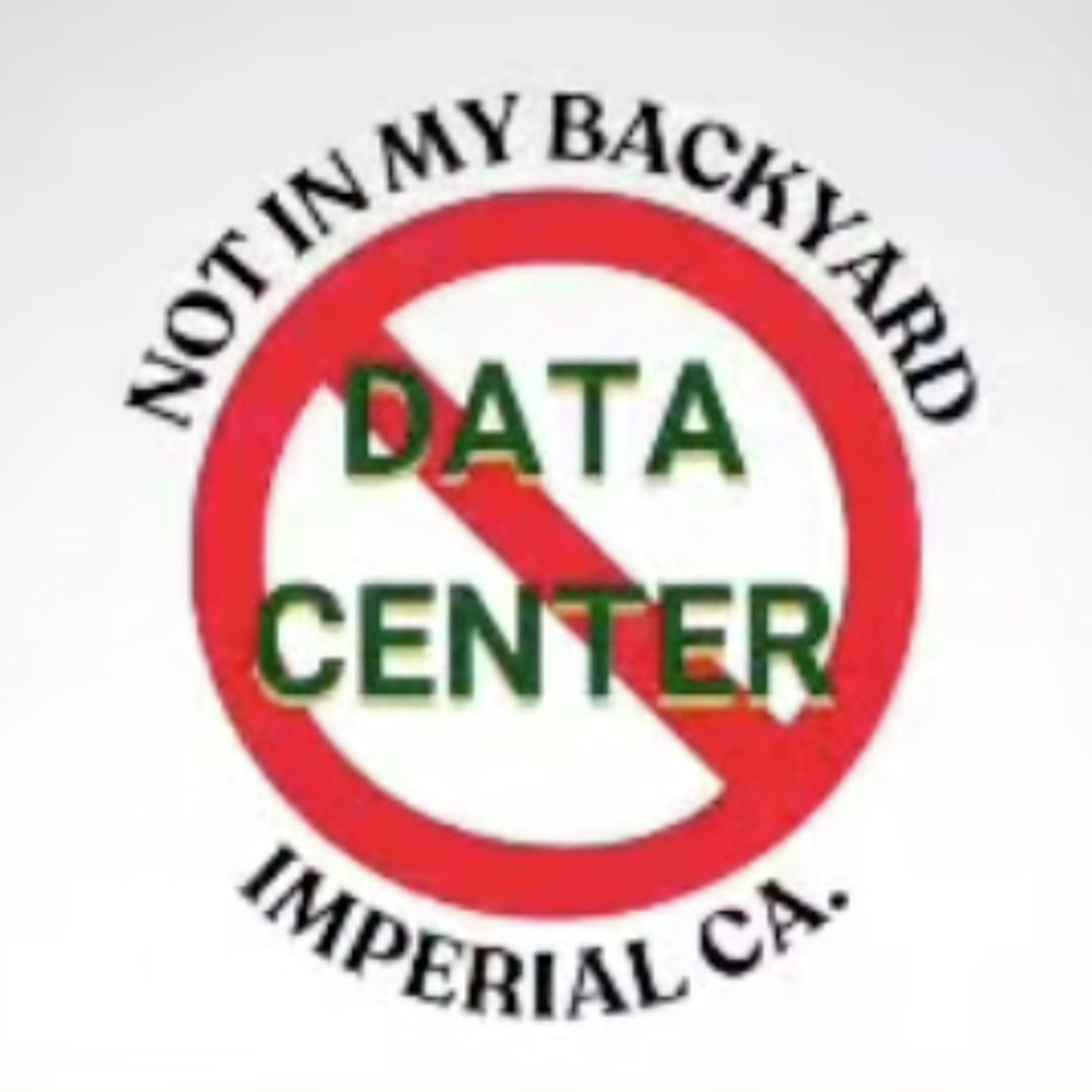
0:42:18 - (Gilberto Manzanarez): That's part of our strategy. We're going to work as hard as we can to continue to be self-sustained and funded like we are. We don't take a cent from people like the not in my Backyard Imperial Coalition, which is the Resident Coalition. They have a GoFundMe. I believe there's only about $1,000 for printing purposes and flyers. Just the bare minimum of things we need. Because in one of those canvassing events I personally spent $200 out of my pocket.
0:42:44 - (Chris Clarke): And we'll link that GoFundMe in the show notes for listeners that may be interested in helping out.
0:42:50 - (Gilberto Manzanarez): Oh yeah, yeah. Appreciate it. I mean, like I said, like GoFundMe, it's not managed by me or Resiste. That's a resident coalition. But the next steps is we're pacing because of the holiday break, right? So it's a little bit like died down a bit, but people are still engaged. The next step is that we are on the lookout for when this agenda item that was tabled eventually comes back. Because we are unsure even if these workshops that were proposed are even going to happen at all.
0:43:17 - (Gilberto Manzanarez): Because now the county of Imperial Supervisors are asking to take the case to them so they can vote on it. Kind of like completely disregarding what the planning commission voted for, which is why the city of Imperial released a statement calling them out on it and asking the county to respect what your planning commission voted for. So right now that's the immediate thing we're kind of like on the lookout of.
0:43:40 - (Gilberto Manzanarez): When these workshops, if they happen, we'll organize around the workshops. If they don't happen, we'll organize around the meeting when they plan to vote on it. What I would like to see long term of this, and we're kind of like still in this early stages of trying to mount this strategy is that we want to utilize what's happening here in Imperial. Let's say that we do win and we stop this data center.
0:44:01 - (Gilberto Manzanarez): But what's going to stop the data center from popping up in Calipatria in north end Imperial County? What's going to stop a data center from popping up in the north Salton Sea region or in Nyland? Right. Like all these super impoverished communities that already have it tough, I want to make sure that the entire valley is protected. The only thing that makes sense and it's something that the coalition is actually asking for right now is one, we're asking for a moratorium.
0:44:27 - (Gilberto Manzanarez): Several communities around this country are asking for moratoriums on data centers expansions because of the speed of which they are advancing. We're only asking like hey, maybe we have a strategic policy regarding modern data centers because they're not the same as the data centers in the 90s. Now they're this evolution monstrosity like power hungry buildings as opposed to a server room in the closet of somebody in the 90s.
0:44:55 - (Gilberto Manzanarez): We're looking for a comprehensive policy revolving around data centers around the Imperial County. We're asking for data centers to not be considered as by right in industrial zones and instead more of a case by case with public hearings. So basically setting up protections and hurdles meant to protect the citizens as well as the policies being crafted that can protect the valley county wide. A moratorium of at least three years so that it gives us time to plan the policy, make sure it's good with people, does it make sense? Is it feasible?
0:45:31 - (Gilberto Manzanarez): And once it's ready, lift the moratorium policies in place wherever it wants to come do business with in regards to data centers here. Well now they have these restrictions and protections that they have to work around.
0:45:42 - (Chris Clarke): Right.
0:45:42 - (Gilberto Manzanarez): And if they have a problem with that, the only reason why they're there is because we want to protect our health. And that is just it. There's no agenda. No one's getting money from this. At least citizens are not making money from this and that's all that we want. Long term, we hope to continue to work outside of the nonprofit industrial complex to keep ourselves grounded in grassroots and that way we are able to say the things that we can say, do the things that we do without any restraints or bureaucratic red tape that usually comes with nonprofit statuses.
0:46:15 - (Chris Clarke): Right. How do people find you so that they can learn more? You've been doing some amazing work on social media. Do you have a preferred place for people to check you out?
0:46:25 - (Gilberto Manzanarez): Yeah, right now we are only on Instagram. We are not on Facebook, although we do have a page so that no one adopts a fake Resiste on Facebook. We do plan to use it in the near future, especially because we are aware we have a giant hole in our content, which is it's not entirely available in Spanish, which is a shame seeing that we live in a community that mostly speaks Spanish. Basically, people can find and see the content and learn more about what we've talked about today if they head over to Instagram and type the V A L L E Imperial R E S I S T E.
0:47:00 - (Gilberto Manzanarez): We also do have a website, valleimperialresiste.com .org sorry, which people can kind of go and read about the work I've done prior to the data center as well.
0:47:11 - (Chris Clarke): Excellent. Gilberto, thank you so much for joining us on this early New Year's Day. Really stoked to talk to you and appreciate you taking the time, of course.
0:47:22 - (Gilberto Manzanarez): Thank you so much Chris and Happy New Year. First day of the year and already at it. It. Sam.
0:48:26 - (Chris Clarke): Huge thanks to Gilberto Manzanares of Valle Imperial Resiste for talking to us. He was actually sitting out in his yard when we recorded this interview. It was starting to rain a little bit down there. It was raining pretty good here when we were talking. Alberto, I appreciate the heck out of you talking with us. If you want to learn more about Valle Imperial Resiste, as Gilberto said, go check out their Instagram account link in the show notes. A lot of good rabble rousing going on there. A lot of good information exhortations to people to do the right thing and there's still plenty of room for you to do the right thing. Look for our show notes for information on the GoFundMe that we talked about.
0:49:06 - (Chris Clarke): I also want to thank all those of you who donated to us in our time of need at a year end. Again, in no particular order, John Griffin, Thomas Alban, Richard Garrison, Tad Coffin, Jamie Moore, John Griesemer, Fred Ryn, Cindy Siegel, Patrick o' Driscoll, Yvonne Legrice, Florian Boyd, Richard Laugharn, Alina Kelly, Hal Rager, Jym Dyer, Kevin Emmerich, and Bruce Graver. And it's worth noting that Bruce dedicated his donation to Nick Graver, who we had a great conversation with about Joshua Trees.
0:49:44 - (Chris Clarke): Thank you to all the Gravers, named or not. If you want to give us some money, go to 90miles from needles.com donate Joe will have more information there in a minute. This has been a hell of a year already folks, and we're only eight days into it as I speak. Things are not getting better on the Trump administration front, and that's going to be reflected in all kinds of stuff this year from border politics and the increasing scapegoating of migrants for the ills of late stage capitalism, as well as speaking of late stage capitalism, rampant mining and environmental degradation of the deserts, undercutting of environmental protection laws, and just general disregard for the right thing to do.
0:50:28 - (Chris Clarke): The deserts continue to be a sacrifice area for most of society, including some parts of society that we would think would be on our side. There is some good news, and it's really good news. 2026 is also part of the golden age of protest in the US Last year we saw the second biggest mass mobilization on behalf of something approaching progressive ideals in US history, the biggest being the original Earth Day in 1970, which I took part in as a we taught.
0:50:59 - (Chris Clarke): And there's a lot you can say about the shortcomings of Earth Day. I don't think we know about the shortcomings of No Kings Day yet, really, but we need to keep at it and keep building opposition to this horrible, murderous warmongering regime. I have avoided using those words before, but they have never felt less cliched and less hackneyed and less over the top than they do now. We've also never had this many people willing to work to force changes in the way this country operates, and I think we can use a lot more of that. So we're going to keep covering efforts to protect the desert and make lives better for people in the desert. And until next time, keep listening.
0:51:40 - (Chris Clarke): Not just to us, but I mean, listen to us, but also listen to each other and listen to the desert. You will learn something and we'll see you next week.
0:51:58 - (Joe Geoffrey): And that brings us to the end of this episode of 90 Miles from Needles, the Desert Protection podcast. You can find show notes for this episode along with links and background@90miles from needles.com we're also on social media. You can find us on Facebook, Instagram, Bluesky and Threads. Just search for 90 miles from Needles and if you'd like a more direct line, you can reach us on signal at HEY90MFN.67.
0:52:33 - (Joe Geoffrey): If you'd like to support the show, you can make a donation of whatever size and frequency feels right to you at 90miles from needles.com listener support is what makes this podcast possible. Our voiceover is by Joe Jeffrey. Podcast artwork is by Martine Mancha. Nature sounds are recorded by Fred Bell. Our theme song, Moody Western is by Bright side Studio, with additional music licensed from independent artists.
0:53:06 - (Chris Clarke): In this episode, we heard Mexico by original soundtrack.
0:54:02 - (Joe Geoffrey): 90 miles from Needles is a production of the Desert Advocacy Media Network.
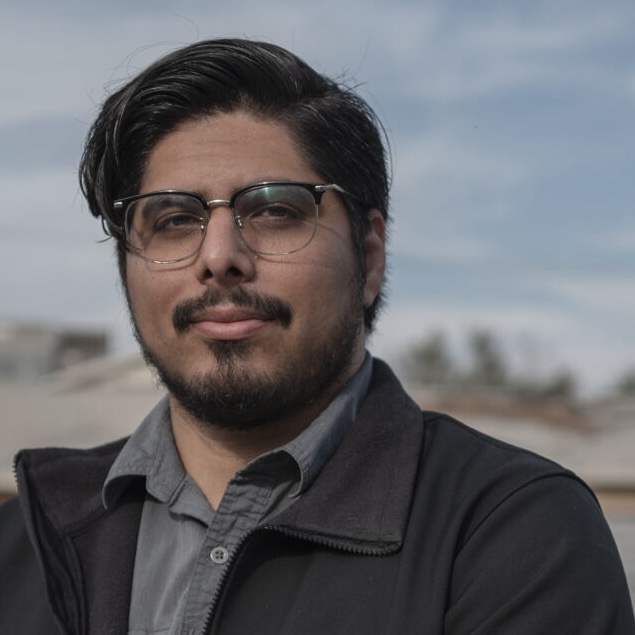
Gilberto Manzanarez is a lifelong Calexico, California resident, raised in the border community after being born in Mexicali and a graduate of Imperial Valley College with a degree in social science who has worked as a community advocate and mental health professional focused on elevating working-class voices.
He served on the Calexico City Council as a young progressive leader campaigning for social and economic justice.